
The 2026 Heat Pump Buying Guide: Navigating SEER2, Cold-Climate Tech, and IRA Rebates
As new refrigerants and stricter efficiency standards take effect, buying a heat pump in 2026 requires navigating a complex web of technology upgrades and government incentives.
By Factlen Editorial Team
- Electrification Advocates
- Focuses on decarbonization, IRA incentives, and long-term climate benefits.
- HVAC Professionals
- Prioritizes proper sizing, A2L refrigerant training, and realistic performance expectations.
- Budget-Conscious Homeowners
- Focuses on upfront costs, ROI, and navigating complex state rebate rollouts.
What's not represented
- · Traditional fossil fuel utility companies
- · Renters unable to upgrade their own HVAC systems
Why this matters
Heating and cooling account for roughly half of a typical home's energy use. Choosing the right heat pump in 2026 can slash utility bills, secure up to $10,000 in combined tax credits and rebates, and future-proof your home against volatile fossil fuel prices.
Key points
- Modern cold-climate heat pumps can comfortably heat homes in temperatures as low as -15°F.
- The industry has shifted to stricter SEER2 and HSPF2 efficiency testing standards.
- New A2L refrigerants are rolling out in 2026, requiring specialized contractor training.
- The federal Section 25C tax credit offers up to $2,000 annually for qualifying installations.
- Income-qualified households can access up to $8,000 in upfront HEEHRA rebates, depending on state rollout.
For decades, the American approach to home climate control was simple: an air conditioner for the summer and a gas furnace or boiler for the winter. But by 2026, the HVAC landscape has fundamentally shifted. Heat pumps—systems that provide both heating and cooling from a single unit—have outsold gas furnaces for consecutive years. This year, however, buyers face a unique set of variables: the rollout of new environmentally friendly refrigerants, stricter federal efficiency standards, and a patchwork of state-administered rebate programs.[3][6]
At its core, a heat pump does not generate heat; it moves it. During the summer, it acts exactly like a traditional air conditioner, absorbing heat from inside the house and dumping it outside. In the winter, a reversing valve switches the flow of refrigerant. The system extracts ambient heat from the outdoor air—even when it is freezing—and pumps it indoors. Because moving heat requires significantly less energy than creating it through combustion or electric resistance, modern heat pumps can operate at over 300% efficiency.[1][3]

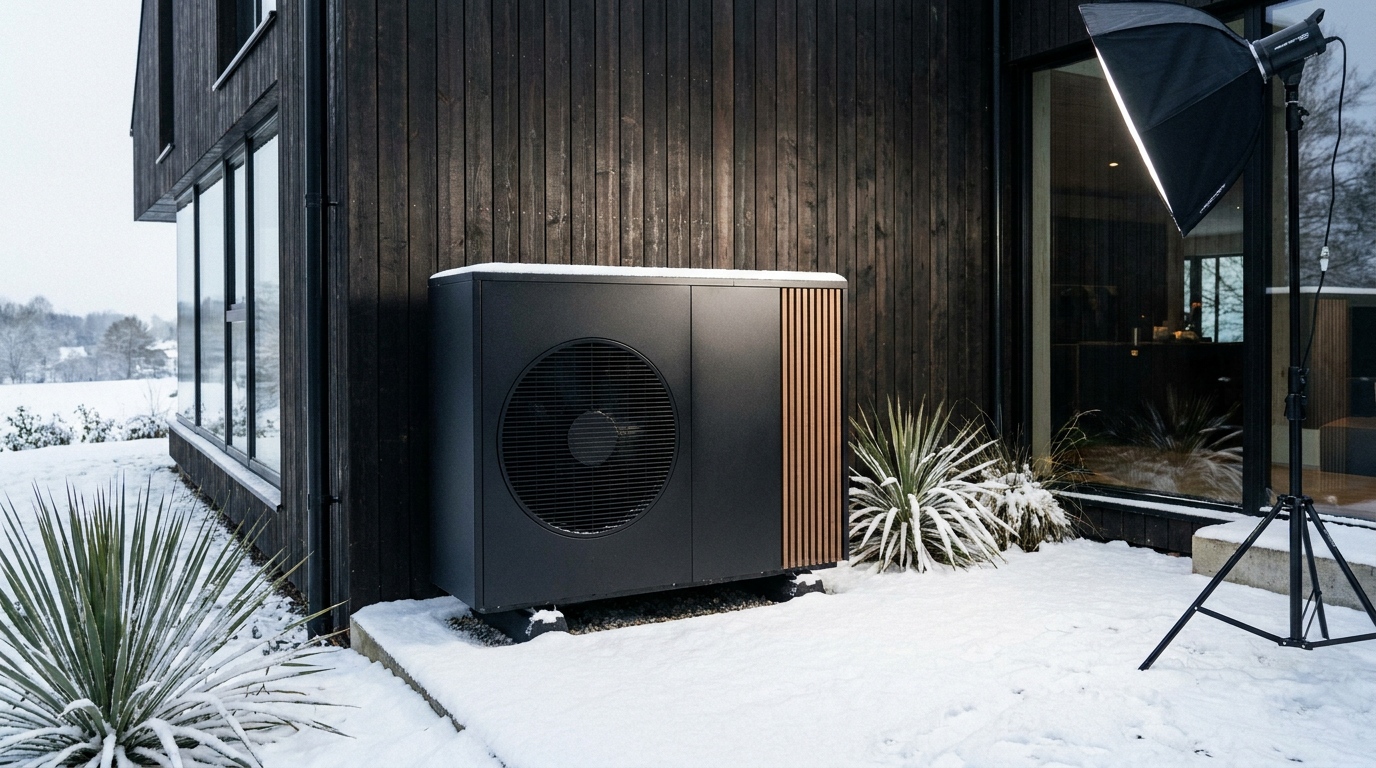
The most persistent myth about heat pumps is that they cannot handle harsh winters. While this was true of models built in the 1990s, 2026 technology tells a different story. Modern "cold-climate" heat pumps utilize vapor-injected compressors and variable-speed motors to extract heat from the air even when temperatures plummet, making them viable primary heating sources in northern climates.[1][2]
Leading models from manufacturers like Mitsubishi, Daikin, and Fujitsu can now operate at full capacity down to -15°F (-26°C), and continue producing heat at temperatures as low as -25°F. For homeowners in northern states, the key is looking for systems that carry a Cold Climate Air Source Heat Pump (ccASHP) designation from the Northeast Energy Efficiency Partnerships (NEEP). This certification guarantees the unit has been rigorously tested to perform at 5°F without relying on expensive electric backup strips.[2][7]
Shopping for a heat pump in 2026 also requires learning a new alphabet of efficiency metrics. The Department of Energy recently transitioned the industry to the SEER2 (Seasonal Energy Efficiency Ratio 2) and HSPF2 (Heating Seasonal Performance Factor 2) testing standards. These updated metrics subject equipment to higher static pressures, providing a much more accurate reflection of real-world performance in modern homes with restrictive ductwork.[5]
Shopping for a heat pump in 2026 also requires learning a new alphabet of efficiency metrics.
The federal minimum for a new split-system heat pump is now 14.3 SEER2 for cooling and 7.5 HSPF2 for heating. However, to qualify for the most lucrative federal tax credits and state rebates, buyers must aim higher. HVAC professionals generally recommend targeting a system with at least 15.2 SEER2 and an HSPF2 of 9.0 or above. While these high-efficiency units carry a larger upfront price tag, they can slash annual cooling and heating costs by up to 50% compared to older, standard-efficiency models.[3][5]

Beyond efficiency ratings, 2026 marks a major transition in the chemicals that make heat pumps work. To comply with federal climate mandates, the industry is phasing out older hydrofluorocarbon (HFC) refrigerants in favor of "A2L" refrigerants, such as R-32 and R-454B. These new refrigerants have a significantly lower global warming potential, aligning residential HVAC systems with broader environmental goals.[3]
For the consumer, the A2L transition means that 2026 equipment features advanced leak detection sensors and updated compressor designs. It also means that installation requires specialized training. Homeowners must ensure their chosen contractor is fully certified to handle A2L systems, as improper installation of these mildly flammable refrigerants can void warranties and compromise the system's safety features.[3]
The financial math of buying a heat pump is heavily influenced by the Inflation Reduction Act (IRA). The most accessible incentive is the Section 25C tax credit, which covers 30% of the installation cost, up to $2,000 annually. Because this credit resets every January 1st, savvy homeowners are phasing their upgrades—installing a heat pump in 2026, and waiting until 2027 to claim a new credit for a heat pump water heater or insulation upgrade.[4][6]
For low- and moderate-income households, the savings can be even more substantial through the Home Electrification and Appliance Rebates (HEEHRA) program. Administered state-by-state, HEEHRA offers point-of-sale discounts of up to $8,000 for a qualifying heat pump, plus additional funds for necessary electrical panel upgrades or home weatherization.[4]

However, the rollout of HEEHRA has been uneven. While states like New York, Colorado, and California have active programs, others have delayed implementation or declined the federal funding entirely. Buyers must check their specific state energy office to determine if these massive rebates are actively available before signing a contract, as they cannot be claimed retroactively.[4]
Ultimately, purchasing a heat pump in 2026 is an exercise in preparation. It requires assessing your home's insulation, evaluating your electrical panel's capacity, and navigating a complex landscape of efficiency ratings and tax codes. But for those who do the math and find a qualified contractor, the reward is a quieter, cleaner, and vastly more affordable way to keep their home comfortable year-round.[8]
How we got here
August 2022
The Inflation Reduction Act is signed, establishing the Section 25C tax credits and funding the HEEHRA rebate programs.
January 2023
The Department of Energy officially transitions the HVAC industry from the old SEER/HSPF metrics to the stricter SEER2/HSPF2 testing standards.
Late 2024 - 2025
States begin the slow, staggered rollout of their individual HEEHRA rebate programs, creating a patchwork of availability.
January 2026
The HVAC industry accelerates the phase-out of high-GWP hydrofluorocarbons, transitioning new equipment to A2L refrigerants like R-32.
Viewpoints in depth
Electrification Advocates
Focuses on the environmental and long-term financial benefits of transitioning away from fossil fuels.
This camp emphasizes that heat pumps are essential for reaching net-zero emissions. They argue that even when powered by a fossil-heavy electrical grid, the 300% efficiency of a heat pump results in lower overall carbon emissions than burning natural gas on-site. They heavily promote the stacking of IRA incentives to make the transition equitable and accessible to lower-income households.
HVAC Professionals
Prioritizes proper sizing, technical training, and realistic performance expectations.
Installers and technicians stress that a heat pump is only as good as its installation. They caution against homeowners simply buying the highest SEER2 rating without conducting a proper "Manual J" heat load calculation to size the unit correctly. This camp is currently highly focused on the 2026 transition to A2L refrigerants, warning that improper handling of these new chemicals by untrained contractors could lead to system failures or safety hazards.
Budget-Conscious Homeowners
Focuses on upfront costs, return on investment, and the complexity of accessing rebates.
This perspective highlights the friction in the current market. While federal tax credits are reliable, the state-by-state rollout of HEEHRA rebates has created confusion. Many in this camp are frustrated by the high initial quotes for cold-climate systems—often exceeding $15,000 for ducted setups—and the hidden costs of necessary electrical panel upgrades, leading some to stick with traditional gas furnaces until prices stabilize.
What we don't know
- When exactly the remaining states will launch their HEEHRA rebate portals.
- How the widespread adoption of A2L refrigerants will impact long-term maintenance costs.
- Whether the electrical grid in certain regions can handle the rapid surge in winter heating electrification.
Key terms
- SEER2
- Seasonal Energy Efficiency Ratio 2; a metric measuring a heat pump's cooling efficiency over a typical season under real-world static pressure conditions.
- HSPF2
- Heating Seasonal Performance Factor 2; a metric measuring a heat pump's heating efficiency over the fall and winter seasons.
- A2L Refrigerant
- A class of refrigerants with low global warming potential and mild flammability, mandated for new HVAC systems starting in 2026.
- HEEHRA
- Home Electrification and Appliance Rebates; a state-administered IRA program offering up to $8,000 in upfront discounts for income-qualified households buying heat pumps.
- Section 25C
- A federal tax credit that allows homeowners to deduct 30% of the cost of a qualifying heat pump, up to $2,000 per year.
- Reversing Valve
- The internal component that allows a heat pump to switch between cooling mode (moving heat outside) and heating mode (moving heat inside).
Frequently asked
Do heat pumps work in freezing weather?
Yes. Modern cold-climate heat pumps can operate efficiently at temperatures as low as -15°F to -25°F without relying on backup electric resistance heating.
What is the difference between SEER and SEER2?
SEER2 is the updated Department of Energy testing standard. It uses higher static pressure to better simulate real-world ductwork, resulting in ratings that are numerically lower (about 4.5%) but represent more accurate efficiency.
Can I claim the $2,000 tax credit every year?
Yes. The Section 25C tax credit resets annually through 2032, allowing homeowners to claim up to $2,000 for a heat pump one year, and claim additional credits for other efficiency upgrades in subsequent years.
What are A2L refrigerants?
A2Ls, like R-32, are the new industry standard refrigerants mandated for 2026. They have a much lower global warming potential than older chemicals but require specialized contractor training to install safely.
Sources
Source coverage
8 outlets
3 viewpoints surfaced






[1]The Daily ExplainerElectrification Advocates
Is a heat pump right for your home? Complete 2026 guide
Read on The Daily Explainer →[2]Heat Pump NetworkHVAC Professionals
What Makes a Heat Pump 'Cold Climate'
Read on Heat Pump Network →[3]HVAC Pro SalesHVAC Professionals
The Technical Reality: How They Differ in 2026
Read on HVAC Pro Sales →[4]Home Energy BasicsBudget-Conscious Homeowners
State, Status, Rebate Range for 2026 Heat Pumps
Read on Home Energy Basics →[5]Alternative AireHVAC Professionals
Understanding SEER Ratings: The Homeowner's 2026 Guide
Read on Alternative Aire →[6]Budget HeatingBudget-Conscious Homeowners
How IRA Era HVAC Incentives Shifted for 2026
Read on Budget Heating →[7]Facilities DiveElectrification Advocates
Extreme cold put heat pumps to the test — and they passed
Read on Facilities Dive →[8]Factlen Editorial Team
Synthesis by Factlen editorial team
Read on Factlen Editorial Team →

Every angle. Every day.
Get shopping stories with full source coverage and perspective breakdowns delivered to your inbox.