
The Ultimate Guide to Heat Pump Maintenance: Maximizing Efficiency Year-Round
Heat pumps offer unparalleled energy efficiency by moving heat rather than generating it, but neglecting routine maintenance can cut their performance by up to 25%. This comprehensive guide breaks down how heat pumps work, what homeowners can safely maintain, and when to call a professional.
By Factlen Editorial Team
- HVAC Professionals
- Emphasize the necessity of bi-annual professional tune-ups, precise refrigerant charging, and electrical safety to prevent catastrophic equipment failure.
- Energy Efficiency Advocates
- Focus on the macro benefits of maintenance, such as reduced grid strain, lower carbon emissions, and maximizing the system's Coefficient of Performance.
- DIY Homeowners
- Prioritize cost-saving preventative measures like regular filter changes, debris clearing, and basic troubleshooting before paying for a service call.
What's not represented
- · Renters without control over HVAC systems
- · Off-grid homeowners relying on alternative power
Why this matters
A well-maintained heat pump can slash household energy bills, extend the lifespan of a system that costs thousands to replace, and ensure reliable comfort during extreme weather events.
Key points
- Heat pumps move heat rather than generating it, making them highly efficient but heavily dependent on proper airflow.
- Neglecting routine maintenance can increase a heat pump's energy consumption by up to 25%.
- Homeowners should replace filters every 1 to 3 months and keep the outdoor unit clear of debris and snow.
- Annual professional servicing is required to check refrigerant levels and electrical connections, preventing costly compressor failures.
As homeowners increasingly transition away from fossil-fuel furnaces and traditional air conditioners, the electric heat pump has emerged as the cornerstone of modern climate control. Unlike conventional systems that sit dormant for half the year, a heat pump operates year-round, shouldering both the summer cooling and winter heating loads. This continuous duty cycle makes routine maintenance not just a recommendation, but a fundamental requirement for the system's survival. Neglecting a heat pump does not merely shorten its lifespan; it actively degrades the very energy efficiency that makes the technology so appealing in the first place.
The financial and environmental stakes of proper upkeep are substantial. According to the U.S. Department of Energy, the difference in energy consumption between a well-maintained heat pump and a severely neglected one can range from 10% to 25%. When a system is forced to work harder to move the same amount of thermal energy, it draws more electricity, driving up monthly utility bills and placing unnecessary strain on the local power grid. For a technology designed to slash carbon footprints, poor maintenance effectively neutralizes its primary advantage.[1]
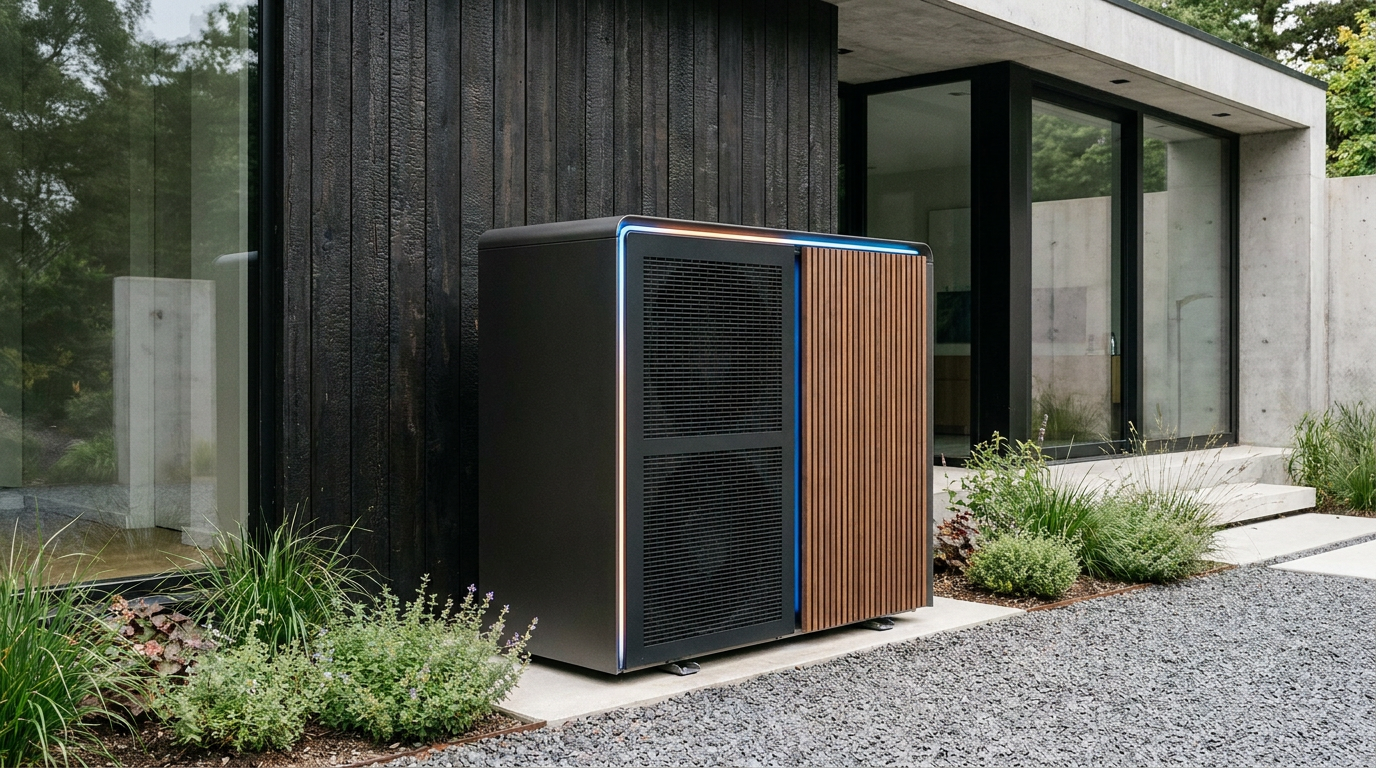
To understand why maintenance is so critical, one must first understand the mechanism of the heat pump itself. Traditional furnaces burn combustible fuels—like natural gas or heating oil—or use electrical resistance to generate heat from scratch. Heat pumps, by contrast, do not generate heat; they simply move it from one place to another. Operating much like a household refrigerator, they extract ambient thermal energy from the outdoor air, concentrate it, and pump it indoors.[3]
This thermal transportation is achieved through a closed-loop refrigeration cycle. The system relies on a chemical refrigerant that continuously transitions between a liquid and a gaseous state. In the outdoor unit, a compressor pressurizes the refrigerant gas, raising its temperature significantly. This hot gas is then pumped to the indoor coil, where a blower fan passes indoor air over the hot coils, warming the house. As the refrigerant releases its heat, it condenses back into a liquid.[4]

The liquid refrigerant then travels back outside through an expansion valve, which rapidly drops its pressure and temperature, turning it into a cold mist. As this cold refrigerant passes through the outdoor coil, it absorbs whatever ambient heat exists in the outside air—even on days when the temperature drops below freezing. The magic component that allows this entire process to run backward in the summer, extracting heat from the house and dumping it outside, is the reversing valve.[4]
Because the entire system relies on the efficient transfer of heat between the coils and the surrounding air, airflow is the lifeblood of a heat pump. Any restriction in airflow forces the compressor to work overtime, dramatically reducing the system's Coefficient of Performance (COP). The Environmental Protection Agency’s Energy Star program notes that airflow problems alone can reduce a system's efficiency by up to 15%, while simultaneously accelerating the wear and tear on the blower motor.[2]
For homeowners, the first and most crucial line of defense against airflow restriction is the indoor air filter. HVAC professionals universally recommend inspecting filters monthly and replacing them every one to three months. While high-efficiency pleated filters with high MERV (Minimum Efficiency Reporting Value) ratings are excellent for trapping microscopic allergens and improving indoor air quality, they can also restrict airflow if the system's blower is not designed to handle the increased resistance.[1]
For homeowners, the first and most crucial line of defense against airflow restriction is the indoor air filter.
The outdoor condenser unit requires equal vigilance. Because it must draw in massive volumes of outside air to extract or exhaust heat, the unit needs at least two feet of unobstructed clearance on all sides. Homeowners should regularly clear away encroaching vegetation, fallen leaves, grass clippings, and winter snowdrifts. A condenser choked by overgrown shrubs or caked in mud cannot facilitate the phase conversion of the refrigerant, leading to elevated system pressures and potential compressor failure.[4]

Beyond physical maintenance, operational habits play a massive role in a heat pump's efficiency. The Department of Energy explicitly warns against aggressive thermostat setbacks during the winter months. While turning the heat down deeply at night saves money with a traditional gas furnace, doing so with a heat pump can trigger the system's electric resistance backup heaters when it tries to recover the lost temperature in the morning. These backup heat strips consume vastly more electricity than the heat pump itself, erasing any savings.[1]
Fan settings also require careful management. Leaving the indoor fan set to "On" rather than "Auto" forces the blower to run continuously. While this filters the air constantly, it can degrade the heat pump's dehumidification performance in the summer by re-evaporating moisture from the indoor coil back into the house. Unless the system is equipped with a high-efficiency, variable-speed fan motor specifically designed for continuous circulation, the "Auto" setting is the most efficient choice.[1]
Winter operation introduces a unique mechanical challenge: the defrost cycle. When the outdoor temperature drops, the outdoor coil becomes significantly colder than the ambient air. This causes airborne moisture to condense and freeze on the metal fins, forming a layer of frost. To combat this, the heat pump will periodically reverse its operation, temporarily switching into air conditioning mode to send hot refrigerant outside and melt the ice, while the backup heat strips keep the house warm.[4]
While a light coating of frost is a normal part of winter operation, a heat pump encased in a solid block of ice indicates a severe malfunction. Frozen coils can be caused by a failing defrost control board, a faulty temperature sensor, or a low refrigerant charge. If the ice does not melt after a few hours, homeowners are advised to turn the system off and call a professional, as running a frozen heat pump can permanently destroy the compressor.[4][5]

Electrical anomalies also account for a significant portion of heat pump failures. Because these systems draw substantial amperage, power surges or grid fluctuations can easily trip a circuit breaker. Most modern heat pumps utilize a dual-breaker setup—one for the indoor air handler and a larger one for the outdoor compressor. If a system fails to turn on, checking the main electrical panel is the first troubleshooting step, though a breaker that repeatedly trips indicates a dangerous electrical short that requires immediate professional attention.[4]
While homeowners can manage filters and exterior clearance, the complex chemistry and high-voltage electronics of a heat pump necessitate annual professional servicing. During a preventative maintenance visit, certified technicians measure the exact voltage and amperage of the motors, inspect the electrical contactors for pitting, and clean the delicate evaporator and condenser coils with specialized chemical solvents.[6]
Most importantly, professionals verify the system's refrigerant charge. A heat pump that is undercharged by even a few ounces will struggle to move heat, running continuously and driving up utility bills. Conversely, an overcharged system operates at dangerously high pressures. Because heat pumps use a sealed refrigeration circuit, low refrigerant always indicates a physical leak that must be located and brazed before the system is recharged.[2][6]

The cost of preventative maintenance pales in comparison to the price of neglect. Replacing a burned-out compressor or a seized blower motor can cost thousands of dollars, often approaching the price of an entirely new system. By adhering to a strict maintenance schedule, homeowners can catch failing capacitors or sticking reversing valves before they cascade into catastrophic system failures.[4]
As federal incentives, including the $2,000 annual tax credit under the Clean Energy Tax Credits for Consumers, continue to drive the mass adoption of heat pumps, consumer education remains the final hurdle. A heat pump is a marvel of modern thermodynamics, capable of extracting warmth from freezing air and delivering unparalleled efficiency. But like any high-performance machine, it demands respect, care, and a proactive approach to maintenance to truly deliver on its promise.[3][7]
Viewpoints in depth
The HVAC Professional's View
Why technical precision matters more than basic cleaning.
For licensed technicians, heat pump maintenance is less about clearing leaves and more about precise thermodynamics. A system that is undercharged by just a few ounces of refrigerant will run continuously, failing to heat the home while driving up the electric bill. Professionals emphasize that because heat pumps use a sealed, pressurized refrigeration circuit, low refrigerant always indicates a physical leak that must be located and brazed. They also focus heavily on electrical health, measuring the microfarads of capacitors and the amperage draw of the compressor to predict and prevent catastrophic motor failure before it happens.
The Energy Advocate's View
Maintenance as a tool for grid stability and decarbonization.
Government agencies and environmental advocates view heat pump maintenance through the lens of macro-level energy consumption. When millions of heat pumps operate at a 15% to 25% efficiency deficit due to clogged filters or dirty coils, the cumulative strain on the electrical grid is massive. Organizations like the EPA and DOE stress that the environmental promise of heat pumps—slashing residential carbon emissions—is entirely dependent on the systems operating at their peak Coefficient of Performance (COP). For these advocates, routine maintenance is a critical component of the broader transition to clean energy.
The Homeowner's View
Balancing comfort, cost savings, and practical DIY upkeep.
For the average homeowner, heat pump maintenance is primarily an exercise in cost control and comfort assurance. The focus is on the practical, safe tasks that prevent expensive emergency service calls: changing MERV-rated filters every few months, keeping the outdoor condenser clear of snow and shrubs, and understanding how to safely reset the system's dual-breaker setup. Homeowners must balance the desire to save money through DIY troubleshooting with the reality that complex mechanical issues, such as a frozen evaporator coil or a malfunctioning reversing valve, require professional intervention.
What we don't know
- How the transition to new, slightly flammable A2L refrigerants will impact the cost and complexity of future maintenance.
- The exact lifespan impact of running a heat pump in extreme cold climates without a secondary backup heating source.
Key terms
- Coefficient of Performance (COP)
- A ratio measuring a heat pump's efficiency, calculated by dividing the heat output by the electrical energy input.
- Reversing Valve
- A mechanical component that reverses the flow of refrigerant, allowing the heat pump to switch between heating and cooling modes.
- MERV Rating
- Minimum Efficiency Reporting Value; a scale that rates the effectiveness of air filters at trapping microscopic particles.
- Defrost Cycle
- An automated process where the heat pump temporarily switches to cooling mode in winter to melt frost off the outdoor condenser coils.
- Refrigerant
- A chemical compound that continuously transitions between liquid and gas to absorb and release heat within the system.
Frequently asked
How often should I change my heat pump's air filter?
HVAC professionals and the Department of Energy recommend inspecting the filter monthly and replacing it every 1 to 3 months, depending on usage and the filter's MERV rating.
Why is my heat pump blowing cold air in the winter?
This often happens when the system enters its automated defrost cycle to melt ice off the outdoor unit. It can also occur if the thermostat fan is set to 'On' instead of 'Auto', circulating unheated air.
Is it normal for the outdoor unit to freeze?
A light layer of frost is normal during cold weather, but if the unit becomes encased in a solid block of ice that doesn't melt after a few hours, it indicates a malfunction that requires professional repair.
Should I turn my thermostat down at night to save money?
The Department of Energy advises against deep thermostat setbacks for heat pumps in winter, as it can trigger inefficient electric resistance backup heaters when the system tries to recover the temperature.
Sources
Source coverage
7 outlets
3 viewpoints surfaced







[1]U.S. Department of EnergyEnergy Efficiency Advocates
Operating and Maintaining Your Heat Pump
Read on U.S. Department of Energy →[2]Energy StarEnergy Efficiency Advocates
Maintenance Checklist
Read on Energy Star →[3]U.S. Environmental Protection AgencyEnergy Efficiency Advocates
Heat Pumps: Efficiency and Maintenance
Read on U.S. Environmental Protection Agency →[4]TraneHVAC Professionals
Heat Pump Troubleshooting Guide
Read on Trane →[5]CarrierHVAC Professionals
Heat Pump Troubleshooting Guide: Is Your Heat Pump Not Working?
Read on Carrier →[6]DaikinHVAC Professionals
What is heat pump servicing and maintenance?
Read on Daikin →[7]Factlen Editorial TeamDIY Homeowners
Synthesis by Factlen editorial team
Read on Factlen Editorial Team →
Every angle. Every day.
Get home stories with full source coverage and perspective breakdowns delivered to your inbox.