
The Science of the Minimum Effective Dose: How Little You Can Lift and Still Build Muscle
Sports science reveals that significant strength and muscle gains can be achieved with a fraction of traditional training volume, provided the intensity remains high.
By Factlen Editorial Team
- Minimalist Training Advocates
- Argue that the vast majority of health and aesthetic benefits can be achieved with a fraction of traditional training volume.
- High-Volume Traditionalists
- Emphasize that maximizing absolute muscle growth and genetic potential requires significantly higher weekly set volumes.
- Clinical Researchers
- Focus on lowering the barrier to entry for resistance training to improve public health outcomes across the general population.
What's not represented
- · Physical Therapists
- · Endurance Athletes utilizing hybrid training
Why this matters
For busy professionals and parents, the belief that fitness requires hours in the gym is a major barrier. Understanding the minimum effective dose liberates you from the 'all-or-nothing' mindset, proving that two short, focused sessions a week can transform your health, strength, and longevity.
Key points
- The 'Minimum Effective Dose' is the smallest amount of training required to trigger muscle growth and strength gains.
- Research shows just one heavy set, 1-3 times a week, can significantly increase pure 1RM strength.
- For muscle size (hypertrophy), roughly four hard sets per muscle group per week is sufficient for most people.
- Minimalist training requires exceptionally high intensity; sets must be pushed very close to muscular failure.
- While 10-20 sets per week maximizes genetic potential, the first four sets deliver the vast majority of physiological benefits.
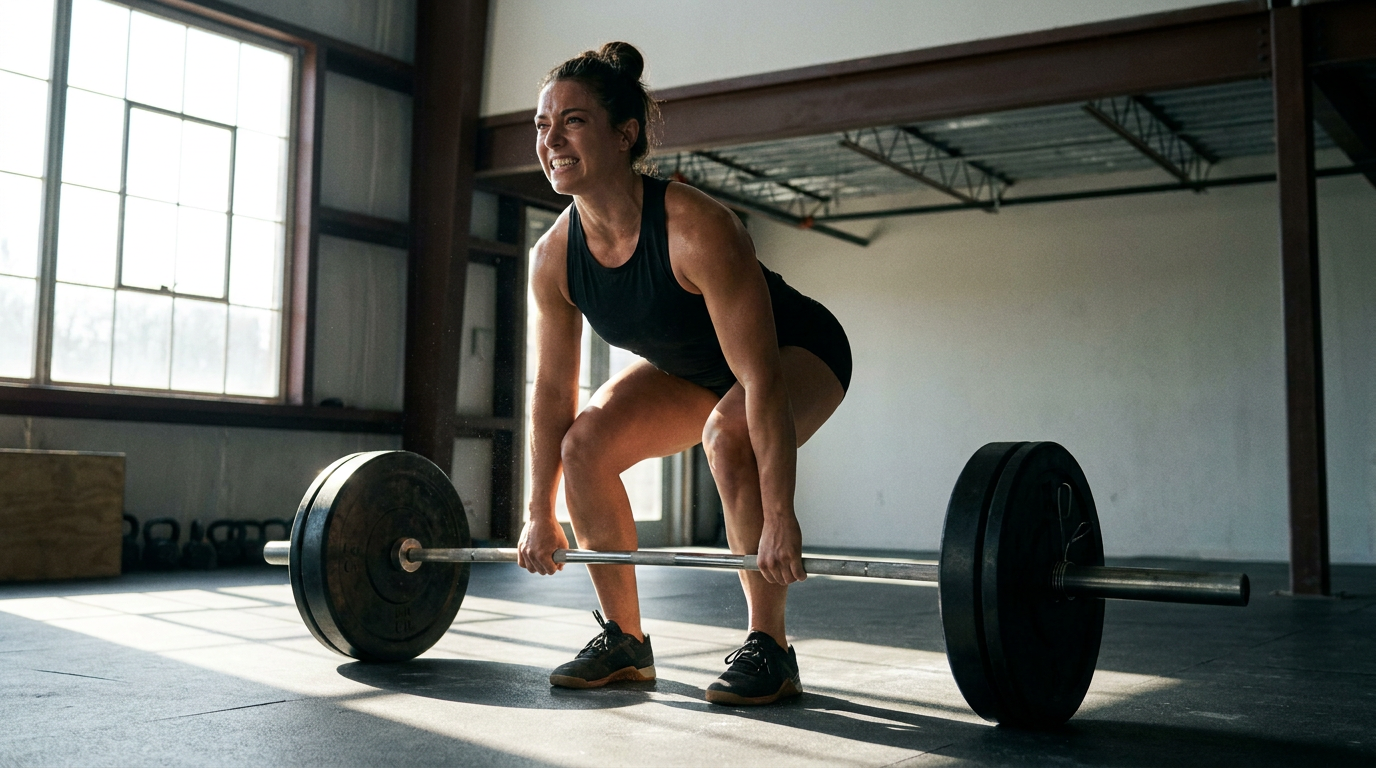
For decades, mainstream fitness culture has been dominated by what industry insiders call the "Volume Wars." Scroll through any social media feed, and the prevailing wisdom relentlessly suggests that building muscle requires living in the gym, grinding through grueling two-hour sessions, and hitting every individual muscle group from six different angles. This high-volume dogma is championed by competitive bodybuilders and fitness influencers whose entire livelihoods revolve around their physical appearance. For the average person, however, this messaging creates a deeply intimidating and often insurmountable barrier to entry. When the perceived cost of getting stronger is sacrificing five evenings a week, millions of people simply choose not to start.[3][4]
This all-or-nothing mindset is one of the primary reasons people abandon their fitness resolutions. Many cite severe time constraints as the single biggest hurdle to maintaining a consistent resistance training routine. They assume that if they cannot commit to the exhaustive splits popularized by fitness magazines, any lesser effort is entirely pointless. However, a growing and highly encouraging body of sports science is actively dismantling this perfectionist approach. Researchers are shifting their focus away from what is strictly "optimal" for an elite competitor and are instead investigating the absolute floor of human physiological adaptation.[1][6]
This shift in scientific inquiry has popularized the concept of the Minimum Effective Dose (MED). Borrowed from pharmacology, the Minimum Effective Dose refers to the absolute smallest amount of a training stimulus required to induce a meaningful, measurable gain in muscle size and strength. Below this specific threshold, the body does not receive a loud enough signal to adapt, and results are negligible. But once that threshold is crossed, the body initiates the complex biological processes required to build new tissue and forge stronger neural pathways.[2][4]
The beauty of the minimum effective dose lies in its efficiency. It operates on the principle that the vast majority of your physiological gains come from the initial stimulus, not the endless repetition that follows. By identifying this precise threshold, sports scientists are providing a scientifically backed permission slip for busy professionals, parents, and aging adults to do significantly less work while still reaping the profound health and aesthetic benefits of resistance training.[6]

When it comes to pure strength—defined strictly as the maximum amount of weight a person can lift for a single repetition, known as a 1-Repetition Maximum (1RM)—the required dose is shockingly low. A landmark 2020 meta-analysis published in the journal Sports Medicine by Dr. Patroklos Androulakis-Korakakis set out to investigate the absolute floor for strength gains. The research team aggregated data from numerous studies to see just how little trained individuals could lift without stalling their progress.[2]
The researchers uncovered a reality that defied decades of gym-bro lore. They found that performing just a single heavy set of six to twelve repetitions, executed one to three times per week, was entirely sufficient to significantly increase 1RM strength in men who already had resistance training experience. This means that the total time spent under the tension of a heavy barbell could be measured in mere minutes per week, yet the body still responded by getting measurably stronger.[2]
This phenomenon occurs because muscular strength is not just about the physical size of the muscle; it is heavily dependent on neurological skill. Lifting a heavy load—typically defined as 70 to 85 percent of your maximum capacity—forces the central nervous system to recruit motor units efficiently and fire muscle fibers in perfect synchronization. This neural adaptation can be triggered by a very brief, highly focused exposure to heavy weight, proving that strength is as much a software upgrade for the brain as it is a hardware upgrade for the body.[2][4]
However, building physical muscle mass—a process known as hypertrophy—requires a slightly different mechanical stimulus than pure neurological strength. Hypertrophy relies heavily on mechanical tension and metabolic stress, which generally demands a higher total volume of work to fully exhaust the muscle fibers and trigger the cellular repair processes that lead to growth. Because of this, the minimum effective dose for size is slightly higher than the minimum effective dose for pure strength.[1][3]
In 2021, a prominent team of researchers, including renowned hypertrophy expert Dr. Brad Schoenfeld and lead author Vegard Iversen, published a comprehensive narrative review titled "No Time to Lift?" Their objective was to synthesize the available literature and determine the absolute minimum weekly volume required to stimulate meaningful muscle growth, specifically tailoring their findings for individuals with severe time constraints.[1]
In 2021, a prominent team of researchers, including renowned hypertrophy expert Dr.
Their findings were a revelation for the time-crunched public. The review revealed that roughly four hard sets per muscle group per week serves as the minimum effective dose for hypertrophy. To put this into perspective, a lifter could perform just two sets of chest presses on Tuesday and two sets on Friday, and they would successfully trigger the biological mechanisms required for their chest to grow. This minimalist approach can easily be condensed into two brief, 30-minute full-body sessions a week.[1][4]

But there is a crucial, non-negotiable caveat to the minimalist training approach: the inverse relationship between training volume and training intensity. If you are only performing four sets a week, you cannot simply go through the motions, lift a comfortable weight, and expect your body to transform. The trade-off for spending less time in the gym is that the time you do spend there must be exceptionally focused and physically demanding.[4][6]
To successfully trigger adaptation with an ultra-low volume routine, the intensity of effort must be remarkably high. Lifters must push their working sets very close to momentary muscular failure—the point where completing another repetition with proper form becomes physically impossible. It is those final, grueling repetitions where the muscle fibers are fully recruited and the mechanical tension is highest, sending the definitive signal to the body that it needs to grow larger to survive the next encounter.[4][6]
"If your goal is just to build some muscle and gain some strength, a very minimalist routine—training an hour a week, let's say two half-hour sessions—can give most people very nice results, provided you're training hard," explains Dr. Schoenfeld. He emphasizes that while this will not prepare someone to step onto a professional bodybuilding stage, it is more than enough to build a strong, capable, and aesthetically pleasing physique for the general population.[3]
This scientific validation of minimalist training does not mean that high-volume training is entirely useless or misguided. For advanced trainees, elite athletes, or competitive bodybuilders looking to maximize every single ounce of their genetic potential, higher volumes are absolutely necessary. The current scientific consensus suggests that 10 to 20 sets per muscle per week is the optimal range for maximizing absolute hypertrophy, requiring a massive commitment of time and recovery resources.[3][5]
A recent study published in the Journal of Applied Physiology perfectly illustrated this dynamic by comparing moderate and high-volume routines. The researchers found that while performing 25 sets a week can drive elite-level adaptations, performing just 12 sets a week produced nearly identical results in thigh size and squat strength for the average trained lifter. The massive increase in workload yielded only a tiny fraction of additional growth.[5]

The relationship between training volume and muscle growth strictly follows the economic law of diminishing returns. The physiological jump from doing zero sets to doing four sets a week yields massive, transformative dividends. The jump from four sets to ten sets yields moderate additional gains. However, pushing the body from ten sets to twenty sets offers only marginal, incremental improvements while exponentially increasing the risk of joint pain, systemic fatigue, and burnout.[1][3]
For the busy professional, the parent juggling childcare, or the student overwhelmed with exams, this science offers a highly practical and forgiving blueprint. Workouts can be radically condensed by focusing exclusively on bilateral, multi-joint compound movements. Exercises such as squats, deadlifts, barbell rows, and overhead presses target multiple large muscle groups simultaneously, providing a massive return on investment for the time spent under the bar.[1][6]
Training time can be compressed even further by utilizing advanced, time-saving techniques like drop sets and supersets. A drop set involves taking an exercise to complete failure, immediately reducing the weight by roughly 20 percent, and continuing to lift to failure again without resting. This brutal but highly efficient technique effectively condenses the metabolic stress and muscle fiber recruitment of multiple traditional sets into one continuous, time-saving block of work.[1][6]

While the minimum effective dose is a powerful and liberating concept, researchers are careful to note that individual biological variability plays a significant role in how well it works. Genetics, sleep quality, nutritional intake, and baseline stress levels all dictate how efficiently a body responds to a low-volume stimulus. Furthermore, older adults may require slightly higher volumes to overcome age-related anabolic resistance, a condition where aging muscles become less responsive to the signals that trigger protein synthesis.[1][2]
Ultimately, the science of the minimum effective dose liberates the average person from the tyranny of the "optimal" workout. It proves that you do not need to sacrifice your life to the gym to build a body that is strong, resilient, and healthy. Consistency over years with a "good enough" minimalist routine will always profoundly outperform a perfect, high-volume program that is abandoned after a month because it was too exhausting to maintain.[4][7]
How we got here
2011
The American College of Sports Medicine issues guidelines suggesting 1-3 sets per exercise for novices, sparking debate over minimum thresholds.
2019
A meta-analysis by Dr. Brad Schoenfeld establishes a clear dose-response relationship, showing 10+ sets per week maximizes growth, but lower volumes still yield results.
April 2020
Dr. Patroklos Androulakis-Korakakis publishes a landmark review proving a single heavy set, 1-3 times a week, significantly increases 1RM strength.
August 2021
The 'No Time to Lift?' narrative review is published in Sports Medicine, formally outlining the minimum effective dose for hypertrophy at roughly four sets per week.
Viewpoints in depth
The Efficiency Argument
Why minimalist training is the key to long-term adherence.
Proponents of the minimum effective dose argue that the fitness industry's obsession with 'optimal' programming actively harms public health by creating unrealistic expectations. When the barrier to entry is set at five days a week, most busy professionals and parents simply opt out. By proving that significant strength and hypertrophy can be achieved in just two 30-minute sessions per week, minimalist advocates aim to reframe resistance training as an accessible, lifelong habit rather than an all-consuming lifestyle.
The Bodybuilding Ceiling
Why competitive athletes still rely on high-volume routines.
While four sets a week will yield the majority of potential gains, high-volume advocates point out that it is mathematically insufficient for maximizing genetic potential. For competitive bodybuilders or elite strength athletes, the difference between 80 percent and 100 percent of their potential is the difference between winning and losing. These athletes deliberately push into the realm of diminishing returns, utilizing 10 to 20 sets per muscle group per week to force every possible ounce of adaptation, accepting the heavy toll it takes on systemic recovery.
The Public Health Perspective
Using low-volume science to combat age-related decline.
Clinical researchers view the minimum effective dose through the lens of longevity and disease prevention. Sarcopenia—the age-related loss of muscle mass—is a leading cause of frailty and mortality in older adults. By establishing that even a single weekly set of heavy resistance training can preserve neuromuscular function, researchers hope to integrate strength training into standard medical guidelines, making it as routine and manageable as taking a daily walk.
What we don't know
- Whether the minimum effective dose is sufficient for highly advanced strength athletes to continue making progress, or if it only serves as a maintenance protocol for elite lifters.
- The exact degree to which age-related anabolic resistance increases the minimum volume threshold for older adults.
- How individual genetic differences in muscle fiber type distribution affect responsiveness to ultra-low-volume training.
Key terms
- Minimum Effective Dose (MED)
- The smallest amount of training volume required to produce a measurable increase in muscle size or strength.
- Hypertrophy
- The enlargement of skeletal muscle tissue, commonly referred to as building muscle.
- 1-Repetition Maximum (1RM)
- The maximum amount of weight a person can lift for a single repetition of a given exercise.
- Compound Movement
- An exercise that engages multiple joints and muscle groups simultaneously, such as a squat, deadlift, or bench press.
- Volitional Failure
- The point in a set where you physically cannot complete another repetition with proper form.
- Drop Set
- An advanced technique where an exercise is performed to failure, the weight is immediately reduced, and the exercise is continued to failure again without resting.
Frequently asked
Can I really build muscle working out twice a week?
Yes. Research shows that performing roughly four hard sets per muscle group per week—which can easily be split across two 30-minute full-body sessions—is sufficient to stimulate significant muscle growth.
Do I need to lift heavy weights to see results?
For pure strength gains, lifting heavier loads (70-85% of your 1-rep max) is highly effective. However, for muscle size (hypertrophy), you can use lighter weights as long as you push the set close to muscular failure.
What is the difference between strength and hypertrophy?
Strength is the neurological ability to generate maximum force (lifting a heavy weight once), while hypertrophy is the physical increase in the size of the muscle fibers.
Are drop sets better than regular sets?
Drop sets are not necessarily 'better' for growth, but they are far more time-efficient. They allow you to accumulate the same amount of metabolic stress and muscle fatigue in a fraction of the time.
Sources
Source coverage
7 outlets
3 viewpoints surfaced






[1]Sports MedicineClinical Researchers
No Time to Lift? Designing Time-Efficient Training Programs for Strength and Hypertrophy: A Narrative Review
Read on Sports Medicine →The Minimum Effective Training Dose Required to Increase 1RM Strength in Resistance-Trained Men: A Systematic Review and Meta-Analysis
Read on Sports Medicine →[3]BarBendHigh-Volume Traditionalists
Brad Schoenfeld's Science-Backed Rules for Hypertrophy Training
Read on BarBend →[4]RP StrengthMinimalist Training Advocates
The Minimum Effective Dose: Your Shortcut to Strength and Hypertrophy
Read on RP Strength →[5]Men's FitnessHigh-Volume Traditionalists
Moderate vs. High-Volume Training: Which is Better for Muscle Growth?
Read on Men's Fitness →[6]Hone HealthMinimalist Training Advocates
What Is the “Minimum Effective Dose” of Exercise?
Read on Hone Health →[7]Factlen Editorial TeamClinical Researchers
Synthesis by Factlen editorial team
Read on Factlen Editorial Team →

Every angle. Every day.
Get fitness stories with full source coverage and perspective breakdowns delivered to your inbox.