
The Science of Induction Cooking: Why Magnets Are Replacing Gas Stoves
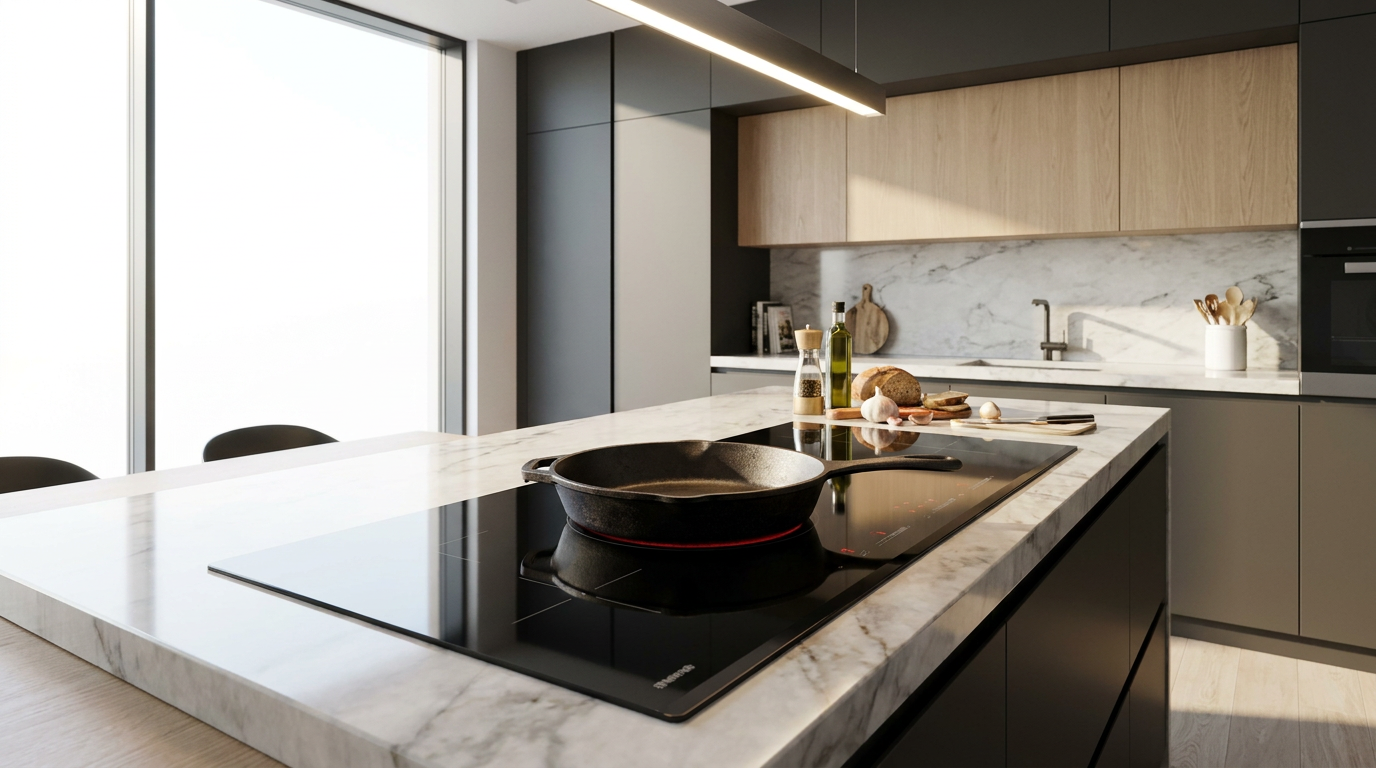
Induction cooktops use electromagnetic fields to heat cookware directly, offering faster boiling times, superior energy efficiency, and significantly cleaner indoor air compared to traditional gas stoves.
By Factlen Editorial Team
- Public Health Researchers
- Focus on the elimination of indoor air pollutants and respiratory hazards.
- Energy & Efficiency Advocates
- Prioritize the reduction of greenhouse gas emissions and grid optimization.
- Consumer Appliance Testers
- Evaluate the practical cooking performance, speed, and cost for the average home chef.
What's not represented
- · Landlords managing electrical upgrades
- · Professional wok chefs
Why this matters
As households look to reduce energy bills and eliminate indoor pollutants like nitrogen dioxide, understanding the mechanics of induction cooking can help consumers make informed, health-conscious decisions about their next kitchen appliance.
Key points
- Induction cooktops use magnetic fields to heat the cookware directly, rather than heating the surrounding air.
- The technology is up to 90% energy efficient, compared to roughly 40% for traditional gas stoves.
- Recent studies show replacing gas stoves with induction models cuts indoor nitrogen dioxide pollution by over 50%.
- Cookware must contain iron to work on an induction surface; aluminum and pure copper are incompatible.
- Induction burners can boil water 20 to 40 percent faster than gas or radiant electric alternatives.
The modern kitchen is undergoing a quiet, magnetic revolution. For decades, the visual roar of a gas flame was the undisputed symbol of serious cooking, while electric coils were relegated to budget apartments. But a third technology is rapidly displacing both.[1]
Induction cooking, once a niche luxury, has become the focal point of appliance upgrades, driven by a combination of culinary performance, energy efficiency, and mounting health concerns.[1]
To understand the shift, one must look beneath the sleek glass surface. Unlike traditional electric stoves that heat a metal coil, or gas stoves that ignite a combustible fuel, induction cooktops do not generate external heat.[2]
Instead, they rely on the principles of electromagnetism. Beneath the cooking zone lies a tightly wound coil of copper wire. When the stove is turned on, an alternating electrical current flows through this coil, creating a dynamic, oscillating magnetic field.[1][2]

This magnetic field passes harmlessly through the glass cooktop. However, when a ferromagnetic pot or pan—one containing iron—is placed on the surface, the magnetic field penetrates the metal.[1]
The oscillating field induces microscopic electrical currents, known as eddy currents, within the base of the cookware. The iron's natural resistance to these currents creates intense friction at the atomic level, generating rapid, concentrated heat directly inside the metal.[1][2]
Because the pan itself becomes the heat source, the efficiency gains are staggering. The U.S. Department of Energy notes that induction cooktops convert up to 85 to 90 percent of their electrical energy into usable cooking heat.[2]
By contrast, traditional gas stoves operate at a mere 32 to 40 percent efficiency. When cooking with gas, more than half of the energy generated by the flame escapes around the sides of the pan, dissipating into the surrounding air and needlessly heating the kitchen.[2][6]

This direct energy transfer translates to remarkable speed. Testing by Consumer Reports has consistently shown that high-powered induction burners can bring a pot of water to a boil 20 to 40 percent faster than their gas or radiant electric counterparts.[3]
The precision of induction also rivals the responsiveness of gas. Because there is no heavy metal grate or glass surface to cool down, lowering the temperature setting instantly reduces the magnetic field, stopping the heat generation in the pan immediately.[3][8]
The precision of induction also rivals the responsiveness of gas.
Beyond culinary mechanics, a growing body of public health research is accelerating the transition away from gas. A landmark study led by the Columbia University Mailman School of Public Health measured the indoor air quality of public housing units in the Bronx.[4]
Researchers monitored apartments before and after replacing traditional gas stoves with induction models. The results were stark: households with induction stoves experienced a 56 percent reduction in average daily concentrations of nitrogen dioxide (NO2).[4]
Nitrogen dioxide is a known respiratory irritant. During controlled cooking tests in the Columbia study, NO2 levels in gas-equipped kitchens routinely spiked to nearly 200 parts per billion—well above outdoor safety guidelines—while levels in induction kitchens remained negligible.[4][7]

Long-term exposure to these emissions is closely linked to the aggravation of asthma and other respiratory diseases, particularly in children. Furthermore, research from Stanford University has demonstrated that gas stoves continuously leak small amounts of methane, a potent greenhouse gas, even when completely turned off.[4][5][7]
Despite the clear benefits, the transition to induction requires some adjustment. The most immediate hurdle for home cooks is cookware compatibility. Because the technology relies on magnetism, aluminum, pure copper, and non-magnetic stainless steel pans will not work.[1][3]
Fortunately, the test for compatibility is simple: if a standard refrigerator magnet sticks firmly to the bottom of a pan, it will work on an induction stove. Cast iron, enameled Dutch ovens, and most high-quality stainless steel sets are perfectly suited for the task.[1][3]

Cooks must also adapt their timing. The sheer speed of induction means that a pan can reach searing temperatures in seconds. Ingredients must be prepped and ready before the stove is turned on, as the leisurely preheating window afforded by gas no longer exists.[1]
Cost and infrastructure present additional barriers. While the prices of induction ranges have fallen, they often carry a premium over basic gas or electric models. Moreover, switching from gas to induction typically requires a dedicated 240-volt electrical outlet, which can necessitate a costly visit from an electrician.[3][6]
To ease this burden, various federal and state incentives are being rolled out to help homeowners offset the electrical upgrade and appliance costs, making the technology accessible to a broader demographic.[6]
How we got here
1909
The first early patents for induction cooking technology are filed.
1971
Westinghouse introduces the first induction range designed for home use, though it remains a costly novelty.
2000s
Induction cooktops gain widespread mainstream adoption across Europe and Asia.
2022
Major public health studies quantify the high levels of indoor nitrogen dioxide pollution caused by residential gas stoves.
2023
The U.S. passes legislation including rebates to help homeowners offset the cost of upgrading to electric and induction appliances.
Viewpoints in depth
Public Health Researchers
Focus on the elimination of indoor air pollutants and respiratory hazards.
This camp emphasizes that cooking with combustible fuels indoors introduces toxic byproducts, primarily nitrogen dioxide and carbon monoxide, into the living space. They point to studies showing that gas stoves routinely push indoor air quality past outdoor safety limits, disproportionately affecting children and asthma sufferers. For these experts, the transition to induction is fundamentally a health intervention.
Energy & Efficiency Advocates
Prioritize the reduction of greenhouse gas emissions and grid optimization.
Environmental and energy experts view induction technology as a critical piece of the broader home electrification puzzle. By converting up to 90 percent of electricity directly into cooking heat, induction minimizes wasted ambient energy. This camp argues that as the electrical grid shifts toward renewable sources, replacing inefficient gas appliances with high-performance electric alternatives is essential for meeting long-term climate goals.
Culinary Traditionalists
Value the tactile feedback, visual cues, and universal cookware compatibility of gas flames.
While acknowledging the efficiency of induction, traditionalists and many professional chefs remain attached to the sensory experience of gas cooking. A visible flame provides instant, intuitive feedback on heat levels, and gas burners easily accommodate specialty cookware like round-bottomed woks or pure copper pans. This camp often views the forced transition to electric cooking as a loss of culinary heritage and technique.
What we don't know
- How quickly the electrical infrastructure in older apartment buildings can be upgraded to support the 240-volt requirements of induction ranges.
- Whether the upfront cost of induction technology will drop enough to achieve true price parity with budget-tier gas stoves in the near future.
Key terms
- Electromagnetic Induction
- The process of using a magnetic field to generate electrical currents within a metal object, which in turn creates heat.
- Ferromagnetic
- A material, such as iron or certain steel alloys, that is highly susceptible to magnetization and is required for induction cooking.
- Nitrogen Dioxide (NO2)
- A toxic gas released as a byproduct of burning natural gas, which is linked to respiratory irritation and asthma.
- Radiant Electric Cooktop
- A traditional electric stove that uses heated metal coils located beneath a glass surface to transfer heat to a pan via direct contact.
Frequently asked
Do I need to buy all new pots and pans for an induction stove?
Not necessarily. If a magnet sticks firmly to the bottom of your current cookware, it will work on an induction cooktop. Cast iron and most stainless steel pans are fully compatible.
Does induction cooking use more electricity than a traditional electric stove?
No. Induction is significantly more energy-efficient than traditional radiant electric stoves because it heats the pan directly, minimizing wasted ambient heat.
Will an induction cooktop work during a power outage?
No. Like all electric appliances, induction cooktops require electricity to operate and will not function during a power grid failure.
Are induction cooktops safe to touch while cooking?
The glass surface itself does not generate heat, so it remains much cooler than a traditional electric or gas stove. However, the glass will absorb some residual heat from the hot pan resting on it.
Sources
Source coverage
8 outlets
3 viewpoints surfaced







[1]Factlen Editorial TeamConsumer Appliance Testers
Synthesis by Factlen editorial team
Read on Factlen Editorial Team →[2]U.S. Department of EnergyEnergy & Efficiency Advocates
The numbers are in: Americans are seeing the benefits of induction appliances
Read on U.S. Department of Energy →[3]Consumer ReportsConsumer Appliance Testers
Pros and Cons of Induction Cooktops and Ranges
Read on Consumer Reports →[4]Columbia University Mailman School of Public HealthPublic Health Researchers
Study Finds Switching From Gas to Electric Stoves Cuts Indoor Air Pollution
Read on Columbia University Mailman School of Public Health →[5]Stanford UniversityPublic Health Researchers
Methane leaks from gas stoves worse than previously thought
Read on Stanford University →[6]Natural Resources Defense CouncilEnergy & Efficiency Advocates
Induction Cooktops: What You Need to Know
Read on Natural Resources Defense Council →[7]The GuardianPublic Health Researchers
Replacing gas stoves with induction cuts indoor pollution, study finds
Read on The Guardian →[8]Energy StarEnergy & Efficiency Advocates
Induction Cooktops and Ranges
Read on Energy Star →
Every angle. Every day.
Get home stories with full source coverage and perspective breakdowns delivered to your inbox.