
How C2PA and Content Credentials Are Cryptographically Securing Digital Truth
As deepfakes surge, the tech industry is shifting from detecting synthetic media to cryptographically proving authenticity at the source using the C2PA standard.
By Factlen Editorial Team
- Provenance Advocates
- Believe cryptographic standards at the point of creation are the only scalable way to establish trust in digital media.
- Forensic Verification Specialists
- Argue that metadata alone is insufficient for high-stakes environments without certified acquisition protocols to prevent physical staging.
- Regulators & Policymakers
- View machine-readable provenance as a necessary compliance tool to protect citizens from AI deception and enforce transparency laws.
- Platform Implementers
- Focus on translating complex cryptographic manifests into user-friendly UI labels without overwhelming consumers.
What's not represented
- · Independent creators who may lack access to expensive C2PA-compliant hardware
- · Privacy advocates concerned about the end of anonymous digital publishing
Why this matters
As AI-generated media becomes visually indistinguishable from reality, the internet is shifting from trying to detect fakes to cryptographically proving what is real. Understanding how Content Credentials work is essential for anyone who consumes news, creates digital art, or relies on digital evidence, as this standard will soon dictate what platforms label as trustworthy.
Key points
- Deepfake incidents surged by 900% between 2023 and 2025, rendering detection-only approaches obsolete.
- C2PA is an open standard that embeds a cryptographically signed 'nutrition label' into digital files.
- The manifest records who created the content, what tools were used, and whether AI was involved.
- Major platforms like Meta and LinkedIn now use C2PA data to automatically apply 'AI Info' labels.
- Upcoming regulations like the EU AI Act are accelerating the adoption of C2PA as a compliance tool.
- While C2PA proves a file's digital history, forensic experts note it cannot prove a physical scene wasn't staged.
The internet is facing an epistemological crisis. Between 2023 and 2025, global incidents of deepfakes surged by 900 percent, jumping from roughly 500,000 to over 8 million cases. Generative AI models have become so sophisticated that synthetic media is now visually indistinguishable from authentic photography. For years, the technology industry's primary response was detection: building AI classifiers designed to spot the subtle artifacts left behind by other AI models. But this approach created an unwinnable arms race. As generative models continuously improve, detectors inevitably fall behind, leading to a landscape where users can no longer trust their own eyes.[1][2]
By 2026, with synthetic content projected to account for up to 90 percent of online media, the paradigm has fundamentally shifted. Instead of trying to detect what is fake after the fact, the technology and media industries are rallying around a new approach: cryptographically proving what is real at the point of creation. The architecture powering this shift is the Coalition for Content Provenance and Authenticity, universally known as C2PA. Founded in 2021 by a consortium including Adobe, Arm, Intel, Microsoft, and the BBC, the coalition has since swelled to over 6,000 members and affiliates.[2][4][7]
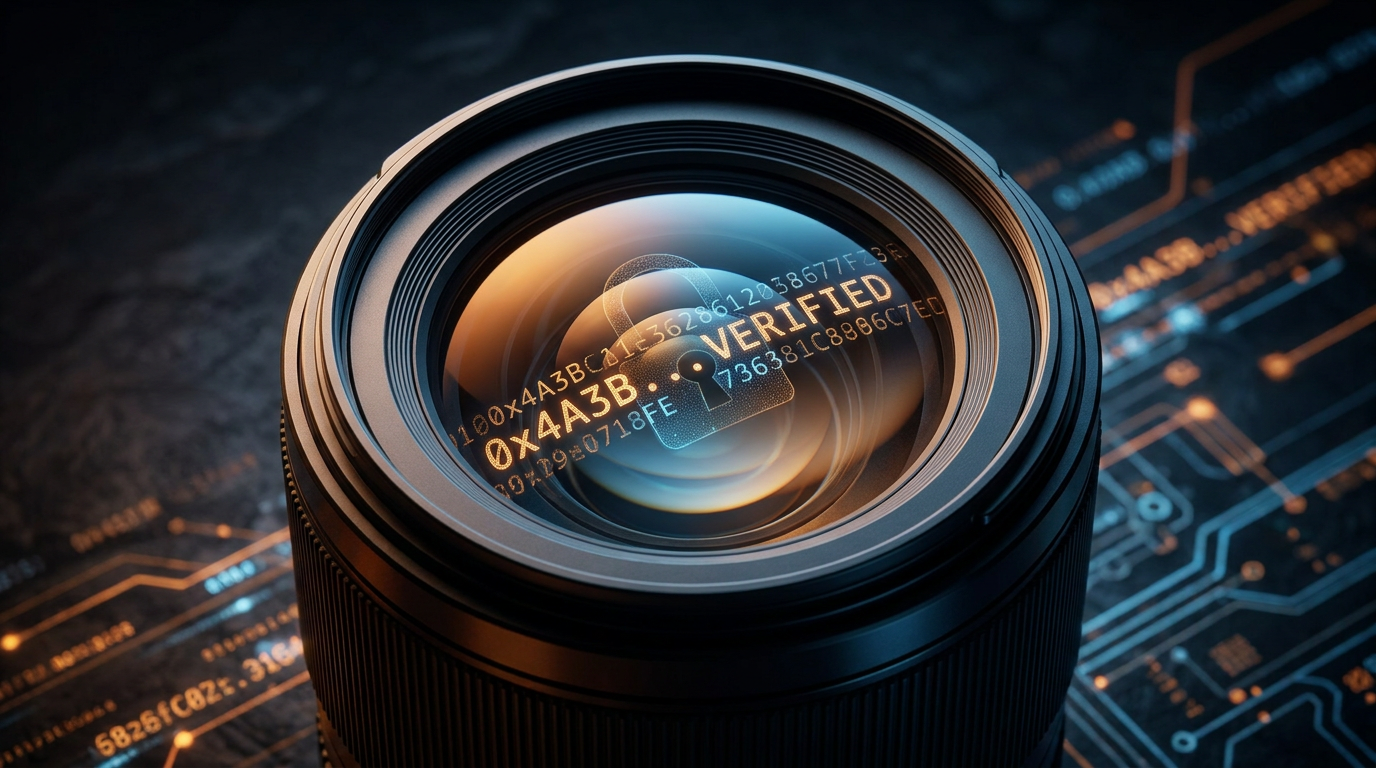
C2PA operates as an open technical standard that embeds verifiable provenance metadata directly into digital files. Think of it as a tamper-evident nutrition label for digital media. It records who created the content, when and where it was captured, what tools were used, and whether generative AI was involved in its creation or modification. The mechanism relies on established cryptographic security rather than proprietary black boxes. When a photo is taken with a C2PA-compliant camera—or an image is generated by an AI tool—the software compiles these assertions into a structured data block known as a manifest.[1][3][5]

Before C2PA, the digital photography industry relied heavily on EXIF and XMP metadata to store information about how an image was captured. While EXIF data records camera settings, location, and timestamps, it was never designed for security. It exists as plain text within the file and can be easily edited, stripped, or spoofed by anyone with basic photo editing software, making it entirely unreliable for provenance verification. C2PA addresses this critical vulnerability by wrapping the provenance data in a cryptographically signed manifest. While it often incorporates EXIF data as assertions within its structure, the C2PA standard ensures that any tampering with those assertions breaks the cryptographic seal, transforming easily manipulated metadata into a tamper-evident chain of custody.[5]
The success of this cryptographic chain relies heavily on hardware integration at the point of capture. Major camera manufacturers, including Sony, Leica, and Nikon, have begun building C2PA signing capabilities directly into their professional camera bodies. When a photographer presses the shutter on these devices, the camera's internal hardware immediately generates a cryptographic hash of the image data and signs it with a private key embedded in the camera's secure enclave. This creates an unbroken chain of trust from the physical sensor to the digital file. Furthermore, mobile manufacturers like Google are planning to integrate Content Credentials into smartphone cameras, democratizing access to verifiable media creation and ensuring that everyday users can prove the authenticity of their photos.[2]
This manifest is then digitally signed using a private key issued by a trusted Certificate Authority, and hard-bound to the file's pixel data using cryptographic hashes. As the file moves through the digital ecosystem, every subsequent edit adds a new, cryptographically signed entry to the manifest. If a photojournalist crops an image in Photoshop, the software logs the action. If an illustrator uses generative fill to alter a background, the AI involvement is permanently recorded in the file's history. Because the manifest is secured with X.509 digital certificates and SHA-256 hashes, any attempt to tamper with the file or alter its history breaks the cryptographic signature.[2][4][5]

This manifest is then digitally signed using a private key issued by a trusted Certificate Authority, and hard-bound to the file's pixel data using cryptographic hashes.
The alteration becomes immediately detectable to any C2PA-compliant viewer, signaling that the chain of custody has been compromised. This standard is no longer theoretical; it is actively reshaping how major platforms handle media. Social networks like Meta, TikTok, and LinkedIn now read C2PA manifests to automatically apply AI disclosure labels to uploaded content. By integrating these checks directly into the user interface, platforms are removing the friction of verification, allowing everyday users to see the provenance of an image with a single click or tap, fundamentally changing the baseline expectations for digital media consumption.[2][5][7]
When an image is exported from generative tools like ChatGPT, Google Gemini, or Adobe Firefly, the C2PA manifest includes a specific digital source type tag—often labeled as trained algorithmic media. Platforms scan for this exact cryptographic signal to enforce transparency, allowing users to make informed decisions about the media they consume. This automated tagging system is crucial because it removes the burden of disclosure from the user. Even if a creator attempts to pass off an AI-generated image as a real photograph, the embedded Content Credentials will trigger the platform's labeling system, ensuring that the synthetic origin remains visible to the public.[3][5]
However, the system faces a structural challenge known as metadata stripping. If a user takes a screenshot of a C2PA-protected image, or passes it through a non-compliant messaging app, the cryptographic manifest is often discarded. To address this vulnerability, the standard incorporates recovery mechanisms, such as cloud retrieval and soft bindings, which attempt to match the visual fingerprint of a stripped image back to its original provenance data. Still, the baseline assumption of the C2PA model is that the absence of credentials on a modern file should invite skepticism, shifting the burden of proof onto the content itself.[1][5][7]

The rapid adoption of C2PA in 2026 is not driven solely by industry goodwill; it is being heavily accelerated by global regulation. The European Union's AI Act, which becomes enforceable for transparency obligations in August 2026, mandates machine-readable labeling for AI-generated content. In the United States, the Digital Authenticity and Provenance Act of 2025 requires organizations to disclose their digital content verification practices. Meanwhile, California's SB 942, effective January 2026, demands visible labeling and imperceptible watermarking for AI systems used by state residents, creating a patchwork of legal requirements that platforms must navigate.[3][6]
While C2PA is not explicitly named in every piece of legislation, it has emerged as the most technically mature pathway for enterprise compliance. It provides the documented, auditor-verifiable trail that regulations demand, far outpacing alternative proposals like blockchain registration, which lacks the required machine-readable labeling formats. Despite its robust cryptography, security researchers and forensic specialists emphasize that C2PA has inherent limitations. The standard certifies the history of a digital file, but it does not inherently certify the truth of the physical scene it depicts, leaving a critical gap in high-trust environments.[4][6]

For high-stakes environments like journalism, insurance claims, and legal proceedings, a C2PA manifest proves that a photo was taken by a specific device at a specific time, but it cannot prove that the scene wasn't physically staged by the photographer. Consequently, the standard is increasingly being paired with forensic acquisition methodologies. Platforms like TrueScreen combine C2PA credentials with certified data acquisition protocols to meet the stringent authentication requirements of the Federal Rules of Evidence, bridging the gap between digital provenance and physical reality by locking down device sensors during capture.[4]
The transition to a provenance-based web represents a fundamental rewiring of digital trust. It moves society away from the exhausting task of constantly interrogating media for signs of forgery, and toward a system where authenticity is built into the infrastructure of the internet. By prioritizing opt-in transparency and cryptographic certainty, the C2PA standard is providing a crucial lifeline for digital truth. In an era defined by synthetic abundance, it ensures that human creativity, factual reporting, and historical records can still be definitively proven and preserved for future generations.[7]
How we got here
Feb 2021
Adobe, Arm, BBC, Intel, and Microsoft found the Coalition for Content Provenance and Authenticity (C2PA).
Jan 2022
C2PA publishes version 1.0 of its open technical specification.
2025
The US Digital Authenticity and Provenance Act is enacted, requiring organizational transparency.
Jan 2026
California SB 942 takes effect, mandating AI transparency and watermarking.
Aug 2026
The EU AI Act's Article 50 transparency obligations become fully enforceable.
Viewpoints in depth
Provenance Advocates
Believe cryptographic standards at the point of creation are the only scalable way to establish trust in digital media.
This camp, led by the C2PA coalition and major tech platforms, argues that the era of relying on AI to detect other AI is over. Because generative models improve exponentially, detection algorithms will always be one step behind. By shifting the paradigm to provenance—cryptographically signing content at the moment of capture or generation—they believe we can establish a verifiable baseline of reality. They view Content Credentials not as a restriction on creativity, but as a necessary infrastructure upgrade for the internet.
Forensic Verification Specialists
Argue that metadata alone is insufficient for high-stakes environments without certified acquisition protocols.
Legal experts, insurance adjusters, and forensic analysts point out a structural limitation in C2PA: it certifies the digital history of a file, but not the physical truth of the scene. A C2PA manifest can prove a photo was taken by a specific camera at a specific time, but it cannot prove the photographer didn't stage the event. For this camp, C2PA must be paired with strict forensic acquisition methodologies—such as certified capture apps that lock down device sensors—to meet the evidentiary standards required in courtrooms and claims processing.
Regulators & Policymakers
View machine-readable provenance as a necessary compliance tool to protect citizens from AI deception.
For government bodies in the EU and US, the explosion of synthetic media represents a critical threat to consumer protection and democratic processes. They are less concerned with the technical elegance of cryptography and more focused on accountability. By passing laws like the EU AI Act and California's SB 942, regulators are forcing platforms to adopt transparency standards. They view C2PA as the most mature vehicle to enforce these mandates, shifting the burden of proof from the consumer back to the platforms and creators.
What we don't know
- How frequently malicious actors will successfully use 'metadata stripping' (like screenshots) to launder AI-generated content past platform filters.
- Whether independent creators and open-source developers will be penalized by algorithms if they cannot afford C2PA-compliant hardware or software.
- How effectively platforms will educate users to understand the difference between 'unverified' content and 'fake' content.
Key terms
- C2PA
- The Coalition for Content Provenance and Authenticity, an industry group developing open standards for media provenance.
- Content Credential
- A tamper-evident digital 'nutrition label' attached to a file that displays its origin and edit history.
- Manifest
- The cryptographically signed data block embedded within a media file that records its chain of custody.
- Digital Provenance
- The verifiable history of a piece of digital content from its initial creation to its current state.
- X.509 Certificate
- A standard format for public key certificates used to cryptographically verify the identity of the tool or device that created the content.
- Soft Binding
- A recovery mechanism that attempts to match a file's visual fingerprint to its provenance data in the cloud if the metadata is stripped.
Frequently asked
Does C2PA detect deepfakes?
No. C2PA does not analyze content to guess if it is fake. Instead, it proves authenticity at the source by cryptographically recording how the file was made.
What happens if someone screenshots a C2PA image?
Taking a screenshot strips the cryptographic metadata. The resulting image will no longer carry Content Credentials, signaling to viewers that its provenance cannot be verified.
Can C2PA metadata be faked by bad actors?
Faking a C2PA manifest would require breaking standard cryptographic algorithms like SHA-256 and X.509, which is currently considered infeasible.
Is C2PA adoption required by law?
While the standard itself is voluntary, regulations like the EU AI Act and California SB 942 require AI transparency. C2PA has emerged as the primary technical method for companies to comply with these laws.
Sources
Source coverage
7 outlets
4 viewpoints surfaced







[1]C2PA OfficialProvenance Advocates
What is C2PA? Content Credentials Explainer
Read on C2PA Official →[2]C2PA ViewerProvenance Advocates
What is C2PA: Coalition for Content Provenance and Authenticity explained
Read on C2PA Viewer →[3]The Traceability HubProvenance Advocates
Digital Provenance as the Foundation of Verifiable Truth
Read on The Traceability Hub →[4]TrueScreenForensic Verification Specialists
C2PA Standard: History, Promises and Structural Limitations
Read on TrueScreen →[5]PrivyCleanPlatform Implementers
What is C2PA? Content credentials explained
Read on PrivyClean →[6]SoftwareSeniRegulators & Policymakers
US and EU AI Regulations: Why C2PA is the Compliance Standard for 2026
Read on SoftwareSeni →[7]Factlen Editorial TeamProvenance Advocates
Synthesis by Factlen editorial team
Read on Factlen Editorial Team →
Every angle. Every day.
Get meta stories with full source coverage and perspective breakdowns delivered to your inbox.