
U.S. and Iran Sign Historic Ceasefire Deal to End War and Reopen Strait of Hormuz
The United States and Iran have signed a 14-point memorandum of understanding that halts military operations, lifts the U.S. naval blockade, and triggers a 60-day window to negotiate a permanent nuclear settlement.
By Factlen Editorial Team

- U.S. Administration & Deal Advocates
- Views the MOU as a pragmatic success that reopens global trade and caps Iran's nuclear program without prolonged conflict.
- Defense Hawks & Skeptics
- Argues the deal surrenders U.S. leverage prematurely and rewards Tehran with economic relief while its nuclear infrastructure remains intact.
- Iranian State & Reformists
- Frames the agreement as a victory for Iranian resilience that secures vital economic lifelines, despite hardliner opposition.
- Israeli & Regional Security Analysts
- Expresses deep concern over the preservation of Iran's nuclear capabilities and the constraints placed on military operations in Lebanon.
What's not represented
- · Commercial shipping operators awaiting security guarantees
- · Lebanese civilians affected by the proposed ceasefire terms
Why this matters
This agreement ends a 110-day conflict that disrupted global shipping and energy markets. The reopening of the Strait of Hormuz will likely stabilize global oil prices, while the 60-day negotiation window sets the stage for a potential long-term shift in Middle Eastern security.
Key points
- The U.S. and Iran signed a 14-point MOU to end the 110-day war.
- The agreement initiates a 60-day window to negotiate a final nuclear settlement.
- Iran will down-blend its highly enriched uranium under IAEA supervision.
- The U.S. will lift its naval blockade and waive sanctions on Iranian oil exports.
- The ceasefire explicitly calls for an end to military operations in Lebanon.
- A proposed $300 billion reconstruction fund is contingent on a final deal.
The 110-day war between the United States and Iran has officially been paused following the signing of a 14-point memorandum of understanding (MOU) that promises to reshape the security architecture of the Middle East. U.S. President Donald Trump and Iranian President Masoud Pezeshkian finalized the agreement on Wednesday, with Trump signing the document during a dinner at the Palace of Versailles following the G7 summit. The MOU, which is now in effect, mandates an immediate and permanent termination of military operations on all fronts, the lifting of the U.S. naval blockade, and the reopening of the Strait of Hormuz to commercial shipping.[1][2]
The agreement triggers a 60-day countdown for Washington and Tehran to negotiate a comprehensive final settlement. During this window, Iran has agreed to down-blend its stockpile of highly enriched uranium under the supervision of the International Atomic Energy Agency (IAEA) and has reaffirmed a commitment not to procure or develop nuclear weapons. In exchange, the United States will issue immediate waivers for Iranian crude oil exports. U.S. officials dictated the terms of the MOU to reporters, emphasizing that the deal effectively requires Iran to rein in its regional proxy network, as the ceasefire explicitly includes a halt to hostilities in Lebanon.[2][3]
Despite the diplomatic breakthrough, the agreement has exposed deep political fault lines in Washington. Vice President JD Vance has emerged as the primary public advocate for the deal, defending the framework across a blitz of television interviews. Vance argued that the agreement secures American interests by ensuring Iran will never possess a nuclear weapon while simultaneously reopening a vital artery for the global economy. However, his prominent role has drawn intense fire from defense hawks within the Republican Party, who have characterized the MOU as a premature concession that leaves Iran's nuclear infrastructure largely intact and rewards Tehran with sanctions relief.[4][7]

The financial mechanics of the deal remain a point of fierce contention. Iranian state media and regional outlets have reported that the agreement guarantees the immediate release of billions in frozen assets, alongside a commitment from the U.S. and regional partners to establish a $300 billion reconstruction fund for Iran. The U.S. administration has pushed back strongly against this narrative. Vance and other senior officials clarified that while the reconstruction fund and broad sanctions relief are on the table, they are strictly contingent upon Iran fulfilling its nuclear obligations and fundamentally changing its regional behavior in the final, long-term agreement.[1][6][8]
The financial mechanics of the deal remain a point of fierce contention.
In the Middle East, the inclusion of Lebanon in the ceasefire terms has generated significant friction. The MOU declares a permanent end to military operations on all fronts, which U.S. officials say requires Hezbollah to cease its rocket attacks. However, Israeli officials have expressed defiance, noting that Israel is not a party to the U.S.-Iran agreement and does not feel bound by its constraints. Israeli leadership has maintained that military operations in Lebanon will continue until the threat from Hezbollah is neutralized, raising questions about how the U.S. and Iran will enforce the broader regional truce.[2][5]
Within Iran, the political establishment is navigating its own internal divisions over the ceasefire. Iranian Parliament Speaker Mohammad Bagher Ghalibaf, who digitally signed the document alongside Vance earlier in the week, publicly framed the agreement as a "record of U.S. failure" and a victory for Iranian resilience. Yet, hardline factions have erupted in protest, accusing the negotiating team of treason for agreeing to IAEA oversight and uranium dilution. Regional analysts suggest that despite the public backlash from hardliners, the ruling elite views the economic relief provided by the MOU as essential to the regime's survival following months of crippling blockades.[6][8]

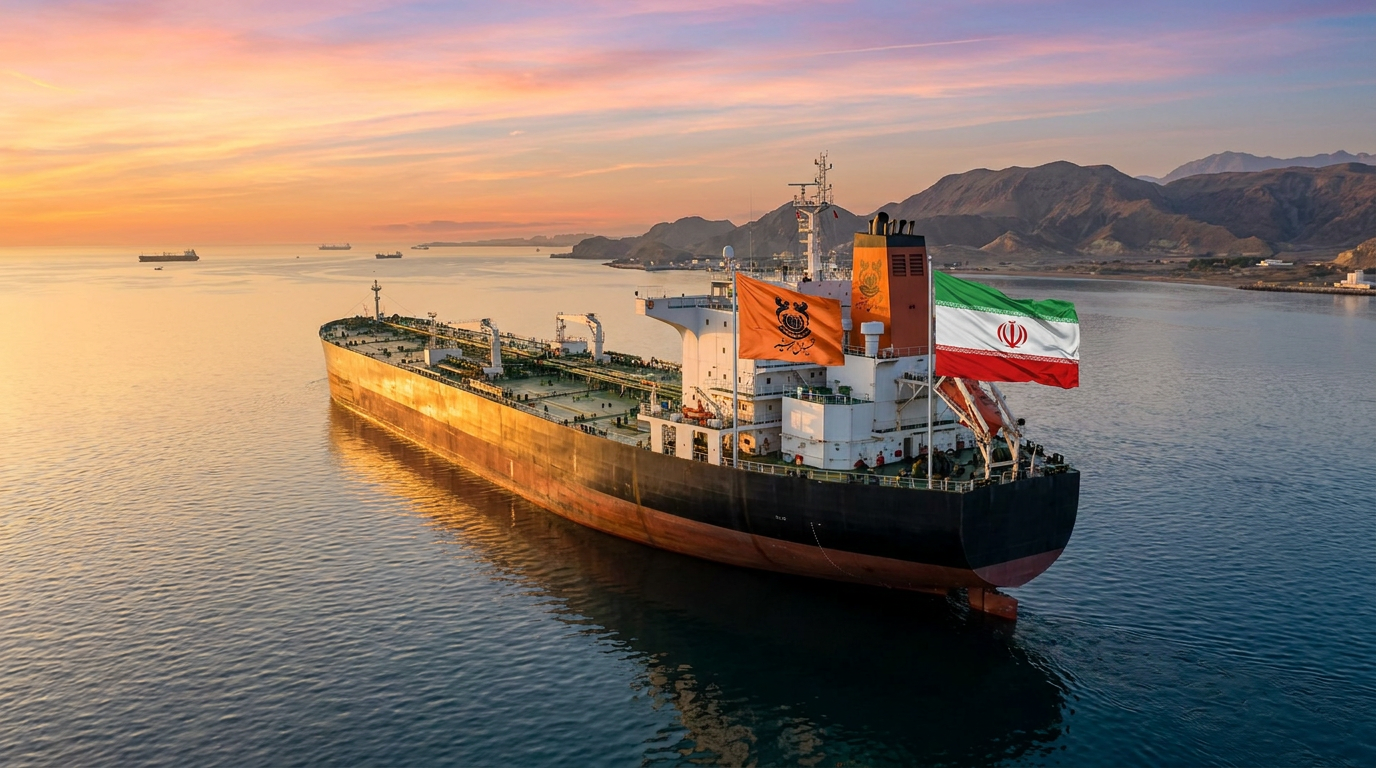
Global energy markets have watched the negotiations closely, as the Strait of Hormuz serves as the transit point for roughly one-fifth of the world's crude oil and liquefied natural gas. While the MOU mandates that Iran arrange safe, toll-free passage for commercial vessels for the next 60 days, shipping companies have remained cautious. Tanker traffic has not immediately returned to pre-war levels, as maritime operators await concrete security guarantees and clarity on whether the U.S. naval blockade has been fully dismantled in practice.[1][3]
The diplomatic focus now shifts to Switzerland, where a formal signing ceremony and the commencement of technical negotiations are scheduled for Friday. These talks will determine the specific mechanisms for IAEA inspections, the exact timeline for sanctions relief, and the ultimate disposition of Iran's nuclear program. If the two sides fail to convert the 14-point framework into a binding final treaty within the 60-day window, the region risks a rapid return to the hostilities that have defined the first half of the year.[2][3][7]
How we got here
Feb. 28, 2026
The United States and Israel launch military operations against Iran, citing the need to halt its nuclear program.
April 8, 2026
A temporary two-week ceasefire is brokered by Pakistan, though sporadic hostilities continue.
June 14, 2026
U.S. Vice President JD Vance and Iranian Parliament Speaker Mohammad Bagher Ghalibaf digitally sign a preliminary memorandum of understanding.
June 17, 2026
President Trump and President Pezeshkian formally sign the 14-point agreement, putting the ceasefire into effect.
June 19, 2026
A formal ceremony and the start of 60-day technical negotiations are scheduled to begin in Switzerland.
Viewpoints in depth
U.S. Administration
The administration views the deal as a pragmatic victory that reopens global trade routes while capping Iran's nuclear ambitions.
Proponents of the deal argue that it achieves the primary strategic goals of the conflict without requiring a prolonged, indefinite occupation or risking a wider regional war. By securing Iran's commitment to down-blend its highly enriched uranium under international supervision, the administration asserts it has neutralized the immediate nuclear threat. Furthermore, officials emphasize that the most significant economic rewards—such as the $300 billion reconstruction fund—are strictly withheld as leverage to ensure Iran's compliance during the 60-day technical negotiations.
Defense Hawks & Skeptics
Critics argue the agreement is a premature concession that rewards Iranian aggression and leaves its nuclear infrastructure intact.
Conservative lawmakers and defense analysts have sharply criticized the memorandum, characterizing it as an abandonment of the war's initial objectives. They argue that granting immediate oil sanctions waivers and lifting the naval blockade surrenders crucial American leverage before a final, verifiable nuclear treaty is secured. Skeptics also express concern that any financial relief will ultimately be funneled to Iran's regional proxy network, undermining the security of U.S. allies in the Middle East.
Iranian Leadership
Tehran frames the agreement as a testament to its resilience and a necessary step to secure vital economic relief.
Iranian officials have publicly portrayed the ceasefire as a failure of the U.S. military campaign, emphasizing that the regime survived the conflict and successfully forced Washington to the negotiating table. Domestically, the leadership is balancing the need for immediate sanctions relief—which is critical to stabilizing a battered economy—against fierce criticism from hardline factions who view the return of IAEA inspectors and the dilution of enriched uranium as an unacceptable capitulation.
Israeli Officials
Israel remains deeply skeptical of the framework, particularly its constraints on military operations in Lebanon.
Israeli leadership has distanced itself from the U.S.-Iran agreement, stressing that Jerusalem is not a signatory and retains the right to defend its borders. Officials are particularly alarmed by the inclusion of a Lebanon ceasefire in the MOU, arguing that Hezbollah must be militarily degraded regardless of diplomatic agreements in Geneva. Furthermore, Israeli defense analysts worry that the 60-day window allows Iran to preserve the core components of its nuclear program rather than dismantling them entirely.
What we don't know
- Whether Israel will abide by the Lebanon ceasefire provisions outlined in the U.S.-Iran agreement.
- How quickly commercial shipping companies will feel secure enough to resume normal transit through the Strait of Hormuz.
- The exact technical mechanisms the IAEA will use to verify the dilution of Iran's uranium stockpile.
Key terms
- Memorandum of Understanding (MOU)
- A formal, written agreement between two or more parties that establishes a framework for cooperation, often serving as a precursor to a legally binding treaty.
- Down-blending
- The process of mixing highly enriched uranium with natural or depleted uranium to reduce its concentration, rendering it unusable for nuclear weapons.
- IAEA
- The International Atomic Energy Agency, the United Nations watchdog responsible for monitoring and verifying national nuclear programs.
- Naval Blockade
- A military operation in which ships are used to cut off a specific area, preventing the passage of maritime trade and supplies.
Frequently asked
Is the war between the U.S. and Iran completely over?
The current agreement is a 60-day ceasefire and framework for negotiations. While military operations have halted, a permanent end to the war depends on finalizing a long-term treaty.
Will this agreement lower global gas prices?
The reopening of the Strait of Hormuz and the waiving of sanctions on Iranian oil are expected to increase global supply, which typically puts downward pressure on energy prices.
Is Iran receiving $300 billion immediately?
No. U.S. officials state that the proposed $300 billion regional reconstruction fund is strictly contingent upon Iran meeting all nuclear obligations in a final, future agreement.
Does this ceasefire apply to Israel and Hezbollah?
The U.S.-Iran agreement calls for an end to hostilities on all fronts, including Lebanon. However, Israel is not a signatory and has indicated it may continue operations against Hezbollah.
Sources
Source coverage
8 outlets
4 viewpoints surfaced








[1]CBS NewsU.S. Administration & Deal Advocates
Live Updates: Trump formally signs U.S.-Iran deal as questions linger about nuclear program, missiles
Read on CBS News →[2]The GuardianU.S. Administration & Deal Advocates
US officials reveal preliminary memorandum of understanding between Washington and Tehran
Read on The Guardian →[3]Council on Foreign RelationsIsraeli & Regional Security Analysts
Trump's Iran Deal: What We Know, What's Contested, and What Remains Unresolved
Read on Council on Foreign Relations →[4]The Washington PostDefense Hawks & Skeptics
Military hawks within the Republican Party are directing their ire over the still-unclear Iran deal toward the vice president
Read on The Washington Post →[5]The Times of IsraelIsraeli & Regional Security Analysts
US-Iran deal said set to halt regional hostilities, including in Lebanon, lift blockade
Read on The Times of Israel →[6]Institute for the Study of WarIsraeli & Regional Security Analysts
Iran Update Special Report, June 16, 2026
Read on Institute for the Study of War →[7]Associated PressU.S. Administration & Deal Advocates
Vance, skeptical of foreign wars, becomes the face of Trump's tentative deal to end war with Iran
Read on Associated Press →[8]Iran InternationalIranian State & Reformists
Vance says Iran deal text will be released latest by Friday
Read on Iran International →

Every angle. Every day.
Get news politics stories with full source coverage and perspective breakdowns delivered to your inbox.