
How Indigenous Culinary Tourism is Reshaping Global Travel
Travelers are increasingly abandoning generic dining in favor of Indigenous-led food experiences, driving a movement that champions ecological sustainability and cultural reclamation.
By Factlen Editorial Team
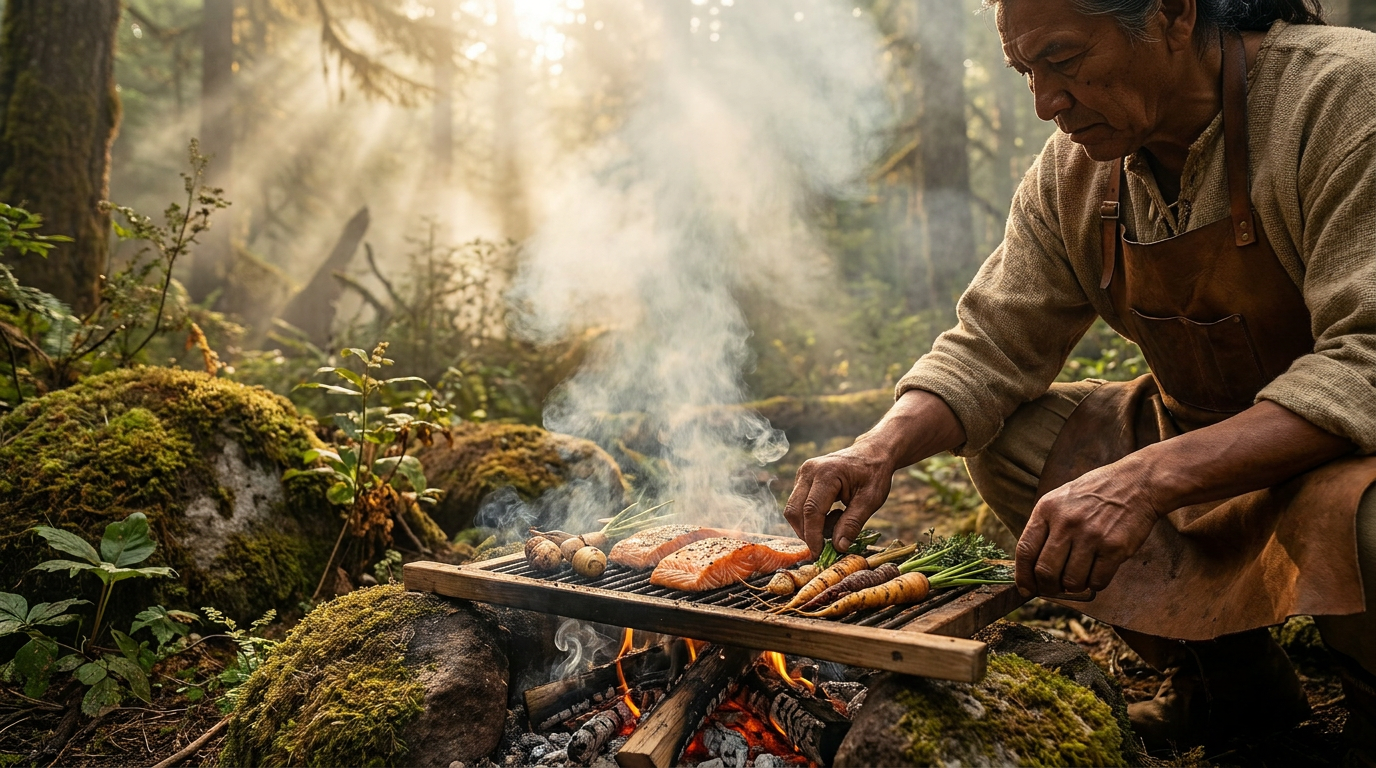
- Indigenous Chefs & Knowledge Keepers
- Focuses on cultural preservation, storytelling, and protecting traditional foodways from mass commodification.
- Tourism & Hospitality Industry
- Focuses on market demand, economic growth, and capturing the multi-trillion-dollar culinary travel market through authentic experiences.
- Academic & Heritage Researchers
- Focuses on decolonizing food systems, reviving native crops, and ensuring ecological sustainability.
What's not represented
- · Conventional agricultural producers
- · Budget travel operators
Why this matters
As culinary travel expands into a multi-trillion-dollar industry, the shift toward Indigenous-led experiences ensures that tourism dollars directly support local communities, preserve endangered ecosystems, and protect ancestral knowledge from commodification.
Key points
- Travelers are increasingly prioritizing authentic, hyper-local food experiences over generic dining options.
- Indigenous culinary tourism is surging globally, offering deep cultural immersion and storytelling.
- The movement provides economic sovereignty and job creation for Indigenous communities.
- Chefs are reviving native, climate-resilient crops to decolonize modern menus.
- A major challenge is scaling these experiences without depleting wild, foraged ingredients.
- Authenticity requires that these culinary experiences be strictly Indigenous-led.
The era of the generic hotel buffet is fading. Today’s travelers are increasingly organizing their itineraries around a destination's most authentic flavors, seeking deep cultural immersion through the plate. At the forefront of this shift is a profound surge in Indigenous culinary tourism—a movement that invites visitors to experience ancient foodways, regenerative agriculture, and hyper-local storytelling.[1][7]
The broader culinary travel sector is experiencing explosive growth, projected to reach $4.25 trillion globally by 2034. Industry data reveals that over 80% of travelers now consider food and beverage a primary factor when selecting a destination. But within this massive market, a specific desire for meaning is taking root. Travelers are trading mass-produced luxury for transparency, eager to understand the history of the land and the hands that harvested their meal.[1][7]
Indigenous culinary tourism offers a depth of connection that conventional dining cannot replicate. It is not merely about consuming a meal; it is an entire ecosystem encompassing ethical foraging, land stewardship, and cultural reclamation. By centering native ingredients and ancestral techniques, Indigenous chefs and knowledge keepers are redefining national food identities on their own terms.[6][7]

In Australia, this movement is illuminating a culinary heritage that spans 65,000 years. First Nations chefs are leading a renaissance of native ingredients, transforming them into modern gastronomic experiences. Chef Mindy Woods, a Bundjalung woman and prominent culinary voice, emphasizes that her culture does not exist within the four walls of a restaurant—it lives and breathes on the land.[2]
Through immersive experiences like "Karkalla on Country" in northern New South Wales, guests are invited to walk through native food forests. They smell, taste, and feel ingredients like finger limes, lemon myrtle, and wattleseed in their natural environment before these elements are woven into sophisticated dishes. This approach pairs ancient botanicals with modern culinary techniques, accompanied by storytelling from clan elders.[2]

A similar reclamation is unfolding across Canada, where demand for First Nations, Inuit, and Métis experiences has reached unprecedented levels. For decades, national tourism marketing relied heavily on generic wilderness tropes, but Indigenous leaders are now placing food sovereignty at the center of the visitor experience. The Indigenous Tourism Association of Canada has championed nation-based culinary strategies, recognizing that food protocols and histories vary drastically across different languages and territories.[3][6]
Chef Paul Commandant, a leading figure in Canada's Indigenous food scene, views this surge not as a passing trend, but as a foundational cultural shift. He notes that consumers are actively seeking locally-rooted dining, providing a rare opportunity for Indigenous entrepreneurs to reshape the culinary landscape. The goal is to move past narrow stereotypes—demonstrating that Indigenous cuisine extends far beyond wild rice and salmon to encompass a vast, diverse ecosystem.[6]
Chef Paul Commandant, a leading figure in Canada's Indigenous food scene, views this surge not as a passing trend, but as a foundational cultural shift.
Across the Atlantic, the African continent is witnessing a powerful movement to decolonize the menu and revive native agriculture through hospitality. Historically, colonial authorities and missionaries marginalized indigenous grains in favor of imported cereals, leading to the decline of highly nutritious, climate-resilient crops. Today, researchers estimate that over 2,000 native African grains and fruits are considered "lost" to the mainstream commercial market.[5]
However, a new generation of chefs and tourism boards are integrating these ancestral foods back into culinary education and high-end gastronomy. Ingredients like fonio, African rice, and Moringa are being celebrated not just for their nutritional density, but for their ability to tell the authentic story of the continent's diverse food cultures. This integration bolsters local economies and reinforces cultural bonds within communities.[5]

The defining characteristic of successful Indigenous culinary tourism is authenticity, which requires that experiences be strictly Indigenous-led. Tourism boards and regional authorities are increasingly recognizing that cultural heritage belongs to the community. True culinary tourism involves active participation and ownership by Indigenous people, ensuring that sacred traditions are shared appropriately and respectfully, rather than commodified by outside operators.[2][4]
This ownership extends to the environmental philosophy underpinning the food. Indigenous foodways are inherently regenerative, relying on seasonal cycles and sustainable harvesting. Unlike industrial agriculture, which extracts from the land, traditional foraging and farming practices are designed to maintain ecological balance, leaving the environment healthier for future generations.[6][7]
Yet, as global demand accelerates, the industry faces a critical challenge: scalability. Authentic Indigenous ingredients—such as wild game, foraged botanicals, and traditional grains—are not mass-produced, nor should they be. Forcing these delicate supply chains to meet industrial-scale tourist demand risks depleting natural resources and compromising the integrity of the food.[6]
To navigate this, Indigenous culinary leaders are innovating. They are focusing on high-value, low-impact tourism models that educate consumers about seasonality and ethical consumption. By keeping operations intimate and deeply connected to the local ecosystem, chefs can protect their supply chains while still offering profound, transformative experiences to visitors.[6][7]

Another structural hurdle is the seasonality of global travel. In regions with harsh climates, tourism businesses often over-rely on a short summer window, making year-round economic stability difficult for rural and Indigenous operators. Developing off-season culinary experiences—such as winter foraging workshops, storytelling dinners, and preserved-food tastings—is becoming a vital strategy for building resilient local businesses.[4][7]
Ultimately, the rise of Indigenous culinary tourism represents a powerful mechanism for economic sovereignty. When travelers invest in Indigenous-owned restaurants, farm tours, and foraging workshops, the capital remains within the community. This financial independence funds language revitalization, protects ancestral lands, and creates viable career paths for Indigenous youth.[3][7]
For the modern traveler, this evolution offers a more meaningful way to explore the world. It transforms tourism from a passive act of consumption into an active exchange of respect and knowledge. By pulling up a chair to the Indigenous table, visitors are not just tasting the history of a destination—they are participating in its vibrant, sustainable future.[1][7]
How we got here
Pre-colonial era
Indigenous communities globally maintain sustainable, hyper-local food systems and regenerative agricultural practices.
20th Century
Colonial agricultural policies marginalize native crops and traditional foraging practices in favor of imported commodities.
2019
The Indigenous Tourism Association of Canada launches nation-based culinary strategies to meet rising traveler demand.
2025
High-profile recognition, such as Indigenous chefs winning global gastronomy awards, brings native ingredients to the mainstream.
2026
Indigenous culinary tourism surges as a primary driver of the multi-trillion-dollar global food travel market.
Viewpoints in depth
Indigenous Culinary Leaders
Advocating for food sovereignty and the protection of ancestral ingredients.
For Indigenous chefs and knowledge keepers, culinary tourism is a vehicle for cultural reclamation. They argue that native foodways cannot be separated from the land or the stories of the people who have stewarded them for millennia. This camp prioritizes authenticity and sustainability over rapid expansion, warning that mass-producing wild game or foraged botanicals to meet tourist demand would replicate the extractive practices of industrial agriculture. Their focus is on intimate, education-driven experiences that leave the ecosystem intact.
The Global Tourism Industry
Viewing authentic food experiences as the primary driver of future travel growth.
Hospitality analysts and destination marketing organizations see a massive economic opportunity in the shift away from generic dining. With culinary travel projected to become a multi-trillion-dollar sector, industry leaders recognize that modern travelers are willing to pay a premium for hyper-local, meaningful experiences. This camp focuses on building capacity, funding infrastructure, and marketing these unique regional offerings to international visitors, aiming to boost local economies and extend visitor stays.
Heritage & Ecological Researchers
Focusing on the revival of native crops and the decolonization of global food systems.
Academic researchers and agricultural historians view Indigenous culinary tourism as a vital tool for reversing the damage of colonial food policies. By creating a high-value market for 'lost' native grains and traditional farming methods, tourism provides a financial incentive to restore biodiversity. This perspective emphasizes that integrating climate-resilient, indigenous crops back into the mainstream diet not only preserves cultural heritage but also offers a sustainable blueprint for global food security.
What we don't know
- How the industry will successfully balance the rising global demand for Indigenous cuisine with the ecological limits of ethical foraging.
- Whether mainstream hospitality brands will attempt to co-opt native ingredients without providing equitable compensation to Indigenous communities.
Key terms
- Indigenous Culinary Tourism
- Travel experiences centered on foraging, preparing, and consuming food that authentically represents and respects Indigenous cultures.
- Food Sovereignty
- The right of peoples to healthy and culturally appropriate food produced through ecologically sound and sustainable methods.
- Hyper-localism
- A sourcing philosophy where ingredients are grown, foraged, or produced in the immediate vicinity of where they are consumed.
- Decolonizing the Menu
- The movement to center native, pre-colonial ingredients and cooking methods over imported or historically imposed food systems.
Frequently asked
What makes a food tourism experience authentically Indigenous?
An authentic experience must be Indigenous-led, meaning the local community actively controls the development, storytelling, and delivery of the culinary offering.
Why can't traditional Indigenous foods be mass-produced?
Many native ingredients, such as wild game and foraged botanicals, rely on delicate, hyper-local ecosystems. Mass production would violate sustainable harvesting protocols and risk depleting natural resources.
How does this trend benefit local communities?
It provides direct economic sovereignty by keeping tourism dollars local, creates jobs, and incentivizes the preservation of ancestral knowledge, languages, and land stewardship practices.
Sources
Source coverage
7 outlets
3 viewpoints surfaced







[1]Hospitality Marketing InsightTourism & Hospitality Industry
Culinary Tourism Opportunities and Trends in 2026
Read on Hospitality Marketing Insight →[2]Range TravelIndigenous Chefs & Knowledge Keepers
Mindy Woods is shaping the future of Indigenous culinary tourism
Read on Range Travel →[3]WindspeakerTourism & Hospitality Industry
Developing a nation-based Indigenous culinary tourism strategy
Read on Windspeaker →[4]Indigenous Tourism AlbertaAcademic & Heritage Researchers
Authenticity and Guidelines in Indigenous Tourism
Read on Indigenous Tourism Alberta →[5]Inkanyiso JournalAcademic & Heritage Researchers
The integration of indigenous food into culinary education and tourism in Africa
Read on Inkanyiso Journal →[6]The Culinary Heritage FoundationIndigenous Chefs & Knowledge Keepers
A Defining Moment for Indigenous Cuisine
Read on The Culinary Heritage Foundation →[7]Factlen Editorial Team
Synthesis by Factlen editorial team
Read on Factlen Editorial Team →

Every angle. Every day.
Get travel stories with full source coverage and perspective breakdowns delivered to your inbox.