
Imagination Library Surpasses 314 Million Books as New Study Proves Global Literacy Impact
The philanthropic reading program has reached a massive new milestone, gifting over 3.4 million free books monthly. A newly released international study of 86,000 families confirms the initiative significantly closes early learning gaps before children even enter the classroom.
By Factlen Editorial Team
- Early Education Researchers
- Focuses on the empirical data showing how early book access closes pre-K vocabulary gaps and improves cognitive development.
- State and Local Policymakers
- Values the public-private cost-sharing model that allows states to provide universal literacy programs affordably.
- Participating Families
- Emphasizes the emotional and bonding benefits of receiving a personalized book in the mail.
What's not represented
- · Primary school teachers receiving these students
- · Children's book publishers and authors
Why this matters
Early childhood literacy is the strongest predictor of long-term academic and economic success. By removing cost barriers and delivering books directly to homes, this initiative is actively rewiring generational education outcomes on a global scale.
Key points
- The Imagination Library has officially surpassed 314 million books gifted globally as of spring 2026.
- The program currently mails over 3.4 million free, age-appropriate books to children every month.
- A new international study of 86,000 caregivers reveals that receiving just 10 books significantly boosts a child's vocabulary and phonological awareness.
- The initiative has successfully expanded to cover all 92 counties in Indiana, demonstrating the viability of its public-private funding model.
- The UK branch of the program recently celebrated gifting its seven-millionth book.
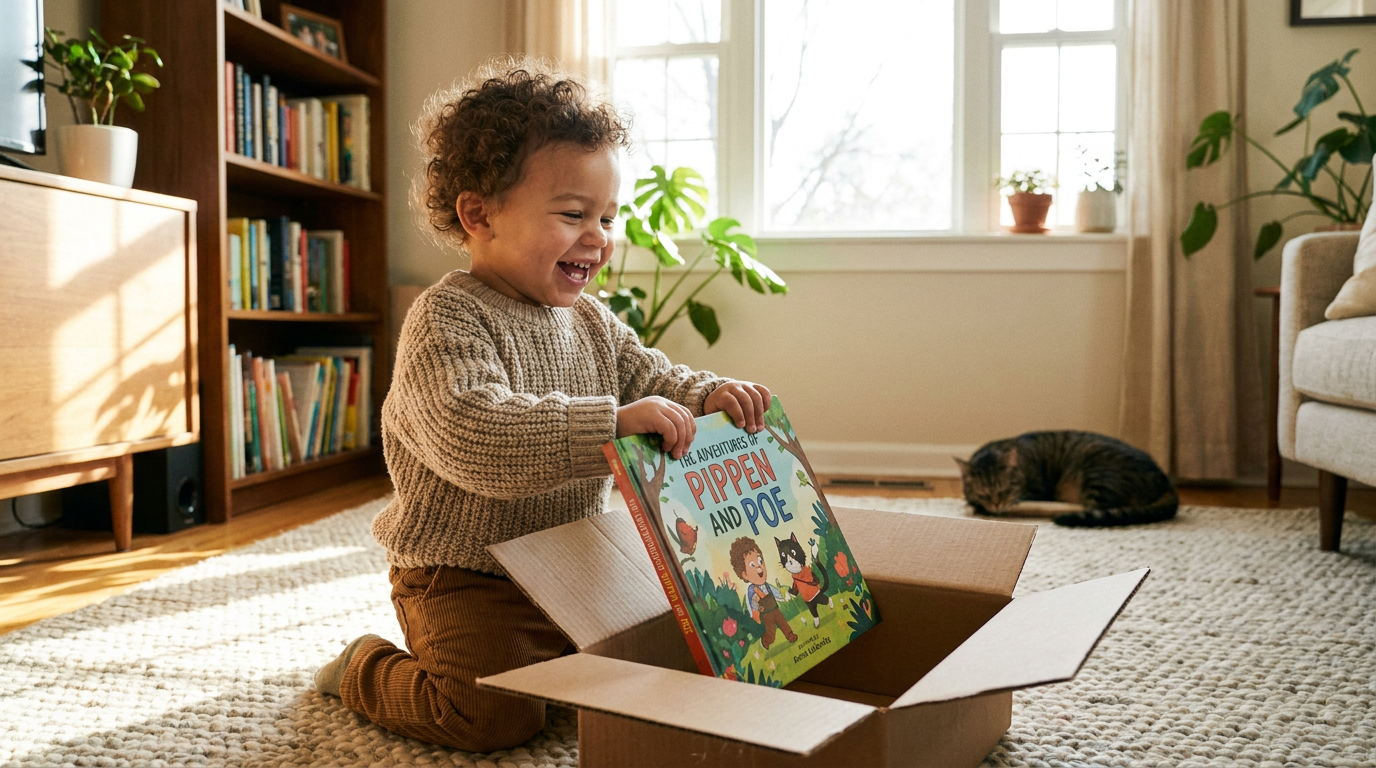
The Imagination Library has crossed a staggering threshold in the spring of 2026, surpassing 314 million free books gifted to children worldwide. The philanthropic initiative, which mails high-quality, age-appropriate books directly to children's homes, now dispatches more than 3.4 million books every single month.[1][5]
What began in 1995 as a localized effort in Sevier County, Tennessee, has evolved into the world's premier early childhood literacy program. The initiative was originally launched to honor a father who was unable to read or write, with the goal of ensuring that every child could experience the magic of books regardless of their family's income.[1][5]
The 2026 milestone coincides with the release of a groundbreaking international study that quantifies the program's profound impact on early childhood development. Led by researcher Dr. Claire Galea, the study represents the largest dataset ever collected on shared book reading, tracking more than 86,000 caregivers across five countries over a twelve-month period.[1][6]

The findings offer empirical proof of what educators have long suspected: consistent access to physical books fundamentally alters a child's developmental trajectory. According to the data, children enrolled in the program demonstrated significantly stronger early literacy skills, including advanced vocabulary development and heightened phonological awareness.[1]
Crucially, the research revealed that these cognitive benefits begin to materialize rapidly. After receiving just 10 books through the mail, children showed measurable improvements, helping to close educational gaps that often take root long before a child ever steps foot inside a kindergarten classroom.[1][6]
Crucially, the research revealed that these cognitive benefits begin to materialize rapidly.
Beyond raw literacy metrics, the Imagination Library acts as a catalyst for behavioral shifts within the home. The study highlighted that enrolled families were far more likely to establish consistent reading routines. Caregivers reported engaging in more interactive reading behaviors, such as discussing the illustrations and encouraging children to hold and explore the books themselves.[1]

The program's logistical scale is matched only by its unique funding model. The central foundation manages the overarching infrastructure, including the secure database, book selection, wholesale purchasing, and mailing logistics. Meanwhile, local community partners—ranging from rotary clubs to state governments—secure the funding to cover the wholesale cost of the books and postage.[2][5]
This public-private partnership has fueled massive state-level expansions across the United States. In April 2026, Indiana officials announced that the program had successfully expanded to cover all 92 counties and every ZIP code in the state. Backed by a combination of state budget allocations and local fundraising, the expansion was hailed as a major victory for early childhood education.[2][3]
The initiative's footprint extends far beyond American borders, operating in Canada, Australia, the Republic of Ireland, and the United Kingdom. In early 2026, the UK celebrated its own monumental achievement, crossing the seven-million-book mark since the program's introduction there in 2007.[4][5]

Local councils across the UK have embraced the program as a core pillar of their early years strategy. In Wandsworth, for example, local leaders hosted specialized story-time events to mark the milestone, noting that over 6,500 local families had signed up in just a few months, underscoring the immense demand from parents.[4]
As the Imagination Library approaches its 30th anniversary, its trajectory shows no signs of slowing. The combination of rigorous new data proving its efficacy and continuous geographic expansion has solidified the program as a gold standard in philanthropic intervention.[1][6]
By removing the cost barrier to book ownership and transforming reading into a monthly event of discovery, the initiative continues to rewire generational education outcomes. It stands as a testament to how targeted, consistent investments in early childhood can yield compounding returns for society—one joyful delivery at a time.[1][5][6]
How we got here
1995
The Imagination Library is launched in Sevier County, Tennessee, to foster a love of reading.
2000
The program begins its national replication, allowing communities across the United States to adopt the model.
2006
International expansion begins with the launch of the program in Canada, later adding the UK, Australia, and Ireland.
2023
The Imagination Library crosses the monumental milestone of 200 million books gifted globally.
Spring 2026
The program surpasses 314 million books and releases a landmark 86,000-family study proving its impact on early literacy.
Viewpoints in depth
Early Education Researchers
Focuses on the empirical data showing how early book access closes pre-K vocabulary gaps and improves cognitive development.
Academics and developmental psychologists emphasize the critical window of neuroplasticity in the first five years of life. For this camp, the 2026 study led by Dr. Claire Galea is a watershed moment because it provides a massive, 86,000-family dataset proving that physical book ownership directly correlates with phonological awareness. They argue that early interventions like the Imagination Library are the most cost-effective way to prevent long-term educational disparities.
State and Local Policymakers
Values the public-private cost-sharing model that allows states to provide universal literacy programs affordably.
Government officials and local community leaders view the program through the lens of economic return on investment. Because the central foundation absorbs the overhead and administrative costs, states and municipalities only pay the wholesale cost of the books and postage. Policymakers in states like Indiana and Montana argue this model allows them to achieve universal early literacy coverage at a fraction of the cost of traditional government-run programs.
Participating Families
Emphasizes the emotional and bonding benefits of receiving a personalized book in the mail.
For parents and caregivers, the value of the program extends beyond academic metrics. Families consistently report that the monthly arrival of a book addressed directly to the child creates a sense of excitement and eventfulness around reading. This camp highlights how the program helps establish a dedicated reading routine, transforming shared reading from a chore into a highly anticipated bonding experience.
What we don't know
- Whether the program will expand to non-English speaking countries in the near future.
- The exact long-term high school graduation rates of the 86,000 children tracked in the 2026 study, as they are still in early childhood.
Key terms
- Phonological Awareness
- The ability to recognize and manipulate the spoken parts of sentences and words, a crucial foundational skill for learning to read.
- Shared Book Reading
- An interactive experience where a caregiver and child look at and discuss a book together, actively engaging with the story and illustrations.
- Public-Private Partnership
- A collaborative funding and operational model between a government agency and a private organization to deliver a public service.
Frequently asked
Who pays for the books sent by the Imagination Library?
The central foundation covers the administrative overhead, database management, and book selection. Local community partners and state governments fund the wholesale cost of the books and the mailing fees.
What age group is eligible to receive the free books?
The program is designed for children from birth until their fifth birthday, providing them with age-appropriate books during their most critical developmental years.
Which countries currently participate in the program?
As of 2026, the Imagination Library operates in the United States, Canada, the United Kingdom, Australia, and the Republic of Ireland.
How many books has the program gifted in total?
By the spring of 2026, the Imagination Library had gifted over 314 million books globally, mailing approximately 3.4 million books every month.
Sources
Source coverage
6 outlets
3 viewpoints surfaced





[1]Dolly Parton OfficialEarly Education Researchers
Dolly Parton's Imagination Library Celebrates Spring Impact and Global Research Milestone
Read on Dolly Parton Official →[2]Mirror IndyState and Local Policymakers
Children in all 92 counties across the state can now get free books
Read on Mirror Indy →[3]Chalkbeat IndianaState and Local Policymakers
Imagination Library expands to all Indiana ZIP codes
Read on Chalkbeat Indiana →[4]Wandsworth Borough CouncilState and Local Policymakers
Wandsworth chosen to kick-off nationwide celebrations for Dolly Parton's Imagination Library
Read on Wandsworth Borough Council →[5]The Dollywood FoundationParticipating Families
A Free Book Gifting Program
Read on The Dollywood Foundation →[6]Factlen Editorial TeamEarly Education Researchers
Synthesis by Factlen editorial team
Read on Factlen Editorial Team →
Every angle. Every day.
Get entertainment stories with full source coverage and perspective breakdowns delivered to your inbox.