
U.S. and Iran Sign 14-Point Agreement to End 110-Day War and Reopen Strait of Hormuz
President Trump and Iranian President Masoud Pezeshkian have signed a memorandum of understanding to halt hostilities, lift the U.S. naval blockade, and begin 60 days of nuclear negotiations. The deal immediately reopens the Strait of Hormuz, though Vice President JD Vance faces fierce pushback from Republican hawks over the concessions.
By Factlen Editorial Team

- U.S. Administration
- Argues the deal averts a broader war, reopens global shipping, and creates a pragmatic framework to contain Iran's nuclear ambitions.
- Iranian Leadership
- Views the agreement as a victory that secures immediate economic relief, unfreezes assets, and asserts sovereignty over the Strait of Hormuz.
- Republican Hawks
- Criticizes the deal as a premature surrender of leverage that rewards Tehran without permanently dismantling its regime or nuclear infrastructure.
- Regional Allies & Israel
- Expresses cautious skepticism, demanding strict enforcement of Hezbollah's containment and permanent destruction of Iran's nuclear capabilities.
- Foreign Policy Analysts
- Focuses on the technical viability of the 60-day window and the historical challenges of enforcing nuclear compliance.
What's not represented
- · Commercial Shipping Industry
- · Lebanese Civilians
Why this matters
The 110-day conflict severely disrupted global energy markets and triggered a U.S. naval blockade. This agreement immediately lowers oil prices and averts a broader regional war, but its fragility means global shipping and Middle Eastern security remain on edge.
Key points
- The U.S. and Iran have signed a 14-point memorandum of understanding to end their 110-day military conflict.
- The agreement immediately lifts the U.S. naval blockade and reopens the Strait of Hormuz for commercial shipping.
- Both nations have 60 days to negotiate a final treaty regarding Iran's nuclear program and permanent sanctions relief.
- Vice President JD Vance is defending the deal against heavy criticism from Republican hawks who view it as a premature concession.
The United States and Iran have officially signed a 14-point memorandum of understanding, bringing an immediate halt to a 110-day conflict that has devastated global shipping and threatened to ignite a broader Middle Eastern war. President Donald Trump signed the document while attending a reception at the Palace of Versailles following the G7 summit, while Iranian President Masoud Pezeshkian signed remotely from Tehran. The agreement, mediated by Qatar and Pakistan, takes immediate effect and establishes a 60-day window for the two nations to negotiate a comprehensive final treaty.[1][2][8]
At the center of the preliminary pact is a mutual declaration to permanently terminate military operations on all fronts. Crucially, the text explicitly includes Lebanon, effectively requiring Tehran to rein in its proxy militia, Hezbollah, which has been engaged in heavy, sustained fighting with Israeli forces. In exchange for the cessation of hostilities, the United States has agreed to immediately lift its naval blockade of Iranian ports and issue sweeping waivers allowing the export of Iranian crude oil and petroleum products. This immediate de-escalation is designed to prevent the conflict from spiraling into a multi-front regional war, though officials acknowledge the truce remains highly fragile.[1][2][5]
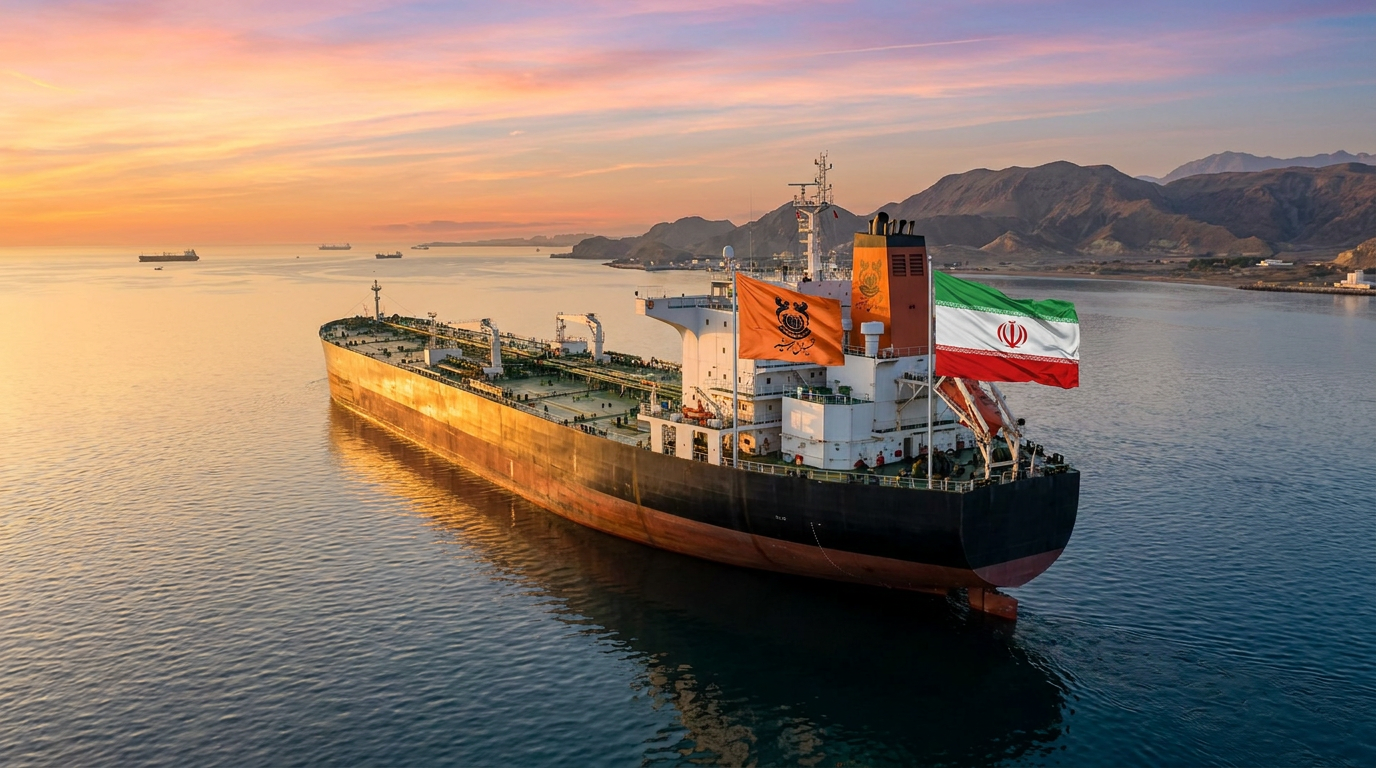
The immediate economic relief is designed to unclog the Strait of Hormuz, a vital maritime chokepoint that handles nearly one-fifth of the world's oil supply. Under the terms of the memorandum, Iran must clear the waterway of technical and military obstacles and guarantee toll-free passage for commercial vessels for at least 60 days. However, friction is already emerging over the strait's long-term status; Iranian chief negotiator Mohammad Bagher Ghalibaf has stated publicly that Tehran intends to charge transit fees once the 60-day grace period expires, a condition the U.S. has previously rejected. The safe passage of tankers remains the most immediate test of the agreement's viability.[1][5]

Global energy markets reacted swiftly to the de-escalation. The price of Brent crude oil fell 1.6 percent to $78.31 a barrel as traders anticipated the resumption of tanker traffic through the Persian Gulf. While prices remain elevated compared to pre-war levels, the immediate threat of a global energy shock has subsided, and commercial shipping companies are cautiously preparing to resume transits. Analysts note that the swift drop in oil prices provides a much-needed reprieve for the global economy, which had been bracing for a prolonged supply disruption and surging inflation.[2]
The most complex phase of the agreement lies ahead: a two-month sprint to resolve the status of Iran's nuclear program. The memorandum requires Iran to halt the procurement and development of nuclear weapons and establishes a framework for the International Atomic Energy Agency to supervise the downblending of Tehran's stockpile of 60-percent enriched uranium. U.S. officials have stressed that broader, permanent sanctions relief is strictly tied to Iran's compliance with these nuclear settlements. If Tehran fails to dilute its highly enriched uranium, the promised economic integration will be immediately revoked.[1][2][5]
The most complex phase of the agreement lies ahead: a two-month sprint to resolve the status of Iran's nuclear program.
Vice President JD Vance has emerged as the primary architect and public defender of the agreement, embarking on a media blitz to sell the pact to a skeptical American public. Vance has characterized the memorandum as a pragmatic framework that incentivizes Iran to abandon its nuclear ambitions and rejoin the global economy, provided it fundamentally changes its behavior. He has also pushed back against reports that the deal includes a guaranteed $300 billion reconstruction fund, clarifying that any future economic benefits would be driven by private investment rather than U.S. taxpayer dollars. Vance's prominent role marks a significant test of his foreign policy influence within the administration.[2][3][4][6]

Despite Vance's assurances, the agreement has triggered fierce backlash from the hawkish wing of the Republican Party. Prominent conservative commentators and lawmakers, including Senator Lindsey Graham, have criticized the administration for offering massive economic concessions without securing a permanent dismantling of the Iranian regime. Critics argue that lifting the naval blockade and waiving oil sanctions prematurely rewards Tehran and weakens U.S. deterrence in the region. They contend that the U.S. military had Iran's leadership under unprecedented pressure, and that pausing the campaign now allows the regime to regroup and rebuild its proxy networks.[3][7]
The geopolitical ripples of the deal extend heavily into Israel, which was not a party to the negotiations. While the agreement mandates a halt to Hezbollah's attacks, U.S. officials have confirmed that Israel retains the right to strike back if the militant group violates the ceasefire. Vice President Vance has expressed confidence that the Israeli government will eventually recognize the deal as a pathway to regional stability and formally buy into the framework. However, Israeli leadership remains deeply skeptical of any arrangement that leaves Iran's nuclear infrastructure partially intact and provides Tehran with a sudden influx of capital.[1][4]

The fragility of the current truce cannot be overstated. The memorandum explicitly notes that either side can walk away at any time if the 60-day technical negotiations collapse. President Trump has publicly warned that the United States is prepared to resume its bombing campaign and tighten economic pressure significantly if Iranian leadership fails to adhere to the agreed-upon terms. This built-in escape clause underscores the deep lack of trust between the two nations, framing the current ceasefire as a temporary pause rather than a permanent peace.[1][2]
Diplomats from both nations, along with mediators from Pakistan and Qatar, are now preparing to convene in Switzerland for the first round of technical talks. These negotiations will determine the exact mechanisms for uranium downblending, the schedule for sanctions relief, and the long-term security architecture of the Strait of Hormuz. As the 60-day clock begins ticking, the international community watches closely to see if this preliminary framework can evolve into the most consequential Middle Eastern treaty in decades, or if the region will once again slide back into open conflict.[1][5][8]
How we got here
March 2026
A military conflict erupts between the U.S., Israel, and Iran, leading to a U.S. naval blockade and the closure of the Strait of Hormuz.
June 14, 2026
The U.S. and Iran reach a preliminary framework to extend a temporary ceasefire and reopen the strait.
June 17, 2026
President Trump and President Pezeshkian officially sign the 14-point memorandum of understanding.
June 19, 2026
Technical negotiations are scheduled to begin in Switzerland to hash out the final details of the nuclear and economic agreements.
Viewpoints in depth
The U.S. Administration's View
The White House argues the deal is a pragmatic victory that averts a global economic crisis.
Led by Vice President JD Vance, the administration contends that the 110-day war had reached a point of diminishing returns. By securing an immediate ceasefire and reopening the Strait of Hormuz, the U.S. stabilizes global energy markets and prevents a worldwide depression. Officials emphasize that the deal is heavily conditional: Iran only receives permanent sanctions relief if it verifiably dismantles its nuclear weapons capabilities over the next 60 days.
Republican Hawks' View
Conservative critics believe the agreement prematurely surrenders U.S. military leverage.
Lawmakers like Senator Lindsey Graham and commentators within the GOP's hawkish wing view the immediate lifting of the naval blockade and oil sanctions as a dangerous concession. They argue that the U.S. had Iran's regime on the brink of collapse and that pausing the military campaign allows Tehran to regroup, rebuild its proxy networks like Hezbollah, and survive without making permanent, irreversible concessions regarding its nuclear program.
Iran's View
Tehran frames the agreement as a successful defense of its sovereignty and a victory over Western pressure.
Iranian leadership, including chief negotiator Mohammad Bagher Ghalibaf, has publicly characterized the U.S. concessions as a failure of Washington's military strategy. By securing immediate waivers for oil exports and the unfreezing of assets, Iran gains a vital economic lifeline. Furthermore, Tehran insists that the Strait of Hormuz will not return to pre-war conditions, asserting its right to eventually charge transit fees to foreign vessels.
What we don't know
- Whether Iran will actually attempt to charge transit fees in the Strait of Hormuz after the 60-day toll-free period expires.
- How Israel will respond if Hezbollah forces in Lebanon violate the terms of the ceasefire.
- The exact technical mechanisms that will be used to downblend Iran's 60-percent enriched uranium stockpile.
Key terms
- Memorandum of Understanding (MOU)
- A preliminary, non-binding agreement outlining the broad terms of a deal before a final, formal treaty is negotiated.
- Strait of Hormuz
- A narrow, strategically vital waterway between the Persian Gulf and the Gulf of Oman through which roughly 20 percent of the world's oil passes.
- Downblending
- The process of mixing highly enriched uranium with lower-grade material to reduce its purity, making it unusable for nuclear weapons.
- Naval Blockade
- A military operation in which ships are used to prevent vessels from entering or leaving a country's ports.
Frequently asked
Does the agreement permanently end the war?
The memorandum establishes an immediate ceasefire, but it is a preliminary framework. Both sides have 60 days to negotiate a final, binding treaty.
Will oil prices go down?
Prices have already begun to drop, with Brent crude falling to $78.31 a barrel as markets anticipate the reopening of the Strait of Hormuz.
Is Israel part of this agreement?
No. Israel was not a party to the negotiations, though the U.S. administration has expressed confidence that Israel will eventually support the framework.
What happens to Iran's nuclear program?
Iran has agreed to halt weapons development and allow the IAEA to supervise the downblending of its highly enriched uranium, with specific details to be finalized in the next 60 days.
Sources
Source coverage
8 outlets
5 viewpoints surfaced








[1]The GuardianIranian Leadership
US-Iran deal takeaways: reopening the strait of Hormuz, waived oil sanctions and Lebanon
Read on The Guardian →[2]CBS NewsU.S. Administration
Live Updates: Trump formally signs U.S.-Iran deal as questions linger about nuclear program, missiles
Read on CBS News →[3]The Washington PostRepublican Hawks
Vance, the face of deal to end Iran war, defies hawkish GOP critics
Read on The Washington Post →[4]The Times of IsraelRegional Allies & Israel
Vance 'confident' Israel will join deal, as US and Iran prepare for signing and talks on Friday
Read on The Times of Israel →[5]Council on Foreign RelationsForeign Policy Analysts
Trump's Iran Deal: What We Know So Far
Read on Council on Foreign Relations →[6]The New York TimesRegional Allies & Israel
Will the Iran Deal Last? JD Vance Is Betting His Future on It.
Read on The New York Times →[7]Fox NewsRepublican Hawks
MORNING GLORY: GOP’s top job now is rebuilding America’s defenses fast
Read on Fox News →[8]AxiosU.S. Administration
US, Iran reach deal to extend ceasefire, open strait
Read on Axios →

Every angle. Every day.
Get news politics stories with full source coverage and perspective breakdowns delivered to your inbox.