
How Agentic Workflows Are Transforming Enterprise Automation in 2026
As traditional robotic process automation reaches its limits, organizations are deploying goal-oriented AI agents capable of reasoning, using tools, and adapting to dynamic environments.
By Factlen Editorial Team
- Agentic Pioneers
- Advocates who view agentic AI as a fundamental replacement for brittle, legacy automation.
- Pragmatic Integrators
- Engineers and architects who view AI agents as a complement to, rather than a replacement for, traditional bots.
- Security & Governance Advocates
- Cybersecurity professionals focused on the risks of granting autonomous software access to enterprise systems.
What's not represented
- · Frontline workers whose daily tasks are being automated
- · Legacy RPA software vendors facing market disruption
Why this matters
For the past decade, automation has been limited to highly repetitive, predictable tasks. The rise of agentic AI means computers can now reason through messy, unstructured workflows—fundamentally changing how businesses operate, reducing manual administrative burdens, and unlocking new levels of digital productivity.
Key points
- Agentic workflows are replacing rigid, instruction-based RPA bots with goal-oriented AI systems capable of reasoning and adapting to change.
- By utilizing computer vision and large language models, AI agents can process unstructured data like emails and dynamic web interfaces.
- Gartner projects that 40% of enterprise applications will feature integrated, task-specific AI agents by the end of 2026.
- To mitigate security risks, organizations are deploying agents within strict zero-trust frameworks and requiring human approvals for high-stakes decisions.
For the last decade, the digital assembly line of the modern enterprise has been powered by Robotic Process Automation (RPA). These software bots successfully digitized repetitive, high-volume tasks, moving structured data between legacy systems with speed and precision. But as organizations push to automate more complex operations in 2026, the limitations of traditional scripting have become impossible to ignore. The industry is now undergoing a fundamental architectural shift from instruction-based bots to goal-oriented 'agentic workflows,' enabling computers to handle the messy, unpredictable realities of modern business processes.[3][4][8]
The core vulnerability of traditional RPA is its inherent fragility. Bots operate on strict 'if this, then that' logic, relying heavily on underlying code selectors—such as HTML tags or XPaths—to navigate software interfaces. If a cloud application updates its user interface and moves a critical button by just a few pixels, the bot's hardcoded instructions become invalid, and the entire automated process grinds to a halt. This deterministic nature makes RPA highly effective for perfectly static environments, but incredibly expensive and labor-intensive to maintain when workflows or software ecosystems inevitably evolve.[4][5]
Agentic AI fundamentally rewrites this rigid architecture. Instead of requiring a human developer to meticulously map out every single click, scroll, and keystroke, agentic systems operate entirely on intent. A user simply provides a high-level goal, such as 'log into the enterprise resource planning system, cross-reference the attached invoice against our purchase orders, and process the payment for our newest vendor.' The AI agent, powered by a large language model acting as its reasoning engine, interprets the objective and dynamically determines the necessary sequence of steps in real time.[3][4][8]

This unprecedented autonomy is driven by a continuous cognitive loop. When an agent receives a goal, it observes its current digital environment, reasons about the best next step, selects a specific software tool to use, and observes the result of its action. If a step fails—perhaps a login portal requires an unexpected secondary verification or a file is missing—the agent does not simply crash and throw an error code. It reflects on the failure, adjusts its approach, and tries an alternative path to reach the objective, functioning as a loop rather than a straight line.[3][6]
To interact seamlessly with legacy software and modern web applications, modern AI agents are increasingly abandoning rigid code selectors in favor of advanced computer vision. Much like a human employee sitting at a desk, the agent visually 'sees' the user interface, identifying a 'Submit' button by its physical appearance and context on the screen rather than searching for its underlying code tag. This visual adaptability allows agents to navigate remote desktop environments, virtual machines, and dynamic web applications that have historically baffled traditional automation bots.[4]
Beyond simply navigating interfaces more effectively, agentic workflows unlock a massive reservoir of previously inaccessible information: unstructured data. Traditional automation requires neat, standardized spreadsheets and rigid forms to function. However, industry analysts estimate that roughly 80% of all enterprise data is trapped in messy, unstructured formats like email threads, chat logs, complex contracts, and scanned images. Because they lack reasoning capabilities, traditional bots have historically been blind to this vast majority of corporate knowledge, forcing human workers to manually extract and structure the data before automation can take over.[4]
Beyond simply navigating interfaces more effectively, agentic workflows unlock a massive reservoir of previously inaccessible information: unstructured data.
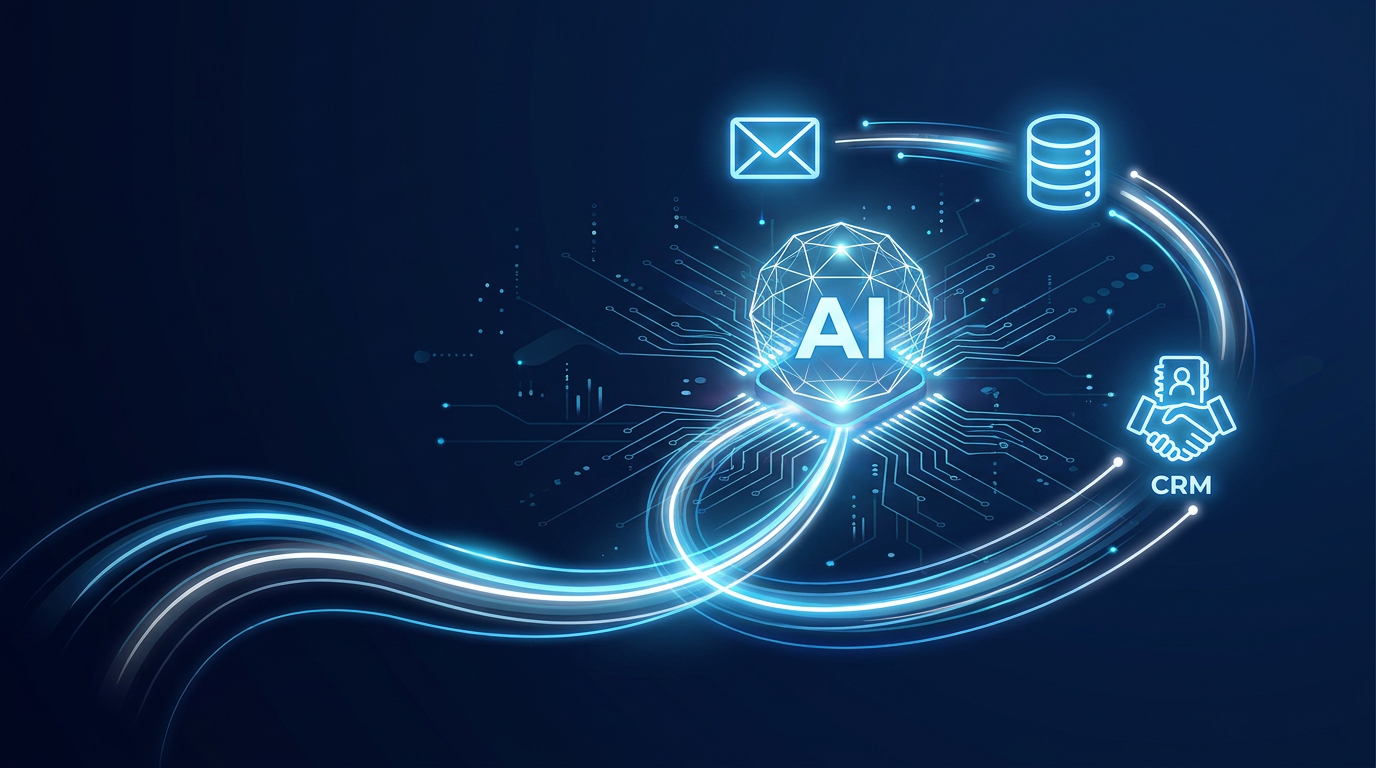
An AI agent bridges this critical gap by applying contextual reasoning to chaos. While an RPA bot might only be capable of moving an email attachment from an inbox to a specific server folder, an agentic workflow can read the body of the email, recognize that a high-value customer is frustrated about a delayed shipment, extract the relevant order number, categorize the complaint in the CRM, and draft a personalized resolution for a human supervisor to review. This shifts the technology from merely executing tasks to actually resolving problems end-to-end.[4][8]
The market adoption of these intelligent systems is accelerating at a breakneck pace. According to projections from Gartner, 40% of all enterprise applications will feature integrated, task-specific AI agents by the end of 2026—a massive leap from less than 5% just a year prior. Researchers at MIT Sloan note that the 'agentic AI age is already here,' with major software vendors embedding these autonomous capabilities directly into their platforms to help organizations automate complex, multi-step procedures without requiring extensive custom development.[1][2]

Despite the overwhelming momentum, automation experts caution against viewing agentic AI as a wholesale, immediate replacement for traditional RPA. For highly regulated, perfectly predictable, and high-volume tasks—such as migrating millions of standardized records between two legacy databases—deterministic bots remain significantly faster, cheaper, and easier to govern. An AI agent's ability to reason introduces slight latency and higher computational costs that are entirely unnecessary for simple, repetitive data entry where the rules never change. In these narrow use cases, the rigid predictability of a script is actually a feature, not a bug, ensuring absolute consistency at scale.[5]
Consequently, the most sophisticated enterprise architectures emerging in 2026 are hybrid systems that leverage the strengths of both technologies. In these environments, AI agents act as the 'brains' of the operation, handling variable inputs, interpreting unstructured data, and making complex judgment calls. Once the agent has structured the data and decided on a course of action, it hands off the final, high-speed execution to traditional RPA bots—the 'hands' of the operation—creating a seamless pipeline from unstructured chaos to deterministic execution.[4][5]
This delegation of authority does, however, introduce entirely new security paradigms. Giving autonomous software the ability to execute actions across multiple business systems creates what cybersecurity professionals refer to as 'non-human identities'. A recent industry poll found that 48% of security experts consider agentic AI a top attack vector for 2026, expressing concern that compromised agents with elevated permissions could bypass traditional access controls or execute unauthorized actions at machine speed. The fear of 'shadow AI'—where employees deploy unsanctioned agents without proper oversight—has forced IT departments to rapidly rethink their identity and access management strategies.[6]
To mitigate these inherent risks, organizations are adopting strict zero-trust frameworks and utilizing emerging standards like the Model Context Protocol (MCP). These protocols ensure that agents operate within tightly defined boundaries, restricting their access to only the specific tools and databases required for their assigned goals. Furthermore, enterprise deployments mandate human-in-the-loop approvals for any high-stakes or irreversible decisions, maintaining comprehensive audit trails of every action the agent takes to ensure compliance and traceability. By treating agents as digital employees subject to the same strict governance as human workers, companies can harness their productivity while containing their potential blast radius.[6][7]

Ultimately, the transition from RPA to agentic workflows represents a profound maturation of digital operations. By combining the adaptive reasoning of large language models with the execution capabilities of enterprise software, organizations are building resilient systems that adapt to change rather than breaking under it. The era of micromanaging computers step-by-step is coming to a close, replaced by a new paradigm where we can simply ask them to work, freeing human employees to focus on strategy, creativity, and connection.[4][7]
How we got here
2010s
Robotic Process Automation (RPA) becomes the enterprise standard for automating repetitive, high-volume digital tasks.
2023
Early generative AI models demonstrate the ability to reason and use basic tools, sparking interest in autonomous agents.
2025
Major software vendors begin embedding agentic capabilities directly into CRM and ERP platforms.
2026
Agentic workflows move into mainstream enterprise production, shifting automation from instruction-based scripts to goal-oriented reasoning.
Viewpoints in depth
Agentic Pioneers
Advocates who view agentic AI as a fundamental replacement for brittle, legacy automation.
This camp argues that traditional Robotic Process Automation (RPA) has reached its limits. Because RPA relies on rigid scripts and underlying code selectors, it breaks whenever a user interface changes or data becomes unstructured. Pioneers believe that by giving AI the ability to reason, use tools, and visually interpret screens, enterprises can finally automate the 80% of business processes that require contextual judgment, drastically reducing maintenance costs in the process.
Pragmatic Integrators
Engineers and architects who view AI agents as a complement to, rather than a replacement for, traditional bots.
While acknowledging the power of agentic reasoning, this group points out the economic and operational realities of enterprise scale. For highly predictable, high-volume tasks, deterministic RPA bots remain faster, cheaper, and easier to audit than large language models. Integrators advocate for a hybrid approach: using AI agents to handle messy, unstructured inputs and exception routing, while relying on traditional bots for the final, high-speed execution of structured data.
Security & Governance Advocates
Cybersecurity professionals focused on the risks of granting autonomous software access to enterprise systems.
This perspective highlights the dangers of 'non-human identities' operating with elevated permissions. If an AI agent is compromised or hallucinates a destructive action, the fallout can be severe. Security advocates stress that agentic workflows must be deployed within strict zero-trust frameworks, utilizing standardized protocols to restrict tool access and mandating human-in-the-loop approvals for any high-stakes or irreversible actions.
What we don't know
- How quickly legacy enterprises will be able to untangle their existing, brittle RPA architectures to implement agentic systems.
- The long-term impact on software pricing models as vendors shift from charging per user seat to charging per autonomous agent outcome.
- Whether open-source agentic frameworks will outpace proprietary, vendor-locked ecosystems in enterprise adoption.
Key terms
- Agentic Workflow
- A goal-directed AI system that dynamically decides the sequence of actions at runtime, rather than following a fixed, pre-programmed script.
- Robotic Process Automation (RPA)
- Software bots that automate repetitive, rule-based digital tasks by following strict instructions, often struggling when interfaces change.
- Computer Vision
- AI technology that allows systems to visually interpret and interact with user interfaces, rather than relying on underlying code selectors.
- Non-Human Identity
- Digital credentials and permissions granted to autonomous software agents to access and modify enterprise systems.
- Model Context Protocol (MCP)
- An open standard that provides AI systems with a secure, standardized way to connect to external tools and data sources.
Frequently asked
What is the difference between an AI agent and a chatbot?
While chatbots are designed to answer questions and generate text, AI agents are goal-directed systems that can execute multi-step workflows, use external software tools, and take actions with minimal human oversight.
Will agentic AI replace traditional RPA entirely?
Not entirely. While agents will handle complex and variable workflows, traditional RPA bots remain faster and cheaper for highly predictable, high-volume data entry tasks.
How do AI agents interact with existing software?
Agents interact through APIs, standardized frameworks like the Model Context Protocol (MCP), and computer vision, which allows them to visually 'see' and navigate user interfaces like a human.
What are the security risks of AI agents?
Because agents operate autonomously with system permissions, they create 'non-human identities' that could be exploited. Experts recommend strict zero-trust frameworks and human-in-the-loop approvals to mitigate these risks.
Sources
Source coverage
8 outlets
3 viewpoints surfaced








[1]GartnerAgentic Pioneers
Gartner Predicts 40% of Enterprise Apps Will Feature Task-Specific AI Agents by 2026
Read on Gartner →[2]MIT SloanAgentic Pioneers
What agentic AI is and how it differs from traditional generative AI tools
Read on MIT Sloan →[3]TaskadeAgentic Pioneers
Agentic Workflows: How AI Agents Orchestrate Complex Tasks
Read on Taskade →[4]KognitosAgentic Pioneers
Replacing RPA with AI Agents for Complex Workflows
Read on Kognitos →[5]MediumPragmatic Integrators
AI Agents vs RPA: Can Computer Use Agents Replace RPA Bots?
Read on Medium →[6]VirtidoSecurity & Governance Advocates
Understanding Agentic Workflows and Levels of Autonomy
Read on Virtido →[7]Automation AnywhereAgentic Pioneers
Agentic Workflows: How AI Agents Orchestrate Complex Tasks
Read on Automation Anywhere →[8]Factlen Editorial TeamPragmatic Integrators
Synthesis by Factlen editorial team
Read on Factlen Editorial Team →

More in ai
See all 7 stories →AI Transparency
Does AI Watermarking Actually Work? The Evidence Pack
7 sources

Local AI
How Local LLMs Work: The Shift to Running AI on Your Own Hardware
7 sources

Healthcare AI
Medical AI Moves from Hype to Practice, Saving Clinicians Weeks of Time and Driving New Breakthroughs
9 sources

Local AI
How to Run Local AI Models on Your Own Hardware
8 sources
Every angle. Every day.
Get ai stories with full source coverage and perspective breakdowns delivered to your inbox.