
U.S. Gas Prices Fall Below $4 Following $300 Billion Strait of Hormuz Agreement
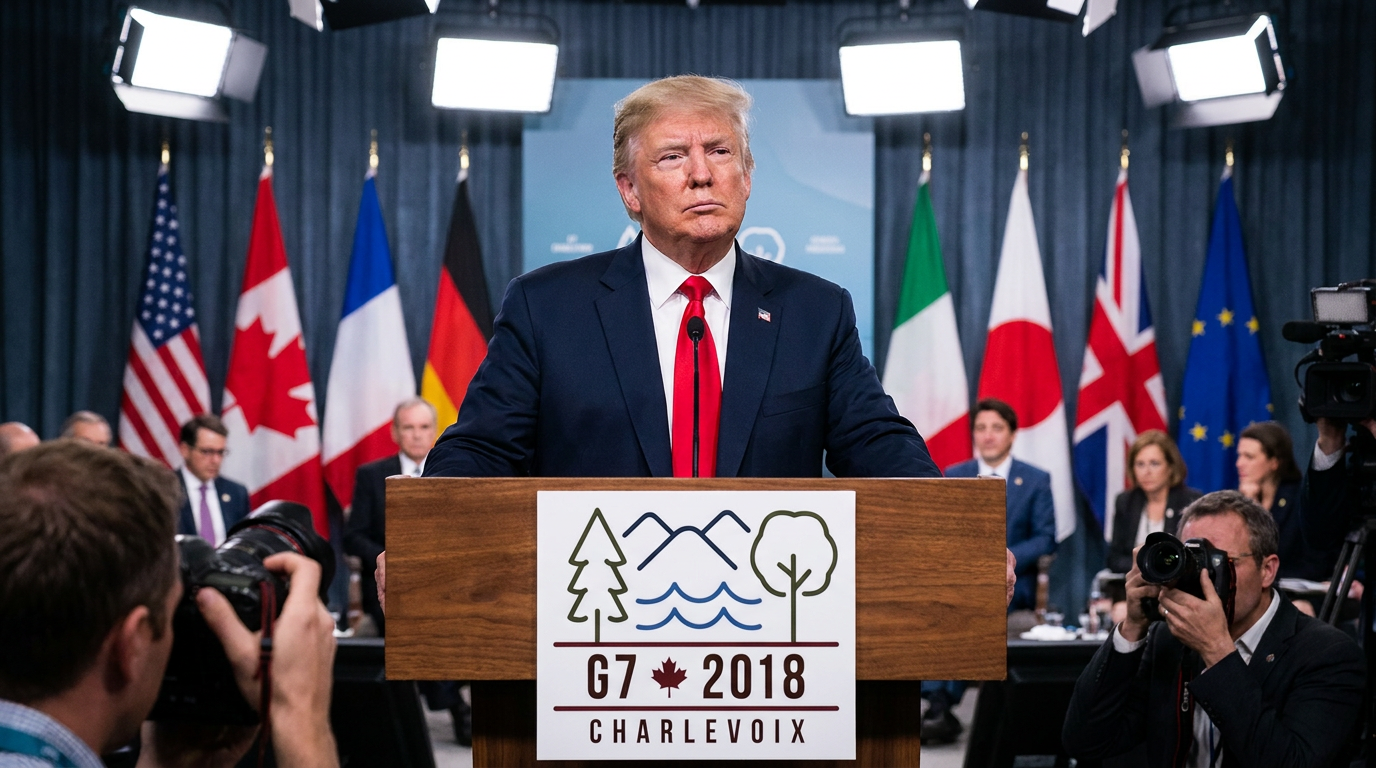
Average U.S. gasoline prices have dropped below $4 a gallon for the first time in months after the U.S. and Iran reached a landmark agreement to reopen the Strait of Hormuz. The deal, which includes a controversial $300 billion financial component, was defended by President Trump during a marathon G7 press conference.
By Factlen Editorial Team
- Administration & Allies
- Argues that the $300 billion is a necessary and worthwhile cost to avoid a broader war and restore global economic stability.
- Foreign Policy Hawks
- Views the $300 billion concession as a dangerous capitulation that rewards aggression and funds a geopolitical adversary.
- Market Analysts
- Focuses strictly on the return of oil supply, noting that the open strait successfully cools inflation and lowers consumer costs.
What's not represented
- · Iranian domestic media
- · Environmental groups tracking shipping emissions
Why this matters
The reopening of the Strait of Hormuz immediately eases global energy bottlenecks, lowering transportation and fuel costs for American households just in time for summer. However, the $300 billion financial concession to Iran sets up a massive domestic political battle over the cost of securing global shipping lanes and the precedent it sets for international diplomacy.
The reopening of the Strait of Hormuz has delivered immediate economic relief to American drivers, with average U.S. gasoline prices falling below $4 a gallon for the first time in months. The drop follows a landmark agreement between the United States and Iran that ends a prolonged blockade of the critical global shipping chokepoint, easing fears of a prolonged energy crisis.[1][4]
The diplomatic breakthrough restores the unhindered flow of roughly a fifth of the world's daily oil consumption. Global energy markets reacted swiftly to the unblocking of the strait, sending crude oil futures tumbling. This wholesale drop has already begun translating directly into lower costs at the pump, providing a highly visible economic win for consumers who had been squeezed by elevated inflation.[3][8]

However, the economic relief comes with a steep and highly controversial diplomatic price tag. The finalized agreement includes a $300 billion financial component directed toward Iran, a figure that has immediately sparked intense domestic political fallout in the United States and overshadowed the positive economic data.[2][5]
President Donald Trump fiercely defended the agreement during a marathon press conference at the G7 summit. Facing aggressive questioning about the financial concessions, Trump engaged in a semantic defense of the $300 billion, arguing that the economic benefits of reopened trade routes and the avoidance of a broader regional war far outweigh the upfront costs of the deal.[2][6]
President Donald Trump fiercely defended the agreement during a marathon press conference at the G7 summit.
The sheer scale of the financial component has drawn sharp criticism from both fiscal conservatives and foreign policy hawks in Washington. Critics argue that injecting $300 billion into the Iranian economy rewards hostile actions, essentially paying a ransom to secure international waters, and sets a dangerous precedent for future maritime blockades.[5]

Despite the political uproar, the immediate economic data provides a stark contrast. The energy sector had been heavily constrained by the Hormuz closure, driving up inflation metrics across the board and straining household budgets. The sudden influx of previously trapped oil supply is expected to have a cooling effect on broader inflation heading into the summer driving season.[1][7]
International allies at the G7 largely welcomed the de-escalation, prioritizing the stabilization of global energy markets over the specifics of the bilateral financial arrangement. European nations, which are highly sensitive to Middle Eastern energy disruptions and rely heavily on the strait, have signaled broad support for the resolution.[6][8]

The administration now faces the dual challenge of enforcing the terms of the open strait while managing the domestic political fallout of the $300 billion transfer. As gas prices continue to stabilize, the debate in Washington will likely shift from the immediate relief at the pump to the long-term strategic implications of the deal and its impact on future geopolitical negotiations.[4][7]
How we got here
Early 2026
Tensions escalate, leading to a blockade of the Strait of Hormuz and a spike in global oil prices.
Spring 2026
U.S. average gasoline prices surge well above $4 a gallon, straining household budgets.
June 2026
The U.S. and Iran finalize a landmark agreement to reopen the strait, including a $300 billion financial component.
June 18, 2026
Gas prices officially fall below $4 a gallon as President Trump defends the deal at the G7 summit.
Viewpoints in depth
The Administration's View
The deal is a pragmatic victory that prevents war and saves consumers money.
Proponents of the agreement, led by the administration, argue that the $300 billion price tag is a fraction of what a prolonged regional conflict would cost the United States in both military expenditures and economic devastation. By securing the Strait of Hormuz diplomatically, they point to the immediate drop in gas prices as proof that the deal delivers tangible benefits to American citizens while stabilizing global markets.
Foreign Policy Critics
The financial concession sets a dangerous precedent and funds a geopolitical rival.
Critics view the $300 billion transfer as an unacceptable capitulation. They argue that paying such a massive sum to end a blockade effectively incentivizes future disruptions of international waters. Furthermore, hawks express deep concern that the influx of capital will be used by Iran to fund regional proxies and expand its military capabilities, ultimately making the Middle East more volatile in the long run.
Energy Market Analysts
The focus is purely on the restoration of supply and the cooling of inflation.
For market analysts and economists, the political optics of the $300 billion are secondary to the macroeconomic relief. The reopening of the strait removes a massive risk premium that had been baked into crude oil prices. Analysts note that this sudden increase in available supply will not only keep gas prices below $4 for the summer driving season but will also have a cascading effect on lowering transportation and manufacturing costs globally.
What we don't know
- How the $300 billion will be structured, transferred, or monitored.
- Whether the drop in gas prices will be sustained through the peak summer driving season.
- How the agreement will impact broader U.S.-Iran diplomatic relations beyond maritime security.
Key terms
- Strait of Hormuz
- A narrow, strategically important waterway in the Middle East that serves as the primary export route for oil from the Persian Gulf.
- G7 Summit
- An annual meeting of leaders from seven of the world's advanced economies to discuss global economic, security, and energy issues.
- Crude Oil Futures
- Financial contracts in which buyers agree to purchase oil at a set price on a future date, heavily influencing the current price of gasoline.
Frequently asked
Why did gas prices drop below $4?
Gas prices dropped because the U.S. and Iran reached an agreement to reopen the Strait of Hormuz, allowing trapped global oil supplies to flow freely again.
What is the $300 billion for?
The $300 billion is a financial component of the agreement directed toward Iran, which the administration argues was necessary to secure the strait and avoid a regional war.
Why is the Strait of Hormuz important?
It is a critical maritime chokepoint between the Persian Gulf and the Gulf of Oman, through which roughly 20% of the world's daily oil consumption passes.
Sources
Source coverage
8 outlets
3 viewpoints surfaced








[1]NYTMarket Analysts
Average U.S. Gasoline Price Falls Below $4 for First Time in Months
Read on NYT →[2]Fox NewsAdministration & Allies
Trump defends war deal in marathon presser, using semantics on why Iran is getting $300 billion
Read on Fox News →[3]ReutersMarket Analysts
Oil prices slump as US-Iran pact reopens Strait of Hormuz
Read on Reuters →[4]BloombergMarket Analysts
Gasoline drops below $4 as Hormuz shipping lanes clear
Read on Bloomberg →[5]PoliticoForeign Policy Hawks
Trump faces conservative backlash over $300B Iran concession
Read on Politico →[6]CNNAdministration & Allies
Inside the G7: Trump defends controversial Iran peace agreement
Read on CNN →[7]WSJMarket Analysts
The Economic Ripple Effects of the Strait of Hormuz Resolution
Read on WSJ →[8]AP NewsAdministration & Allies
US and Iran finalize agreement to end Hormuz blockade
Read on AP News →

Every angle. Every day.
Get news politics stories with full source coverage and perspective breakdowns delivered to your inbox.