
Immigrant and First-Generation Chefs Sweep Top Honors at 2026 James Beard Awards
Houston's culinary scene dominated the 2026 James Beard Awards, with diverse and first-generation chefs taking center stage to celebrate immigrant contributions to American gastronomy.
By Factlen Editorial Team
- First-Generation Innovators
- Focuses on telling authentic cultural stories and elevating immigrant cuisines to the highest levels of fine dining.
- Industry Reformers
- Prioritizes mental health, fair wages, and sustainable farming practices as essential components of culinary excellence.
- Fine Dining Traditionalists
- Maintains that classic technique, execution, and high-end hospitality remain the ultimate benchmarks for industry awards.
What's not represented
- · Undocumented back-of-house workers
- · Independent farmers supplying the restaurants
Why this matters
The James Beard Awards set the trajectory for the $900 billion U.S. restaurant industry. This year's sweeping recognition of first-generation and DACA-recipient chefs signals a permanent shift in American fine dining, moving away from traditional Eurocentric models to elevate the diverse, community-driven cuisines that actually reflect the nation's demographics.
Key points
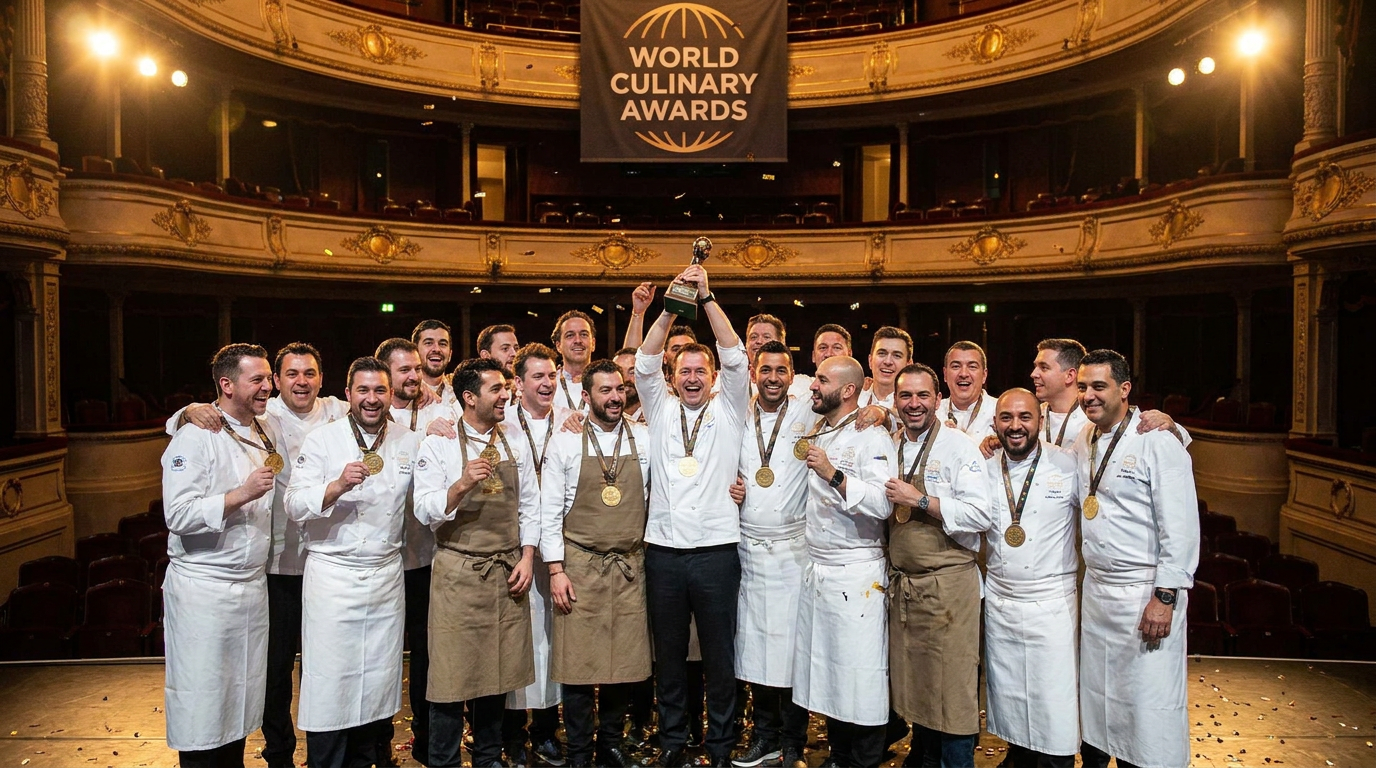
- The 2026 James Beard Awards celebrated a historic night for immigrant and first-generation chefs at Chicago's Lyric Opera.
- Adrian Torres of Maximo won Emerging Chef, delivering a powerful speech about his journey as a DACA recipient.
- Houston chefs Evelyn Garcia and Henry Lu of JŪN won Best Chef: Texas for their New Asian American cuisine.
- Philadelphia's Kalaya won Outstanding Restaurant, while New York's Lei was named Best New Restaurant.
- The ceremony also highlighted industry reform, honoring the Southern Smoke Foundation for its mental health and financial support of restaurant workers.
The 2026 James Beard Foundation Awards, held Monday night at Chicago's historic Lyric Opera, marked a triumphant celebration of immigrant and first-generation talent, with chefs from diverse cultural backgrounds sweeping the culinary world's highest honors. Often referred to as the "Oscars of the food world," the ceremony underscored a profound and permanent shift in American fine dining. Moving away from traditional Eurocentric models, the industry's most prestigious institution chose to elevate the diverse, community-driven cuisines that accurately reflect the nation's changing demographics. Before an audience of roughly 2,000 chefs, restaurateurs, and culinary figures, the evening became a powerful testament to the resilience and creativity of the immigrant communities that form the backbone of the hospitality sector.[1][6]
The defining moment of the night belonged to Adrian Torres, the 27-year-old executive chef of Maximo in West University Place, Texas, who captured the highly coveted national Emerging Chef award. A DACA recipient and first-generation college student whose parents immigrated from San Luis Potosí, Mexico, Torres delivered an emotional acceptance speech that resonated deeply throughout the auditorium. "I refuse to let fear be the headline," Torres told the crowd, directly addressing the anxieties often faced by undocumented workers in the industry. "I'm proud to be the son of immigrants. I'm proud to be a DACA recipient." His modern Mexican restaurant recently earned a Michelin Bib Gourmand after a major menu revamp that highlighted innovative heirloom masa applications, proving that authentic cultural storytelling can command the highest levels of critical acclaim.[6][7]

Houston's culinary scene continued its massive night with Evelyn Garcia and Henry Lu of JŪN taking home the award for Best Chef: Texas. The duo—Garcia, a Houston native of Salvadoran and Mexican heritage, and Lu, a Bronx-born Chinese American—were recognized for their New Asian American cuisine, which brilliantly bridges their shared backgrounds. In her acceptance speech, Garcia praised her hometown as a "city of dreams and hopes" built by first-generation creatives, while Lu dedicated the win to their immigrant parents who invested everything into their futures. Their victory marks Houston's third win in the Best Chef: Texas category in the last four years, cementing the city's status as a premier incubator for diverse culinary innovation.[3][5][7]
The national top honors further reflected this industry-wide embrace of diverse, community-rooted dining experiences. Kalaya, a vibrant Southern Thai eatery in Philadelphia, took home the evening's top prize for Outstanding Restaurant, beating out a highly competitive field of nominees. Meanwhile, Lei, a dynamic wine bar located in New York's Chinatown, was named Best New Restaurant. These victories signal that the James Beard Foundation, which is celebrating its 40th anniversary this year, is actively prioritizing discovery and authentic regional flavors over conventional white-tablecloth establishments. Even the Outstanding Bakery award went to Wild Crumb in Bozeman, Montana, proving that exceptional culinary craftsmanship is thriving far beyond the traditional coastal food capitals.[1][2][6]

The national top honors further reflected this industry-wide embrace of diverse, community-rooted dining experiences.
Beyond celebrating cultural diversity, the ceremony highlighted a growing movement among chefs to reform the industry's labor practices and environmental impact. Taylor Montgomery, who won Best Chef: Southeast for his work at Montgomery Sky Farm in Leicester, North Carolina, used his time on stage to advocate for systemic change in the food system. In a striking visual statement, Montgomery brought 15 of his farm employees onto the stage with him, acknowledging that true culinary excellence relies entirely on the often-invisible agricultural workers who cultivate the ingredients. His speech served as a necessary call to action for chefs to actively combat food waste and prioritize sustainable sourcing.[2][5]
The push for a healthier, more supportive hospitality industry was also recognized through the Foundation's Impact Award, which was given to the Southern Smoke Foundation. Co-founded by Houston chef Chris Shepherd, the organization was honored for its vital work in providing no-cost mental health care and emergency financial grants to food-and-beverage workers nationwide. Shepherd pledged to continue dedicating his life to the foundation, noting that improving the physical and mental well-being of industry professionals is essential for the culinary world's survival. This recognition reflects a broader cultural reckoning within restaurant kitchens, moving away from the toxic, high-stress environments of the past toward models of sustainable, empathetic leadership.[5]

While the evening heavily favored emerging voices and diverse cuisines, it also carved out space to honor the meticulous execution of fine dining traditionalists. Michael Tusk of San Francisco's Quince was named Outstanding Chef, a nod to his decades of unwavering commitment to culinary excellence and classic hospitality. In the Midwest, Jacob Potashnick of Chicago's Feld won Best Chef: Great Lakes for his intensely seasonal, ever-changing tasting menu. Potashnick, whose restaurant recently earned a Michelin star, dedicated his award to the local farmers who supply his kitchen, reinforcing the night's overarching theme of community interdependence. Together, these winners represent a holistic vision for the future of American dining—one that honors classic technique while boldly expanding the boundaries of whose stories get told on the plate.[4][6]
As the culinary community looks ahead, the 2026 James Beard Awards will likely be remembered as a watershed moment. By elevating DACA recipients, first-generation innovators, and advocates for agricultural and mental health reform, the Foundation has set a clear trajectory for the $900 billion U.S. restaurant industry. The message from Chicago's Lyric Opera was unmistakable: the pinnacle of American gastronomy is no longer defined solely by luxury ingredients or European techniques, but by the courage to cook one's heritage, protect one's workers, and nourish one's community.[2][5][6]
How we got here
1990
The James Beard Foundation establishes the Restaurant and Chef Awards to recognize culinary excellence.
2015
The awards ceremony moves from New York to Chicago, broadening its geographic focus.
2022-2025
The Foundation overhauls its voting process to emphasize diversity, equity, and inclusion following industry criticism.
June 2026
The 40th anniversary of the Foundation culminates in a historic sweep for first-generation and immigrant chefs.
Viewpoints in depth
First-Generation Innovators
Chefs using fine dining to elevate and preserve their cultural heritage.
For chefs like Adrian Torres and Evelyn Garcia, the kitchen is a platform for cultural validation. This viewpoint argues that American fine dining has historically marginalized immigrant cuisines as 'street food' or 'cheap eats.' By applying rigorous technique to heirloom ingredients—like Torres's nixtamalized masa or Garcia's New Asian American flavor profiles—these chefs are demanding that their heritage be treated with the same reverence and price point historically reserved for French or Japanese gastronomy.
Industry Reformers
Advocates pushing for sustainable labor and agricultural practices.
Figures like Taylor Montgomery and Chris Shepherd represent a growing faction that views culinary excellence as inseparable from human welfare. This camp argues that the traditional 'brigade' system of high-stress, low-pay kitchen culture is unsustainable. They advocate for transparent supply chains, living wages, and mental health support, insisting that a restaurant cannot be considered 'outstanding' if it exploits its workers or the environment to achieve its results.
Fine Dining Traditionalists
Culinary purists focused on classical technique and execution.
While celebrating the influx of new voices, traditionalists maintain that the core pillars of fine dining—impeccable service, flawless technique, and consistent execution—must remain the ultimate benchmark for awards. Winners like Michael Tusk of Quince embody this philosophy, proving that there is still a vital place for classic, highly refined hospitality that prioritizes the perfection of the craft above all else.
What we don't know
- How the increased national spotlight and subsequent surge in reservations will impact the operational capacity of smaller, newly awarded restaurants like Maximo and JŪN.
- Whether the James Beard Foundation's shift toward diverse, regional cuisines will permanently alter the criteria used by other major culinary arbiters, such as the Michelin Guide.
Key terms
- DACA
- Deferred Action for Childhood Arrivals, a U.S. policy protecting eligible immigrants who came to the country as children from deportation.
- Bib Gourmand
- A Michelin Guide distinction awarded to restaurants offering exceptionally good food at moderate prices.
- Heirloom Masa
- Traditional corn dough made through nixtamalization using native, non-GMO corn varieties, central to authentic Mexican cuisine.
Frequently asked
Who won Outstanding Restaurant at the 2026 James Beard Awards?
Kalaya, a Southern Thai restaurant located in Philadelphia, won the national Outstanding Restaurant award.
Why was Adrian Torres's win significant?
Torres, executive chef at Maximo in Texas, is a DACA recipient and first-generation college student who used his Emerging Chef win to advocate for immigrant contributions to the culinary world.
Where are the James Beard Awards held?
The 2026 ceremony was held at the Lyric Opera of Chicago, which will continue to host the event through at least 2028.
Sources
Source coverage
7 outlets
3 viewpoints surfaced






[1]ResyFine Dining Traditionalists
The Resy Guide to the 2026 James Beard Awards® Winners
Read on Resy →[2]ForbesIndustry Reformers
Meet The 2026 James Beard Award Winners
Read on Forbes →[3]Houston ChronicleFirst-Generation Innovators
Evelyn Garcia, Henry Lu of Jun win a James Beard Award. What to know
Read on Houston Chronicle →[4]CBS ChicagoFine Dining Traditionalists
Chef Jake Potashnick of Feld wins 2026 James Beard Award for Best Chef - Great Lakes
Read on CBS Chicago →[5]The Local PalateIndustry Reformers
2026 James Beard Awards Show Strength of the South
Read on The Local Palate →[6]CNNFirst-Generation Innovators
These chefs and restaurants are the 2026 James Beard Award winners
Read on CNN →[7]Houstonia MagazineFirst-Generation Innovators
Houston Just Had Its Biggest Night Yet at the 2026 James Beard Awards
Read on Houstonia Magazine →
Every angle. Every day.
Get food drink stories with full source coverage and perspective breakdowns delivered to your inbox.