
How Passive House Standards Cut Home Energy Use by 90%
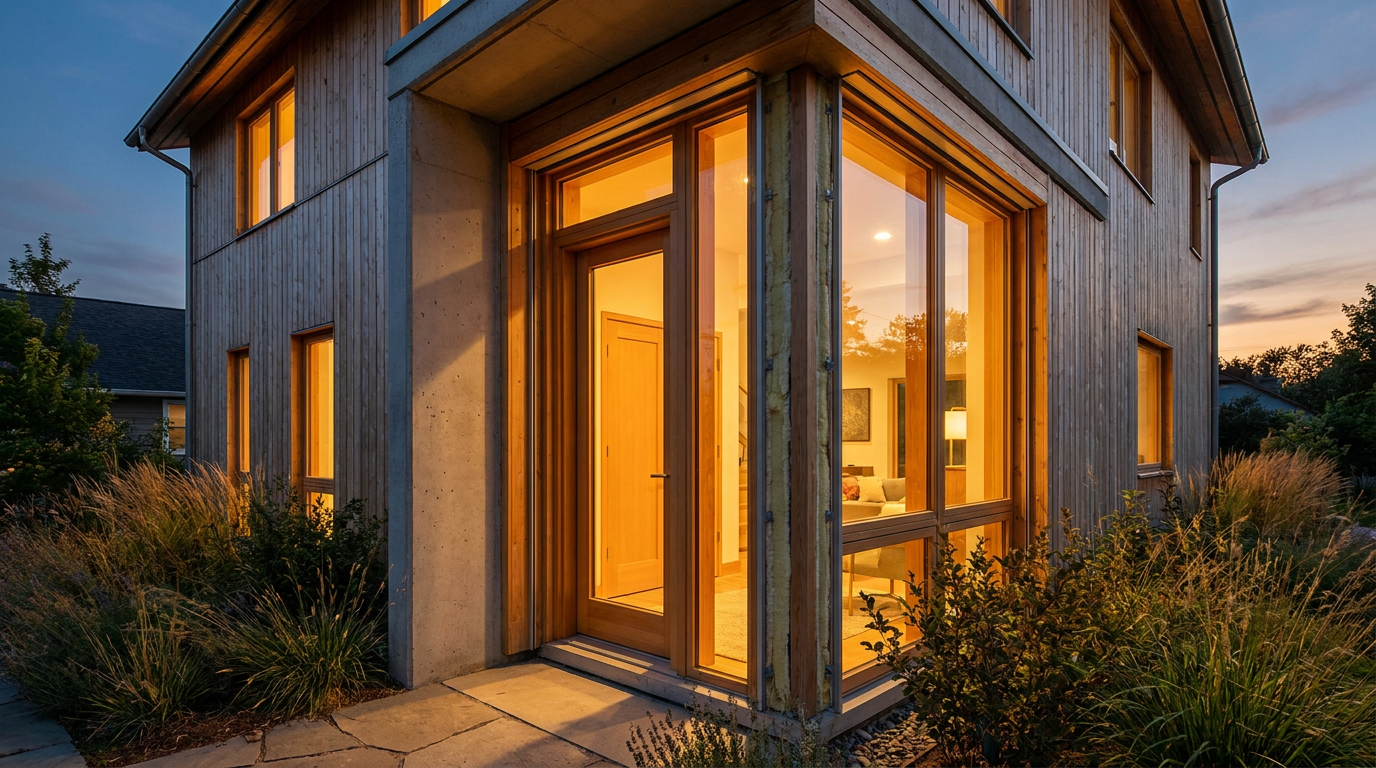
The Passivhaus standard relies on extreme airtightness, superinsulation, and heat recovery ventilation to nearly eliminate the need for traditional heating and cooling.
By Factlen Editorial Team
- Passive House Advocates
- Proponents argue the standard is the ultimate solution for climate resilience and long-term affordability.
- Cost-Conscious Builders
- Critics highlight the financial and logistical barriers to widespread adoption.
- Building Science Pragmatists
- Engineers emphasize that extreme airtightness introduces severe risks if ventilation fails.
What's not represented
- · Renters who cannot control building standards
- · Retrofit contractors dealing with existing housing stock
Why this matters
Heating and cooling account for the majority of residential energy use and carbon emissions. By adopting fabric-first building standards, homeowners can permanently slash their utility bills while drastically improving indoor air quality and climate resilience.
Key points
- The Passive House standard reduces heating and cooling energy demand by up to 90 percent.
- The design relies on a 'fabric-first' approach, utilizing superinsulation and extreme airtightness.
- Mechanical ventilation with heat recovery (MVHR) ensures constant fresh air without losing thermal energy.
- Building to the standard typically adds a 5 to 15 percent premium to upfront construction costs.
Imagine a home that requires almost no energy to heat in the winter or cool in the summer, maintaining a perfect ambient temperature year-round regardless of the weather outside.[1]
This is the promise of the Passive House (or Passivhaus) standard. Originating in Germany in the late 1980s through the research of Bo Adamson and Wolfgang Feist, the concept has evolved from a niche European experiment into a globally recognized benchmark for ultra-low-energy buildings.[1]
The core claim of the standard is striking: a certified Passive House reduces heating and cooling energy consumption by 75 to 90 percent compared to standard code-built homes. This translates to massive reductions in both monthly utility bills and lifetime carbon emissions.[1][5]
Crucially, this drastic reduction is not achieved by bolting solar panels onto a conventional roof or installing complex smart-home gadgets. Instead, it relies on a 'fabric-first' approach, focusing entirely on the physics of the building's envelope to trap energy inside.[2][8]

The standard rests on five non-negotiable design principles. The first is superinsulation. The walls, roofs, and floors are packed with significantly more insulation than conventional homes—often achieving R-values double or triple the local building code—creating a thick thermal blanket around the living space.[6][8]
The second principle is extreme airtightness. A Passive House is meticulously sealed with specialized tapes and intelligent membranes to prevent drafts and uncontrolled air leaks, ensuring that conditioned air cannot escape through cracks in the framing.[2][8]
To prove this airtightness, builders must pass a rigorous diagnostic evaluation known as a blower door test. The standard requires the home to leak no more than 0.6 air changes per hour at 50 Pascals of pressure (ACH50)—a metric roughly 10 to 20 times tighter than a standard older home.[1][6]
The third principle involves high-performance windows and doors. Passive Houses typically mandate triple-glazed windows with insulated frames and warm-edge spacers. These windows are strategically positioned to capture solar heat during the winter while utilizing exterior shading to block the harsh summer sun.[1][8]
The third principle involves high-performance windows and doors.
The fourth principle is the complete elimination of thermal bridges. A thermal bridge is a conductive material—like a steel beam or a concrete balcony slab—that bypasses the insulation layer, wicking heat directly out of the building. Passive design meticulously isolates these structural elements.[2][8]

Because the home is essentially sealed like a thermos, the fifth principle is the most critical for human survival and indoor air quality: Mechanical Ventilation with Heat Recovery (MVHR).[3][8]
Often described as the 'lungs' of the house, a Heat Recovery Ventilator (HRV) or Energy Recovery Ventilator (ERV) continuously exhausts stale, humid air from kitchens and bathrooms while simultaneously drawing in fresh, filtered air from the outside.[3]
The magic of the HRV lies in its internal heat exchanger core. As the warm outgoing air and the cold incoming air pass through the unit, they cross paths in adjacent channels without ever physically mixing. The outgoing air transfers up to 90 percent of its thermal energy to the incoming air, pre-warming it for free.[3]
In highly humid or mixed climates, builders often opt for an ERV, which transfers both heat and moisture. This specialized core prevents the home from becoming uncomfortably dry in the winter or overly humid in the summer, maintaining optimal indoor air quality.[3]
The financial equation of building a Passive House is a tale of short-term pain for long-term gain. Industry data indicates that achieving the rigorous standard adds a 5 to 15 percent premium to upfront construction costs, depending on the region and the builder's experience.[5][6]

This premium pays for the thicker walls, imported high-performance windows, specialized airtightness tapes, and the rigorous third-party certification process itself. However, proponents argue that the return on investment is measured in decades of slashed utility bills.[5]
For example, a recent case study of a 1,000-square-foot Passive House in Romania tracked real-world energy use over three years. The home required just €3,705 in total energy costs during that period—saving the owners more than €8,300 compared to a standard conventional home in the same climate.[4]
Despite the clear environmental and financial benefits, the standard faces significant hurdles. Finding contractors trained in the exacting precision required for thermal-bridge-free construction and airtight sealing remains difficult in many regional housing markets.[2]
Furthermore, building scientists warn that an airtight home is highly unforgiving. If the mechanical ventilation system fails, is improperly sized, or is turned off by an uneducated occupant, the trapped moisture can quickly lead to severe condensation, mold, and toxic indoor air quality issues.[3]
Yet, as global energy prices remain volatile and municipal building codes increasingly prioritize carbon reduction, the Passive House standard is transitioning from a radical eco-fringe concept into a highly practical blueprint for the future of residential construction.[7]
How we got here
1988
The Passive House concept is developed by Bo Adamson and Wolfgang Feist.
1991
The first Passivhaus residence is constructed in Darmstadt, Germany.
1996
The Passivhaus Institut (PHI) is founded to standardize and certify ultra-low energy buildings.
2024
Over 1.6 million square feet of Passive House projects are certified in North America alone.
2026
Passive House principles increasingly influence mainstream building codes as energy costs rise globally.
Viewpoints in depth
Passive House Advocates
Proponents argue the standard is the ultimate solution for climate resilience and long-term affordability.
Architects and environmental advocates view the Passive House standard as a moral and economic imperative. They argue that building to minimum code standards locks homeowners into decades of high utility bills and vulnerability to energy price shocks. By investing in the building envelope upfront, advocates claim homeowners secure unparalleled indoor comfort, eliminate drafts, and drastically reduce their carbon footprint. They point to real-world data showing that the initial construction premium is reliably recouped through decades of near-zero heating and cooling costs.
Cost-Conscious Builders
Critics highlight the financial and logistical barriers to widespread adoption.
Traditional contractors and budget-focused developers caution that the 5 to 15 percent construction premium is a steep hurdle for average homebuyers, particularly in high-interest-rate environments. They argue that the standard requires highly specialized materials—like imported triple-glazed windows and specialized airtight tapes—and a level of labor precision that many local crews are not trained to deliver. For these critics, achieving 90 percent of the energy savings through 'pretty good house' principles is often a more pragmatic and accessible goal than chasing the final, expensive margins required for official certification.
Building Science Pragmatists
Engineers emphasize that extreme airtightness introduces severe risks if ventilation fails.
HVAC specialists and building scientists focus on the technical tightrope of ultra-tight construction. They warn that when a home is sealed to 0.6 air changes per hour, it loses its ability to 'breathe' naturally. If the mechanical ventilation system (HRV or ERV) is improperly sized, poorly maintained, or turned off, the home can quickly accumulate toxic levels of volatile organic compounds (VOCs), excess humidity, and mold. This camp stresses that a Passive House requires 'active users' who understand how to maintain their mechanical systems, making occupant education just as critical as the insulation itself.
What we don't know
- Whether the specialized labor required for airtight construction will scale quickly enough to meet growing demand.
- How extreme climate shifts and prolonged heatwaves will affect the cooling loads of existing Passive Houses.
Key terms
- Thermal Bridge
- A weak spot in a building's insulation—like a steel beam or concrete slab extending from inside to outside—that allows heat to easily escape.
- Blower Door Test
- A diagnostic test using a powerful fan mounted in an exterior door frame to measure how airtight a building is by depressurizing the interior.
- ACH50
- Air Changes per Hour at 50 Pascals of pressure; the standard metric used to quantify a building's airtightness.
- U-value
- A measure of how effectively a material insulates. Lower U-values indicate better insulation performance.
Frequently asked
Can you open the windows in a Passive House?
Yes. While the mechanical ventilation system provides constant fresh air, occupants can open windows whenever they want. However, keeping them closed during extreme heat or cold ensures the system operates at peak efficiency.
Do Passive Houses need a traditional furnace?
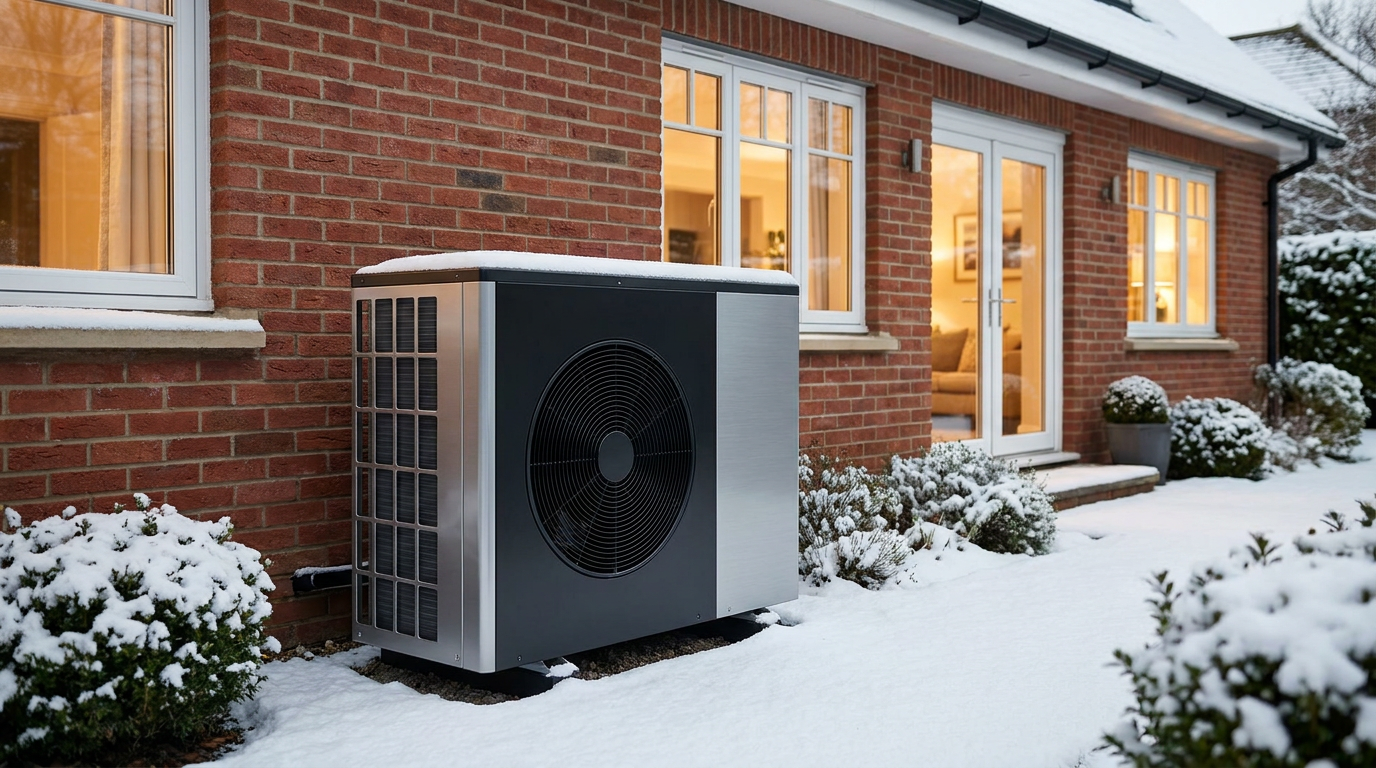
No. Because the building envelope retains heat so effectively, a massive traditional HVAC system is unnecessary. Most Passive Houses use a small heat pump or even just a heated towel rail and a post-heater in the ventilation system.
What is the difference between an HRV and an ERV?
A Heat Recovery Ventilator (HRV) transfers only heat between outgoing and incoming air. An Energy Recovery Ventilator (ERV) transfers both heat and moisture, which helps manage humidity in extreme climates.
Sources
Source coverage
8 outlets
3 viewpoints surfaced








[1]Wikipedia
Passive house
Read on Wikipedia →[2]Institution of Civil EngineersBuilding Science Pragmatists
What You Need To Know If You're New To Passivhaus
Read on Institution of Civil Engineers →[3]RiseBuilding Science Pragmatists
The Top HRVs or ERVs for Passive House Design
Read on Rise →[4]BIOBUILDSPassive House Advocates
Passive House Costs After 3 Years: Full Breakdown
Read on BIOBUILDS →[5]Grow Build & DesignCost-Conscious Builders
Passive House Cost Guide 2026
Read on Grow Build & Design →[6]Air TheoryPassive House Advocates
Passive House Australia Guide
Read on Air Theory →[7]Factlen Editorial Team
Synthesis by Factlen editorial team
Read on Factlen Editorial Team →[8]YourHomePassive House Advocates
Passive House
Read on YourHome →
Every angle. Every day.
Get home stories with full source coverage and perspective breakdowns delivered to your inbox.