
How Air Source Heat Pumps Work: The Science of Electrifying Home Heating
Modern air source heat pumps are replacing traditional gas furnaces by moving heat rather than creating it. Here is how the technology works, why it is so efficient, and what it costs.
By Factlen Editorial Team
- Electrification Advocates
- Argue that heat pumps are essential for decarbonizing residential heating.
- Pragmatic Homeowners
- Focus on the immediate financial return and operating costs.
- HVAC Installers
- Emphasize the technical realities of retrofitting older homes.
- Neutral Analysts
- Provide objective synthesis of the technology and market trends.
What's not represented
- · Natural gas utility companies facing declining residential demand
- · Renters who cannot control their building's heating infrastructure
Why this matters
Heating and cooling account for roughly half of the average home's energy use. Understanding how modern heat pumps work allows homeowners to drastically reduce their utility bills, lower their carbon footprint, and take advantage of thousands of dollars in available government rebates.
Key points
- Air source heat pumps transfer heat from the outside air rather than burning fuel, making them 200% to 400% efficient.
- Technological advancements like inverter-driven compressors allow modern units to operate efficiently in temperatures as low as -20°F.
- While upfront installation costs are higher than traditional furnaces, lower operating costs typically yield a return on investment within five to eight years.
- Heat pumps provide both winter heating and summer air conditioning in a single appliance.
- Federal tax credits and state rebates can offset thousands of dollars of the initial installation price.
The heating landscape is undergoing a quiet revolution. For decades, the basement gas furnace was the undisputed king of residential heating in cold climates. But in recent years, air source heat pumps have officially overtaken gas furnaces in annual sales. This shift is driven by a combination of volatile fossil fuel prices, aggressive government decarbonization incentives, and a fundamental desire for more efficient home climate control. Yet, despite their growing popularity, heat pumps remain widely misunderstood. Many homeowners still view them with suspicion, haunted by outdated myths about their inability to perform in freezing temperatures or their true cost-effectiveness.[4][7]
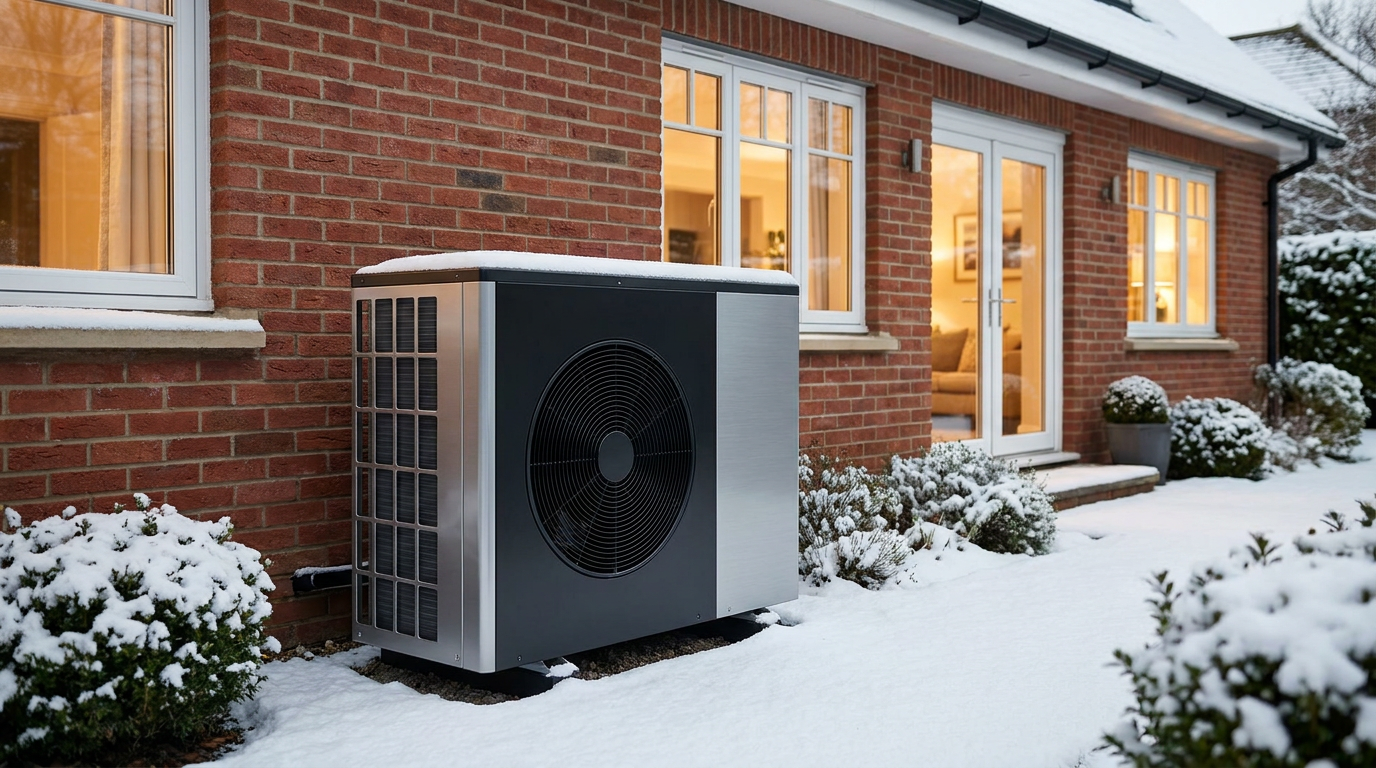
At the heart of the confusion is a misunderstanding of how the technology actually works. A traditional gas or oil furnace relies on combustion: it burns fuel to generate heat, a process strictly bound by the laws of physics. Even the most advanced high-efficiency gas furnaces max out at around 96 percent efficiency, meaning four cents of every dollar spent goes literally up the exhaust flue. A heat pump, by contrast, does not generate heat at all. Instead, it transfers it. Operating essentially as a refrigerator running in reverse, an air source heat pump extracts ambient thermal energy from the outside air and moves it indoors.[3][4][6]
The mechanics rely on a closed-loop refrigerant cycle. The system uses a specialized liquid refrigerant with a very low boiling point. As outside air blows across the outdoor unit's coils, the refrigerant absorbs the ambient heat and evaporates into a gas. This gas is then passed through a compressor, which dramatically increases its pressure and, consequently, its temperature. The superheated gas travels to the indoor unit, where it releases its heat into the home's central air ducts or hydronic radiant floor system. Finally, the refrigerant passes through an expansion valve, cooling back into a liquid to begin the cycle anew.[3][7]

Because heat pumps move existing heat rather than creating it from scratch, they achieve efficiency levels that combustion systems simply cannot match. This efficiency is measured by the Coefficient of Performance, or COP. While a top-tier gas furnace operates at a maximum of 0.96 COP—meaning it loses four percent of its energy to waste—a modern air source heat pump typically operates at a COP between 2.0 and 4.0. This means that for every single unit of electrical energy the system consumes, it delivers two to four units of heat energy into the home. This translates to an effective efficiency rate of 200 to 400 percent, fundamentally altering the math of residential heating.[4][5]
Historically, the fatal flaw of the air source heat pump was its vulnerability to extreme cold. Early-generation models from the 1980s and 1990s suffered severe efficiency drops when outdoor temperatures plunged below freezing, forcing homeowners to rely on expensive electric resistance backup heaters. This earned the technology a poor reputation in regions like New England, Canada, and the American Midwest. However, the engineering landscape has shifted dramatically over the last decade. The advent of the cold-climate heat pump has effectively solved the freezing-temperature problem, allowing systems to extract usable thermal energy from air as cold as minus 20 degrees Fahrenheit.[1][5][6]
Historically, the fatal flaw of the air source heat pump was its vulnerability to extreme cold.
The breakthrough relies on two key technological advancements: variable-speed inverter-driven compressors and enhanced vapor injection. Traditional compressors operate on a binary system—they are either running at 100 percent capacity or turned off completely. Inverter-driven compressors, however, act more like a car's accelerator pedal, continuously adjusting their speed to match the exact heating load required by the home. When combined with advanced refrigerants that maintain heat transfer efficiency at extreme cold, these modern systems maintain high efficiency and heat output even in sub-zero conditions, eliminating the need for backup systems in most cases.[1][5][6]

The financial calculus of switching to a heat pump is complex and highly dependent on local utility rates. On paper, the upfront installation cost of a high-efficiency heat pump is notably higher than a standard gas furnace, often carrying a premium of $2,000 to $5,000. However, because a heat pump provides both winter heating and summer air conditioning in a single unit, it effectively replaces two separate appliances. When factoring in federal tax credits, state rebates, and utility incentives, the net installation cost frequently drops to parity with—or even below—a traditional furnace and air conditioner bundle.[4][7]
Operating costs tell a similar story, though the exact savings vary by geography. In regions where electricity is relatively cheap and heating oil or propane is expensive, homeowners can save upwards of $1,000 to $2,000 annually by making the switch. When comparing heat pumps to natural gas, the margin is narrower. Industry analyses suggest that as long as the ratio of local electricity prices to natural gas prices remains below roughly 3.5 to 1, the heat pump will cost less to operate over the course of a winter. In moderate climates, this translates to average annual savings of around $650.[4][7]

For homeowners in the most extreme northern climates who remain hesitant to sever their gas lines completely, the industry has popularized the dual-fuel, or hybrid, system. This configuration pairs a high-efficiency electric heat pump with a traditional gas furnace backup. The heat pump handles the heating load for 80 to 90 percent of the winter, operating during the milder temperatures where its efficiency is highest. On the absolute coldest nights of the year, when the heat pump's efficiency curve dips, the system automatically switches over to the gas furnace, providing peace of mind and optimizing running costs.[4][7]
The physical installation of a heat pump requires specialized expertise, as it differs significantly from a standard furnace swap. Technicians must carefully calculate the home's heating load to size the equipment correctly; an oversized heat pump will short-cycle and fail to dehumidify the air, while an undersized unit will struggle to maintain temperature. The process involves safely capturing old refrigerant, laying new copper refrigerant lines, upgrading the electrical panel to handle the increased amperage, and ensuring the outdoor condenser unit is elevated above the local snowfall line to prevent ice buildup from blocking airflow.[2][7]
As the technology continues to mature, the transition toward electrified heating appears inevitable. With the global push toward decarbonization and the greening of the electrical grid, heat pumps represent a critical tool for reducing residential greenhouse gas emissions. While the upfront logistics and localized energy prices require careful consideration, the underlying physics are undeniable. By harnessing the ambient energy that surrounds us every day, heat pumps offer a fundamentally smarter way to keep our homes comfortable, proving that the future of heating is not about burning more fuel, but moving heat with precision.[1][6][7]
How we got here
1940s–1950s
Early versions of ground-source heat pumps are developed and installed in residential homes.
1980s–1990s
Manufacturers begin developing the first cold-climate heat pumps, though early models struggle with efficiency in sub-zero temperatures.
2022
The US Inflation Reduction Act passes, introducing significant federal tax credits for high-efficiency heat pump installations.
2025
Air source heat pumps officially outsell traditional gas furnaces in North America, marking a major shift in residential heating.
Viewpoints in depth
Electrification Advocates
Argue that heat pumps are essential for decarbonizing residential heating.
This camp, which includes environmental organizations and green-energy policymakers, views the widespread adoption of heat pumps as a non-negotiable step in the fight against climate change. Because heat pumps run on electricity, their carbon footprint shrinks as the power grid transitions to renewable sources like wind and solar. Advocates emphasize that even in regions where the grid is still heavily reliant on fossil fuels, the sheer efficiency of moving heat rather than burning fuel results in lower overall emissions per unit of heat delivered.
Pragmatic Homeowners
Focus on the immediate financial return and operating costs.
For many consumers, the decision to switch to a heat pump is driven less by environmental idealism and more by household economics. This perspective closely tracks the ratio of local electricity prices to natural gas prices. While acknowledging the long-term savings, pragmatic homeowners are often highly sensitive to the steep upfront installation costs, making their adoption heavily dependent on the availability of federal tax credits and state rebate programs to bridge the gap.
HVAC Installers
Emphasize the technical realities of retrofitting older homes.
The professionals tasked with actually installing these systems caution that a heat pump is not a simple plug-and-play replacement for a gas furnace. Installers focus on the necessity of proper load calculations, noting that an improperly sized heat pump will fail to dehumidify the air or maintain comfortable temperatures. They also highlight the hidden costs of electrification, such as the need to upgrade older 100-amp electrical panels to accommodate the increased power draw of the new equipment.
What we don't know
- How future fluctuations in the ratio of electricity prices to natural gas prices will impact the long-term financial savings of heat pumps.
- Whether local electrical grids in older neighborhoods will require significant infrastructure upgrades to handle the widespread electrification of home heating.
- The long-term lifespan and maintenance costs of the newest generation of low-GWP (Global Warming Potential) refrigerants under extreme weather conditions.
Key terms
- Air Source Heat Pump
- A heating and cooling system that transfers heat between the inside of a home and the outside air, rather than generating heat through combustion.
- Coefficient of Performance (COP)
- A metric used to measure the efficiency of a heat pump, representing the ratio of heat output to electrical energy input.
- Inverter-Driven Compressor
- A variable-speed compressor that continuously adjusts its output to match the home's heating or cooling demand, improving efficiency and cold-weather performance.
- Refrigerant
- A specialized chemical fluid used in heat pumps that absorbs and releases heat as it cycles between liquid and gas states.
- AFUE (Annual Fuel Utilization Efficiency)
- A measure of how efficiently a gas or oil furnace converts fuel into usable heat.
Frequently asked
Do heat pumps work in freezing weather?
Yes. Modern cold-climate heat pumps use inverter-driven compressors to extract heat from the air even when temperatures drop to -20°F.
Will a heat pump save me money?
In most cases, yes. While the upfront cost is higher, heat pumps are 2 to 4 times more efficient than gas furnaces, leading to lower annual operating costs.
Can a heat pump replace my air conditioner?
Yes. A heat pump operates as an air conditioner in the summer by reversing its cycle to pull heat out of your home and release it outside.
What is a dual-fuel system?
A dual-fuel or hybrid system pairs an electric heat pump with a gas furnace backup, using the furnace only during the most extreme cold snaps.
Sources
Source coverage
7 outlets
4 viewpoints surfaced







[1]RMIElectrification Advocates
Improvements to Heat Pumps for Cold Climates
Read on RMI →[2]EnergySageHVAC Installers
Overview of a typical heat pump project
Read on EnergySage →[3]Which?Pragmatic Homeowners
What is an air source heat pump?
Read on Which? →[4]NuWatt EnergyPragmatic Homeowners
Heat Pump vs Gas Furnace: Annual Running Cost Comparison
Read on NuWatt Energy →[5]Korycki MechanicalHVAC Installers
Cold Climate Heat Pump Advancements
Read on Korycki Mechanical →[6]WalterFedyElectrification Advocates
Cold Climate Heat Pump Advancements – Can it Lead North America to Net Zero?
Read on WalterFedy →[7]Factlen Editorial TeamNeutral Analysts
Synthesis by Factlen editorial team
Read on Factlen Editorial Team →
Every angle. Every day.
Get home stories with full source coverage and perspective breakdowns delivered to your inbox.