
The Science of Chrononutrition: Why When You Eat Matters as Much as What You Eat
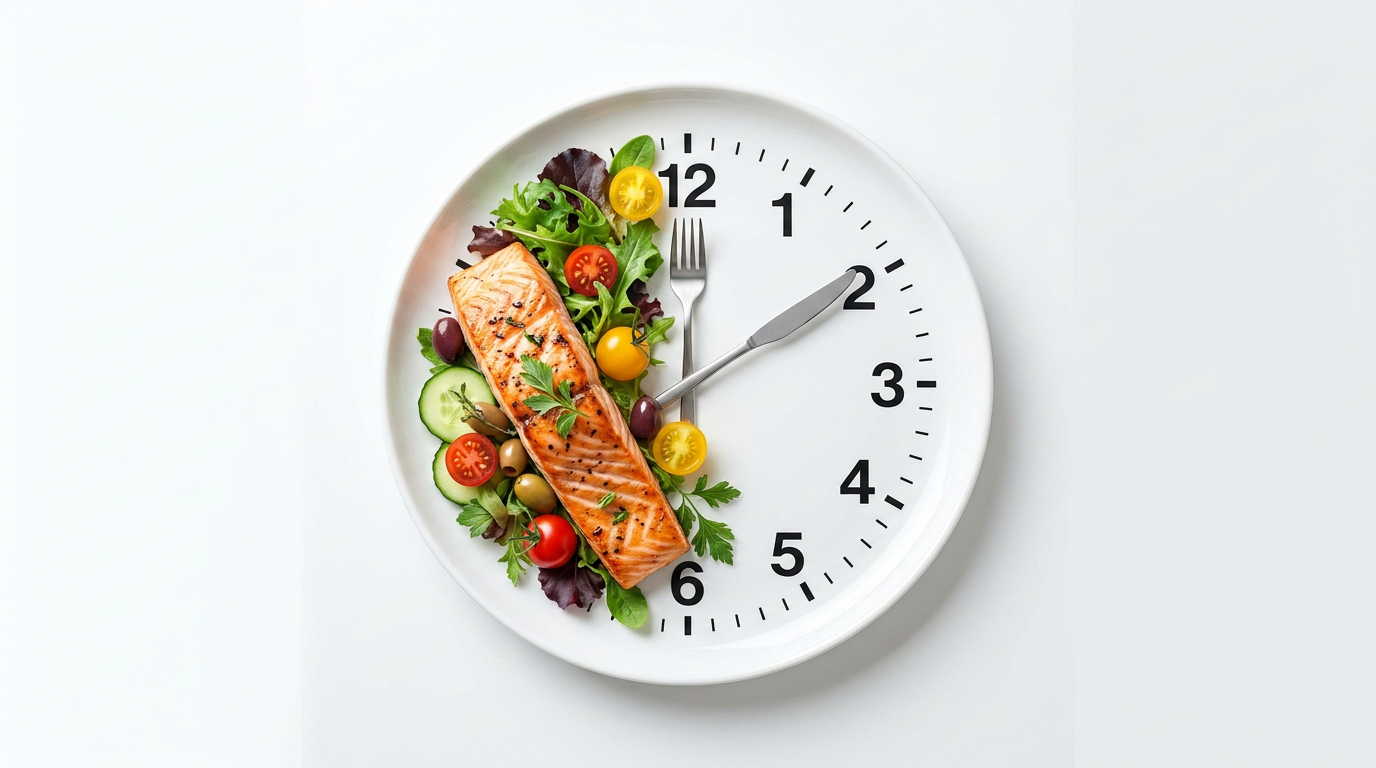
Emerging research shows that aligning meal times with the body's natural circadian rhythms can optimize metabolic health and stabilize blood sugar. Time-Restricted Eating offers a pragmatic approach to working with evolutionary biology, though it still requires a caloric deficit for weight loss.
By Factlen Editorial Team
- Chronobiology Researchers
- View meal timing as a fundamental biological reset for cellular health.
- Clinical Dietitians
- Emphasize that fasting windows primarily work by naturally inducing a caloric deficit.
- Cardiovascular Skeptics
- Urge caution regarding extreme fasting windows due to potential long-term risks.
What's not represented
- · Shift workers who cannot biologically align their eating windows with natural daylight.
- · Individuals with eating disorders for whom strict fasting windows may trigger unhealthy behaviors.
Why this matters
Aligning your meals with your body's natural circadian rhythms can improve metabolic health, stabilize blood sugar, and aid in weight loss without requiring complex calorie counting.
Key points
- Chrononutrition explores how aligning meal times with circadian rhythms impacts metabolic health.
- The body's digestive organs operate on 'peripheral clocks' that are synchronized by food intake.
- A 10-hour eating window has been shown to reduce abdominal fat and stabilize blood sugar.
- Recent studies confirm that Time-Restricted Eating still requires a caloric deficit to produce weight loss.
- Early Time-Restricted Eating (eTRE) aligns best with the body's natural peak in insulin sensitivity.
For decades, the golden rule of nutrition was simple: calories in, calories out. The focus was entirely on the volume and macronutrient breakdown of the food on the plate, treating the human body like a simple combustion engine that burns fuel at a constant rate regardless of the hour.
But a growing body of research suggests that when you eat might be just as critical as what you eat. This is the foundation of chrononutrition, a rapidly expanding scientific field exploring how food intake interacts with the body's internal biological clocks.[1]
The human body operates on a 24-hour circadian rhythm, governed by a "master clock" located in the brain's suprachiasmatic nucleus. This central timekeeper responds primarily to light, telling the body when to wake, when to release cortisol, and when to prepare for sleep.[6]
However, nearly every organ—including the liver, pancreas, and muscles—has its own "peripheral clock." While light sets the brain's master clock, food intake is the primary signal that sets the clocks in our metabolic organs.[6]

In modern society, prolonged eating windows are the norm. Many people consume their first calories with a coffee at 7:00 AM and their last with a late-night snack at 10:00 PM, creating a 15-hour daily feeding cycle.
This prolonged grazing causes a desynchronization between the central and peripheral clocks. This "metabolic jetlag" impairs insulin sensitivity, promotes fat storage, and prevents the digestive system from entering its natural restorative fasting state.[1][6]
To counter this misalignment, researchers have championed Time-Restricted Eating (TRE). This dietary strategy confines all caloric intake to a specific window, typically 8 to 10 hours, leaving the remaining 14 to 16 hours of the day for continuous fasting.
Dr. Satchidananda Panda and his team at the Salk Institute have been pioneers in this space. They have demonstrated that a consistent 10-hour eating window allows the body to rest and restore its metabolic functions overnight, aligning digestion with the hours we are most active.[5]
In clinical trials, the Salk team found that TRE, even when combined with traditional medications, helped patients with metabolic syndrome reduce abdominal fat, lower blood pressure, and stabilize blood sugar levels.[5]
Beyond treating metabolic syndrome, TRE and broader intermittent fasting protocols have shown significant promise as accessible weight management tools for the general public.
A 2025 study from the CU Anschutz Medical Campus tested a specific intermittent fasting protocol—eating freely for four days and restricting calories for three—against traditional daily calorie restriction.[3]
The researchers found that the intermittent fasting group achieved a 7.6% reduction in body weight over a year, outperforming the daily calorie restriction group, which saw a 5% reduction. The fasting group also saw more favorable changes in systolic blood pressure and fasting glucose.[3]

Despite these successes, the scientific community remains divided on the exact mechanism. Does TRE work because it optimizes cellular biology, or simply because a shorter eating window naturally forces people to eat less?
The ChronoFast trial, conducted by the German Institute of Human Nutrition in late 2025, attempted to answer this by testing TRE without allowing participants to reduce their overall calorie intake.[2]
The results were sobering: without a caloric deficit, TRE did not lead to measurable improvements in insulin sensitivity, blood sugar levels, or cardiovascular parameters. This suggests that the weight loss seen in other TRE studies is largely driven by spontaneous calorie reduction.[2]
However, the ChronoFast study yielded one crucial finding. Even without metabolic improvements, the strict eating window successfully shifted the participants' internal clocks. Blood cell analysis revealed a 40-minute shift in circadian phases, proving that meal timing acts as a powerful biological cue.[2]

The long-term safety of extreme eating windows has also faced scrutiny. A controversial 2024 presentation at an American Heart Association conference analyzed dietary data from over 20,000 adults and linked an 8-hour eating window to a higher risk of cardiovascular mortality.[4]
Medical experts quickly urged caution regarding these findings. Dr. Kenneth Mukamal of Harvard Medical School noted that the observational study could not account for why participants chose an 8-hour window; people with underlying health conditions or poor appetites might naturally eat less frequently, skewing the data.[4]
As chrononutrition evolves, researchers are zeroing in on the optimal timing for the eating window. Reviews suggest that "early TRE" (eTRE)—where the eating window closes in the mid-afternoon—aligns best with the body's natural peak in insulin sensitivity.[1][6]

Eating late into the evening forces the pancreas to process glucose when it is biologically programmed to rest, leading to higher blood sugar spikes and increased fat storage.[1]
Ultimately, chrononutrition shifts the dietary focus from sheer deprivation to biological alignment. While it cannot override the laws of thermodynamics—calories still matter—confining meals to a daylight window offers a pragmatic strategy to work with the body's evolutionary programming, rather than against it.[7]
How we got here
2019
Salk Institute researchers publish foundational data showing a 10-hour eating window improves outcomes for metabolic syndrome patients.
May 2022
A major clinical trial finds that Time-Restricted Eating is not significantly more beneficial for weight loss than daily calorie restriction.
March 2024
An American Heart Association presentation sparks debate by linking an 8-hour eating window to increased cardiovascular mortality risk.
March 2025
CU Anschutz researchers publish data showing a 4:3 intermittent fasting protocol outperforms daily calorie restriction for weight loss.
November 2025
The ChronoFast study demonstrates that while TRE without calorie reduction doesn't improve metabolism, it successfully shifts the body's internal clocks.
Viewpoints in depth
Chronobiology Researchers
Scientists who view meal timing as a fundamental biological reset for cellular health.
This camp, led by researchers at institutions like the Salk Institute, argues that the human body is evolutionarily programmed to experience extended daily fasts. They point to evidence that peripheral clocks in the liver and pancreas require a 12-to-14 hour break from digestion to perform cellular repair and optimize insulin sensitivity. For these researchers, Time-Restricted Eating is not just a weight-loss hack, but a necessary intervention to cure the 'metabolic jetlag' caused by modern 15-hour grazing habits.
Clinical Dietitians
Nutrition professionals who emphasize that fasting windows primarily work by naturally inducing a caloric deficit.
Many clinical dietitians and metabolic researchers caution against viewing chrononutrition as a magic bullet that defies the laws of thermodynamics. Pointing to controlled trials like the ChronoFast study, they argue that when caloric intake is kept identical, the metabolic advantages of a compressed eating window largely disappear. From this perspective, Time-Restricted Eating is highly valuable, but primarily as a behavioral compliance tool that helps patients effortlessly cut out late-night snacking and reduce overall energy intake.
Cardiovascular Skeptics
Medical professionals urging caution regarding extreme fasting windows due to potential long-term risks.
A more cautious perspective has emerged following observational data linking very short eating windows (under 8 hours) to increased cardiovascular mortality. While acknowledging that these studies often suffer from confounding variables—such as sick individuals naturally losing their appetite—this camp argues that extreme fasting could theoretically increase stress hormones or negatively impact blood pressure over decades. They advocate for moderate 10-to-12 hour eating windows rather than extreme restriction until long-term randomized trials are completed.
What we don't know
- Whether the metabolic benefits of Time-Restricted Eating persist over multiple decades.
- How to optimally adapt chrononutrition protocols for night-shift workers.
- The exact biological mechanism that caused an observational link between 8-hour windows and cardiovascular risk.
Key terms
- Chrononutrition
- The scientific study of how the timing of food intake interacts with the body's internal biological clocks.
- Circadian Rhythm
- The 24-hour internal cycle that regulates sleep, metabolism, and other physiological processes in living beings.
- Peripheral Clocks
- Biological timekeepers located in organs like the liver and pancreas, which are synchronized primarily by food intake rather than light.
- Time-Restricted Eating (TRE)
- A dietary strategy that confines all daily caloric intake to a specific window, typically 8 to 10 hours, leaving the rest of the day for fasting.
- Metabolic Jetlag
- A state of biological confusion caused when the brain's light-driven clock and the organs' food-driven clocks are out of sync.
Frequently asked
What is the difference between chrononutrition and intermittent fasting?
Intermittent fasting broadly refers to cycling between eating and fasting, often for weight loss. Chrononutrition specifically focuses on aligning those eating windows with the body's natural 24-hour circadian rhythms to optimize cellular health.
Do I still need to cut calories if I restrict my eating window?
Yes, for weight loss. Recent studies, including the 2025 ChronoFast trial, show that Time-Restricted Eating without a caloric deficit does not magically improve metabolic markers or cause weight loss, though it does shift the body's internal clocks.
What is the optimal eating window?
Research from the Salk Institute suggests a 10-hour eating window is highly effective for metabolic health. Furthermore, 'early Time-Restricted Eating' (eTRE), where meals are consumed earlier in the day, aligns best with the body's peak insulin sensitivity.
Is an 8-hour eating window dangerous?
A 2024 observational study linked an 8-hour window to higher cardiovascular risk, but experts caution that the data may be skewed by individuals who eat less due to underlying illnesses. Moderate 10-to-12 hour windows are generally considered safe and effective.
Sources
Source coverage
7 outlets
3 viewpoints surfaced







[1]Frontiers in NutritionChronobiology Researchers
Time-restricted eating and circadian regulation
Read on Frontiers in Nutrition →[2]German Institute of Human NutritionClinical Dietitians
Time-Restricted Eating Without Calorie Reduction Does Not Improve Metabolic Health, But Does Shift the Body's Internal Clocks
Read on German Institute of Human Nutrition →[3]CU Anschutz Medical CampusClinical Dietitians
Intermittent Fasting Outperforms Daily Calorie Restriction in Weight Loss Study
Read on CU Anschutz Medical Campus →[4]American Heart AssociationCardiovascular Skeptics
8-hour time-restricted eating linked to higher risk of cardiovascular death
Read on American Heart Association →[5]Salk InstituteChronobiology Researchers
Time-restricted eating combined with medications can give metabolic syndrome patients the ability to better manage their disease
Read on Salk Institute →[6]MDPI NutrientsChronobiology Researchers
Food Timing, Circadian Rhythm and Chrononutrition
Read on MDPI Nutrients →[7]Factlen Editorial TeamChronobiology Researchers
Synthesis by Factlen editorial team
Read on Factlen Editorial Team →

Every angle. Every day.
Get food drink stories with full source coverage and perspective breakdowns delivered to your inbox.