
How to Buy an E-Bike in 2026: The Ultimate Guide to Motors, Batteries, and Safety
The 2026 electric bicycle market has matured past exaggerated spec-sheet claims, prioritizing verifiable UL safety certifications, sophisticated mid-drive motors, and purpose-built commuter designs.
By Factlen Editorial Team
- Pragmatic Commuters
- Value reliability, cost-per-mile, step-through frame accessibility, and local dealer support over raw speed.
- Safety Regulators & Fire Officials
- Prioritize strict UL certification and thermal runaway prevention to mitigate the risks of lithium-ion battery fires in urban environments.
- Performance Enthusiasts
- Focus on motor torque, natural trail feel, and the engineering nuances between Bosch and Shimano drive systems.
- Industry Analysts
- Track the market shift from exaggerated spec-sheet marketing toward verifiable range, legal compliance, and radical transparency.
What's not represented
- · Traditional acoustic bicycle purists who oppose motor access on shared trails
- · Delivery gig workers who rely on budget e-bikes and face the highest costs from new battery regulations
Why this matters
Choosing the right e-bike can replace your car commute, improve your cardiovascular health, and save thousands of dollars annually—but buying an uncertified or mismatched model can lead to costly repairs, legal headaches, or severe fire risks.
Key points
- The 2026 e-bike market prioritizes verifiable safety and UL certification over exaggerated speed claims.
- Mid-drive motors from brands like Bosch and Shimano dominate the premium market for their hill-climbing ability.
- Battery capacities have increased, with 750Wh to 800Wh becoming common for long-range commuting.
- Understanding the 3-Class legal system is essential for knowing where you can legally ride.
- Step-through frames have become the standard for urban utility, offering unmatched accessibility.
The electric bicycle market has crossed a threshold. In 2026, buying an e-bike is no longer a fringe experiment or a gamble on unproven technology; it is a mainstream transportation decision. The era of slapping a generic battery onto a standard bicycle frame is over, replaced by a sophisticated landscape of purpose-built machines designed to replace car trips, flatten grueling hills, and extend the range of weekend adventures.[7]
For consumers, this maturation means the buying process has fundamentally changed. The market has shifted away from the "spec sheet wars" of the early 2020s—where brands competed on exaggerated wattage and unrealistic range claims—toward an era defined by verifiable safety, radical transparency, and tailored ride dynamics. Today, choosing the right e-bike requires navigating a matrix of motor types, battery certifications, and legal classifications to find a machine that perfectly matches a rider's specific route and lifestyle.[1][4]
The most critical shift in the 2026 e-bike landscape is the absolute prioritization of battery safety. Following a string of high-profile thermal runaway incidents involving cheap, uncertified lithium-ion packs, regulators and fire officials have cracked down. The conversation now begins and ends with two letters: UL.[3]
UL certification, administered by the independent safety science company Underwriters Laboratories, has evolved from a voluntary badge to a legal mandate in many jurisdictions. The gold standard is UL 2849, which evaluates the entire electrical drivetrain—battery, motor, controller, and charger—as a single, cohesive ecosystem to ensure they communicate safely and prevent electrical surges.[5]

This regulatory shift was catalyzed by New York City's Local Law 39, which banned the sale of uncertified e-bikes, creating a ripple effect that has transformed the national market. In 2026, purchasing a non-certified system is widely considered a severe liability. Top-tier manufacturers now engineer their bikes with "UL-first design," utilizing smart Battery Management Systems (BMS) that predict thermal issues and modular packs that isolate potential cell failures.[3][4]
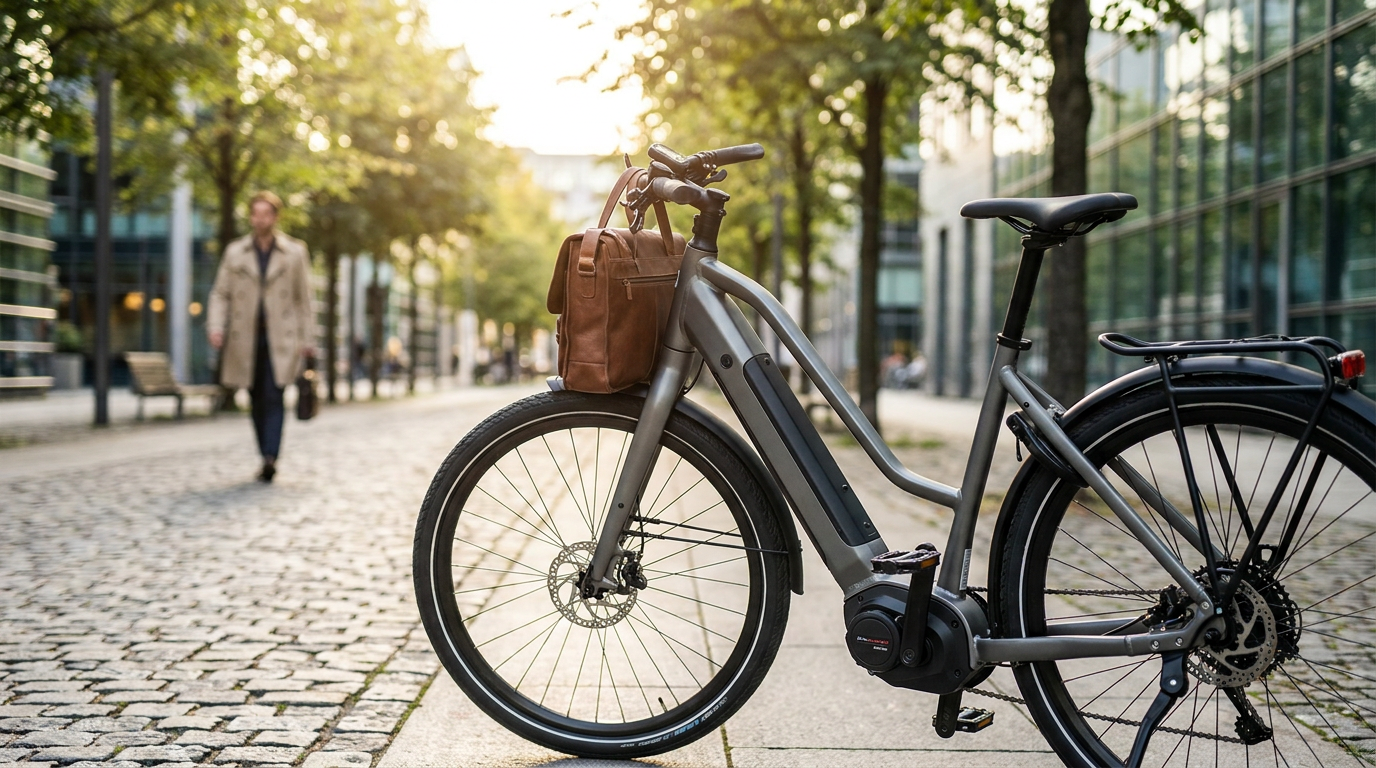
Once safety is assured, the next major decision is the motor. While budget-friendly e-bikes often use hub motors located in the center of the rear wheel, the premium and mid-tier markets are dominated by mid-drive motors. Positioned at the bike's bottom bracket between the pedals, mid-drives leverage the bicycle's mechanical gears, making them vastly superior for climbing steep hills and providing a balanced, low center of gravity.[1][7]
When evaluating mid-drive motors, torque—measured in Newton-meters (Nm)—is the defining metric. Torque represents the twisting force the motor applies to the drivetrain. For 2026, 85 Nm has become the industry benchmark for high-performance e-bikes, providing enough grunt to conquer sustained 12% grades without straining the rider or the battery.[2]
When evaluating mid-drive motors, torque—measured in Newton-meters (Nm)—is the defining metric.
The mid-drive market is currently locked in a fascinating duopoly between two engineering giants: Bosch and Shimano. Bosch's Smart System, particularly the Gen 5 Performance Line CX, is widely regarded as the powerhouse of the industry. It delivers punchy, immediate acceleration and is backed by a massive global service network, making it the default choice for heavy cargo bikes and long-distance commuters.[2][4]

Shimano, conversely, has optimized its EP801 motor for a completely different sensation: the "natural trail feel." Shimano's engineers have continuously refined their firmware to smooth out the power curve, ensuring the motor's assistance feels like a seamless extension of the rider's own legs. When a rider stops pedaling, the Shimano motor disengages with zero drag, a feature highly prized by mountain bikers and cycling purists.[2][4]
Alongside these full-power titans, 2026 has seen the explosion of the "lightweight" e-bike category. These systems utilize smaller motors producing 50 to 60 Nm of torque, paired with compact batteries. The result is a whisper-quiet bike that weighs significantly less, offering a ride experience that closely mimics a traditional acoustic bicycle, with the motor fading into the background until it is explicitly needed for a climb.[2][7]
Battery capacity is the other half of the powertrain equation, measured in Watt-hours (Wh). A higher Wh rating directly translates to a longer range. While 500 Wh was once standard, the 2026 market frequently sees 750 Wh to 800 Wh batteries integrated seamlessly into the downtube of the frame. Many brands now also offer modular "range extenders"—water-bottle-sized auxiliary batteries that plug in for exceptionally long weekend rides.[1][2]
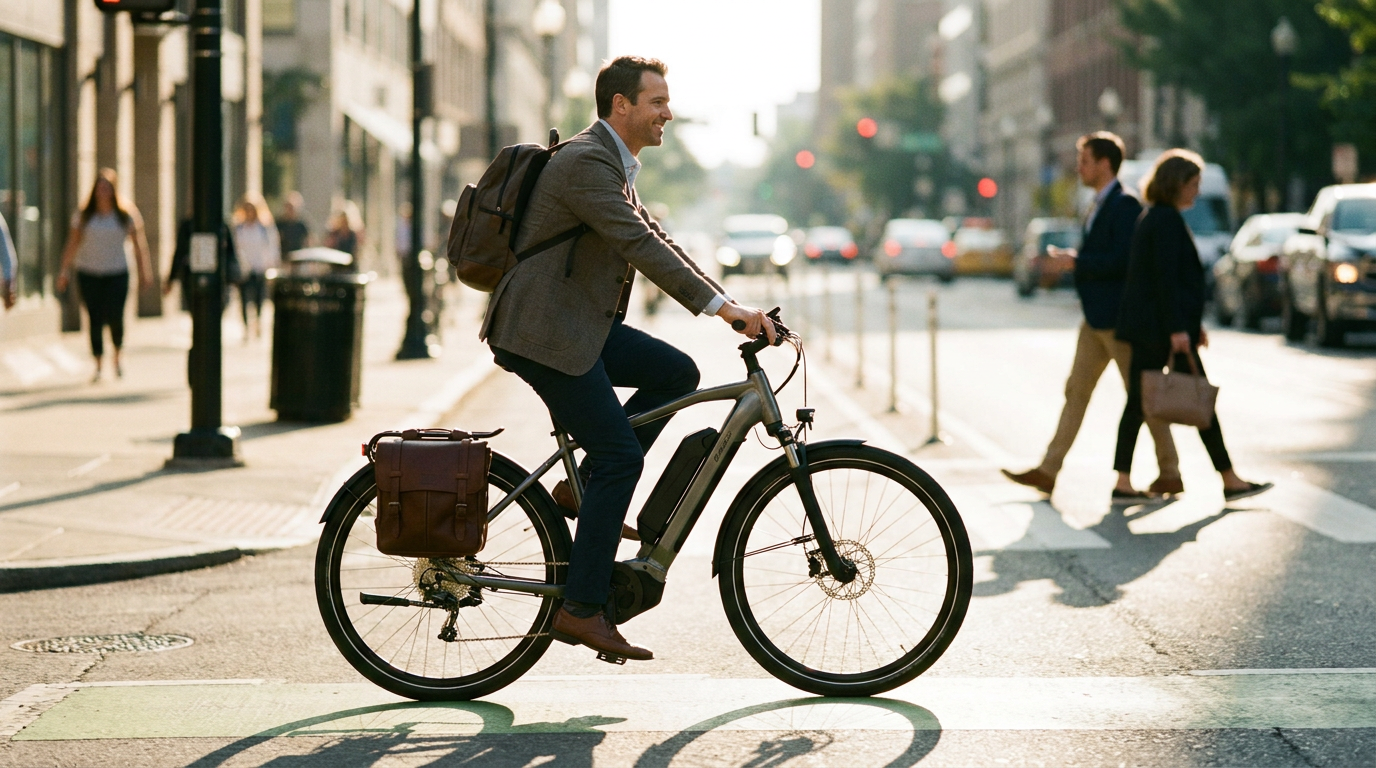
Navigating the legal landscape is equally important, as the United States relies on a three-class system to regulate where e-bikes can be ridden. Class 1 e-bikes provide pedal assistance up to 20 mph and are generally allowed on any bike path or trail. Class 2 e-bikes also cap at 20 mph but include a throttle, allowing the bike to move without pedaling—a popular feature for commuters who want to avoid sweating in work clothes.[6]

Class 3 e-bikes are the speed demons of the commuter world, providing pedal assistance up to 28 mph. Because of their higher speeds, Class 3 models are often restricted from multi-use pedestrian paths and are best suited for riders sharing the road with vehicular traffic in dedicated bike lanes. Understanding local path regulations is crucial before committing to a specific class.[6][7]
Beyond the electronics, the physical geometry of the bike dictates daily comfort. The "step-through" frame, once unfairly stigmatized, has become the dominant design for urban commuters in 2026. By removing the high top tube, riders can easily mount and dismount the bike, a critical advantage when the rear rack is loaded with groceries or a child seat.[1][7]

Finally, experts urge buyers to look beyond the initial sticker price and consider the total cost of ownership. A bargain e-bike purchased directly from an overseas warehouse may seem appealing, but proprietary parts and a lack of local dealer support can render the bike unfixable if a sensor fails. Investing in a standardized drivetrain with hydraulic disc brakes and a verifiable warranty ensures the bike remains a reliable transportation asset for years to come.[1][4]
How we got here
2015
Early e-bikes rely heavily on heavy hub motors and external battery packs.
2020
The pandemic triggers a massive boom in e-bike adoption for socially distanced commuting.
2022
Bosch introduces the Smart System, ushering in an era of connected, app-integrated e-bikes.
2023
New York City passes Local Law 39, mandating UL certification for all e-bikes sold in the city.
2026
UL-first design becomes the national standard, with 800Wh batteries and 85Nm motors dominating the premium market.
Viewpoints in depth
Safety Regulators' View
Municipalities and fire departments view uncertified e-bike batteries as a critical public safety threat.
Following a surge in battery-related fires in dense urban areas, regulators have shifted from issuing warnings to enacting strict bans on non-compliant hardware. For these officials, an e-bike is only as good as its UL 2849 certification. They argue that the slightly higher upfront cost of a certified system is a necessary insurance policy against catastrophic thermal runaway, pushing for nationwide adoption of standards like New York City's Local Law 39.
Performance Enthusiasts' View
Riders focused on trail performance prioritize motor dynamics, torque delivery, and software tuning.
For the enthusiast camp, the e-bike is an extension of the sport of mountain biking. They heavily scrutinize the 'trail feel' of different mid-drive motors, debating the punchy, aggressive power delivery of Bosch's Smart System against the whisper-quiet, natural pedal-assist of Shimano's EP801. This group is also driving the demand for 'lightweight' e-bikes that sacrifice raw power for a more agile, traditional cycling experience.
Pragmatic Commuters' View
Daily riders view e-bikes as car replacements, prioritizing reliability, cargo capacity, and weather readiness.
Commuters care less about peak torque and more about whether the bike will start in the rain and carry a week's worth of groceries. They champion step-through frames for accessibility, integrated lighting for winter evenings, and hydraulic disc brakes for stopping heavy loads. For this camp, the presence of a local dealer network for immediate servicing is often the deciding factor in a purchase.
What we don't know
- How quickly smaller municipalities will adopt and enforce strict UL certification mandates for e-bikes.
- Whether solid-state battery technology will become commercially viable for consumer e-bikes before the end of the decade.
- How the used e-bike market will handle the influx of older, non-UL-certified models as new regulations take effect.
Key terms
- UL 2849
- The gold-standard safety certification that evaluates an e-bike's entire electrical drivetrain as a single ecosystem to prevent fires.
- Mid-Drive Motor
- A motor positioned at the bike's pedals (bottom bracket) that leverages the bike's gears for better hill climbing and a natural feel.
- Torque (Nm)
- The twisting force of the motor, measured in Newton-meters, which dictates how easily the bike can climb steep hills or carry heavy cargo.
- Class 2 E-Bike
- An electric bicycle equipped with a throttle that can propel the bike up to 20 mph without the rider needing to pedal.
- Watt-hours (Wh)
- The measurement of a battery's total energy capacity, which is the most accurate predictor of how far the bike can travel on a single charge.
Frequently asked
Do I need a license or insurance to ride an e-bike?
In the US, Class 1, 2, and 3 e-bikes are federally classified as consumer products, not motor vehicles, so they generally do not require a license or insurance.
How far can a modern e-bike go on one charge?
Most quality 2026 models deliver between 30 and 60 miles per charge, depending heavily on rider weight, terrain, and the level of pedal assist used.
What is the difference between a cadence and torque sensor?
A cadence sensor turns the motor on like a switch when you pedal, while a torque sensor measures how hard you are pushing and delivers proportional power for a smoother ride.
Can I safely ride my electric bike in the rain?
Yes, modern e-bikes from reputable brands feature weather-sealed electrical components designed to withstand rain and puddles, though they should never be fully submerged.
Sources
Source coverage
7 outlets
4 viewpoints surfaced





[1]Electric Bike ReportPragmatic Commuters
Best Electric Bikes of 2026: Commuter and Value Picks
Read on Electric Bike Report →[2]E-MOUNTAINBIKE MagazinePerformance Enthusiasts
2026 Motor Group Test: Bosch vs. Shimano vs. Lightweight
Read on E-MOUNTAINBIKE Magazine →[3]The Ridgewood BlogSafety Regulators & Fire Officials
Why UL Certification is the New Standard for E-Bikes
Read on The Ridgewood Blog →[4]BikometryIndustry Analysts
The 2026 E-Bike Market Shift: From Spec Wars to Transparency
Read on Bikometry →[5]Underwriters Laboratories (UL Solutions)Safety Regulators & Fire Officials
Evaluating and Testing to UL 2849 for E-Bikes
Read on Underwriters Laboratories (UL Solutions) →[6]Consumer Product Safety Commission (CPSC)Industry Analysts
Low-Speed Electric Bicycle Regulations
Read on Consumer Product Safety Commission (CPSC) →[7]Factlen Editorial TeamPragmatic Commuters
Synthesis by Factlen editorial team
Read on Factlen Editorial Team →
More in shopping
See all 6 stories →Home Electrification
The 2026 Heat Pump Buying Guide: Navigating SEER2, Cold-Climate Tech, and IRA Rebates
8 sources
AI Hardware
Copilot+ PCs and the Rise of the NPU: How to Buy an AI Laptop in 2026
8 sources

EV Tech
How Bidirectional Charging is Turning 2026 EVs into Massive Home Batteries
6 sources
Display Tech
OLED vs. Mini-LED TVs in 2026: Which Display Tech Wins Your Living Room?
6 sources

Every angle. Every day.
Get shopping stories with full source coverage and perspective breakdowns delivered to your inbox.