
Why Women's Boxing is Tearing Itself Apart Over 60 Seconds
Elite female boxers are vacating world titles in a coordinated push to fight three-minute rounds, challenging decades-old rules and citing glaring double standards in combat sports.
By Factlen Editorial Team
- Equal Rules Advocates
- Argue that three-minute rounds are essential for equal pay, strategic depth, and parity with men's boxing.
- Safety & Status Quo Defenders
- Argue that physiological differences make three-minute rounds an unacceptable concussion risk for female fighters.
- Pacing & Entertainment Purists
- Note that two-minute rounds force a higher work rate and create uniquely action-packed, sprint-style fights.
What's not represented
- · Ringside physicians specializing in female physiology
- · Grassroots amateur female boxers
Why this matters
This isn't just a debate about sports rules—it's a high-stakes labor dispute over equal pay, workplace safety, and whether female athletes have the right to govern their own physical limits.
Key points
- Elite female boxers are vacating world titles to protest the mandate that women fight two-minute rounds.
- Fighters argue the shorter rounds are used to justify lower pay and prevent them from scoring highlight-reel knockouts.
- The WBC refuses to sanction three-minute rounds for women, citing physiological differences and concussion risks.
- Advocates point out that female athletes in MMA and bare-knuckle boxing already fight under the same time rules as men.
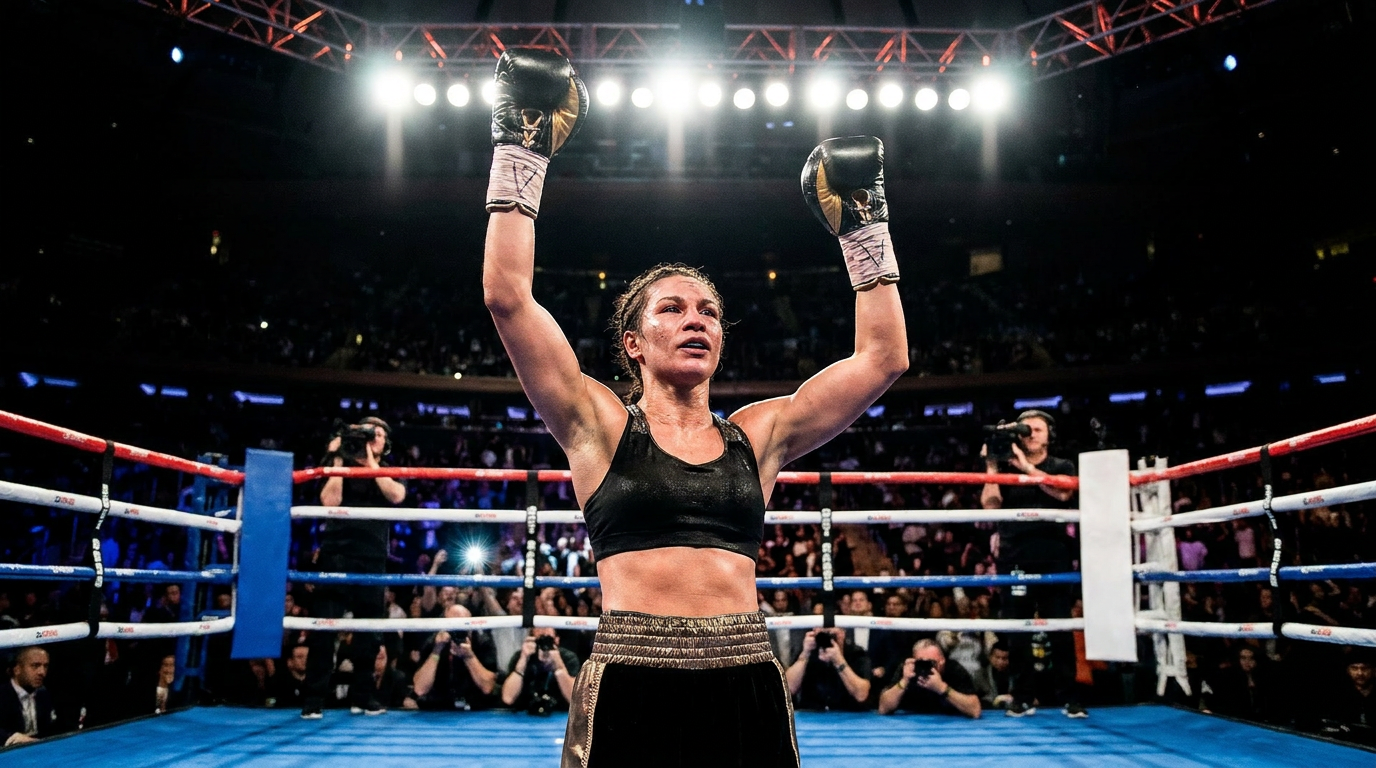
In men's professional boxing, the bell rings after three minutes. In women's boxing, it rings after two. For decades, this 60-second discrepancy was accepted as an immutable law of the sport, codified by sanctioning bodies and rarely questioned by the broader public. But a revolution is currently sweeping through women's boxing, led by its biggest stars. Elite female fighters are no longer just asking for equal time; they are actively vacating their hard-earned world titles to force the issue, turning a debate over round length into a high-stakes labor dispute.[6]
The movement reached a boiling point in late 2025 when British super-lightweight champion Chantelle Cameron relinquished her World Boxing Council (WBC) title. Cameron explicitly stated her decision was a direct protest against the WBC's mandate that women compete in two-minute rounds. Framing her choice as a fight for future generations of female athletes, Cameron walked away from one of the sport's most prestigious belts rather than accept what she viewed as fundamentally unequal treatment. Her decision sent shockwaves through the industry, proving that top-tier fighters were willing to sacrifice their unified status to force structural change.[1]
Cameron was following a blueprint drawn by Amanda Serrano, the legendary seven-division world champion who has become the de facto face of this labor movement. In late 2023, Serrano fought a historic 12-round, three-minute bout against Danila Ramos. When the WBC refused to sanction the fight under those extended rules, Serrano vacated their featherweight belt without hesitation. She declared she would no longer fight for organizations that refused to evolve, setting a powerful precedent that a fighter's principles could outweigh their desire to hold every piece of championship hardware.[3]
The momentum continued into 2026. In April, unified super featherweight champion Alycia Baumgardner headlined a major card at Madison Square Garden's Infosys Theater. She defended her remaining belts against Bo Mi Re Shin in a bout contested over 10 three-minute rounds. Baumgardner, who had also previously dropped her WBC strap over the exact same issue, used the high-profile ESPN broadcast to prove a point. She demonstrated that female athletes could thrive under the exact same physiological demands placed on men, delivering a masterclass in endurance and technical skill over the extended timeframe.[2]

At the heart of the debate is a simple, brutal equation that governs the business of combat sports: time equals money, and time equals knockouts. A traditional women's title fight lasts a maximum of 20 minutes, consisting of 10 rounds of two minutes each. A men's championship fight, by contrast, lasts 36 minutes, spanning 12 rounds of three minutes. Fighters argue this 16-minute deficit is routinely weaponized by promoters and television networks to justify lower pay, creating a structural ceiling on their earning potential.[5]
If female athletes are not working the same "hours" in the ring, the structural argument goes, they cannot demand equal compensation at the negotiating table. By pushing for three-minute rounds, women are attempting to eliminate the sport's most persistent and legally convenient excuse for the gender pay gap. As Baumgardner and others have pointed out, true parity in compensation is impossible as long as the official rulebook explicitly defines women's boxing as a shorter, lesser version of the men's sport.[2][5]
Inside the ropes, the extra minute fundamentally changes the sport's geometry, pacing, and strategy. Two-minute rounds create a frantic, sprint-like pace where fighters must immediately engage to win the judges' favor. While highly entertaining for fans who prefer high-volume brawls, this compressed timeframe severely limits a power puncher's ability to methodically break down an opponent. Fighters note that just as they find their range, establish a punishing jab, and begin to visibly hurt an opponent, the bell rings to end the round, offering the damaged fighter a full minute to recover.[5]
Inside the ropes, the extra minute fundamentally changes the sport's geometry, pacing, and strategy.
An extra 60 seconds allows for strategic setups, body-snatching combinations, and the kind of late-round, exhausting knockouts that build boxing superstars. Without that time, women's boxing sees a disproportionately high number of fights go to the judges' scorecards. Advocates argue that denying women the time to score definitive knockouts artificially suppresses their marketability. It prevents them from producing the viral, highlight-reel moments that drive pay-per-view sales and turn casual viewers into lifelong fans of the athletes. The ability to finish a fight definitively is the ultimate currency in boxing, and female fighters are demanding the time required to earn it.[3][5]

Standing firmly in the way of this movement is the WBC and its president, Mauricio Sulaiman. The organization has drawn a hard line in the sand, stating it will never sanction three-minute rounds for women under any circumstances. The WBC's primary argument is rooted entirely in safety. The organization cites physiological differences, arguing that women have different neck structures, lower muscle mass in the upper body, and different bone density, making them inherently more susceptible to whiplash and severe brain trauma from repeated blows.[4]
To support their rigid stance, the WBC points to broader medical studies from organizations like the NCAA, which suggest female athletes generally suffer higher rates of sports-related concussions than their male counterparts in sports like soccer and basketball. The sanctioning body maintains that the two-minute limit is a necessary biological safeguard, not a sexist restriction. They argue that extending the rounds by a full minute would inevitably lead to a spike in catastrophic ring injuries and long-term neurological damage.[4]
However, the medical consensus is far from settled, and many fighters view the WBC's safety argument as paternalistic and outdated. Dr. Meeryo Choe, a neurologist at the UCLA Brain Research Institute whose work was previously cited by the WBC, has publicly clarified that the data is highly nuanced. She noted that while women may report more concussions in some field sports, there is a glaring lack of specific, peer-reviewed studies on elite female boxers to definitively prove that an extra minute per round exponentially increases brain trauma in conditioned fighters.[4][7]
The safety argument also faces a glaring contradiction when looking at the wider combat sports landscape. In mixed martial arts, female UFC fighters compete in five-minute rounds, exactly like their male counterparts, and the sport has not seen a disproportionate epidemic of brain injuries among its female roster. Even in the brutal, bare-knuckle boxing industry, men and women fight under identical time rules. Boxing remains the sole major combat sport clinging to a gender-based time restriction, making the WBC's medical claims appear increasingly isolated.[3][7]

Not everyone in the boxing world is rushing to change the rules, however. Some boxing purists, and occasionally fighters themselves, point out that the two-minute format has inadvertently created a highly entertaining, unique product. The shorter duration forces fighters to throw punches in bunches from the opening bell, resulting in action-packed bouts that rarely suffer from the slow, tactical lulls often seen in men's 12-round fights. For some fans, the sprint-style pacing of women's boxing is a feature, not a bug.[5][7]
Yet, the tide appears to be turning irreversibly toward equality. With influential promoters like Jake Paul's Most Valuable Promotions (MVP) actively building platforms specifically for equal-rules bouts, the financial leverage is shifting toward the athletes. MVP's willingness to host and heavily promote 12-round, three-minute fights gives champions a lucrative alternative to the traditional sanctioning bodies, proving that there is a massive commercial appetite for women fighting under the exact same conditions as men. This financial backing empowers fighters to vacate belts without sacrificing their livelihoods.[2][3]

As more unified champions choose their principles over their belts, boxing's traditional power brokers are being backed into a corner. The athletes have realized a fundamental truth of the fight game: the championship belts need the star fighters much more than the star fighters need the belts. If the current trend continues, the organizations that refuse to sanction three-minute rounds may soon find themselves governing a sport that has simply moved on without them, leaving their titles vacant and irrelevant.[7]
How we got here
2007
Layla McCarter fights in one of the last sanctioned women's bouts to feature 12 three-minute rounds before the practice largely disappears.
Oct 2023
Amanda Serrano fights Danila Ramos in a historic 12-round, three-minute bout, vacating her WBC title when the organization refuses to sanction it.
Oct 2025
British champion Chantelle Cameron relinquishes her WBC super-lightweight title in protest over the two-minute round mandate.
Apr 2026
Alycia Baumgardner headlines a Madison Square Garden card, defending her unified titles in a 10-round, three-minute fight.
Viewpoints in depth
The Fighters' View
Elite boxers argue that equal time is the only path to equal pay and respect.
For champions like Amanda Serrano and Alycia Baumgardner, the two-minute rule is a structural barrier to equality. They argue that promoters use the shorter fight duration to justify paying women significantly less than men. Furthermore, the compressed timeframe robs power punchers of the opportunity to strategically break down opponents and score the viral knockouts that build boxing superstars. By vacating their titles, they are attempting to force the industry's hand.
The WBC's View
The World Boxing Council maintains that shorter rounds protect female athletes from severe brain trauma.
WBC President Mauricio Sulaiman has drawn a hard line against three-minute rounds, citing biological differences. The organization points to studies suggesting women have different neck musculature and are more susceptible to sports-related concussions. From the WBC's perspective, the two-minute limit is a necessary medical safeguard, and extending the rounds would recklessly endanger fighters' long-term neurological health, regardless of the commercial arguments.
The MMA Comparison
Critics of boxing's rules point to mixed martial arts as proof that women can handle longer rounds.
Advocates for equal rules frequently point to the UFC and other MMA promotions, where women have fought five-minute rounds for over a decade without a disproportionate spike in catastrophic injuries. This cross-sport comparison makes boxing's two-minute mandate look increasingly archaic to modern fight fans, suggesting the restriction is rooted more in boxing's traditionalist culture than in hard medical science.
What we don't know
- Whether the remaining major sanctioning bodies (WBA, IBF, WBO) will eventually adopt three-minute rounds as a standard.
- If comprehensive, peer-reviewed neurological studies on elite female boxers will be commissioned to settle the safety debate.
Key terms
- Sanctioning Body
- An organization, like the WBC or WBA, that creates the rules for boxing matches and awards championship belts.
- Unified Champion
- A boxer who holds world titles from two or more of the major sanctioning bodies simultaneously.
- Undisputed Champion
- A fighter who holds all four major world titles (WBA, WBC, IBF, WBO) in a single weight class.
- WBC
- The World Boxing Council, one of the sport's four major sanctioning bodies, which strictly enforces two-minute rounds for women.
Frequently asked
Why do women box two-minute rounds?
Historically, sanctioning bodies implemented two-minute rounds citing safety concerns and physiological differences between men and women, arguing the shorter duration reduces the risk of concussions.
How long are men's boxing rounds?
Men's professional boxing rounds last three minutes, with championship fights scheduled for 12 rounds, totaling 36 minutes of action.
Why did Amanda Serrano vacate her title?
Amanda Serrano vacated her WBC featherweight title in 2023 because the organization refused to sanction her fights for 12 three-minute rounds, prompting her to protest the unequal rules.
Do female UFC fighters have shorter rounds?
No. In the UFC and most major mixed martial arts promotions, female athletes fight the exact same five-minute rounds as their male counterparts.
Sources
Source coverage
7 outlets
3 viewpoints surfaced







[1]The GuardianEqual Rules Advocates
Chantelle Cameron gives up WBC title in protest against women's boxing rules
Read on The Guardian →[2]BETEqual Rules Advocates
Alycia Baumgardner Headlines Historic Fight Tonight
Read on BET →[3]EssentiallySportsEqual Rules Advocates
Pros and Cons of Having 12 3-Minute Rounds for Women's Boxing
Read on EssentiallySports →[4]Sports IllustratedSafety & Status Quo Defenders
For Women's Boxing, Is Going Long the Answer?
Read on Sports Illustrated →[5]DAZN NewsEqual Rules Advocates
Should women boxers fight 12 three-minute rounds like the men?
Read on DAZN News →[6]Association of Boxing CommissionsSafety & Status Quo Defenders
Unified Rules of Boxing
Read on Association of Boxing Commissions →[7]Factlen Editorial TeamPacing & Entertainment Purists
Synthesis by Factlen editorial team
Read on Factlen Editorial Team →

Every angle. Every day.
Get sports stories with full source coverage and perspective breakdowns delivered to your inbox.