
Global Oil Markets Recalibrate as U.S.-Iran Deal Reopens the Strait of Hormuz
A landmark diplomatic agreement between Washington and Tehran has initiated the reopening of the Strait of Hormuz, sending global oil prices tumbling and bringing U.S. gasoline averages below $4 a gallon. However, experts warn that clearing the massive shipping backlog and stabilizing supply chains will take weeks.
By Factlen Editorial Team
- Energy & Consumer Markets
- Focused on the immediate macroeconomic relief, celebrating the drop in crude prices and the easing of inflationary pressures at the consumer level.
- Geopolitical Skeptics
- Views the agreement as a temporary tactical pause rather than a lasting peace, warning that core nuclear disputes remain unresolved.
- Maritime Logistics Sector
- Emphasizes the operational realities of the reopening, noting that clearing the physical backlog and lowering insurance premiums will be a slow process.
What's not represented
- · Environmental groups monitoring the massive backlog of anchored vessels
- · Regional non-oil export businesses reliant on the strait
Why this matters
The unblocking of the world's most critical oil chokepoint provides immediate relief to global energy markets and consumers battling inflation. For the average household, this translates directly to cheaper fuel at the pump and lower transportation costs for everyday goods, though the fragile nature of the truce leaves long-term economic stability uncertain.
Key points
- The U.S.-Iran agreement has officially reopened the Strait of Hormuz to commercial shipping.
- Global benchmark crude prices tumbled immediately, driving U.S. gasoline averages below $4 a gallon.
- Clearing the massive backlog of waiting vessels and navigating new security checks will take weeks.
- Analysts warn the deal is a temporary pause, with core nuclear disputes deferred to a 60-day negotiation window.
Global energy markets experienced a massive recalibration on Thursday morning as a landmark agreement between the United States and Iran officially took effect, initiating the reopening of the Strait of Hormuz. The immediate market reaction was swift and decisive, with benchmark crude prices tumbling in early trading as the prospect of restored supply lines materialized.[3][5]
For American consumers, the geopolitical breakthrough delivered instant relief at the pump. U.S. gasoline prices dipped below the psychological threshold of $4 a gallon for the first time since March, ending a brutal stretch of fuel inflation that had squeezed household budgets. Retail prices are expected to continue their downward trajectory as wholesale gasoline futures adjust to the new geopolitical reality.[2][8]

The reopening marks the end of a historic global supply disruption that had effectively paralyzed one of the world's most vital economic arteries. At the height of the strain, the closure forced international shipping conglomerates to reroute vessels around the Cape of Good Hope, adding thousands of miles, millions of dollars in fuel costs, and weeks of delay to standard delivery schedules.[1][6]
Understanding the magnitude of this market reaction requires looking at the sheer volume of commerce that relies on this narrow waterway. The Strait of Hormuz is the world's most important oil chokepoint, typically facilitating the transit of roughly 20% of global petroleum consumption. When this valve is shut, the entire global energy architecture is forced into a costly and inefficient scramble for alternatives.[5]

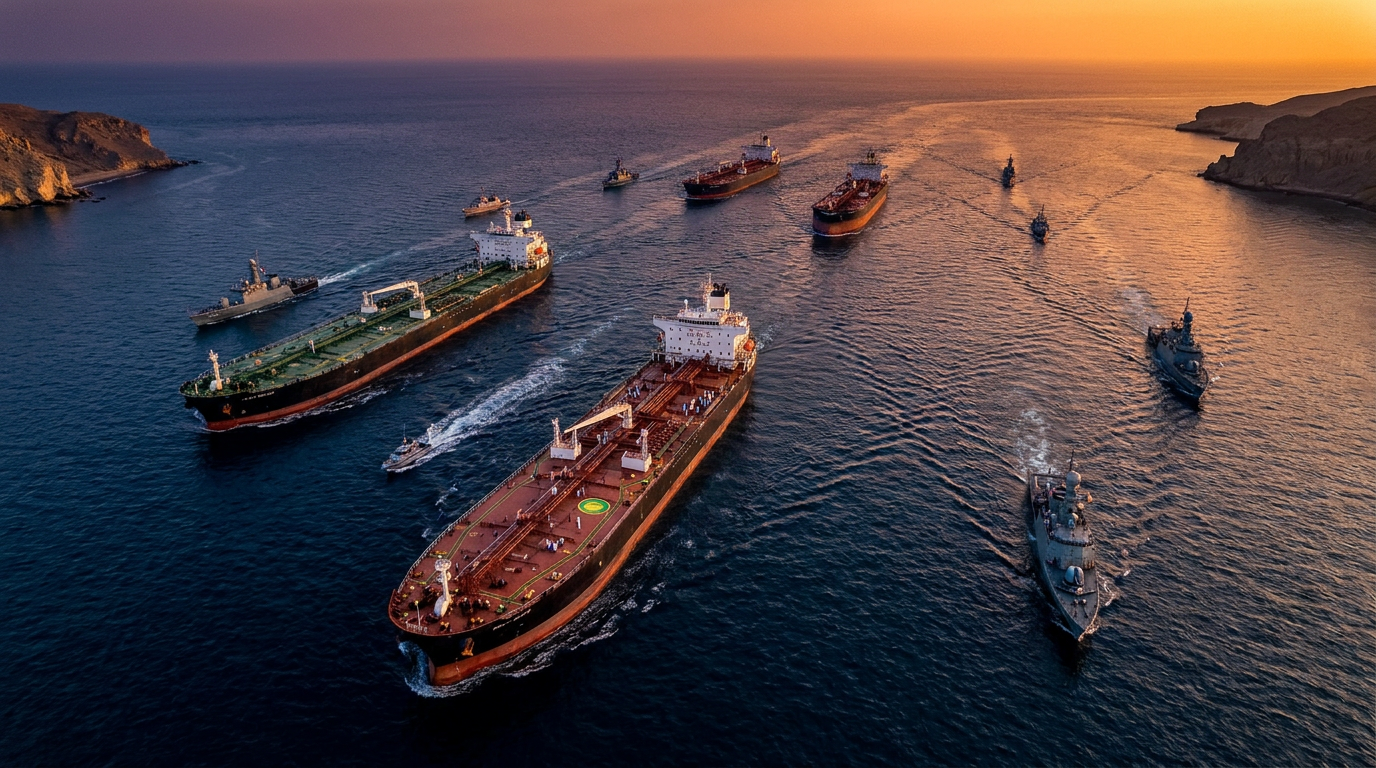
However, industry experts are quick to caution that signing a diplomatic agreement does not instantly untangle a global logistical knot. The physical reopening of the strait is expected to take weeks to fully ease the massive shipping backlog and alleviate the lingering pressure on oil delivery schedules.[1]
Hundreds of massive crude carriers and liquefied natural gas (LNG) vessels are currently anchored in holding patterns in the Arabian Sea and the Gulf of Oman, waiting for the green light to proceed. Maritime authorities must now coordinate a complex sequencing operation to safely guide this armada through the 21-mile-wide transit corridor.[1][6]
Maritime authorities must now coordinate a complex sequencing operation to safely guide this armada through the 21-mile-wide transit corridor.
Compounding the logistical challenge are the stringent security protocols mandated by the new agreement. Vessels entering the corridor will be subject to enhanced verification checks to ensure compliance with the terms of the U.S.-Iran pact, a process that inherently slows the pace of transit and limits the daily volume of ships that can pass.[1]
Insurance premiums for commercial shipping, which skyrocketed during the closure, are also expected to remain elevated in the near term. Underwriters in London and elsewhere are taking a wait-and-see approach, demanding proof that the waterway is genuinely secure before rolling back the "war risk" surcharges that have inflated the cost of global trade over the past several months.[6]

Beyond the immediate logistics, the broader economic implications of the reopening are profound. Central banks, which have been battling sticky inflation exacerbated by high energy costs, are watching the oil market's recalibration closely. Sustained lower energy prices could provide the macroeconomic breathing room needed to adjust interest rate policies in the coming quarters.[2][5]
Yet, geopolitical analysts warn against treating the current diplomatic breakthrough as a permanent resolution. The agreement that unlocked the strait is widely viewed in diplomatic circles as a tactical pause rather than a comprehensive peace treaty.[4]
Under the terms of the deal, Iran agreed to lift the blockade in exchange for the unfreezing of billions of dollars in restricted assets. However, the core disputes that triggered the crisis—most notably the escalating tensions over Tehran's nuclear enrichment program—have not been resolved.[4]
Instead, those explosive issues have been deferred to a new round of high-stakes negotiations scheduled to take place over the next 60 days. This ticking clock means that the energy markets will remain on edge, pricing in the risk that the strait could once again become a geopolitical flashpoint if the upcoming talks collapse.[4][7]

For now, major oil-importing nations, particularly in Asia, are using this window of opportunity to aggressively restock their strategic petroleum reserves. Refineries in China, Japan, and South Korea are booking future deliveries at the newly discounted rates, hedging against the possibility of future disruptions.[7]
The coming weeks will be a critical test of the agreement's durability. As the first wave of tankers successfully navigates the strait and unloads their cargo at global ports, the physical constraints on the oil market will begin to loosen, providing a real-time stress test of the new diplomatic framework and its ability to sustain global economic stability.[1][3]
How we got here
March 2026
Strait of Hormuz closure triggers a global supply disruption and spikes energy prices.
Early June 2026
Secret negotiations between Washington and Tehran accelerate to address the economic fallout.
June 18, 2026
The diplomatic deal officially takes effect, reopening the strait to commercial shipping.
August 2026 (Scheduled)
Deadline for the 60-day deferred negotiations regarding Tehran's nuclear enrichment program.
Viewpoints in depth
Energy Consumers & Markets
Focused on the immediate macroeconomic relief and the easing of inflationary pressures.
For global markets and everyday consumers, the reopening is viewed primarily through the lens of inflation relief. The closure of the strait had acted as a massive tax on the global economy, driving up the cost of manufacturing, transportation, and consumer goods. Market analysts argue that the immediate drop in benchmark crude and retail gasoline prices will provide central banks with the macroeconomic breathing room needed to potentially lower interest rates. This camp emphasizes the tangible, immediate benefits of restored supply lines over the long-term geopolitical uncertainties.
Geopolitical Skeptics
Views the agreement as a temporary tactical pause rather than a lasting peace.
Foreign policy analysts and geopolitical strategists are urging caution, characterizing the agreement as a fragile truce rather than a permanent solution. They point out that Iran secured the unfreezing of billions in assets simply by lifting a blockade it initiated, while the core issue of nuclear enrichment remains entirely unresolved. This camp argues that deferring these explosive issues to a 60-day negotiation window merely kicks the can down the road, leaving the global energy market vulnerable to another sudden shock if the upcoming talks inevitably stall.
Maritime Logistics Sector
Emphasizes the operational realities and the slow process of clearing the physical backlog.
Shipping conglomerates, port authorities, and maritime insurers are focused on the immense logistical hangover left by the closure. While the political agreement is signed, the physical reality involves hundreds of massive vessels anchored in holding patterns that must now be safely sequenced through a 21-mile chokepoint. This camp highlights that enhanced security protocols and sky-high "war risk" insurance premiums will continue to drag on supply chains for weeks, meaning the operational crisis is far from over even as oil prices drop.
What we don't know
- Whether Iran will fully comply with the 60-day nuclear negotiation timeline.
- Exactly how long it will take to clear the massive backlog of LNG and crude carriers.
- If insurance underwriters will lower war-risk premiums before the 60-day window closes.
Key terms
- Strait of Hormuz
- A narrow waterway between the Persian Gulf and the Gulf of Oman, serving as the world's most important oil chokepoint.
- War Risk Surcharge
- Additional insurance premiums charged to vessels navigating through designated high-risk conflict zones.
- Benchmark Crude
- Standardized petroleum varieties, like Brent Crude or West Texas Intermediate, used to price oil globally.
Frequently asked
Why did gas prices drop so quickly?
Energy markets price in future supply. The agreement signals that millions of barrels of delayed oil will soon reach refineries, prompting an immediate drop in wholesale costs before the ships even arrive.
Is the conflict completely resolved?
No. Analysts describe the deal as a tactical pause, with core issues like nuclear enrichment deferred to a new round of negotiations over the next 60 days.
How long will it take to clear the shipping backlog?
Maritime experts estimate it will take several weeks to safely process the hundreds of vessels waiting to transit the strait due to enhanced security checks.
Will shipping insurance costs decrease immediately?
Unlikely. Underwriters are maintaining high "war risk" premiums until the security of the waterway is proven over a sustained period.
Sources
Source coverage
8 outlets
3 viewpoints surfaced








[1]CNBCMaritime Logistics Sector
Strait of Hormuz reopening may take weeks to ease shipping backlog and oil pressure
Read on CNBC →[2]BloombergEnergy & Consumer Markets
US Gasoline Prices Fall Below $4 a Gallon as Iran Strain Eases
Read on Bloomberg →[3]NYTEnergy & Consumer Markets
Oil Prices Fall as U.S.-Iran Deal to Reopen Hormuz Takes Effect
Read on NYT →[4]ForbesGeopolitical Skeptics
Iran's Deal With Washington Is A Pause, Not A Peace
Read on Forbes →[5]ReutersMaritime Logistics Sector
Brent crude tumbles as US-Iran Hormuz deal takes effect
Read on Reuters →[6]WSJGeopolitical Skeptics
Clearing the Hormuz Backlog: Why Shipping Insurance Remains Sky-High
Read on WSJ →[7]Al JazeeraMaritime Logistics Sector
Asian markets hedge bets as Strait of Hormuz reopens after US-Iran pact
Read on Al Jazeera →[8]Fox BusinessEnergy & Consumer Markets
Gas prices drop below $4 as Iran deal reopens critical oil chokepoint
Read on Fox Business →

Every angle. Every day.
Get business stories with full source coverage and perspective breakdowns delivered to your inbox.