
The Neuroscience of Tactile Hobbies: How Crafting Combats Digital Burnout
As younger generations trade screen time for knitting, pottery, and woodworking, neuroscientists are uncovering how tactile hobbies actively rewire the brain, lower stress hormones, and induce a therapeutic 'flow state.'
By Factlen Editorial Team
- Neuroscientists & Psychologists
- Focuses on the measurable brain benefits of hobbies, including neuroplasticity, cortisol reduction, and the mechanics of the flow state.
- Digital Minimalism Advocates
- Emphasizes the need to replace screen time with analog activities to combat digital burnout and reclaim attention.
- Occupational Therapists
- Highlights the practical, therapeutic applications of tactile engagement for emotional regulation and physical rehabilitation.
What's not represented
- · Educators advocating for the return of shop and home economics classes in schools
- · Commercial craft suppliers who benefit financially from the analog trend
Why this matters
Understanding the neuroscience behind hands-on hobbies reveals that taking time to knit, carve, or paint isn't an indulgent luxury—it is a scientifically backed method to protect your brain from aging, lower your stress hormones, and reverse the psychological toll of constant screen time.
Key points
- Tactile hobbies like knitting and woodworking induce a 'flow state' that actively resets the brain's emotional centers.
- Engaging in sequence-based, bilateral movements builds neuroplasticity and acts as a buffer against age-related cognitive decline.
- The rhythmic motions of crafting mimic meditation, significantly lowering cortisol and reducing heart rate.
- Physical hobbies provide 'genuine dopamine' through mastery, countering the 'cheap dopamine' depletion caused by excessive screen time.
- Communal crafting environments offer low-stakes social interaction that effectively combats loneliness and isolation.
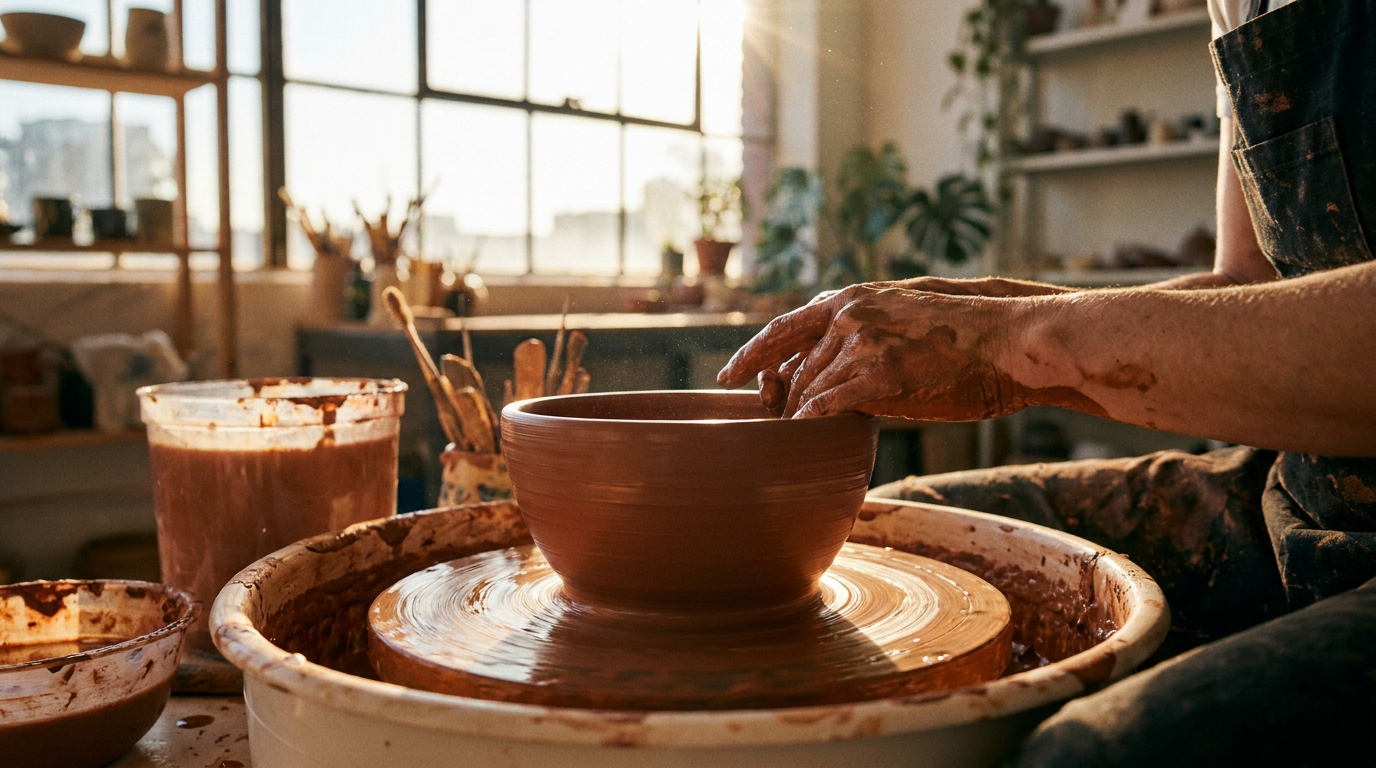
The rhythmic click of knitting needles, the damp resistance of clay on a pottery wheel, and the precise friction of a woodcarver’s chisel are sounds increasingly replacing the digital hum of smartphones. Across demographics, but particularly among Generation Z and Millennials, so-called "grandma hobbies" are experiencing a massive cultural resurgence. This shift toward analog, tactile pastimes is often framed as a nostalgic retreat from the modern world. However, contemporary psychology and neuroscience suggest something far more profound is happening. People are not just seeking a break from their screens; they are instinctively seeking out activities that actively repair the cognitive fatigue caused by digital burnout.[1][5]
The core mechanism driving the psychological benefits of these hands-on activities is a phenomenon known as the "flow state." Coined in the 1970s by Hungarian-American psychologist Mihaly Csikszentmihalyi, flow is defined as a cognitive state of total immersion and focus in an activity, where the participant loses track of time and self-consciousness. When a person is engaged in a tactile hobby like sewing, painting, or woodworking, their attention is entirely consumed by the immediate physical feedback of the materials. This deep focus acts as an active reset for the brain's emotional centers, providing a sanctuary from the fragmented attention demanded by modern digital life.[2][4]
Achieving this state of flow requires a specific psychological environment. It exists on a delicate precipice between anxiety and boredom. If a task is too easy, the mind wanders; if it is too difficult, the participant becomes frustrated. Tactile hobbies are uniquely suited to maintaining this balance because they offer immediate, tangible feedback and allow the creator to incrementally increase the difficulty of the task as their skills improve. Whether it is learning a more complex knitting stitch or attempting a new joint in carpentry, the continuous adjustment of challenge to match growing competence keeps the brain locked in a state of intrinsic reward.[2][3]

The neurological benefits of this sustained focus go far beyond simple stress relief. Engaging in sequence-based, bilateral movements—activities that require both hands to work together in a coordinated pattern—forces the brain to forge and maintain vital connections between neural pathways. This process, known as neuroplasticity, is the brain's ability to rewire itself in response to new challenges. For aging populations, this serves as a form of low-stakes cognitive training. Research indicates that tactile hobbies create greater brain connectivity, which can help compensate for the natural die-off of neurons that occurs during the aging process.[1][4]
In fact, the cognitive protection offered by complex crafting activities is so robust that it is increasingly being studied as a buffer against cognitive decline. When an individual learns to read a sewing pattern, measure wood, or calculate the shrinkage of clay, they are engaging memory, attention, and motor function simultaneously. This continuous mental workout builds cognitive reserve, essentially creating a neurological safety net that can help delay the onset of memory-related conditions. It is a biological investment disguised as a leisure activity.[1][4]
In fact, the cognitive protection offered by complex crafting activities is so robust that it is increasingly being studied as a buffer against cognitive decline.
Beyond neuroplasticity, tactile hobbies exert a profound influence on the body's endocrine system, specifically regarding stress regulation. The repetitive, rhythmic motions inherent in activities like knitting or cross-stitching mimic the physiological effects of meditation. As the hands move in a predictable pattern, the parasympathetic nervous system is activated, leading to a measurable decrease in heart rate and blood pressure. Studies have shown that engaging in art-making and crafting can significantly lower levels of cortisol, the body's primary stress hormone, in a majority of participants.[1][6]

This physiological relaxation is particularly crucial in the context of the modern attention economy. Psychologists frequently point to the "displacement hypothesis," which suggests that the primary harm of excessive screen time is not necessarily the digital content itself, but the developmental and restorative activities it replaces. Scrolling through social media provides what neuroscientists call "cheap dopamine"—rapid, fleeting spikes of the reward neurotransmitter that leave the user feeling depleted. In contrast, finishing a seam, completing a puzzle, or throwing a ceramic bowl provides "genuine dopamine," fostering a lasting sense of mastery, self-efficacy, and grit.[6]
Occupational therapists have long recognized the therapeutic value of this tangible mastery. For individuals dealing with anxiety, depression, or trauma, the physical reality of a crafted object serves as an anchor. The mind cannot easily spiral into anxious rumination about the future or regret about the past when it is forced to calculate the tension of a thread or the moisture content of clay. The forgiving nature of crafting—where mistakes can often be unraveled, sanded down, or painted over—also provides a safe environment to practice emotional regulation and resilience.[6]

The social dimension of these hobbies further amplifies their psychological benefits. While crafting can be a solitary pursuit, the rise of communal workshops, knitting circles, and community pottery studios highlights a deep human need for "low-stakes interaction." In these environments, people connect side-by-side rather than face-to-face. The shared focus on a physical task removes the pressure of direct social scrutiny, allowing conversation to flow naturally. This type of parallel play is highly effective at reducing loneliness and fostering a sense of belonging, particularly for older adults or those experiencing major life transitions.[1][4]
Despite the overwhelming evidence supporting the benefits of tactile hobbies, researchers are careful to note that they are not a universal panacea. The therapeutic efficacy of a hobby depends entirely on the individual's intrinsic motivation. If a person feels pressured to monetize their craft—a common pitfall in the era of online side-hustles—the activity quickly shifts from an autotelic experience (done for its own sake) to an extrinsic obligation, destroying the flow state and reintroducing stress. The joy must remain in the process, not just the product.[2][3]

Furthermore, the barrier to entry for some tactile hobbies can be a source of friction. Woodworking requires space, specialized tools, and safety equipment, while pottery necessitates access to a kiln. If the logistical or financial hurdles of starting a hobby induce anxiety, the cognitive benefits are immediately negated. Psychologists recommend starting with low-barrier activities, such as sketching, origami, or basic hand-sewing, to train the brain toward intrinsic enjoyment before investing heavily in specialized equipment.[3]
Ultimately, the resurgence of analog hobbies represents a collective, intuitive pushback against an increasingly intangible world. By reclaiming the physical use of our hands, we are not just making sweaters, bowls, or birdhouses; we are actively repairing our attention spans, regulating our nervous systems, and rebuilding our cognitive resilience. In a society that constantly demands our digital presence, choosing to sit quietly and create something real has become one of the most accessible and effective forms of preventative healthcare available.[5][6]
How we got here
1975
Psychologist Mihaly Csikszentmihalyi publishes foundational research defining the 'flow state' of optimal engagement.
1990s
Occupational therapy formally integrates tactile crafts as a clinical tool for cognitive and physical rehabilitation.
2015
Studies in cognitive science link slow, analog thinking to optimal brain function and emotional regulation.
2020
Pandemic lockdowns trigger a massive global resurgence in baking, knitting, and hands-on analog hobbies.
2025
New research confirms that physical, tactile hobbies act as a vital safeguard against digital burnout and youth mental health crises.
Viewpoints in depth
Neuroscientists & Psychologists
Focuses on the measurable brain benefits of hobbies, including neuroplasticity, cortisol reduction, and the mechanics of the flow state.
Cognitive researchers view tactile hobbies not merely as leisure, but as essential biological investments. They point to brain imaging studies showing that sequence-based, bilateral activities—like knitting or playing an instrument—force the brain to forge new neural pathways. This neuroplasticity is crucial for aging populations, as it builds a cognitive reserve that can delay memory loss. Furthermore, psychologists emphasize that the 'flow state' achieved during these activities acts as a powerful emotional regulator, providing a necessary respite from the chronic stress and fragmented attention of modern life.
Digital Minimalism Advocates
Emphasizes the need to replace screen time with analog activities to combat digital burnout and reclaim attention.
For advocates of digital minimalism, the value of tactile hobbies lies in the 'displacement hypothesis'—the idea that the real danger of screens is the physical, real-world experiences they replace. They argue that the modern attention economy traps users in cycles of 'cheap dopamine' through endless scrolling, leading to burnout and anxiety. By intentionally choosing analog activities like woodworking or sewing, individuals can reclaim their agency, rebuild their attention spans, and experience the deep, sustained satisfaction of 'genuine dopamine' that comes from physical mastery.
Occupational Therapists
Highlights the practical, therapeutic applications of tactile engagement for emotional regulation and physical rehabilitation.
In clinical settings, occupational therapists have long utilized crafts as a primary tool for rehabilitation. They emphasize the grounding nature of tactile engagement for individuals recovering from trauma, anxiety, or physical injury. The physical reality of the materials—the resistance of clay or the tension of yarn—forces the mind to stay anchored in the present moment, preventing anxious rumination. Additionally, the forgiving nature of many crafts provides a safe, low-stakes environment for patients to practice problem-solving, rebuild fine motor skills, and experience a tangible sense of accomplishment.
What we don't know
- Whether the cognitive benefits of tactile hobbies differ significantly between people who learned the skills in childhood versus those who pick them up late in life.
- The exact threshold of time per week required to see long-term structural changes in the brain's neuroplasticity from crafting.
Key terms
- Flow State
- A cognitive state of total immersion and focus in an activity, where a person loses track of time and self-consciousness.
- Neuroplasticity
- The brain's ability to reorganize itself by forming new neural connections in response to learning and experience.
- Displacement Hypothesis
- The psychological theory that the primary harm of screen time comes from the beneficial real-world activities it replaces.
- Autotelic Experience
- An activity or endeavor that is engaged in purely for its own sake, rather than for an external reward or profit.
- Bilateral Stimulation
- Activities that require both sides of the body and brain to work together in a coordinated pattern, such as knitting or playing an instrument.
Frequently asked
How long does it take to enter a flow state?
Psychologists estimate it takes about 10 to 15 minutes of uninterrupted, directed focus on a task to successfully enter a flow state.
Do I have to be good at a hobby to get the mental health benefits?
No. The benefits come from the balance of challenge and skill. As long as the task is slightly challenging but achievable for your current skill level, you can experience flow and cognitive benefits.
Why are tactile hobbies better than playing video games for relaxation?
While video games can induce flow, tactile hobbies provide 'genuine dopamine' through physical mastery and tangible results, avoiding the digital fatigue and 'cheap dopamine' spikes associated with screen time.
Can crafting really help prevent cognitive decline?
Yes. Engaging in complex, sequence-based tasks like woodworking or sewing builds cognitive reserve and neural pathways, which acts as a buffer against age-related memory loss.
Sources
Source coverage
6 outlets
3 viewpoints surfaced






[1]National GeographicNeuroscientists & Psychologists
‘Grandma hobbies’ are making a comeback. Here’s why they’re good for your brain.
Read on National Geographic →[2]Psychology TodayNeuroscientists & Psychologists
Flow: The Psychology of Optimal Experience
Read on Psychology Today →[3]PositivePsychology.comOccupational Therapists
How to Enter Flow State: 6 Activities & Trainings
Read on PositivePsychology.com →[4]Standard MediaNeuroscientists & Psychologists
Why adults need hobbies: The science of play
Read on Standard Media →[5]HappifulDigital Minimalism Advocates
Going analogue: Tactile hobbies are making a comeback
Read on Happiful →[6]Factlen Editorial TeamDigital Minimalism Advocates
Synthesis by Factlen editorial team
Read on Factlen Editorial Team →
Every angle. Every day.
Get lifestyle stories with full source coverage and perspective breakdowns delivered to your inbox.