
Sodium-Ion Batteries Enter Mass Production, Reshaping the EV Landscape in 2026
A new generation of electric vehicles powered by abundant, cold-resistant sodium-ion batteries is hitting the market in 2026, offering a cheaper alternative to lithium.
By Factlen Editorial Team
- Commercial Adopters
- Focus on mass production, cost parity, and vehicle integration.
- Resource & Energy Analysts
- Focus on supply chain security, mineral intensity, and grid applications.
What's not represented
- · Lithium Mining Industry
- · Legacy Western Automakers
Why this matters
By replacing expensive, scarce lithium with cheap, abundant sodium, this technology promises to significantly lower the purchase price of entry-level EVs while eliminating the severe range loss drivers experience in freezing winter temperatures.
Key points
- Sodium-ion batteries are entering mass production in 2026, led by major manufacturers like CATL and BYD.
- The chemistry replaces scarce lithium with abundant sodium, projecting a 30% reduction in cell costs.
- Sodium cells retain 90% of their capacity at -40°C, solving the severe winter range loss associated with lithium-ion.
- While cheaper and safer, their lower energy density means they are best suited for city cars and grid storage rather than long-range luxury EVs.
The electric vehicle industry has spent the last decade chasing a single, highly reactive metal: lithium. As automakers pushed for longer ranges and faster charging, lithium-ion batteries became the undisputed king of the road. But this dominance created a fragile ecosystem. Lithium is geographically concentrated, subject to wild price swings, and requires intensive mining.
In 2026, the automotive world is witnessing the first genuine structural shift away from that dependency. Sodium-ion batteries, long relegated to laboratory experiments and academic papers, are officially entering mass production for passenger vehicles. It is a milestone that promises to fundamentally alter the economics of electric transport, making cars cheaper to build and more resilient in extreme climates.[1][3]
The transition from lab curiosity to highway reality is being led by the world's largest battery manufacturer, CATL. In mid-2026, the company, in partnership with automaker Changan, is launching the Nevo A06—widely recognized as the world's first mass-produced passenger EV powered by a sodium-ion pack. This is not a concept car or a limited pilot program; it is a full-scale commercial deployment aimed at the mainstream market.[1][5]
To understand why this matters, it helps to look inside the cell. At a fundamental level, sodium-ion batteries operate on the exact same electrochemical principles as their lithium-ion counterparts. When the battery charges and discharges, ions shuttle back and forth between a cathode and an anode through a liquid electrolyte. The critical difference is the charge carrier: sodium replaces lithium.[7]
Because sodium ions are physically larger than lithium ions—measuring roughly 1.02 Angstroms compared to lithium's 0.76 Angstroms—they cannot easily slip into the standard graphite anodes used in today's EVs. Instead, battery engineers use a material called "hard carbon," which has a more disordered structure that can accommodate the bulkier sodium ions.[7]

This chemical swap unlocks a cascade of supply chain advantages. Sodium is the sixth most abundant element on Earth, easily extracted from seawater and soda ash. Furthermore, sodium does not alloy with aluminum at low voltages. This quirk of chemistry means manufacturers can replace the expensive, heavy copper current collectors used in lithium batteries with cheap, lightweight aluminum on both sides of the cell.[4][6]
The result is a battery that is significantly cheaper to produce. Industry analysts project that at scale, sodium-ion cells will cost up to 30% less than equivalent lithium-ion cells. CATL has publicly stated its goal to reach strict price parity with low-cost Lithium Iron Phosphate (LFP) batteries by the end of 2026, effectively resetting the floor for how cheap an EV battery can be.[2][6]
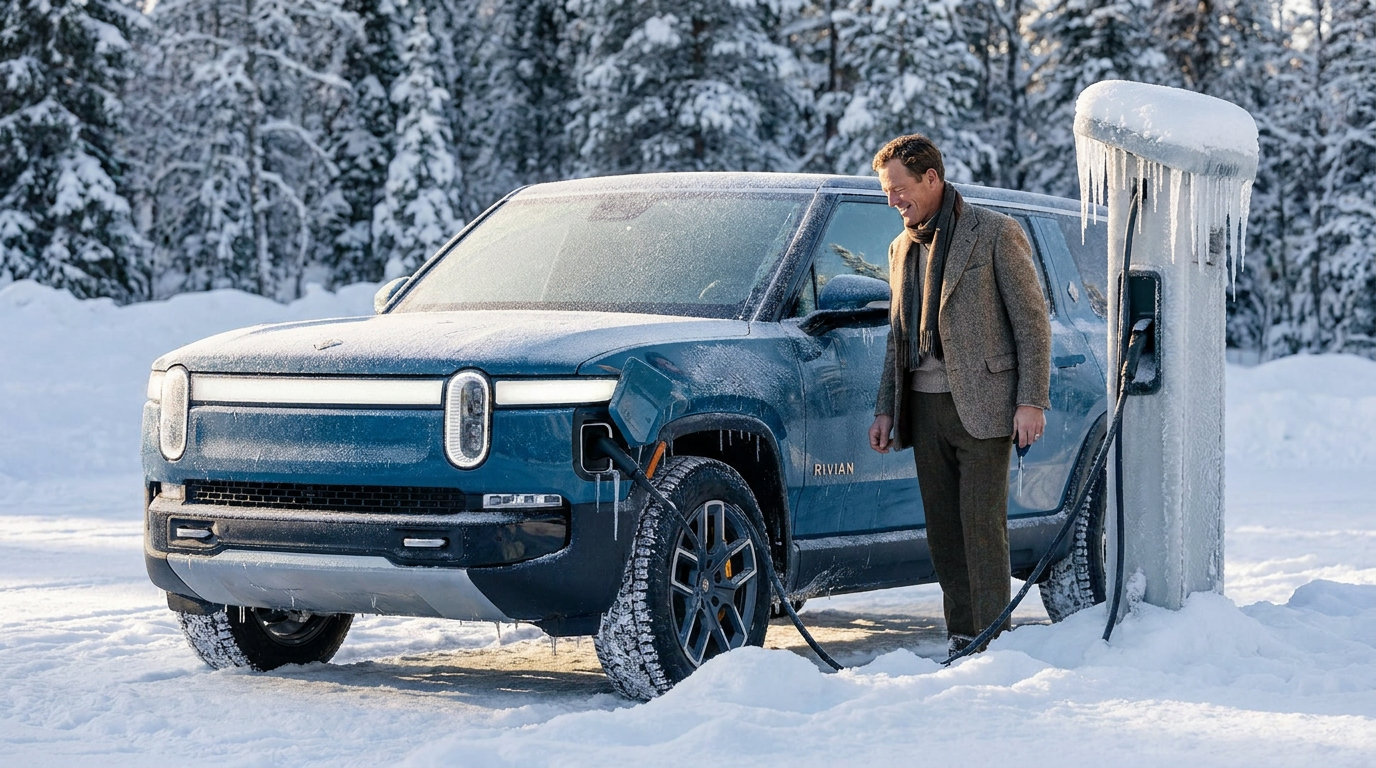
But cost is only half the story; the other half is climate resilience. Drivers in cold regions have long complained about lithium-ion batteries losing significant range and charging speed when temperatures plummet. Sodium-ion chemistry inherently resists this degradation.[3][5]
But cost is only half the story; the other half is climate resilience.
Testing data shows that the latest sodium-ion cells can retain approximately 90% of their nominal capacity even at a punishing -40°C. At -30°C, their discharge power is nearly three times that of a comparable LFP cell. For fleet operators in Northern Europe, taxi drivers in Helsinki, or daily commuters in the Canadian prairies, this translates to predictable winter range without the need for energy-intensive battery heaters.[3][5]
Safety profiles also see a marked improvement. Sodium-ion cells are less prone to thermal runaway—the dangerous, self-sustaining chain reaction that causes battery fires. They can be safely discharged to zero volts for transport, drastically reducing the fire risk during shipping and assembly, a feat that would permanently damage a lithium-ion cell.[4][6]
Scaling up a new battery chemistry usually takes decades, but sodium-ion is moving at an unprecedented pace. The secret lies in its manufacturing compatibility. Because the internal architecture is so similar to lithium-ion, manufacturers can use 70% to 80% of their existing factory equipment to build sodium cells.[7]

This "drop-in" capability means gigafactories do not need to be torn down and rebuilt. Companies can simply switch production lines from lithium to sodium in a matter of months, allowing the industry to bypass the massive capital expenditure normally required to commercialize a new energy storage technology.[4][7]
Despite these breakthroughs, sodium-ion is not a silver bullet that will immediately render lithium obsolete. The technology's primary constraint remains energy density. Because sodium is heavier and larger than lithium, the batteries store less energy per kilogram.[3][7]
Currently, CATL's Naxtra sodium-ion cells achieve an energy density of roughly 175 Wh/kg. While this is a massive leap from early prototypes and puts it within striking distance of older LFP batteries, it still trails far behind the premium Nickel Manganese Cobalt (NMC) lithium-ion cells that boast 250 Wh/kg or more.[1][3]

In practical terms, this means sodium-ion batteries are too heavy and bulky for long-range luxury sedans or heavy-duty electric pickup trucks that need to travel 500 miles on a single charge. Instead, their immediate future lies in entry-level city cars, compact hatchbacks, and urban delivery vans where a 250-mile range is more than sufficient.[2][7]
Beyond passenger vehicles, the true scale of sodium-ion may be realized on the power grid. Stationary energy storage systems—massive battery banks used to store wind and solar power—do not care about weight or physical size. For these applications, the ultra-low cost, high safety, and wide temperature tolerance of sodium-ion make it an almost perfect fit.[3][6][7]
Looking ahead, battery makers are not standing still. CATL is actively developing next-generation sodium cells that target a 600-kilometer driving range, which would push the technology squarely into the mainstream automotive sector. Other manufacturers are experimenting with hybrid battery packs that mix sodium and lithium cells, using software to balance the cold-weather strengths of the former with the high capacity of the latter.[2][7]
The electric vehicle landscape of the late 2020s will not be a winner-take-all battle between elements. Instead, 2026 marks the beginning of a diversified battery ecosystem. Lithium will continue to power the premium, long-range segment, while sodium-ion democratizes electrification, providing a cheap, rugged, and abundant foundation for the masses.[3][6]
How we got here
2023
First generation of sodium-ion battery storage systems and early prototype vehicles are tested in China.
February 2026
CATL and Changan officially unveil the Nevo A06, the first mass-produced passenger EV with a sodium-ion pack.
Mid-2026
The first commercial sodium-ion EVs begin rolling off assembly lines and reaching consumers.
Late 2026
Sodium-ion cell production costs are projected to reach parity with low-cost LFP lithium batteries.
Viewpoints in depth
Battery Manufacturers' View
Focusing on rapid scaling and cost parity to capture the entry-level EV market.
Companies like CATL and BYD view sodium-ion as the ultimate tool to democratize electric vehicles. By leveraging existing lithium-ion manufacturing lines, they argue they can scale production with minimal capital expenditure. Their primary goal is to drive cell costs down to match or beat Lithium Iron Phosphate (LFP) by the end of 2026, effectively cornering the market for budget-friendly city cars and grid storage.
Supply Chain Analysts' View
Emphasizing geopolitical security and reduced reliance on critical minerals.
For energy analysts and market researchers, the appeal of sodium-ion lies in its material independence. Because the chemistry uses abundant sodium instead of lithium, and aluminum instead of copper, it insulates the EV industry from the volatile price spikes and geographical bottlenecks that have historically plagued battery production. They see this diversification as essential for meeting global electrification targets without triggering a mineral shortage.
What we don't know
- Whether Western automakers will rapidly adopt sodium-ion technology or cede the entry-level market to Chinese manufacturers.
- Exactly how long the first generation of mass-produced sodium-ion cells will last under real-world daily driving conditions over a decade.
- If future breakthroughs in sodium energy density will eventually allow the chemistry to compete in the 400-mile long-range EV segment.
Key terms
- Sodium-Ion (Na-ion)
- A rechargeable battery chemistry that uses abundant sodium ions as the charge carrier instead of lithium.
- Energy Density
- The amount of energy a battery can store relative to its weight, typically measured in Watt-hours per kilogram (Wh/kg).
- LFP (Lithium Iron Phosphate)
- A popular, durable, and lower-cost lithium-ion battery chemistry widely used in standard-range EVs today.
- Hard Carbon
- A disordered carbon material used as the anode in sodium-ion batteries because its structure accommodates the larger sodium ions.
- Thermal Runaway
- A dangerous chain reaction within a battery cell that leads to rapid overheating and potential fires.
Frequently asked
Can I put a sodium-ion battery in my current EV?
No. While the manufacturing process is similar, the physical battery packs and battery management systems are engineered specifically for sodium chemistry and cannot be retrofitted into older vehicles.
Will sodium batteries make electric cars cheaper?
Yes. Because sodium is abundant and the cells use cheaper materials like aluminum instead of copper, automakers expect sodium-ion to significantly lower the sticker price of entry-level EVs.
Are sodium-ion batteries safe?
Yes, they are generally considered safer than lithium-ion. They have a lower risk of thermal runaway (battery fires) and can be safely discharged to zero volts for transport without damaging the cell.
Sources
Source coverage
7 outlets
2 viewpoints surfaced







[1]ElectrekCommercial Adopters
CATL is bringing sodium-ion batteries to EVs in 2026
Read on Electrek →[2]CarNewsChinaCommercial Adopters
CATL to mass-produce Sodium-Ion Batteries in 2026, targets 600 km range
Read on CarNewsChina →[3]International Energy AgencyResource & Energy Analysts
Sodium-ion batteries are emerging as a new player in battery markets
Read on International Energy Agency →[4]CRU GroupResource & Energy Analysts
Scaling Na-ion capacity reduces exposure to lithium price risk
Read on CRU Group →[5]EleportCommercial Adopters
Sodium-Ion batteries go mainstream
Read on Eleport →[6]SodiumBatteryHubCommercial Adopters
Sodium-Ion Batteries Beat Lithium on Cost and Safety in 2026
Read on SodiumBatteryHub →[7]Discovery AlertResource & Energy Analysts
Manufacturing Scale and Market Challenges for Sodium-Ion
Read on Discovery Alert →
Every angle. Every day.
Get transportation stories with full source coverage and perspective breakdowns delivered to your inbox.