
The Science of Spin: How Hexagonal Rackets and Carbon Fiber are Rewriting the Physics of Table Tennis
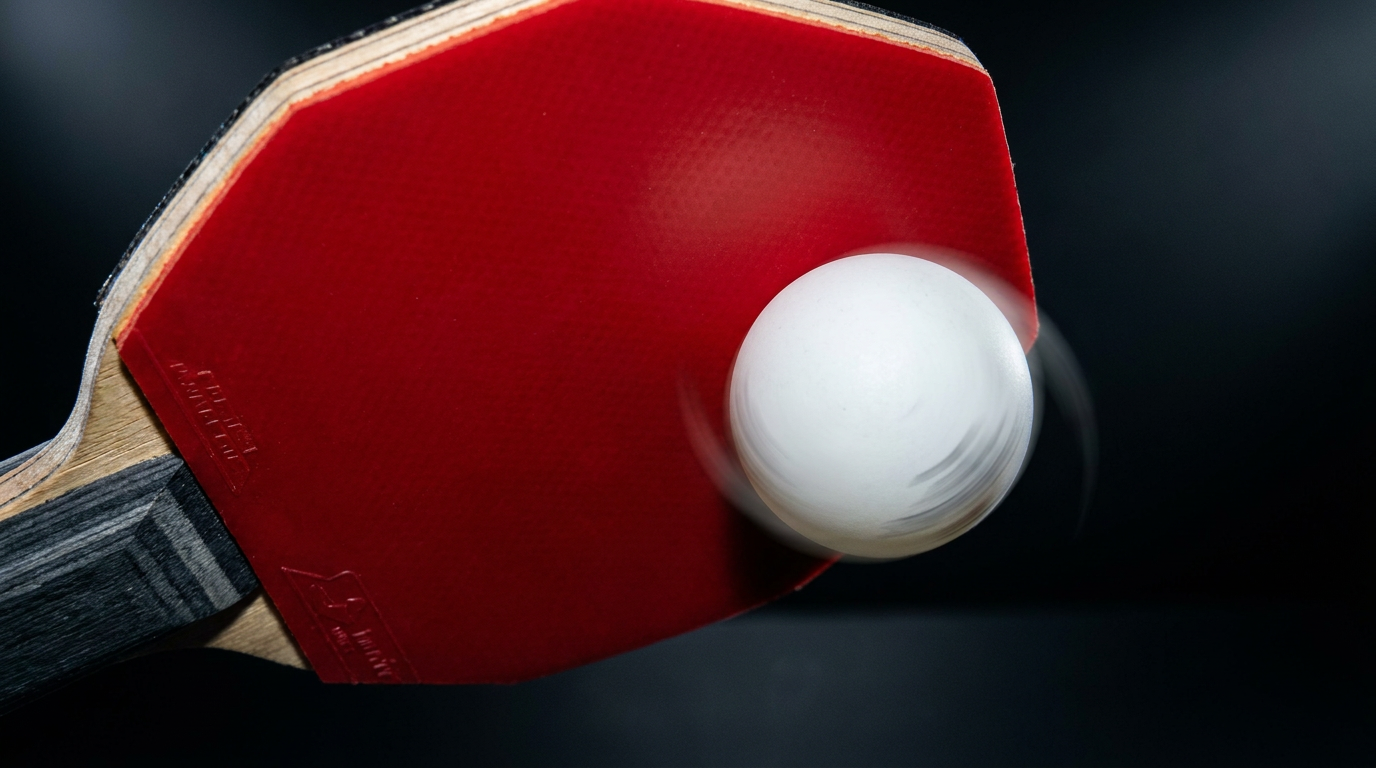
Table tennis is undergoing a technological renaissance as engineers abandon the traditional oval racket for polygonal blades and advanced composites. These innovations allow players to manipulate the Magnus effect, generating unprecedented levels of speed and spin.
By Factlen Editorial Team
- Equipment Innovators
- Focus on material science, blade geometry, and maximizing performance metrics.
- Analytical Observers
- Synthesize technological trends with their practical impact on the sport's evolution.
- Sports Physicists
- Focus on the fluid dynamics and aerodynamic forces acting on the ball.
What's not represented
- · Traditionalist players who prefer the feel of pure wood blades
- · Grassroots coaches adapting teaching methods to new equipment
Why this matters
The equipment evolution in table tennis demonstrates how materials science and fluid dynamics can fundamentally elevate human athletic performance. For amateur players, understanding these mechanics provides a direct pathway to improving their own game through better equipment choices.
Key points
- Table tennis rackets are shifting from traditional oval shapes to hexagonal and polygonal designs.
- The new geometry increases the sweet spot by up to 12% and improves wrist articulation.
- Modern blades use carbon fiber and aramid layers to increase stiffness and energy transfer.
- Tensor rubbers create a trampoline effect to maximize speed without chemical speed glues.
- These innovations help players manipulate the Magnus effect, forcing the ball to dive sharply onto the table.
- The technology evolved rapidly to compensate for the sport's transition to heavier, less-spin-friendly plastic balls.
Table tennis is often perceived as a casual basement pastime, but at the competitive level, it is a high-speed physics experiment. The modern game is defined by fractions of a second, microscopic margins of error, and extreme aerodynamic forces. To compete on the world stage, athletes require equipment that pushes the absolute boundaries of material science.[6]
For over a century, the primary tool of the sport—the racket—remained largely unchanged. The traditional oval wooden blade was the undisputed, unquestioned standard. However, the sport is currently undergoing a radical technological revolution, driven by aerodynamic engineering and a deeper understanding of biomechanics.[1]
The most visible manifestation of this shift is the abandonment of the classic oval shape. In recent years, hexagonal and polygonal blades have surged in popularity, moving rapidly from niche prototypes to the standard equipment of choice for elite competitors and club players alike.[6]
This geometric redesign is not a mere aesthetic choice or a marketing gimmick; it is deeply rooted in physics. By squaring off the edges of the racket, engineers have successfully expanded the "sweet spot"—the optimal hitting zone on the blade—by up to 12 percent compared to traditional rounded models.[4][5]

Crucially, this expanded sweet spot is concentrated in the upper half of the blade. High-speed video analysis reveals that professional players consistently strike the ball near the top edge of the racket during aggressive topspin rallies. The hexagonal shape optimizes the surface area exactly where the ball makes contact most frequently.[1]
Beyond expanding the sweet spot, the polygonal shape fundamentally alters the racket's weight distribution. The design creates a slightly head-heavy balance, which acts as a fulcrum during the swing. This allows players to generate more angular momentum when they snap their wrists, translating directly to heavier spin and higher velocity.[6]
But the shape of the blade is only half of the equation. The internal composition of the racket has also evolved far beyond simple plywood. Modern blades are complex composites, incorporating layers of carbon fiber, Zylon, and aramid woven seamlessly between ultra-thin wood veneers.[1]
These synthetic layers drastically increase the stiffness and torsional stability of the blade. When a player strikes the ball slightly off-center, the carbon fiber prevents the racket from twisting in their hand, ensuring that the kinetic energy is still directed forward rather than being lost to vibration.[1][5]
Covering these high-tech blades are specialized "tensor" rubbers. Unlike traditional rubbers of the past, tensor variants are manufactured with extreme internal tension permanently built into the sponge layer. This creates a trampoline effect, allowing the rubber to absorb the ball's impact and violently eject it forward without the need for the toxic chemical speed glues that were banned decades ago.[1]
Covering these high-tech blades are specialized "tensor" rubbers.
All of this technology—the polygonal shape, the carbon fiber core, the tensioned rubber—serves one primary master: the Magnus effect. Understanding modern table tennis requires a firm grasp of this fundamental aerodynamic principle.[2][6]

The Magnus effect dictates how a spinning object interacts with the fluid it travels through. When a player brushes the ball sharply to create topspin, the top of the ball rotates into the oncoming air, while the bottom of the ball rotates with the airflow.[2][3]
This rapid rotation creates a stark pressure differential. The air pressure becomes higher on the top of the ball and lower on the bottom. According to Newton's laws of motion, this imbalance generates a net downward force, aggressively pushing the ball toward the table.[2][3]
This downward force is the secret to the modern game. It allows players to hit the ball with staggering forward velocity while still ensuring it arcs downward sharply enough to land within the confines of the nine-foot table. Without the Magnus effect, modern topspin drives would simply fly out of bounds.[2][6]
Conversely, backspin reverses this aerodynamic dynamic. A ball hit with heavy backspin experiences higher pressure on the bottom, creating aerodynamic lift. This causes the ball to float and decelerate in mid-air, forcing the opponent to generate their own pace to return the shot effectively.[3]

Recent studies in sports physics have even documented an "inverse Magnus effect" in table tennis. At specific, highly elevated spin ratios, the wake of the air behind the ball contracts and reorients, causing the ball to deviate in unexpected lateral directions—a phenomenon elite players exploit for deceptive around-the-net shots.[2]
The catalyst for this current wave of intense innovation was actually a regulatory change. In 2014, the International Table Tennis Federation mandated a global transition from highly flammable celluloid balls to slightly larger, heavier 40+ millimeter plastic balls.[1]
The new plastic balls were inherently slower, bounced differently, and were significantly more resistant to spin. To maintain the sport's dynamic, aggressive style, equipment manufacturers had to engineer rackets that could artificially inject the speed and rotation that the new balls naturally lacked.[1][6]
Today, data-driven design is the industry standard. Manufacturers utilize massive datasets of player telemetry and AI-driven simulations to map carbon weaves and formulate rubber compounds. This allows them to tailor equipment to specific playing styles—whether that is a loop-heavy attacker or a control-oriented defender.[4][5]
The result is a sport that is faster, more athletic, and more visually spectacular than ever before. The equipment has become a seamless extension of the athlete's biomechanics, allowing them to manipulate physics in real-time with astonishing precision.[1][6]
As we look toward the future, the integration of smart sensors directly into the handles of these hexagonal blades promises to provide real-time telemetry on swing speed, impact angles, and spin rates. The humble basement pastime has truly transformed into a marvel of modern sports engineering.[1][6]
How we got here
Pre-2014
Table tennis is dominated by 38mm and 40mm celluloid balls, allowing for extreme spin with traditional wooden blades.
2014
The International Table Tennis Federation mandates the switch to 40+ plastic balls for safety and durability, reducing overall spin.
2021
Swedish player Truls Möregårdh reaches the World Championship final using a radical hexagonal blade, sparking global interest.
2024-2025
Major manufacturers release advanced inner-carbon and aramid-fiber blades to compensate for the heavier plastic balls.
2026
Polygonal shapes and data-driven 'tensor' rubbers become standard equipment for competitive players worldwide.
Viewpoints in depth
Sports Physicists
Scientists studying the aerodynamics and material properties of the sport.
For physicists, table tennis is a high-speed fluid dynamics laboratory. They focus on how the Magnus effect dictates ball trajectory and how new composite materials interact with the plastic ball. Researchers note that the shift to 40+ millimeter plastic balls fundamentally altered the game's aerodynamics, prompting the current wave of racket innovation to recover lost spin and speed.
Equipment Engineers
Designers pushing the boundaries of racket shapes and materials.
Engineers argue that the traditional oval racket was an arbitrary historical artifact, not an optimized design. By utilizing carbon mapping, aramid fibers, and polygonal shapes, they aim to maximize the sweet spot and improve energy transfer. Their goal is 'controlled power'—allowing players to swing with maximum force while relying on the racket's geometry and rubber tension to keep the ball on the table.
Professional Players
Elite athletes adapting to the new technology.
At the elite level, players are highly sensitive to minute changes in equipment balance and dwell time. Many have embraced the hexagonal blades for the added power on wide forehand loops and the improved wrist articulation on backhand flicks. However, they also emphasize that technology cannot replace technique; the new rackets simply raise the ceiling of what is physically possible during a rally.
What we don't know
- Whether the International Table Tennis Federation will eventually regulate or cap racket shapes to preserve traditional playstyles.
- How the integration of smart sensors into racket handles will impact live coaching and match analytics in the coming years.
Key terms
- Sweet Spot
- The optimal area on the racket face that provides the most power, consistency, and least vibration when striking the ball.
- Magnus Effect
- The aerodynamic force that causes a spinning ball to curve away from its principal flight path due to pressure differences.
- Tensor Rubber
- A type of table tennis rubber manufactured with built-in tension in the sponge, creating a trampoline effect that boosts speed and spin.
- Dwell Time
- The fraction of a second that the ball remains in contact with the racket's rubber during a stroke.
- Carbon Blade
- A racket core that incorporates thin layers of carbon fiber between the wood veneers to increase stiffness and speed.
Frequently asked
Why are new table tennis rackets hexagonal?
Hexagonal or polygonal shapes increase the racket's surface area at the top half of the blade. This expands the 'sweet spot' and shifts the weight distribution outward, allowing for more powerful shots.
What is the Magnus effect?
It is a physical phenomenon where a spinning object moving through a fluid creates a pressure differential. In table tennis, topspin creates higher pressure above the ball, forcing it to dive downward.
Why do modern blades use carbon fiber?
Carbon fiber, aramid, and Zylon layers increase the stiffness and stability of the wood blade. This provides a larger sweet spot and faster energy transfer without adding excessive weight.
How did the plastic ball change the sport?
The transition from celluloid to 40+ millimeter plastic balls made the ball slightly heavier and less prone to spin. Racket technology evolved to help players generate the speed and rotation that the new balls naturally resisted.
Sources
Source coverage
6 outlets
3 viewpoints surfaced






[1]Racket TripEquipment Innovators
Innovation in Table Tennis: Technologies and Trends Transforming the Game
Read on Racket Trip →[2]American Institute of PhysicsSports Physicists
Experimental analysis of the Magnus effect on table tennis balls
Read on American Institute of Physics →[3]ResearchGateSports Physicists
Analytical Solution of Spinning Table Tennis Ball Trajectories Under Magnus Effect
Read on ResearchGate →[4]Elevate Door Co Industry ReportsEquipment Innovators
Emerging Trends in Table Tennis Racket Brands for 2026
Read on Elevate Door Co Industry Reports →[5]Konyo SportEquipment Innovators
Table tennis racket technology trends 2026
Read on Konyo Sport →[6]Factlen Editorial TeamAnalytical Observers
Synthesis by Factlen editorial team
Read on Factlen Editorial Team →



Every angle. Every day.
Get sports stories with full source coverage and perspective breakdowns delivered to your inbox.