
AI Startup Basecamp Research Unveils Breakthrough in Programmable Gene Insertion
London-based startup Basecamp Research has developed an AI model capable of designing custom enzymes that insert large DNA sequences into the human genome without damaging it, overcoming a major limitation of CRISPR.
By Factlen Editorial Team
- Techbio Innovators
- View biology as a programmable engineering discipline powered by AI.
- Medical Researchers
- Focus on the clinical safety and payload benefits over existing CRISPR tools.
- Biodiversity Advocates
- Emphasize the need for ethical sourcing of the global genetic data powering these models.
What's not represented
- · Regulatory bodies overseeing the approval of AI-generated biological therapies
- · Patients currently suffering from untreatable genetic diseases awaiting these therapies
Why this matters
For decades, genetic medicine has been constrained by tools that can only make small edits and often damage DNA in the process. This AI-driven breakthrough allows scientists to safely insert entirely new, large therapeutic genes, opening the door to cures for complex cancers and rare genetic diseases that were previously untreatable.
Key points
- Basecamp Research developed an AI model that designs enzymes to insert large DNA sequences into the human genome.
- Unlike CRISPR, the new aiPGI technology does not require breaking DNA strands, making it significantly safer.
- The AI, named EDEN, was trained on 10 trillion tokens of DNA collected from over a million species globally.
- In lab tests, the technology successfully targeted 10,000 disease-related locations and showed 90% tumor clearance in CAR-T cells.
- The startup is launching the Trillion Gene Atlas to sequence 100 million more species to further train its models.
A London-based techbio startup has achieved a long-sought milestone in genetic medicine, using artificial intelligence to design custom enzymes capable of inserting large sequences of DNA into the human genome with unprecedented precision. Basecamp Research, backed by Nvidia's venture capital arm, unveiled its AI-Programmable Gene Insertion (aiPGI) platform, which promises to overcome the most significant limitations of current gene-editing technologies.[1][4][5]
For years, the medical world has relied on CRISPR-Cas systems to edit genes. While revolutionary, CRISPR has fundamental constraints: it typically relies on breaking both strands of the DNA helix to make changes, and it is largely limited to making small edits. Breaking DNA can introduce dangerous variability, off-target mutations, and safety concerns, particularly when engineering cells for human therapies. Furthermore, many complex genetic diseases require the insertion of entirely new, large functional genes—a payload size that CRISPR struggles to accommodate safely.[2][5]
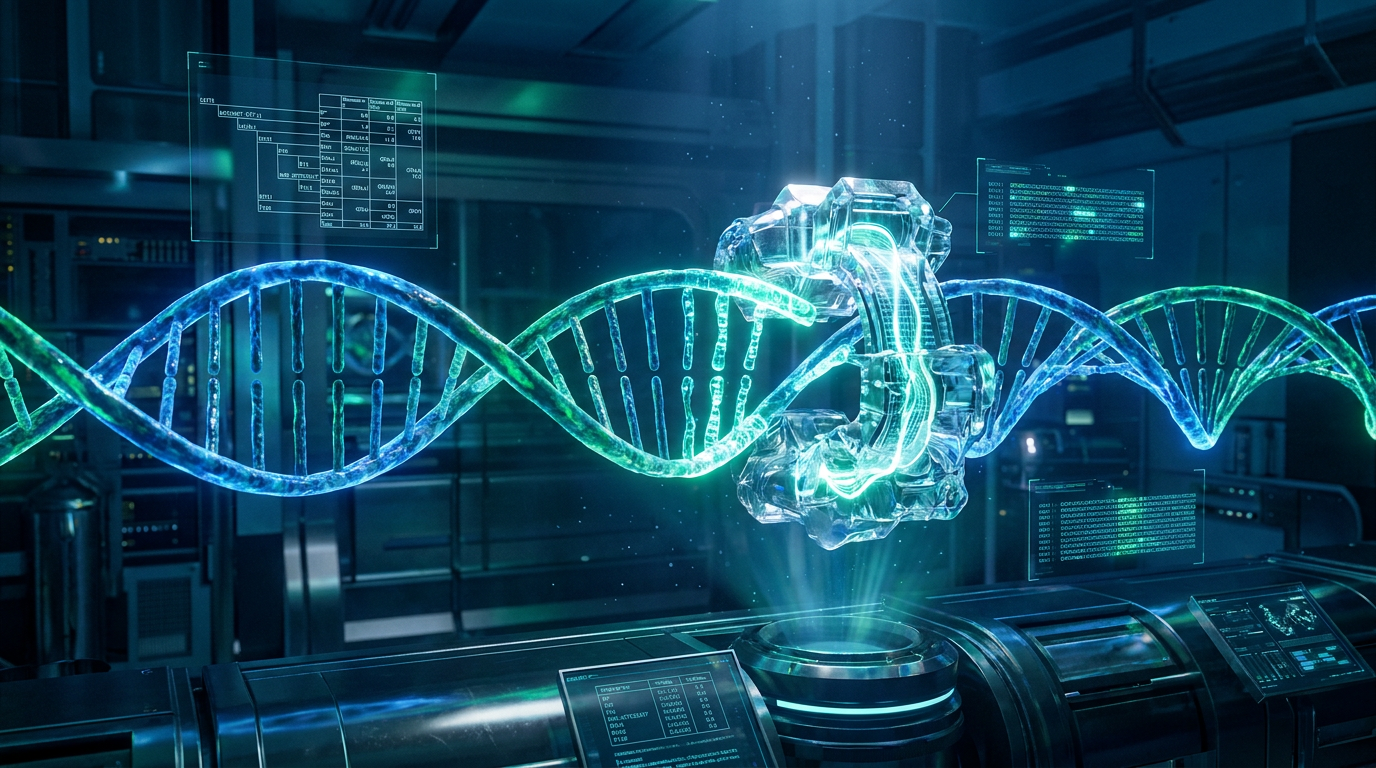
Basecamp Research’s approach bypasses these hurdles entirely. Instead of repurposing naturally occurring enzymes like Cas9, the startup used its proprietary AI model, EDEN, to design entirely new "large serine recombinase" proteins from scratch. These AI-generated enzymes act like molecular delivery vehicles that can place large therapeutic DNA payloads at exact, programmable locations in the genome without severing the DNA strands.[4][5]

The results in the laboratory have been striking. According to a peer-reviewed paper co-authored with researchers from Nvidia and Microsoft, the EDEN model successfully designed active insertion proteins for 100 percent of the disease-relevant genomic target sites tested. The company has already demonstrated successful insertions at more than 10,000 disease-related locations in the human genome.[4][5]
In one critical application, Basecamp used the technology to engineer primary human T cells, integrating cancer-fighting DNA into "safe-harbor" sites in the genome. In laboratory assays, these newly engineered CAR-T cells demonstrated more than 90 percent tumor-cell clearance. The precision of the insertion means the therapies could be vastly safer and more predictable than current methods.[4][5]
In one critical application, Basecamp used the technology to engineer primary human T cells, integrating cancer-fighting DNA into "safe-harbor" sites in the genome.
The secret behind EDEN’s capability lies in its training data. While most biological AI models are trained on public databases that represent a narrow slice of life on Earth, Basecamp Research spent five years conducting global "bioprospecting." The team collected samples from deep-sea volcanoes, remote rainforests, and extreme environments across 150 locations in 28 countries. This effort yielded BaseData, a proprietary dataset containing 10 trillion tokens of evolutionary DNA from over one million newly identified species.[1][2][5]

By feeding this massive library of evolutionary history into a cluster of 1,008 Nvidia Hopper GPUs, the EDEN model learned the fundamental "language" of DNA. It learned how nature solves complex biological problems, allowing the AI to reason out new protein structures that have never existed in nature but function perfectly in human cells.[2][4][5]
The technology's potential extends beyond gene therapy. Basecamp also applied EDEN to the growing crisis of antimicrobial resistance. In collaboration with the University of Pennsylvania, the AI designed novel antimicrobial peptides—small proteins that kill bacteria. In lab tests, these AI-designed molecules achieved a 97 percent success rate, including highly potent candidates against multidrug-resistant "superbugs."[2][4][5]
While the breakthrough is currently confined to the laboratory, the implications for the pharmaceutical industry are profound. Developing a new drug or gene therapy traditionally takes years of trial and error and hundreds of millions of dollars. With EDEN, medical researchers can input a specific genomic target site, and the AI can generate the exact enzyme needed to deliver the cure, effectively turning biological design into a programmable software problem.[2][3][6]

To accelerate this future, Basecamp Research recently announced the "Trillion Gene Atlas" initiative in partnership with Anthropic, Ultima Genomics, and PacBio. The project aims to expand the known genetic universe by another 100-fold, collecting genomic data from more than 100 million species. By capturing an even wider array of nature's evolutionary tricks, the startup hopes to unlock AI systems capable of designing cures for virtually any genetic disease on demand.[4]
How we got here
2021–2025
Basecamp Research conducts global bioprospecting, collecting DNA from over a million species to build BaseData.
June 2025
The company publishes its novel data collection strategy, emphasizing ethical sourcing and global representation.
January 2026
Basecamp unveils its aiPGI platform and EDEN models, demonstrating programmable gene insertion without DNA breaks.
March 2026
The startup announces the Trillion Gene Atlas initiative to sequence 100 million species in partnership with Anthropic and Ultima Genomics.
Viewpoints in depth
Techbio Innovators
Focus on how AI and massive biodiversity data can solve the inverse design problem in biology.
For AI and biotech founders, the breakthrough proves that biology can be treated as a programmable engineering discipline. By mapping billions of years of evolution, AI models like EDEN can solve the 'inverse design problem'—working backward from a desired medical outcome to generate the exact protein sequence required to achieve it. They view this as a shift away from merely discovering what nature has already made, toward actively designing bespoke biological machines.
Medical Researchers
Focus on the clinical implications of moving past CRISPR's limitations.
Clinicians and geneticists emphasize the safety and payload benefits of the new technology. Because traditional CRISPR relies on breaking DNA strands, it carries inherent risks of off-target mutations that have slowed the rollout of many gene therapies. The ability to insert large, complex genes without severing the DNA helix means that multi-gene diseases and complex cancers could finally be treated safely, moving gene therapy from a niche tool for rare single-gene defects to a mainstream medical intervention.
Biodiversity Advocates
Focus on the ethical sourcing of global genetic data used to train these models.
Environmental and ethics groups point out that the power of these AI models relies entirely on 'bioprospecting'—harvesting genetic data from diverse ecosystems around the world. They stress that as startups sequence millions of species from remote rainforests and oceans, it is vital to avoid 'biopiracy.' Advocates argue that the countries and indigenous communities stewarding these biodiverse regions must share in the commercial and medical benefits derived from the AI models trained on their local ecosystems.
What we don't know
- How quickly the AI-designed enzymes can move from laboratory assays to human clinical trials.
- Whether the enzymes will trigger unintended immune responses when introduced into the human body.
- How the regulatory approval process will adapt to therapies designed entirely by artificial intelligence.
Key terms
- Programmable Gene Insertion
- The ability to intentionally place large, therapeutic DNA sequences at exact, pre-determined locations within a genome.
- CRISPR-Cas
- A widely used gene-editing technology that acts like molecular scissors, cutting DNA to allow natural repair processes to alter the gene.
- Large Serine Recombinase
- A type of enzyme that can seamlessly integrate or swap large segments of DNA without breaking the double helix.
- Bioprospecting
- The search for plant and animal species from which medicinal drugs and other commercially valuable compounds can be obtained.
- Antimicrobial Peptides
- Small proteins that can kill bacteria and are being researched as alternatives to traditional antibiotics.
Frequently asked
How is this different from CRISPR?
CRISPR typically makes small edits by cutting the DNA strands, which can cause unintended damage. Basecamp's AI-designed enzymes can insert much larger genes without breaking the DNA, making the process safer and more versatile.
What diseases could this cure?
The technology is aimed at complex genetic diseases that require the insertion of entire healthy genes, as well as engineering immune cells to fight aggressive cancers.
Where did the AI get its training data?
The AI was trained on a proprietary dataset of DNA collected from over a million species found in extreme environments around the world, from deep-sea volcanoes to rainforests.
Is this available for patients yet?
No. The technology has proven highly successful in laboratory tests on human cells, but it must undergo rigorous clinical trials before it can be used in patients.
Sources
Source coverage
6 outlets
3 viewpoints surfaced






[1]Financial TimesMedical Researchers
AI used to design enzymes for gene therapy in medical milestone
Read on Financial Times →[2]Evening StandardBiodiversity Advocates
With samples collected from millions of species, Basecamp Research is building the “ultimate medicine-making machine”
Read on Evening Standard →[3]Tech.euTechbio Innovators
UK startup Basecamp Research unveils world's first AI models for programmable gene insertion
Read on Tech.eu →[4]PR NewswireTechbio Innovators
Basecamp Research Announces First AI Models Capable of Programmable Gene Insertion
Read on PR Newswire →[5]Move the Needle NewsMedical Researchers
Basecamp Research claims AI breakthrough in programmable gene insertion
Read on Move the Needle News →[6]Read the PeakMedical Researchers
Nvidia could help take gene therapy to the next level
Read on Read the Peak →


Every angle. Every day.
Get business stories with full source coverage and perspective breakdowns delivered to your inbox.