
U.S. and Iran Reach $300 Billion Agreement to Reopen Strait of Hormuz, Easing Global Energy Markets
President Trump defended a landmark agreement with Tehran that reopens the critical Strait of Hormuz to global shipping in exchange for $300 billion in financial concessions, immediately driving U.S. gas prices below $4 a gallon.
By Factlen Editorial Team
- Economic Pragmatists
- Argue that the devastating global economic cost of a closed Strait of Hormuz far outweighs the financial concessions made to Iran.
- National Security Hawks
- View the $300 billion package as dangerous appeasement that will inevitably fund regional proxy groups and destabilize the Middle East.
- Iranian Leadership
- Frame the agreement as a diplomatic triumph that successfully leveraged their geographic position to break crippling economic sanctions.
What's not represented
- · Independent shipping insurers
- · Iranian citizens facing domestic inflation
- · Gulf Arab state diplomats
Why this matters
The Strait of Hormuz is the world's most critical oil chokepoint, and its reopening immediately lowers global energy costs and eases inflation. However, the $300 billion financial concession to Iran fundamentally reshapes the balance of power and security architecture in the Middle East.
Key points
- The U.S. and Iran signed an agreement to fully reopen the Strait of Hormuz to commercial shipping.
- U.S. gas prices immediately fell below $4 a gallon, and global markets rallied on the news.
- The deal includes $300 billion in financial concessions to Iran, drawing sharp criticism from security hawks.
- President Trump defended the deal at the G7, arguing the economic benefits outweigh the costs.
- The financial package consists of unfrozen assets and sanctions relief rather than direct U.S. taxpayer payouts.
- Regional allies have expressed private concerns about Iran utilizing the new capital to fund proxy networks.
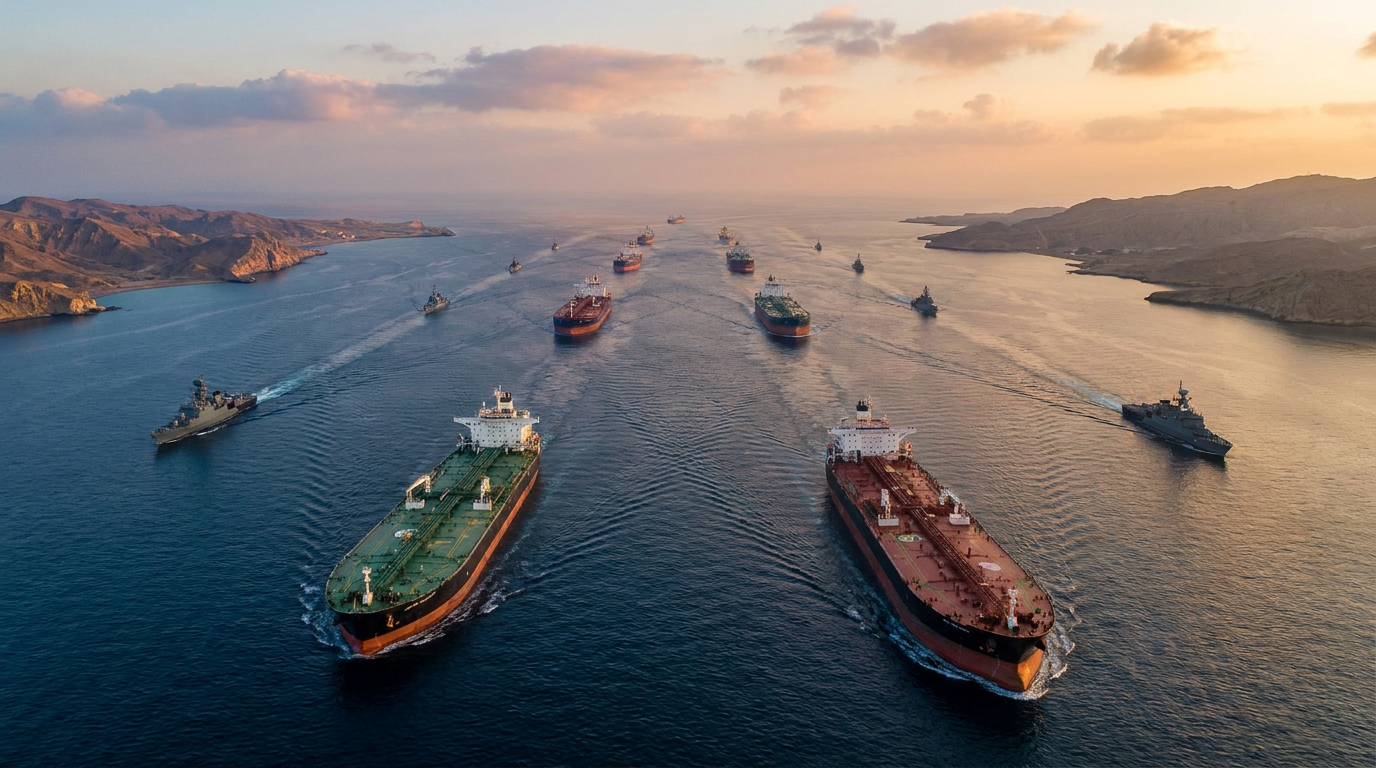
Following months of military tension and restricted shipping that sent global energy markets into a tailspin, the United States and Iran have signed a landmark agreement to fully reopen the Strait of Hormuz. The deal, which guarantees the safe passage of commercial vessels through the critical chokepoint, immediately triggered a massive sell-off in oil futures and brought swift relief to consumers worldwide.[1][4][6]
The economic impact was instantaneous. In the United States, the national average for a gallon of gasoline plummeted below $4 for the first time in months, offering a highly visible political victory for the administration just as the summer driving season begins. Global markets rallied on the news, with major indices in Europe and Asia posting their strongest single-day gains of the year as the threat of a prolonged energy-driven recession evaporated.[1][7]

However, the diplomatic breakthrough comes with a staggering price tag that has ignited fierce political debate: $300 billion in financial concessions to Tehran. During a marathon press conference at the G7 summit, President Trump fiercely defended the arrangement, pushing back against critics who labeled the deal a massive capitulation. He argued that the economic damage of a closed Strait would have far exceeded the financial package provided to Iran.[2][5]
The mechanics of the $300 billion transfer remain a point of intense scrutiny. Administration officials, utilizing what critics described as "semantics," emphasized that the total figure represents a combination of unfrozen Iranian assets held in foreign banks, sanctions waivers on specific non-military exports, and complex debt restructuring, rather than direct taxpayer payouts. Nevertheless, the sheer volume of capital flowing back into the Iranian economy has alarmed regional security analysts.[2][5]

In Washington, the agreement has drawn sharp bipartisan reactions. While consumer advocates and retail sectors celebrated the end of the energy squeeze, defense hawks warned that the influx of capital will inevitably be funneled into Iran's regional proxy networks. The deal has even permeated late-night television, with hosts mocking the administration for being "Hormuzled" into paying a premium to resolve a crisis that critics argue was mishandled from the start.[1][2]
In Washington, the agreement has drawn sharp bipartisan reactions.
The ripple effects of the prior uncertainty are still being felt across the global economy. In the United Kingdom, major retailers like Tesco reported that their sales growth had more than halved in recent months, directly attributing the slowdown to the "ongoing uncertainty for many households" caused by the Middle East conflict and the resulting inflationary pressure on everyday goods.[3]
Despite the peace deal, central banks remain cautious. The Bank of England is still facing intense pressure to raise interest rates following unexpected wage growth and a dip in unemployment to 4.9%. Economists note that while the drop in oil prices will help cool headline inflation, the underlying structural damage to supply chains over the past few months will take time to fully unwind.[3][7]
For Tehran, the agreement represents a massive strategic and economic victory. Iranian state media has framed the deal as a successful defense of their territorial sovereignty and a humiliating concession by the West. The $300 billion package is expected to stabilize the heavily depreciated rial and fund domestic infrastructure projects that have been stalled for years under the weight of international sanctions.[4]

Regional allies, particularly Israel and Gulf Arab states, have expressed deep private reservations about the pact. During his G7 presser, Trump attempted to assuage these concerns, dedicating a significant portion of his remarks to reaffirming the U.S. commitment to Israel's security and hinting at parallel defense agreements designed to counter any potential Iranian overreach funded by the new capital.[2][4]
Moving forward, the focus shifts to implementation and verification. International shipping insurers have already begun lowering premiums for vessels transiting the Gulf, but naval escorts will likely remain a fixture in the region for the foreseeable future. As the first tankers pass through the newly secured Strait, the global economy breathes a sigh of relief, even as diplomats brace for the long-term geopolitical consequences of the historic payout.[6][7]
How we got here
Early 2026
Military tensions escalate, leading to severe restrictions on commercial shipping through the Strait of Hormuz.
Spring 2026
Global energy markets panic, sending oil futures skyrocketing and driving U.S. gas prices well above $4 a gallon.
June 18, 2026
The U.S. and Iran announce a landmark agreement to reopen the Strait in exchange for $300 billion in financial concessions.
Viewpoints in depth
The U.S. Administration's View
A pragmatic necessity to save the global economy from a devastating energy-driven recession.
Administration officials argue that the math of the deal is straightforward: the daily economic damage of a closed Strait of Hormuz far exceeds the value of the concessions granted to Tehran. By framing the $300 billion as largely consisting of Iran's own previously frozen assets rather than new U.S. taxpayer money, they maintain that the agreement is a diplomatic victory that restores global supply chains, crushes inflation, and provides immediate relief to consumers at the gas pump.
Regional Allies & Security Hawks
A dangerous capitulation that provides Tehran with the capital to fund future conflicts.
Defense analysts and regional allies, particularly Israel, view the massive financial injection with deep alarm. They argue that regardless of whether the funds are technically 'unfrozen assets,' providing $300 billion to the Iranian government will inevitably lead to increased funding for proxy networks across the Middle East. Critics contend that the deal sets a dangerous precedent, effectively rewarding Tehran for holding global shipping lanes hostage and ensuring that future security crises will be even more costly to resolve.
Global Energy Markets
Pure relief at the removal of the world's most dangerous supply-chain bottleneck.
For commodities traders, shipping insurers, and multinational retailers, the geopolitical nuances of the deal are secondary to the immediate restoration of the supply chain. The reopening of the Strait removes the massive 'risk premium' that had been baked into oil prices for months. Market analysts note that this single diplomatic breakthrough has done more to cool global inflation and prevent a European recession than any central bank policy could have achieved in the same timeframe.
What we don't know
- Exactly how the $300 billion will be disbursed and whether any mechanisms exist to track its usage.
- How regional allies like Israel and Saudi Arabia will adjust their defense postures in response to the deal.
- Whether the agreement includes any unannounced side-deals regarding Iran's nuclear program.
Key terms
- Strait of Hormuz
- A narrow waterway between the Persian Gulf and the Gulf of Oman, serving as the only sea passage from the Persian Gulf to the open ocean.
- Sanctions Relief
- The reduction or removal of economic penalties previously placed on a country to allow them to resume international trade.
- Unfrozen Assets
- Funds belonging to a nation that were previously locked in foreign banks due to sanctions, which are now being released back to the country's control.
Frequently asked
Why is the Strait of Hormuz so important?
It is the world's most critical oil chokepoint, with roughly 20% of global petroleum liquids passing through it. Any closure immediately spikes global energy prices.
Where is the $300 billion coming from?
Administration officials state it is not a direct taxpayer payout, but rather a combination of unfrozen Iranian assets held abroad, sanctions waivers, and debt restructuring.
How did this affect U.S. gas prices?
The guarantee of safe shipping immediately lowered global oil futures, causing the U.S. national average for gasoline to drop below $4 a gallon for the first time in months.
Sources
Source coverage
7 outlets
3 viewpoints surfaced







[1]The New York TimesEconomic Pragmatists
Average U.S. Gasoline Price Falls Below $4 for First Time in Months
Read on The New York Times →[2]Fox NewsNational Security Hawks
Trump defends war deal in marathon presser, using semantics on why Iran is getting $300 billion
Read on Fox News →[3]The GuardianEconomic Pragmatists
Tesco’s UK sales growth more than halves amid Iran war uncertainty
Read on The Guardian →[4]Al JazeeraIranian Leadership
Iran and US sign historic agreement to secure Gulf shipping lanes
Read on Al Jazeera →[5]ReutersIranian Leadership
Trump defends $300 bln Iran deal at G7, cites immediate drop in oil prices
Read on Reuters →[6]The Wall Street JournalEconomic Pragmatists
Oil Markets Plunge as Strait of Hormuz Reopens Under New U.S.-Iran Pact
Read on The Wall Street Journal →[7]BBC NewsEconomic Pragmatists
Global markets rally as US-Iran deal ends Hormuz blockade
Read on BBC News →

Every angle. Every day.
Get news politics stories with full source coverage and perspective breakdowns delivered to your inbox.