
The Evidence on At-Home LED Face Masks: Do They Actually Work?
Clinical data shows that at-home red and blue light therapy masks can modestly improve acne and fine lines, provided users commit to consistent use and choose devices with the correct wavelengths.
By Factlen Editorial Team
- Dermatological Consensus
- Values clinical evidence and safety, emphasizing that at-home devices are supplementary to in-office care and require proper diagnosis.
- Skincare Enthusiasts
- Values the convenience, non-invasive nature, and cumulative long-term benefits of integrating LED therapy into a daily at-home routine.
- Device Skeptics
- Highlights the low irradiance of at-home masks, the prevalence of ineffective knockoffs, and the high cost-to-benefit ratio compared to clinical lasers.
What's not represented
- · Aesthetic Device Manufacturers
- · Regulatory Bodies (FDA)
Why this matters
Consumers are spending hundreds of dollars on at-home light therapy devices based on social media hype. Understanding the clinical evidence helps buyers separate scientifically backed skincare tools from expensive, underpowered placebos.
Key points
- At-home LED masks use photobiomodulation to stimulate cellular repair and collagen production.
- Red light (630-660 nm) targets fine lines and aging, while blue light (415 nm) neutralizes acne-causing bacteria.
- Clinical trials confirm efficacy, but results require 8 to 12 weeks of consistent use.
- At-home devices have significantly lower irradiance (power) than in-office dermatological lasers.
- Users with darker skin tones or those taking photosensitizing medications should consult a doctor before use.
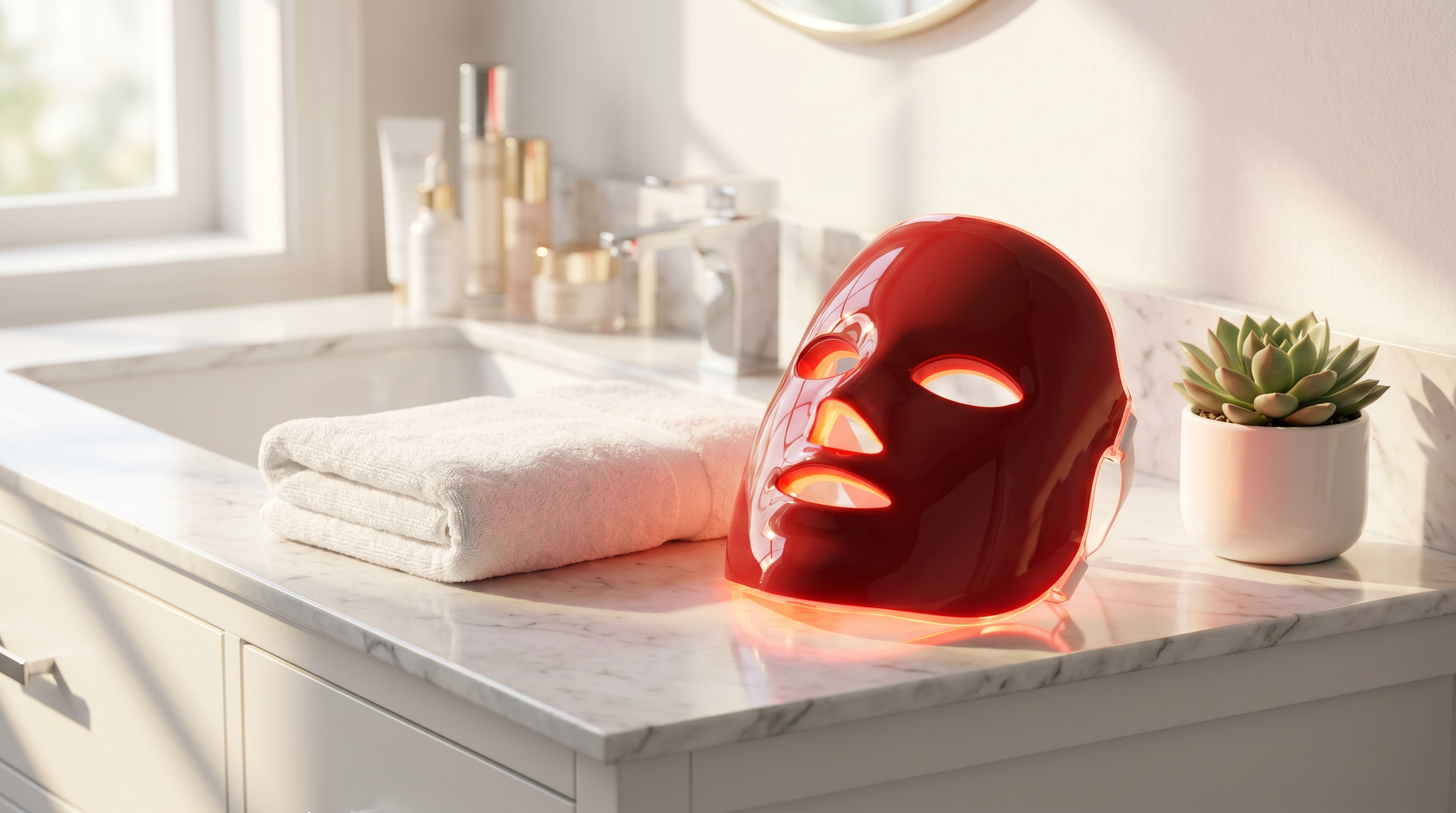
If you have scrolled through social media or walked through a beauty retailer recently, you have likely seen them: rigid, glowing masks that make the wearer look like a futuristic cyborg. Light-emitting diode (LED) face masks have exploded from niche dermatologist-office treatments into a booming at-home consumer market. Brands like Omnilux, CurrentBody, and SharkNinja are promising to erase fine lines, eliminate acne, and restore youthful elasticity, all from the comfort of a living room couch.[3][4]
But when a consumer device promises clinical results without a prescription, skepticism is warranted. The core question for buyers staring at a $400 price tag is simple: is this science, or is it an expensive placebo? According to dermatologists and a growing body of clinical literature, at-home LED masks do genuinely work. However, the evidence comes with significant caveats regarding power output, wavelength accuracy, and the sheer patience required to see visible changes.[2][5]
The underlying mechanism behind these devices is a well-documented biological process called photobiomodulation (PBM). When specific wavelengths of light penetrate the skin, the energy is absorbed by receptors in the mitochondria—the powerhouses of the cells. This absorption triggers a cascade of cellular events, including increased production of adenosine triphosphate (ATP), which provides energy for cellular repair and regeneration.[3][8]

The strongest clinical evidence supports the use of red light, typically calibrated between 630 and 660 nanometers, for anti-aging and skin rejuvenation. At this wavelength, red light penetrates the outer layer of the skin to reach fibroblasts, the cells responsible for synthesizing collagen and elastin. As humans age, collagen production naturally degrades, leading to sagging and fine lines; red light therapy aims to artificially stimulate that production to restore structural firmness.[1][6]
Multiple peer-reviewed studies back this mechanism. A landmark trial published in Photomedicine and Laser Surgery demonstrated that patients receiving consistent red and near-infrared light treatments experienced statistically significant improvements in skin complexion, skin feeling, and collagen density. A more recent systematic review in the Journal of Clinical and Aesthetic Dermatology pooled data from dozens of trials, confirming consistent, measurable benefits for skin rejuvenation and wrinkle reduction.[6][7]
For acne sufferers, the evidence points to a different wavelength: blue light, typically hovering around 415 nanometers. Unlike red light, which penetrates deeply, blue light stays near the surface, where it acts as a targeted antimicrobial agent. It specifically attacks Propionibacterium acnes, the bacteria primarily responsible for inflammatory breakouts, by causing the bacteria to produce free radicals that ultimately destroy it.[4][6]
Clinical consensus suggests that the most effective acne protocols combine blue and red light. While the blue light neutralizes the surface bacteria, the red light simultaneously reduces the associated post-inflammatory redness and supports the skin's barrier repair. This combination has been shown to significantly reduce the frequency and severity of mild to moderate acne lesions, offering a non-invasive alternative to harsh topical treatments.[2][6]

Clinical consensus suggests that the most effective acne protocols combine blue and red light.
Some premium masks also incorporate near-infrared (NIR) light, which operates invisibly at 830 to 850 nanometers. Because of its longer wavelength, NIR penetrates deeper than both red and blue light, reaching the subcutaneous layer. Dermatologists frequently utilize NIR to calm deep tissue inflammation, accelerate wound healing, and support recovery after aggressive in-office procedures like chemical peels or laser resurfacing.[5][7]
Despite this solid biological foundation, there is a massive gulf between the clinical lasers used in a dermatologist's office and the flexible silicone masks sold online. The critical variable is irradiance, or the power output of the light. In-office LED panels deliver highly concentrated energy, whereas at-home devices are intentionally capped at lower power levels to ensure they are safe for unsupervised consumer use.[1][3]
Because at-home masks are inherently weaker, they rely entirely on cumulative exposure. This is where the evidence meets consumer frustration. Clinical trials demonstrating efficacy for at-home devices universally require consistent use—typically three to five sessions per week, lasting 10 to 20 minutes each, over a period of 8 to 12 weeks. Users expecting overnight results or a quick fix for a weekend breakout will inevitably be disappointed.[1][5]

Furthermore, the market is flooded with cheap, unregulated knockoffs that fail to deliver the precise wavelengths required to trigger photobiomodulation. A mask that simply glows red is not necessarily emitting light at the clinically proven 633-nanometer mark. Dermatologists strongly advise consumers to look for FDA-cleared devices, which provides a baseline assurance that the mask actually emits the wavelengths it claims to.[2][3]
Safety is another crucial component of the evidence pack. While LED therapy is generally celebrated for being non-invasive and painless—causing no thermal damage or burning—it is not entirely without risk. The American Academy of Dermatology warns that individuals with darker skin tones should consult a physician before beginning a regimen, as increased sensitivity to visible light can occasionally trigger hyperpigmentation or worsen conditions like melasma.[1][8]
Eye protection is also a subject of ongoing medical debate. While many manufacturers claim their masks are safe to use with open eyes, the intense brightness of the LEDs, particularly blue light, can cause strain or potential long-term retinal issues. Experts generally recommend using the built-in blackout goggles provided with high-quality masks, or simply keeping eyes closed during the treatment session.[1][5]

Finally, patients taking photosensitizing medications—such as certain antibiotics, prescription retinoids, or nonsteroidal anti-inflammatory drugs (NSAIDs)—must exercise extreme caution. These medications make the skin abnormally sensitive to light exposure, and combining them with an LED mask can lead to unexpected irritation, redness, or blistering.[3][8]
Ultimately, the evidence pack for at-home LED masks is highly favorable, provided expectations are kept in check. They are not a replacement for medical-grade dermatological care, nor can they reverse severe photoaging or cure cystic acne. But as a supplementary, long-term investment in skin health, the science confirms that these glowing visors are much more than a social media gimmick.[2][8]
Viewpoints in depth
Dermatological Consensus
Medical professionals view LED masks as a valid but supplementary tool for skin health.
Dermatologists generally agree that the science behind photobiomodulation is sound and well-documented. However, they caution against viewing at-home masks as a cure-all. Medical professionals emphasize that these devices cannot replace prescription treatments for severe acne, nor can they replicate the dramatic results of in-office lasers or injectables. Their primary value lies in long-term maintenance, reducing mild inflammation, and supporting the skin's barrier function between professional treatments.
Skincare Enthusiasts
Consumers value the convenience and cumulative benefits of integrating LED therapy into daily routines.
For dedicated skincare consumers, the appeal of LED masks lies in their non-invasive nature and ease of use. Enthusiasts argue that while the power output is lower than clinical devices, the ability to use the mask multiple times a week at home allows for cumulative benefits that are difficult to achieve with sporadic, expensive office visits. This camp heavily relies on before-and-after documentation to track subtle improvements in skin tone, texture, and overall radiance over several months.
Device Skeptics
Critics highlight the high cost, low power output, and prevalence of ineffective knockoffs in the market.
Skeptics point out that the consumer market is flooded with devices that lack the necessary irradiance to trigger meaningful biological changes. They argue that many buyers are essentially paying hundreds of dollars for a glowing plastic prop. Furthermore, skeptics note that the clinical trials often cited by brands are frequently funded by the manufacturers themselves, raising questions about the objectivity of the results and the true cost-to-benefit ratio for the average consumer.
What we don't know
- The exact minimum irradiance threshold required to guarantee clinical efficacy across all skin types.
- The long-term effects of daily, decades-long use of at-home LED devices on facial tissue.
- Whether combining multiple wavelengths simultaneously is strictly better than using them in isolated, sequential sessions.
Key terms
- Photobiomodulation
- The process by which specific wavelengths of light trigger biological changes and energy production in cells.
- Fibroblasts
- Cells located in the dermis layer of the skin that are responsible for producing structural proteins like collagen and elastin.
- Irradiance
- The power output or intensity of the light emitted by a device, which determines how much energy actually reaches the skin.
- Adenosine Triphosphate (ATP)
- The primary energy carrier in all living organisms; its production is stimulated by red light therapy to aid cellular repair.
- Wavelength
- The distance between successive crests of a light wave, measured in nanometers (nm), which determines the light's color and skin penetration depth.
Frequently asked
Can I use an LED mask with retinol or vitamin C?
Dermatologists recommend applying active ingredients like retinol after the LED session, using the mask on clean, dry skin to maximize light penetration.
Do LED masks hurt or burn the skin?
No. Unlike clinical lasers, LED therapy is non-thermal and does not cause heat damage, burning, or pain.
Can an at-home mask replace Botox or fillers?
No. LED masks improve skin texture and mild fine lines over time, but they cannot replicate the muscle-relaxing or volume-adding effects of injectables.
How often should I use an LED mask?
Most clinical protocols and manufacturers recommend 3 to 5 sessions per week, lasting 10 to 20 minutes each, for optimal results.
Sources
Source coverage
8 outlets
3 viewpoints surfaced








[1]American Academy of DermatologyDermatological Consensus
Light therapy for acne and anti-aging
Read on American Academy of Dermatology →[2]Mayo ClinicDermatological Consensus
Are LED face masks worth it?
Read on Mayo Clinic →[3]ForbesDevice Skeptics
The Biology Behind LED Face Masks
Read on Forbes →[4]Global NewsSkincare Enthusiasts
Do at-home LED face masks actually work?
Read on Global News →[5]TODAYSkincare Enthusiasts
Dermatologists explain how red light therapy masks work
Read on TODAY →[6]Journal of Clinical and Aesthetic DermatologyDermatological Consensus
The Use of Light-Emitting Diodes in Dermatology: A Review of the Current Evidence
Read on Journal of Clinical and Aesthetic Dermatology →[7]Photomedicine and Laser SurgeryDermatological Consensus
A Controlled Trial to Determine the Efficacy of Red and Near-Infrared Light Treatment
Read on Photomedicine and Laser Surgery →[8]Factlen Editorial TeamDevice Skeptics
Synthesis by Factlen editorial team
Read on Factlen Editorial Team →

More in shopping
See all 50 stories →E-Bike Tech
The 2026 E-Bike Buying Guide: Motors, Batteries, and the New Safety Rules
8 sources

Audio Tech
Solid-State MEMS Speakers Are Replacing Traditional Headphone Drivers
7 sources
Nursery Tech
Smart Bassinets vs. Traditional Sleepers: The Complete Trade-Off Analysis
8 sources
Kitchen Upgrades
Induction vs. Gas Cooktops: The 2026 Trade-Off Analysis
8 sources
Every angle. Every day.
Get shopping stories with full source coverage and perspective breakdowns delivered to your inbox.