
How Small Language Models Work (And Why AI is Moving to Your Phone)
The AI industry is shifting focus from massive cloud-based systems to Small Language Models (SLMs) that run locally on everyday devices, promising better privacy, lower costs, and offline capabilities.
By Factlen Editorial Team

- Privacy Advocates & Enterprise Users
- Champions of SLMs who prioritize data sovereignty and absolute privacy.
- Hardware & Edge Developers
- Engineers focused on the speed, cost-efficiency, and offline capabilities of local AI.
- Consumer Rights & Storage Skeptics
- Critics concerned about the forced distribution of massive AI files onto personal devices.
What's not represented
- · Cloud Infrastructure Providers losing API revenue to local models
- · Mobile Hardware Manufacturers forced to increase base RAM to support SLMs
Why this matters
Instead of sending your personal data, corporate secrets, or private messages to a distant server, local AI processes everything directly on your own hardware. However, this privacy-first shift is also sparking new debates over digital ownership, as tech giants begin silently downloading gigabytes of AI models onto consumer devices without explicit consent.
Key points
- The AI industry is moving toward Small Language Models (SLMs) that run locally on consumer devices.
- SLMs offer absolute data privacy because prompts are processed without sending data to the cloud.
- Techniques like knowledge distillation and quantization allow SLMs to run on standard laptops and smartphones.
- Local processing eliminates network latency, enabling real-time, offline AI capabilities.
- The shift has caused controversy, as tech giants silently download multi-gigabyte models onto users' hard drives.
For years, the artificial intelligence industry operated under a singular, brute-force philosophy: bigger is always better. Massive Large Language Models (LLMs) like OpenAI's GPT-4 and Google's Gemini required vast, energy-hungry data centers and specialized supercomputers just to process a single prompt. But as AI integration becomes ubiquitous in 2026, the architectural moat has shifted toward a radically different paradigm. The industry is rapidly pivoting to Small Language Models (SLMs)—highly efficient, compact AI systems designed to run directly on consumer hardware rather than relying on the cloud. This shift represents a fundamental change in how artificial intelligence is deployed, prioritizing cognitive efficiency and data sovereignty over sheer computational scale.[8]
The defining metric of any neural network is its parameter count—the artificial "synapses" that dictate a model's reasoning capabilities and knowledge base. While frontier LLMs boast hundreds of billions or even trillions of parameters, Small Language Models typically range from 1 billion to 10 billion parameters. Despite this massive reduction in size, modern SLMs retain the core natural language capabilities of their larger counterparts, including text generation, summarization, translation, and even complex coding tasks. By stripping away the bloated trivia and edge-case knowledge required to be a universal generalist, developers have created streamlined models that punch far above their weight class in specific, everyday applications.[1]
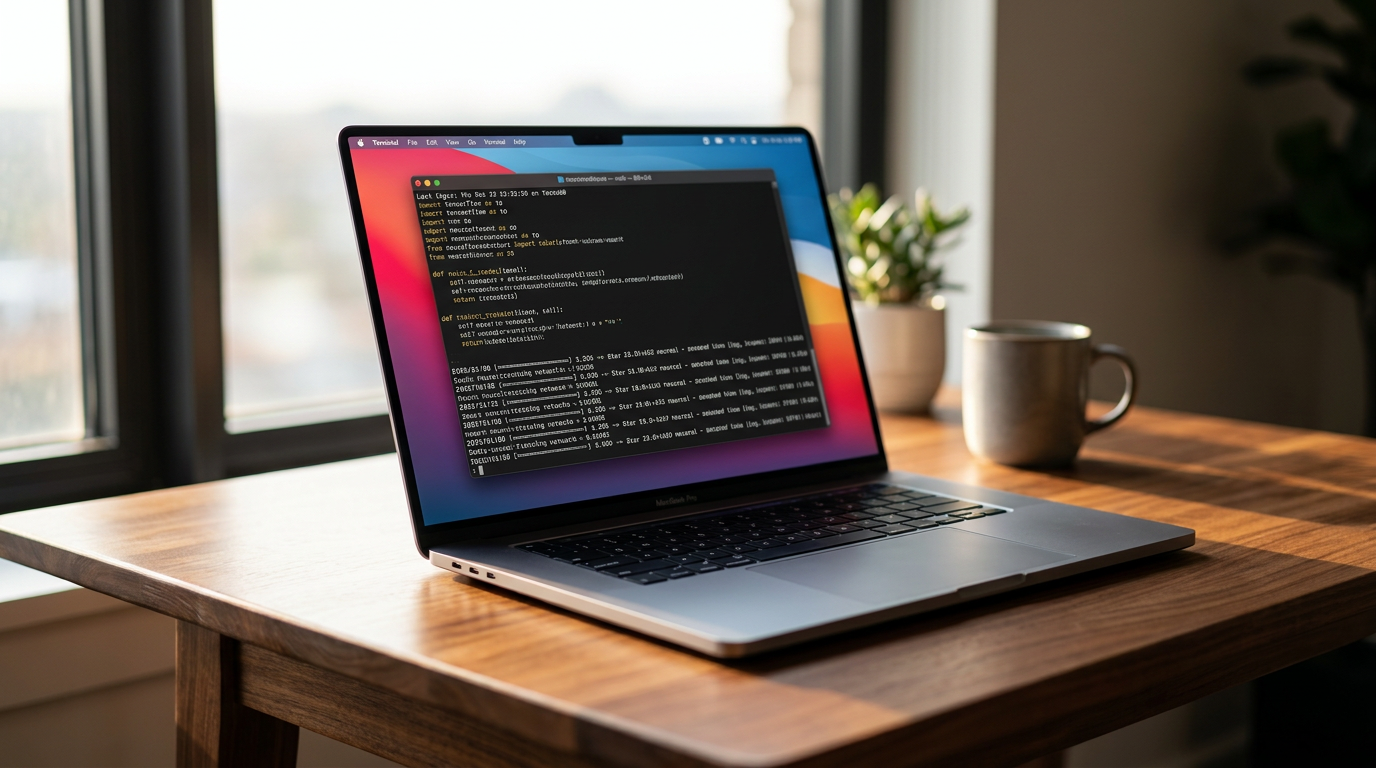
The most transformative aspect of an SLM is not just its parameter count, but where it physically operates. Because they are so lightweight, these models do not require a persistent internet connection or a high-bandwidth round-trip to a distant server farm. They are engineered to run locally on standard consumer devices, from laptops equipped with just 8GB of RAM to smartphones, tablets, and even edge-computing IoT sensors. This "on-device" capability fundamentally alters the user experience, allowing artificial intelligence to function seamlessly in airplane mode, remote locations, or highly secure environments where external network access is strictly prohibited.[1][7]

How exactly does an AI model shrink by a factor of one hundred without losing its mind? The primary mechanism driving the SLM revolution is a process known as "knowledge distillation." In this teacher-student dynamic, a massive, computationally expensive LLM (the teacher) is used to train a smaller SLM (the student). Instead of learning from scratch by reading the entire internet, the student model learns to mimic the refined reasoning patterns, logic steps, and outputs of the teacher model. This allows the SLM to inherit the sophisticated behavioral traits of a trillion-parameter system without carrying its massive memory overhead.[8]
The second crucial pillar of SLM efficiency is a mathematical technique called quantization. AI models typically use high-precision mathematics—such as 16-bit or 32-bit floating-point numbers—to store the weights of their neural connections. Quantization aggressively rounds these numbers down to 4-bit or even 1-bit precision. While this slight reduction in mathematical fidelity can introduce minor margins of error, it drastically reduces the memory footprint required to load the model into a device's RAM. By compressing the model's physical size, quantization allows sophisticated AI to run smoothly on the limited silicon of a standard smartphone processor.[8]
Finally, the training data itself has evolved. Rather than scraping the entire unfiltered internet—a process that forces models to memorize vast amounts of useless or toxic information—SLMs are trained on highly curated, domain-specific datasets. This principle of "curated data sovereignty" ensures that the model's limited parameter budget is spent entirely on high-density, high-quality knowledge. A model trained exclusively on verified medical literature or clean Python code will outperform a massive generalist LLM in those specific domains, proving that data quality is often more important than data volume.[8]

This principle of "curated data sovereignty" ensures that the model's limited parameter budget is spent entirely on high-density, high-quality knowledge.
The most significant advantage of on-device AI, and the primary driver of enterprise adoption, is absolute data privacy. When a user queries a cloud-based LLM, sensitive information—whether it is proprietary corporate source code, confidential patient medical records, or intimate personal messages—must be transmitted over the internet to a third-party server. Even with strict enterprise agreements, the risk of data leakage or interception remains a critical bottleneck for regulated industries. With an SLM, the data never leaves the local hardware. The prompt is processed on the device, and the output is generated on the device, creating an impenetrable privacy moat.[1][8]
Beyond privacy, local processing solves the persistent issue of latency. By eliminating the API round-trip to a distant cloud data center, on-device models can achieve sub-millisecond response times, enabling true real-time human-computer interaction. Furthermore, the economics of SLMs are drastically altering the software landscape. Running a 3-billion parameter SLM locally on a user's machine is estimated to be 10 to 30 times cheaper for developers than executing the same query on a frontier cloud model. This cost reduction democratizes AI access, allowing smaller startups to integrate advanced features without facing ruinous cloud computing bills.[2][8]
The 2026 AI landscape is now dominated by these compact powerhouses. Microsoft's Phi-3 and Phi-4-mini models have set new industry benchmarks for logic-to-size ratios, proving highly capable at complex reasoning despite their small footprint. Meta's open-weight Llama 3 (8B) serves as a versatile workhorse for developers worldwide, while Apple's OpenELM is engineered specifically to maximize battery life and performance on Apple Silicon. Meanwhile, Google has integrated its Gemini Nano model directly into the Android operating system via AICore, providing developers with built-in APIs for on-device summarization and translation.[3][6][8]

This localized efficiency is particularly crucial for the rapid rise of "agentic AI"—systems that autonomously execute multi-step workflows across different applications. AI agents frequently need to perform repetitive, highly specialized micro-tasks: parsing user commands, generating structured JSON outputs for tool calls, or summarizing contextual data. Using a massive, general-purpose LLM for every single micro-task is economically unviable and unnecessarily slow. SLMs provide the fast, cheap, and reliable inference required to make these autonomous agent networks scalable across enterprise environments.[2]
However, the transition to a localized AI ecosystem has not been entirely without friction. The aggressive push by tech giants to embed SLMs directly into consumer software has sparked significant controversy, particularly regarding user consent and local storage space. Because these models require gigabytes of local disk space to operate, their distribution has forced a debate over who truly owns the hardware resources on a personal computer.[5]
The tension reached a boiling point in mid-2026 when cybersecurity researchers discovered that Google Chrome had been quietly downloading a 4-gigabyte AI model—Gemini Nano—directly onto users' hard drives. The file, cryptically named weights.bin, was placed in a hidden directory within the browser's profile folder. Google deployed the model to power built-in, on-device browser features like scam detection, text summarization, and writing assistance, arguing that the background download ensured these privacy-preserving features were instantly ready for use without network latency.[4][5]

Despite the privacy benefits of processing text locally, the silent rollout drew fierce criticism from privacy advocates and IT administrators. Users found themselves paying a mandatory 4GB "storage tax" for AI features they had not explicitly requested and might never use. Furthermore, if a user manually deleted the massive file to free up disk space, the browser would simply download it again in the background. The incident highlighted the physical cost of the on-device AI revolution: while the cloud abstracts hardware limitations away from the user, local AI forces consumers to bear the burden of storage and memory consumption.[4][5]
Despite these growing pains, the trajectory of artificial intelligence is unmistakably hybrid. The era of relying solely on monolithic cloud brains is ending. Moving forward, massive cloud-based LLMs will be reserved for heavy lifting—complex scientific reasoning, massive data analysis, and broad creative generation. Meanwhile, a fleet of specialized, privacy-preserving Small Language Models will live quietly in our pockets and laptops, orchestrating our daily digital lives, protecting our data, and making our devices fundamentally smarter from the inside out.[1][2]
How we got here
2023-2024
The AI industry focuses almost exclusively on scaling massive, cloud-based Large Language Models.
Early 2025
Tech companies begin releasing highly capable open-weight SLMs designed for consumer hardware.
May 2026
Cybersecurity researchers reveal Google Chrome has been silently downloading the 4GB Gemini Nano model to users' hard drives.
June 2026
Chrome 138 officially rolls out built-in, on-device AI APIs powered by the local Gemini Nano model.
Viewpoints in depth
Privacy Advocates & Enterprise Users
Champions of SLMs who prioritize data sovereignty and absolute privacy.
For healthcare providers, financial institutions, and privacy-conscious consumers, SLMs represent the only viable path forward for AI integration. This camp argues that the risk of transmitting sensitive data—such as patient records or proprietary code—to a third-party cloud server is fundamentally unacceptable. By processing data entirely on the local hardware, SLMs create an impenetrable privacy moat, ensuring that AI can be utilized in highly regulated industries without violating compliance laws or exposing trade secrets.
Hardware & Edge Developers
Engineers focused on the speed, cost-efficiency, and offline capabilities of local AI.
This perspective views the cloud-dependency of massive LLMs as a critical bottleneck. Developers in this camp emphasize that relying on API calls to distant server farms introduces unacceptable latency for real-time applications and incurs massive, recurring computing costs. They champion SLMs because local inference allows for sub-millisecond response times, enables AI agents to run autonomously without bankrupting startups, and ensures that critical software features remain functional even when a device loses internet connectivity.
Consumer Rights & Storage Skeptics
Critics concerned about the forced distribution of massive AI files onto personal devices.
While acknowledging the privacy benefits of local processing, this camp strongly objects to how tech giants are deploying SLMs. They argue that silently downloading multi-gigabyte AI models—like Chrome's 4GB Gemini Nano file—without explicit user consent is a violation of digital ownership. This group highlights that local AI shifts the physical cost of computing from the cloud provider directly onto the consumer, eating up valuable hard drive space and bandwidth for features the user may not even want.
What we don't know
- Whether regulators will force companies like Google to make local AI model downloads strictly opt-in.
- How quickly mobile hardware manufacturers will increase base RAM to accommodate increasingly capable SLMs.
Key terms
- Small Language Model (SLM)
- A compact artificial intelligence system, typically between 1 and 10 billion parameters, designed to run efficiently on consumer devices rather than cloud servers.
- Knowledge Distillation
- A training technique where a massive AI model teaches a smaller AI model to mimic its reasoning, allowing the smaller model to become highly capable without growing in size.
- Quantization
- A mathematical compression technique that reduces the precision of an AI model's internal numbers, drastically shrinking the amount of memory required to run it.
- Parameters
- The artificial 'synapses' or connection weights within a neural network that dictate how much information the model can learn and process.
- Agentic AI
- Artificial intelligence systems designed to act as autonomous agents, executing multi-step workflows and making decisions without constant human prompting.
Frequently asked
What is the difference between an LLM and an SLM?
Large Language Models (LLMs) have hundreds of billions of parameters and require massive cloud servers to run. Small Language Models (SLMs) typically have 1 to 10 billion parameters and are compact enough to run directly on your phone or laptop.
Do I need an internet connection to use an SLM?
No. Because the model is downloaded and stored on your device's local hardware, it can process prompts and generate text entirely offline.
Why did Google Chrome download a 4GB file to my computer?
Chrome quietly downloaded the Gemini Nano SLM (often named weights.bin) to power built-in browser features like scam detection and text summarization locally, ensuring your browsing data doesn't have to be sent to a cloud server.
Can an SLM write code or answer complex questions as well as GPT-4?
While they lack the broad, encyclopedic trivia knowledge of a massive LLM, SLMs are highly capable at specific tasks. If trained on high-quality coding data, an SLM can write and debug code with accuracy rivaling much larger models.
Sources
Source coverage
8 outlets
3 viewpoints surfaced








[1]Hugging FacePrivacy Advocates & Enterprise Users
Small Language Models (SLM): A Comprehensive Overview
Read on Hugging Face →[2]NVIDIA Technical BlogHardware & Edge Developers
How Small Language Models Are Key to Scalable Agentic AI
Read on NVIDIA Technical Blog →[3]Android DevelopersHardware & Edge Developers
Gemini Nano | AI
Read on Android Developers →[4]CNETConsumer Rights & Storage Skeptics
Google's Been Quietly Using Your Hard Drive for AI. Here's What to Do About It
Read on CNET →[5]The Small Business Cybersecurity GuyConsumer Rights & Storage Skeptics
Chrome Gemini Nano Silent AI Download Problem 2026
Read on The Small Business Cybersecurity Guy →[6]DataCampHardware & Edge Developers
Top 15 Small Language Models for 2026
Read on DataCamp →[7]Local AI MasterConsumer Rights & Storage Skeptics
Best Small Language Models 2026: 12 SLMs Ranked for 8GB RAM
Read on Local AI Master →[8]MeetCyberPrivacy Advocates & Enterprise Users
What are Small Language Models (SLM)? A Guide to Enterprise AI
Read on MeetCyber →
More in ai
See all 5 stories →Biotech Breakthrough
AI Models Are Designing Novel Proteins and Antibiotics From Scratch, Slashing Drug Development Costs
0 sources

Local AI
The 2026 Guide to Running AI Locally: How to Put Frontier Models on Your Laptop
0 sources

Edge AI
The Era of the Tiny Datacenter: How Small Language Models Are Bringing AI Offline
0 sources

Every angle. Every day.
Get ai stories with full source coverage and perspective breakdowns delivered to your inbox.