
As the World Climbing Series Heads to Innsbruck, Anraku Sorato and Emma Hunt Dominate the 2026 Standings
Halfway through the inaugural 2026 World Climbing Series, teenage sensation Anraku Sorato has established a commanding lead in the men's Boulder standings, while U.S. speedster Emma Hunt continues her record-breaking dominance. As the circuit prepares for the crucial Innsbruck stop, new challengers like Australia's Oceania Mackenzie are shaking up the women's field.
By Factlen Editorial Team
- Boulder Specialists
- Athletes focused on the explosive, dynamic movements of the early season and maximizing points before Lead begins.
- Dual-Discipline Strategists
- Athletes and coaches balancing the transition from Boulder to Lead, aiming for the overall combined titles.
- Speed Competitors
- Focused entirely on the isolated 15-meter sprint, pushing human limits and breaking micro-second records.
What's not represented
- · Recreational climbers adapting to competition styles
- · Route setters designing the complex boulders
Why this matters
As the sport climbing circuit transitions into its grueling summer schedule, the early-season standings reveal a generational shift in talent. For fans and athletes, the upcoming events will determine whether established Olympic champions can hold off a surging wave of teenage prodigies pushing the physical limits of the sport.
Key points
- Anraku Sorato has won three consecutive Boulder gold medals to open the 2026 season.
- Oceania Mackenzie secured Australia's first-ever World Climbing gold at the Bern event.
- American Emma Hunt continues to dominate the Speed discipline, winning her third gold in Madrid.
- The circuit now heads to Innsbruck, Austria, marking the start of the endurance-focused Lead season.
The 2026 sport climbing season has officially reached its midpoint, and the newly rebranded World Climbing Series is delivering a compelling mix of historic firsts and dominant, unbroken streaks. Following the International Federation of Sport Climbing's decision to rename the circuit late last year, the 38th edition of the global tour has brought the world's elite to stops across Asia and Europe. Now, as the circuit arrives in Austria for the highly anticipated Kletterweltcup Innsbruck event beginning on June 17, the overall standings across the Boulder, Lead, and Speed disciplines are taking definitive shape. The outdoor venue at Kletterzentrum Innsbruck is expected to draw massive crowds, setting the stage for a critical juncture in the championship race.[4][5]
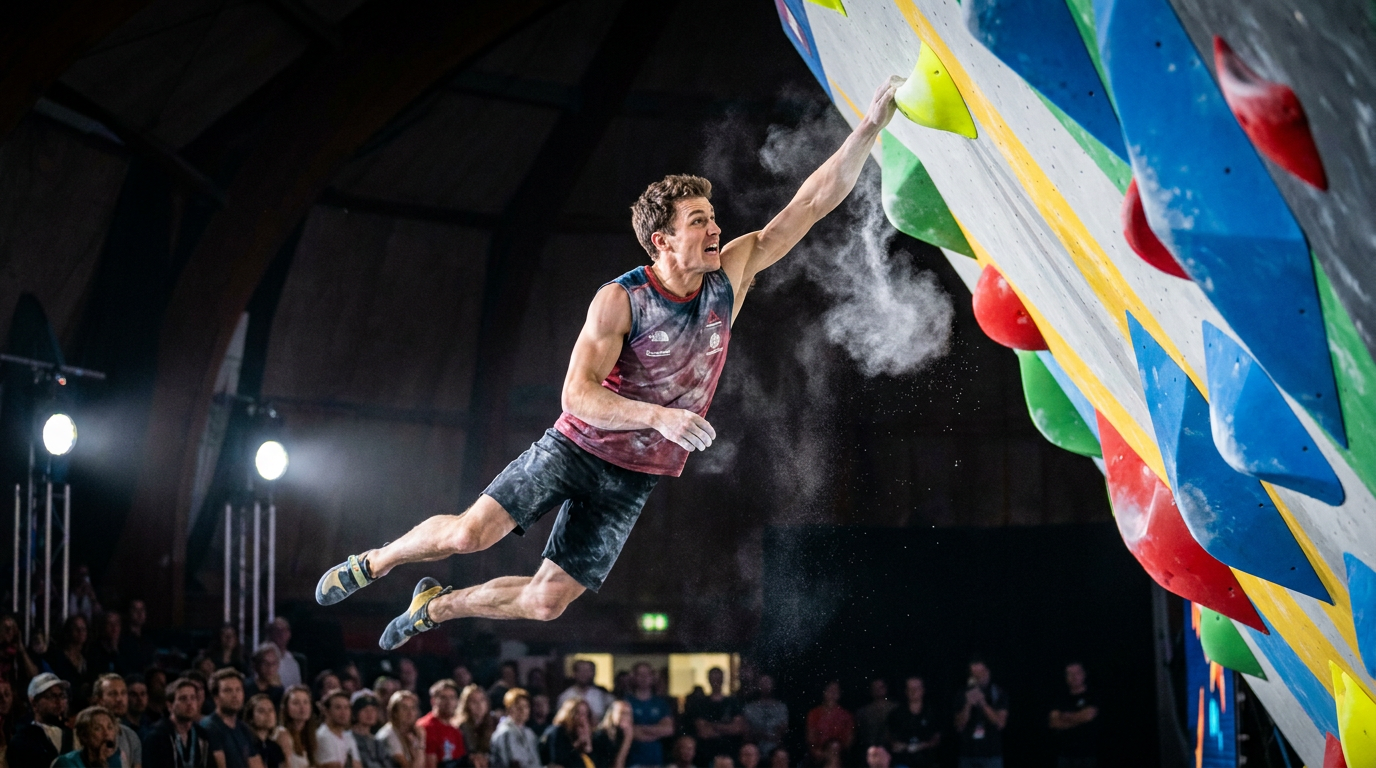
In the men's Boulder discipline, the narrative has been entirely monopolized by Japanese teenage sensation Anraku Sorato. Fresh off a stellar 2025 campaign, Sorato has established an iron grip on the 2026 season, opening the year with three consecutive gold medals. His sweep of the events in Keqiao, Bern, and Madrid has left the rest of the field scrambling for silver and bronze. Analysts and fans alike are watching a generational talent operate at the peak of his powers, combining explosive dynamic movements with a calm, analytical approach to problem-solving that routinely leaves route setters astounded.[3][6]
Sorato's performance at the Bern stop in late May was particularly staggering and highlighted the widening gap between him and his peers. He was the only competitor in the final to successfully top all four boulder problems, securing a near-perfect score of 99.7 points and flashing the first problem with ease. He followed that masterclass with a dramatic victory in Madrid, where he spent much of the final trailing American climber Colin Duffy. When Duffy failed to zone on the final problem, Sorato stepped up and flashed it, snatching his third consecutive gold and cementing an overwhelming lead in the overall World Climbing Series standings.[2][6]

While the men's Boulder field currently resembles a one-man exhibition, the women's circuit has been blown wide open, offering some of the most unpredictable and thrilling competition in recent memory. Slovenia's double Olympic champion Janja Garnbret remains a formidable and heavily favored presence, but a new wave of international challengers has successfully disrupted the podiums this spring. The era of guaranteed victories for the established veterans appears to be pausing, as younger athletes push the boundaries of dynamic coordination and raw finger strength.[3]
The upsets began at the season opener in Keqiao, China, where France's Zélia Avezou secured her career-first World Climbing Series victory. Avezou edged out Garnbret in a tense final, flashing the second boulder and capitalizing when the Slovenian required multiple attempts on early problems. The disruption continued weeks later in Bern, where 21-year-old Australian climber Oceania Mackenzie made history. Mackenzie won her first World Cup gold medal with a score of 74.5 points, a landmark achievement that also marked Australia's first-ever gold in the top-tier World Climbing circuit, fundamentally shifting the geographic balance of power in the women's field.[2][3]
The upsets began at the season opener in Keqiao, China, where France's Zélia Avezou secured her career-first World Climbing Series victory.
Over on the 15-meter Speed wall, American Emma Hunt is putting together a masterclass season of her own. Hunt has been the model of consistency in a discipline famous for its razor-thin margins and catastrophic slips. At the recent World Climbing Series stop in the Comunidad de Madrid, Hunt captured her third gold medal of the 2026 campaign. She clocked a blistering 6.39 seconds in the final race to defeat Ukraine's Kseniia Khalkevych, pulling away in the upper section of the route to secure the victory.[1]

Hunt's flawless execution in Madrid was punctuated by a Pan American record earlier in the competition, making her the undisputed frontrunner in the women's speed standings as the tour heads into the summer months. Meanwhile, the men's Speed circuit remains a fiercely contested battleground, largely dictated by the Chinese national team. China's Chu Shouhong captured his second career title in Madrid with a flying performance against Indonesia's Antasyafi Robby Al Hilmi, leading a dominant Chinese speed squad that continues to set the global pace and crowd the podiums.[1]
As the athletes converge on Tyrol for the seven-day Innsbruck event, the competitive stakes are rising significantly. Running from June 17 to 21, Innsbruck is traditionally one of the most prestigious stops on the calendar, renowned for its roaring crowds of up to 18,000 fans and world-class route setting. More importantly, the Austrian stop marks a critical transition in the season schedule, as the Lead climbing discipline kicks into high gear alongside the ongoing Boulder battles, forcing dual-discipline athletes to manage their endurance and skin condition across multiple grueling rounds.[4][5]

The introduction of the Lead climbing events in Innsbruck will test the endurance specialists who have been waiting in the wings during the boulder-heavy spring schedule. Athletes like Japan's Ai Mori and Great Britain's Toby Roberts are expected to make their presence felt, shifting the dynamic of the overall standings. Lead climbing requires a drastically different physiological approach, favoring sustained stamina and route-reading efficiency over the explosive power demanded by modern bouldering. As the World Climbing Series transitions into this new phase, the race for the combined overall titles will require climbers to seamlessly adapt their training peaks.[4][5]
For established titans like Sorato and Garnbret, Innsbruck offers a crucial opportunity to extend their dominance across multiple disciplines and pad their overall points leads. For rising stars like Mackenzie, Avezou, and Hunt, the Austrian wall represents a chance to prove that their early-season triumphs were not mere anomalies, but rather the definitive beginning of a new era in competition climbing. With the overall World Climbing Series trophies on the line, the race to Santiago this October is officially heating up.[1][2][3][5]
How we got here
May 1-3, 2026
The World Climbing Series opens in Keqiao, China, with Zélia Avezou and Anraku Sorato claiming the first Boulder golds.
May 22-24, 2026
Oceania Mackenzie makes history in Bern, winning Australia's first-ever World Cup gold medal in sport climbing.
May 28-31, 2026
Emma Hunt sets a blistering pace in Madrid to secure her third Speed gold of the season.
June 17-21, 2026
The circuit arrives in Innsbruck, Austria, marking the critical transition into the Lead climbing season.
Viewpoints in depth
The Boulder Specialists
Athletes focused on maximizing points during the explosive early-season bouldering events.
For boulder specialists, the first half of the World Climbing Series is a critical window to amass overall points. The modern bouldering style demands extreme dynamic coordination, 'parkour-style' jumps, and immense finger strength. Climbers like Anraku Sorato have capitalized on this block of the calendar, building an insurmountable lead in their preferred discipline before the endurance-heavy Lead events dilute the field. Their strategy relies on perfect execution in high-pressure, four-minute windows.
The Dual-Discipline Strategists
Coaches and climbers balancing the transition from Boulder to Lead for the overall combined titles.
As the circuit shifts toward Innsbruck, athletes aiming for the overall combined title must navigate a brutal physiological transition. Lead climbing requires sustained aerobic endurance and the ability to recover while resting on the wall, which directly contradicts the fast-twitch muscle power optimized for bouldering. Strategists in this camp argue that true climbing supremacy is proven in the back half of the season, where athletes must maintain their bouldering sharpness while suddenly enduring grueling 15-meter Lead routes.
The Speed Purists
Competitors dedicated entirely to the isolated, record-breaking sprint of the 15-meter speed wall.
Speed climbing exists in its own distinct ecosystem within the World Climbing Series. Unlike Boulder and Lead, the route never changes, allowing athletes to refine their muscle memory to the microsecond. The speed camp views the sport as a pure track-and-field sprint that happens to be vertical. With times continuously dropping—highlighted by Emma Hunt's consistent low-6-second runs—speed purists are focused entirely on explosive power and minimizing errors, entirely detached from the route-reading challenges of the other disciplines.
What we don't know
- Whether Anraku Sorato can maintain his dominant form as the grueling Lead season begins.
- How the new generation of female boulderers will fare against Janja Garnbret in the combined overall standings.
Key terms
- Boulder
- A climbing discipline where athletes scale short, complex 4.5-meter walls without ropes, scored by successfully controlling designated holds.
- Lead
- A discipline where climbers ascend a towering 15-meter wall with a rope, aiming to reach the highest hold possible within a strict time limit.
- Speed
- A head-to-head sprint up a standardized 15-meter route, where the fastest time to hit the top buzzer wins.
- Flash
- Successfully completing a boulder problem or climbing route on the very first attempt without any prior falls.
- Zone
- A designated midway hold on a boulder problem that awards partial points if a climber controls it but cannot reach the top.
Frequently asked
What is the World Climbing Series?
It is the premier international competition circuit for sport climbing, formerly known as the IFSC Climbing World Cup before its rebranding in late 2025.
Who is leading the men's Boulder standings in 2026?
Japanese teenager Anraku Sorato is dominating the circuit, having won three consecutive gold medals in Keqiao, Bern, and Madrid.
When does the Lead climbing season begin?
The Lead climbing discipline officially kicks into high gear at the Kletterweltcup Innsbruck event, which runs from June 17 to 21.
How fast are the top speed climbers?
Elite female speed climbers like America's Emma Hunt are consistently clocking times in the low 6-second range, with Hunt winning Madrid in 6.39 seconds.
Sources
Source coverage
6 outlets
3 viewpoints surfaced





[1]Olympics.comSpeed Competitors
World Climbing Series Comunidad de Madrid 2026: Emma Hunt and Chu Shouhong win speed titles
Read on Olympics.com →[2]NZ Alpine ClubBoulder Specialists
Unexpected (and Expected) World Cup Results
Read on NZ Alpine Club →[3]World ClimbingDual-Discipline Strategists
World Climbing Series Keqiao 2026: Anraku Sorato starts Boulder season with confident win
Read on World Climbing →[4]PlanetMountainDual-Discipline Strategists
IFSC announces 2026 calendar for Sport Climbing & Para Climbing
Read on PlanetMountain →[5]Kletterweltcup InnsbruckDual-Discipline Strategists
World Climbing Series Innsbruck 2026: Kletterweltcup Innsbruck
Read on Kletterweltcup Innsbruck →[6]Gripped MagazineBoulder Specialists
Sorato Anraku Wins Third Consecutive World Cup Gold of 2026
Read on Gripped Magazine →
More in sports
See all 8 stories →Injury
Lindsey Vonn Embraces Recovery Milestones and Surgical Scars Following Devastating Olympic Crash
0 sources
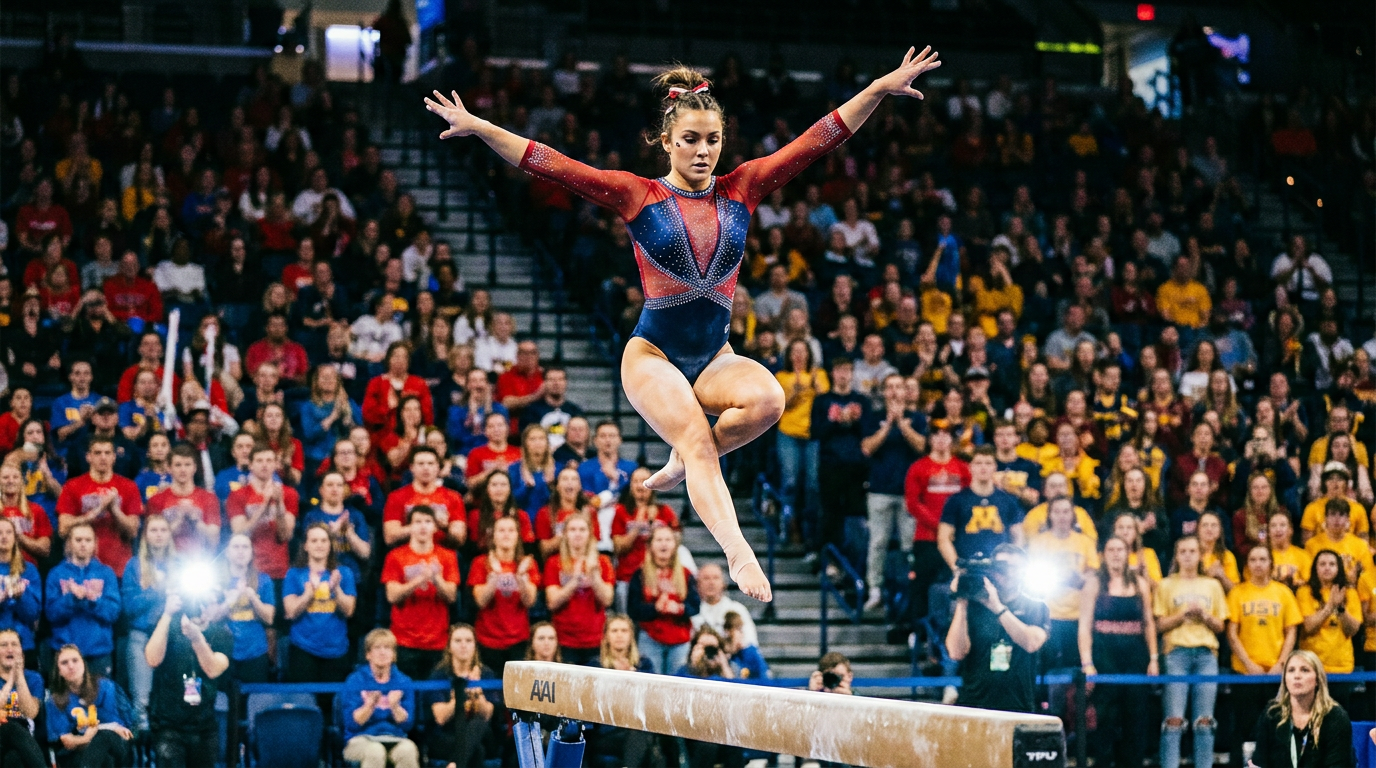
NCAA Gymnastics
How NCAA Gymnastics Stepped Out of the Olympic Shadow to Become a Ratings Powerhouse
0 sources
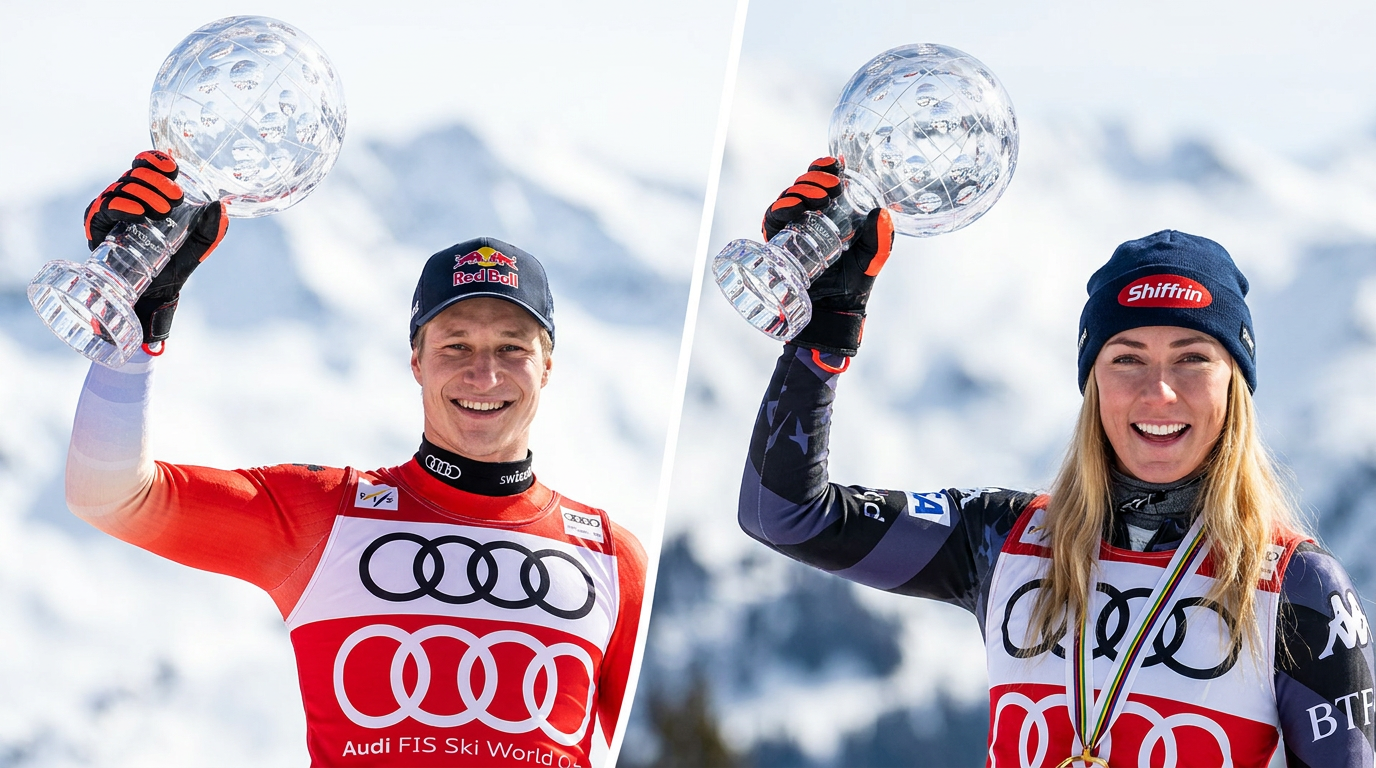
Standings
State of the Slopes: How Historic 2026 FIS Standings Set the Stage for the Southern Hemisphere Chase
0 sources
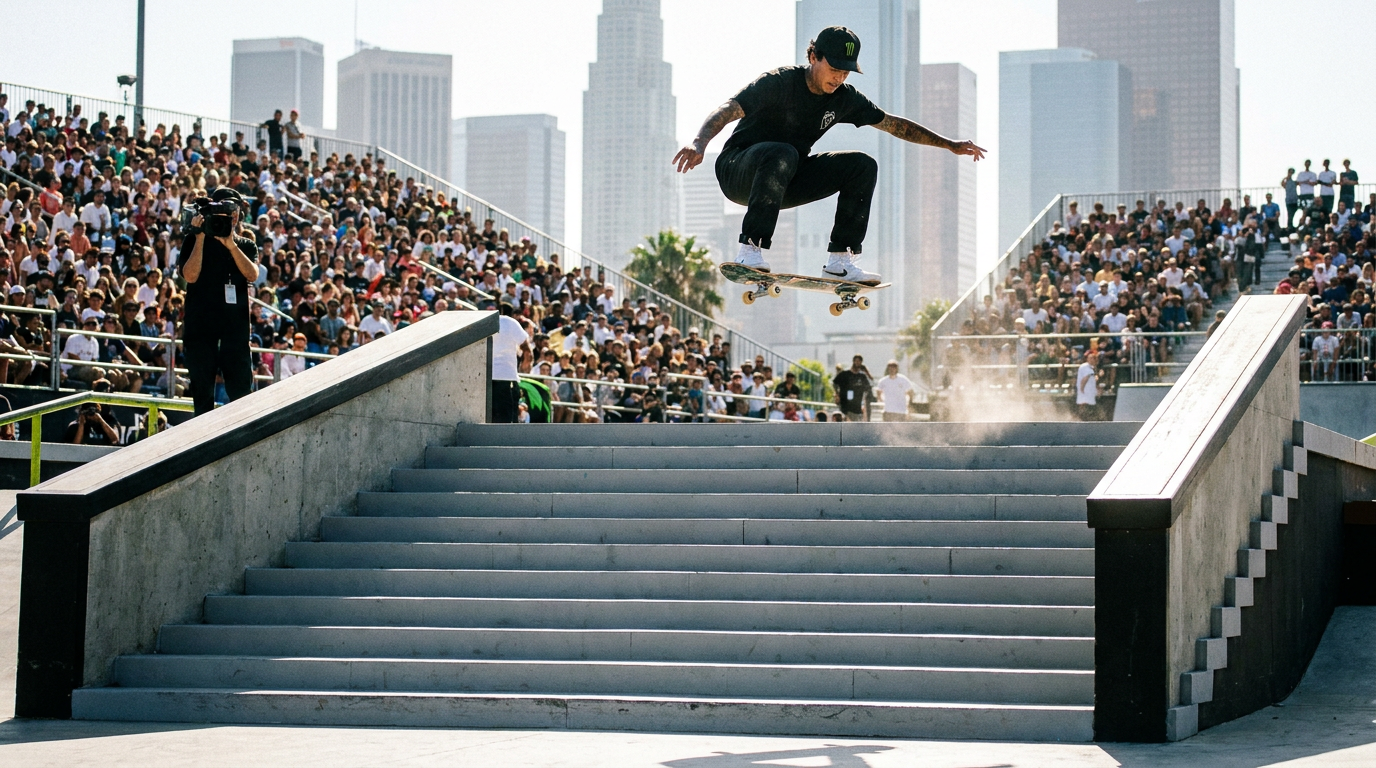
Injury
Skateboarder Nyjah Huston Vows to Return After Second Major Crash of 2026
0 sources
Every angle. Every day.
Get sports stories with full source coverage and perspective breakdowns delivered to your inbox.