
US and Iran Reach Tentative Agreement to End War and Reopen Strait of Hormuz
The United States and Iran have agreed to a 60-day ceasefire and a framework to reopen the Strait of Hormuz, pausing a devastating months-long conflict. While the deal promises relief for global energy markets, significant logistical hurdles and internal skepticism remain ahead of Friday's formal signing.
By Factlen Editorial Team
- Diplomatic Negotiators
- Framing the memorandum of understanding as a historic breakthrough that will stabilize the region and reopen global trade.
- Global Trade & Shipping Industry
- Relieved by the drop in oil prices but highly cautious about the physical dangers and logistical hurdles of resuming Gulf transit.
- U.S. Defense & Intelligence Officials
- Focused on maintaining military leverage and expressing deep skepticism about Iran's willingness to make genuine nuclear concessions.
What's not represented
- · European and Asian energy importers
- · Arab Gulf states' economic ministries
Why this matters
The reopening of the Strait of Hormuz—a chokepoint for a fifth of the world's oil—promises to ease the global energy crisis that has driven up fuel prices and inflation since February. However, the fragile 60-day window to negotiate a permanent nuclear settlement means the threat of renewed conflict still hangs over the global economy.
Key points
- The U.S. and Iran agreed to a 60-day ceasefire and a framework to reopen the Strait of Hormuz.
- A formal signing ceremony is scheduled for Friday in Geneva, Switzerland.
- Brent crude oil prices dropped to $82 a barrel following the announcement.
- Over 500 commercial ships remain trapped in the Persian Gulf awaiting safe passage.
- U.S. intelligence officials reportedly doubt Iran will make lasting nuclear concessions.
- The two nations are already disputing whether Iran can charge maritime service fees.
The United States and Iran have reached a memorandum of understanding to halt military operations and reopen the Strait of Hormuz, pausing a devastating conflict that has choked global energy supplies since late February. The framework establishes a 60-day ceasefire during which the two nations will attempt to negotiate a comprehensive settlement regarding Iran's nuclear program.[2][5]
President Donald Trump, Vice President JD Vance, and Iranian Parliament Speaker Mohammad Bagher Ghalibaf have electronically signed the preliminary agreement, with a formal ceremony scheduled for Friday in Geneva. Under the terms, the U.S. will lift its naval blockade of Iranian ports, while Tehran has committed to allowing commercial traffic to resume through the vital maritime chokepoint.[1][5][6]
Global markets breathed an immediate sigh of relief following the announcement. Brent crude tumbled to $82 a barrel—a sharp drop from the $126 peak reached at the height of the crisis. However, energy analysts warn that American drivers are unlikely to see gasoline prices return to their pre-war average of $3 per gallon anytime soon, as supply chains remain severely disrupted.[3][4]

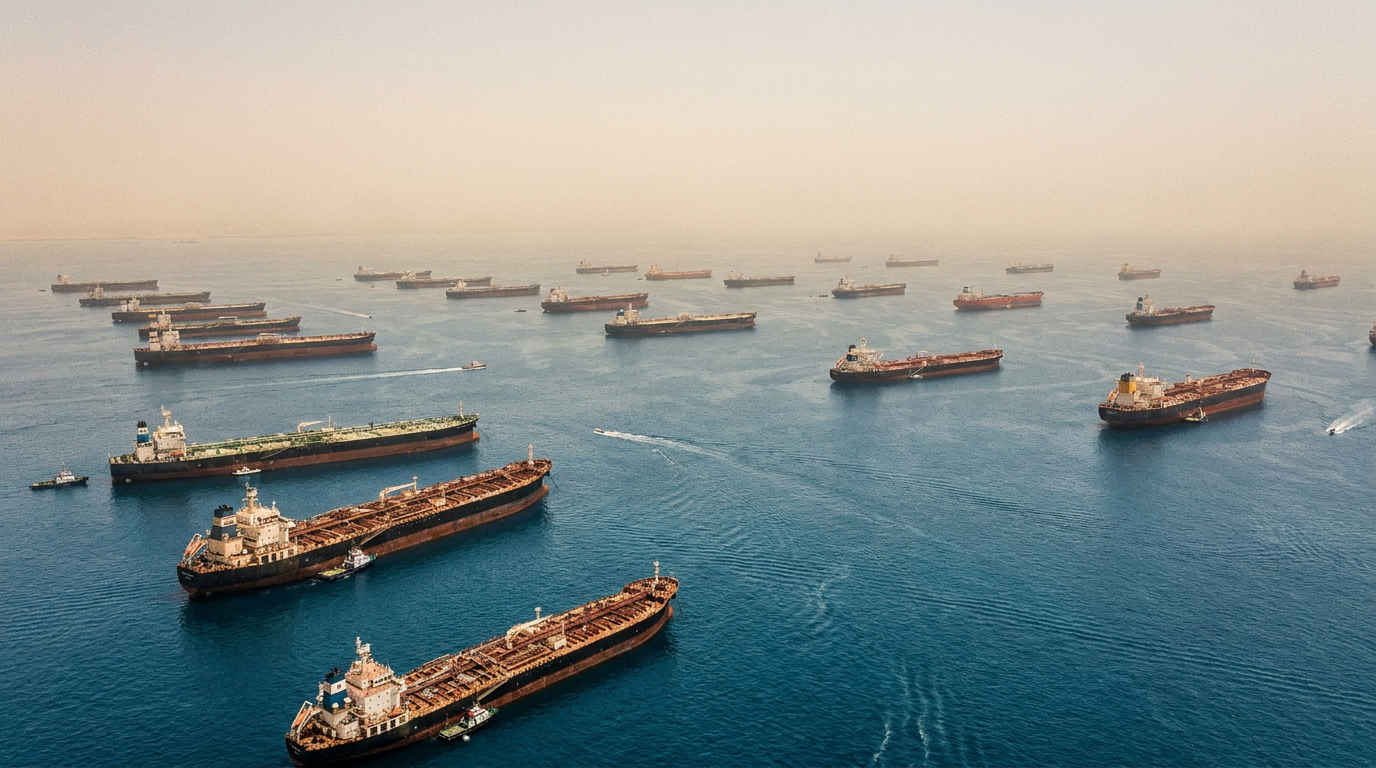
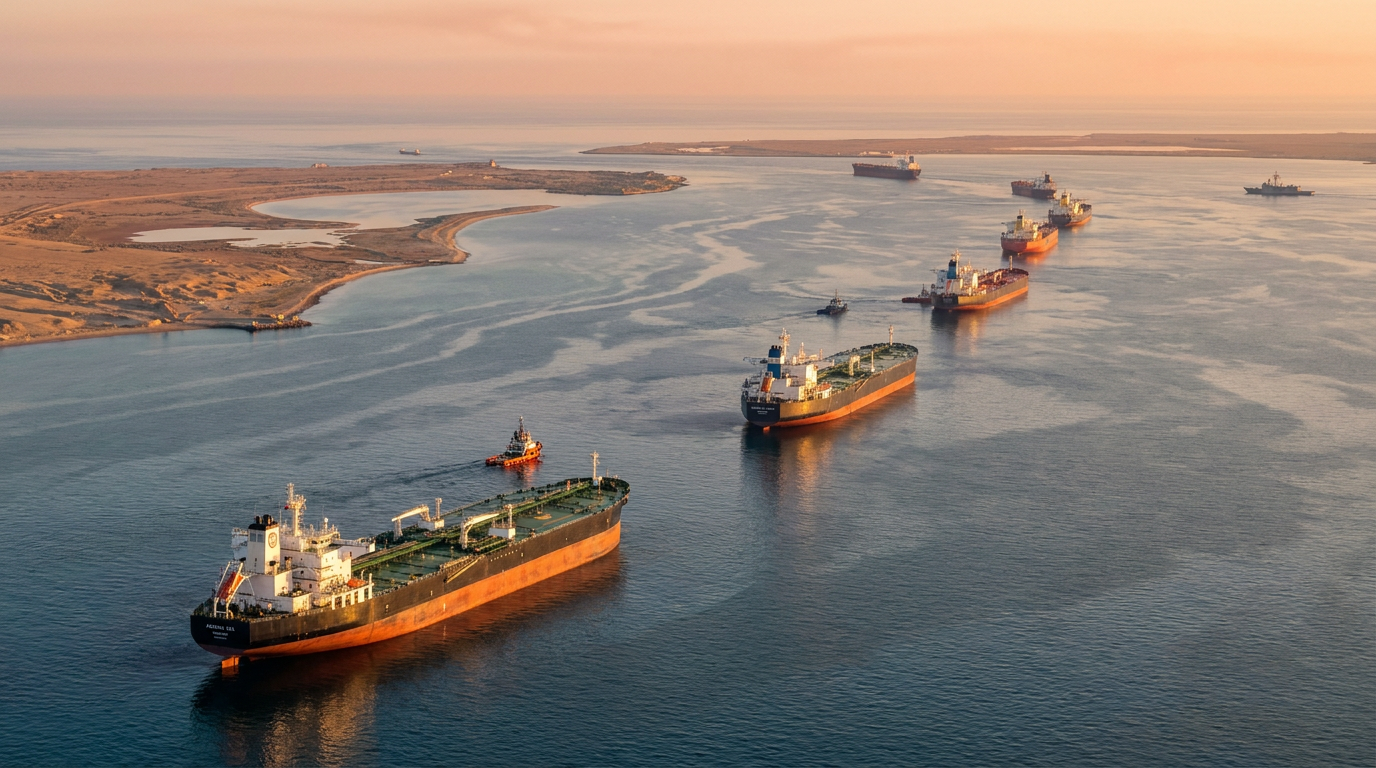
Declaring the strait open is vastly different from safely navigating it. Approximately 500 to 600 commercial vessels, including hundreds of oil tankers, remain trapped inside the Persian Gulf. Maritime organizations caution that clearing the backlog will take weeks, requiring extensive coordination, mine-clearance operations, and renewed insurance assurances before captains risk the passage.[4][7]
Declaring the strait open is vastly different from safely navigating it.
A significant diplomatic friction point has already emerged over transit costs. President Trump announced that the agreement guarantees a "toll-free opening" of the strait. In stark contrast, Iran's foreign ministry indicated that Tehran intends to collect "maritime service fees" from transiting ships—a move that legal experts warn could violate international law and trigger U.S. sanctions.[4][6]
Within the Trump administration, the prospect of a lasting peace is being met with deep skepticism. CIA Director John Ratcliffe recently briefed the president that U.S. intelligence raises serious doubts about Iran's willingness to make genuine nuclear concessions. Secretary of State Marco Rubio and Defense Secretary Pete Hegseth reportedly share these reservations as the 60-day negotiation clock begins ticking.[1]

The upcoming technical talks will prioritize Iran's nuclear ambitions, focusing specifically on its highly enriched uranium stockpiles and enrichment capabilities. U.S. officials have stated that any release of frozen Iranian assets or broader reconstruction funds will be strictly tied to Tehran's verifiable performance during these negotiations.[2][6]
For neighboring Arab Gulf states, the ceasefire brings a massive sigh of relief. Countries across the region have borne the economic brunt of the instability and the disruption to their own energy exports. If the fragile truce holds, the agreement could fundamentally reshape Middle Eastern security dynamics; if it collapses, the global economy faces a rapid return to the crippling blockades of the past four months.[8]
How we got here
Feb 28, 2026
The United States and Israel launch military operations against Iran, sparking a broader regional conflict.
April 2026
A brief two-week truce is attempted but fails to yield a lasting agreement.
May 2026
The U.S. blockades Iranian ports while Iran chokes off commercial traffic in the Strait of Hormuz.
June 14, 2026
U.S. and Iranian officials finalize a memorandum of understanding for a 60-day ceasefire.
June 19, 2026
A formal signing ceremony for the ceasefire agreement is scheduled to take place in Geneva.
Viewpoints in depth
The U.S. Administration
Framing the deal as a victory that restores global commerce while maintaining pressure on Tehran.
The White House is projecting confidence that its military campaign successfully forced Iran to the negotiating table. By securing the reopening of the Strait of Hormuz, the administration aims to deliver immediate economic relief to American consumers. However, key intelligence and defense officials remain highly skeptical that Tehran will ultimately dismantle its nuclear infrastructure, viewing the 60-day window as a test of Iranian compliance rather than a guaranteed peace.
The Iranian Government
Viewing the ceasefire as a necessary economic reprieve and an assertion of regional sovereignty.
Tehran is framing the lifting of the U.S. naval blockade and the unfreezing of assets as a capitulation by Washington. Iranian hardliners continue to assert that the Strait of Hormuz falls under their sovereign control, pushing for the right to collect maritime transit fees. For Iran's leadership, the 60-day pause offers a critical opportunity to stabilize a domestic economy battered by the war, while maintaining their stance that they will not permanently surrender their right to nuclear enrichment.
The Global Shipping Industry
Cautiously optimistic but deeply concerned about the physical dangers of resuming transit.
Maritime organizations and shipping firms are treating the political announcements with extreme caution. With over 500 vessels trapped in the Gulf and the threat of sea mines still present, industry leaders emphasize that a political signature does not instantly make the waters safe. They are demanding clear, coordinated international protocols—and guarantees against arbitrary Iranian tolls or boardings—before they will risk their crews and multibillion-dollar cargoes in the strait.
What we don't know
- Whether Iran will actively attempt to enforce maritime tolls on commercial vessels.
- How quickly sea mines and physical hazards can be cleared from the strait.
- If the 60-day negotiation window will yield a permanent agreement on Iran's nuclear program.
Key terms
- Strait of Hormuz
- A narrow waterway between the Persian Gulf and the Gulf of Oman, through which roughly 20% of the world's oil supply passes.
- Brent Crude
- A major global benchmark for the price of oil, used to price two-thirds of the world's internationally traded crude oil supplies.
- Naval Blockade
- A military operation in which ships are used to prevent vessels from entering or leaving a nation's ports.
Frequently asked
Is the war between the U.S. and Iran officially over?
Not yet. The current agreement is a 60-day ceasefire and a memorandum of understanding designed to allow for further negotiations, rather than a permanent peace treaty.
Will gas prices go back down immediately?
While global crude oil prices have dropped significantly, analysts warn it could take months for the supply chain to normalize, meaning pump prices will likely remain elevated in the near term.
Why are ships still trapped if the strait is open?
It will take weeks to safely clear the backlog of over 500 ships due to logistical challenges, the need for mine-clearance operations, and lingering security concerns from ship captains.
Sources
Source coverage
8 outlets
3 viewpoints surfaced








[1]AxiosU.S. Defense & Intelligence Officials
Scoop: CIA director doubts Iran's intentions on deal
Read on Axios →[2]CBS NewsDiplomatic Negotiators
Nuclear talks will be prioritized in first month of U.S.-Iran negotiations
Read on CBS News →[3]The GuardianGlobal Trade & Shipping Industry
Markets welcome US-Iran peace deal but prices may stay high
Read on The Guardian →[4]Washington PostGlobal Trade & Shipping Industry
The tentative agreement to end the war in Iran and reopen the Strait of Hormuz
Read on Washington Post →[5]Fox NewsDiplomatic Negotiators
The U.S. and Iran come to an agreement to reopen the Strait of Hormuz
Read on Fox News →[6]Channel News AsiaDiplomatic Negotiators
US says Hormuz to be toll-free under Iran deal
Read on Channel News Asia →[7]gCaptainGlobal Trade & Shipping Industry
Global Shipping Industry Cautiously Welcomes U.S.-Iran Agreement
Read on gCaptain →[8]Institute for the Study of WarU.S. Defense & Intelligence Officials
Iran Update, June 15, 2026
Read on Institute for the Study of War →

Every angle. Every day.
Get news politics stories with full source coverage and perspective breakdowns delivered to your inbox.