
Solid-State EV Batteries Are Finally Rolling Off Production Lines in 2026
After a decade of laboratory breakthroughs, next-generation solid-state batteries are entering pilot production, promising to double EV ranges and slash charging times.
By Factlen Editorial Team
- Solid-State Pioneers
- Developers pushing for rapid commercialization of next-generation battery architectures.
- Incumbent Manufacturers
- Established battery giants balancing new R&D with existing lithium-ion scale.
- Industry Pragmatists
- Analysts focused on the economic and manufacturing hurdles of scaling new tech.
What's not represented
- · Raw material suppliers managing the shift from liquid electrolyte chemicals to solid ceramics and sulfides.
- · Independent safety regulators evaluating the new crash-test dynamics of solid-state packs.
Why this matters
Solid-state batteries are widely considered the holy grail of electric vehicles. By eliminating fire risks and enabling 600-mile ranges with 15-minute charge times, this technology removes the final barriers to mass EV adoption and fundamentally changes the economics of global transportation.
Key points
- Multiple battery developers, including QuantumScape and Dongfeng, have officially launched pilot production lines for solid-state EV batteries in 2026.
- By replacing flammable liquid electrolytes with solid materials, the new batteries eliminate the risk of thermal runaway and catastrophic fires.
- Early production cells are achieving energy densities up to 400 Wh/kg, enabling future vehicles to travel over 600 miles on a single charge.
- While pilot production is underway, high manufacturing costs mean the technology will likely debut in luxury vehicles before reaching the mass market around 2030.
For the better part of a decade, solid-state batteries have been the electric vehicle industry’s most tantalizing mirage—a revolutionary technology that always seemed to be exactly five years away. But in 2026, that mirage is finally materializing into physical reality. Across the globe, from Silicon Valley to Yokohama and Guangzhou, the first dedicated pilot production lines for solid-state cells are officially powering up. This marks a profound shift for the automotive sector, transitioning the technology out of controlled laboratory environments and into the rigorous, high-volume world of industrial manufacturing. The implications for consumers are staggering: vehicles that can travel over 600 miles on a single charge, replenish their batteries in the time it takes to buy a coffee, and operate safely without the fire risks associated with today’s standard battery packs.[1][2]
To understand why this shift is so monumental, it is necessary to look under the floorboards of a modern electric vehicle. Nearly all EVs on the road today rely on conventional lithium-ion batteries. In these standard cells, lithium ions travel back and forth between an anode and a cathode through a liquid electrolyte—a chemical soup that facilitates the flow of energy. While this technology has improved dramatically over the last twenty years, it is fundamentally constrained by its chemistry. Liquid electrolytes are heavy, they degrade over time, and crucially, they are highly flammable. If a traditional battery is punctured or severely overheated, the liquid can ignite, leading to a dangerous chain reaction known as thermal runaway.
Solid-state batteries solve this foundational problem by replacing the liquid soup with a solid material. Instead of swimming through a volatile fluid, the lithium ions travel through a solid, conductive separator—typically made of advanced ceramics, specialized polymers, or sulfide glass. This single architectural change unlocks a cascade of engineering benefits. Because the solid electrolyte is inherently non-flammable, automakers can safely remove the heavy, complex liquid cooling systems and protective armoring that current EV battery packs require. The result is a battery that is not only vastly safer but significantly lighter and more compact.[4]

The most immediate consumer benefit of this solid architecture is a massive leap in energy density—the amount of power a battery can store relative to its weight or volume. Today’s best lithium-ion cells hover around 250 watt-hours per kilogram (Wh/kg). By contrast, the solid-state cells rolling off pilot lines in 2026 are hitting between 350 and 400 Wh/kg. For the driver, this translates directly to range. Automakers utilizing these new cells project that upcoming solid-state vehicles will easily exceed 600 miles (roughly 1,000 kilometers) on a single charge, effectively eliminating range anxiety for even the most demanding road trips.[2][3]
Beyond sheer distance, solid-state technology fundamentally alters the mathematics of charging. Because solid electrolytes are highly resistant to the heat generated by rapid energy transfer, these batteries can absorb power at unprecedented rates without sustaining internal damage. QuantumScape, a leading solid-state developer backed by Volkswagen, recently demonstrated that its new cells can endure 400 consecutive fast-charge cycles—replenishing from 10 percent to 80 percent capacity in just 15 minutes—while retaining over 80 percent of their original energy capacity. This brings the EV charging experience remarkably close to the familiar rhythm of a traditional gas station fill-up.[1][6]
Another historical weakness of electric vehicles—cold weather performance—is also being neutralized by solid-state chemistry. Traditional liquid electrolytes become sluggish in freezing temperatures, which is why EV owners often see their driving range plummet during winter months. Solid electrolytes are far less sensitive to temperature swings. In early 2026, Chinese automaker Dongfeng subjected its solid-state battery prototypes to extreme cold-weather calibration testing in Mohe, China. Even at bone-chilling temperatures of minus 30 degrees Celsius, the solid-state packs retained over 74 percent of their charge, maintaining a functional range that would be impossible for a standard lithium-ion vehicle under identical conditions.[3]

Another historical weakness of electric vehicles—cold weather performance—is also being neutralized by solid-state chemistry.
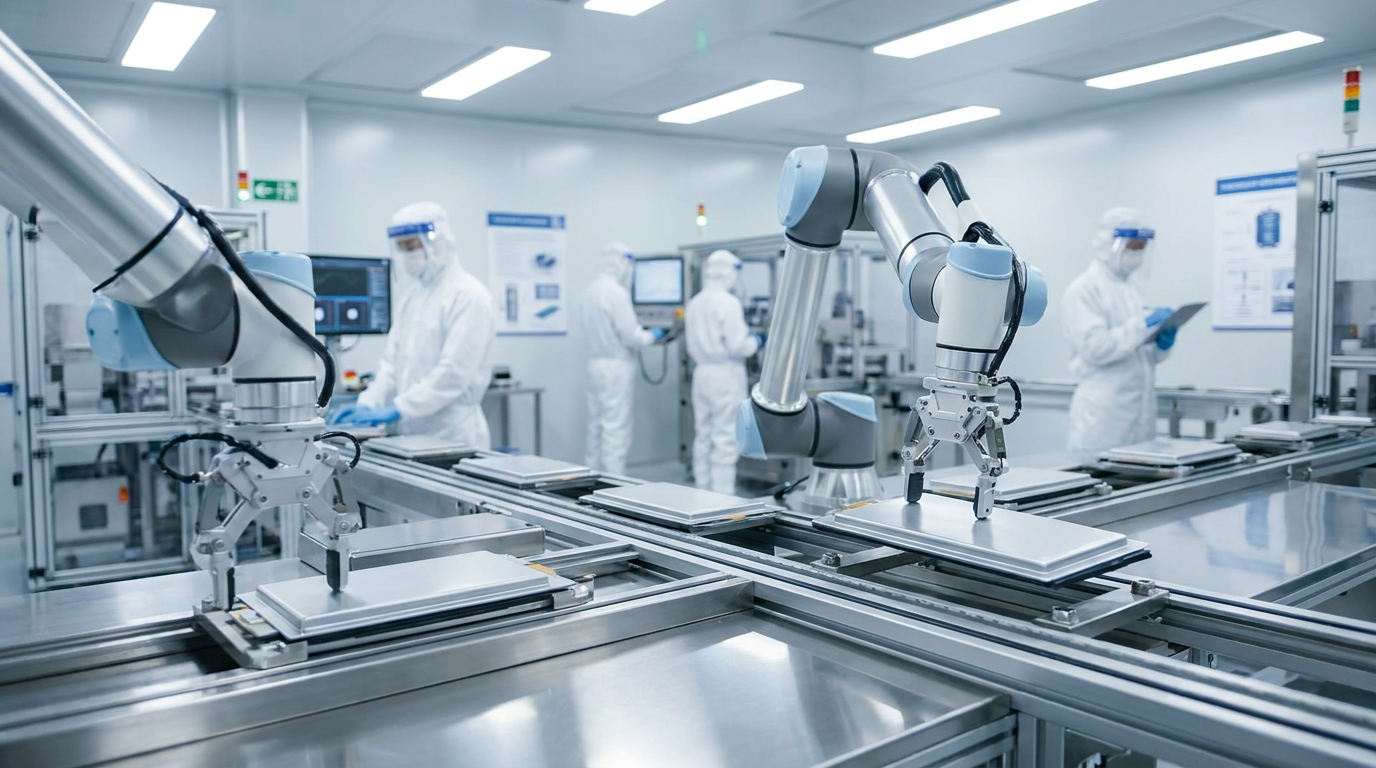
The race to commercialize this technology has triggered a massive wave of capital investment and geopolitical maneuvering. In the United States, QuantumScape inaugurated its 'Eagle Line' in San Jose in early 2026. This highly automated pilot facility is designed to produce the company's proprietary QSE-5 cells at a scale large enough to supply automotive partners for real-world vehicle integration and testing. The facility utilizes a breakthrough manufacturing technique dubbed the 'Cobra process,' which allows for the rapid, continuous production of the delicate ceramic separators that have historically been the hardest component to manufacture at scale.[1][6]
Meanwhile, Japan’s automotive giants are moving aggressively to reclaim their historic leadership in battery technology. Toyota, which has been notoriously cautious about fully committing to standard lithium-ion EVs, recently received official approval from the Japanese government to begin producing its next-generation solid-state cells. The automaker plans to initiate production in 2026, with a gradual ramp-up targeting high-volume manufacturing by the end of the decade. Toyota’s roadmap explicitly targets the 1,000-kilometer range threshold, viewing solid-state technology as the definitive leap that will make EVs universally viable.[2]
Nissan is executing a parallel strategy, recently opening an all-solid-state battery pilot line at its Yokohama plant. The company has set a firm target to launch its first mass-produced solid-state EV by 2028. To overcome the notoriously high costs of solid-state manufacturing, Nissan is deploying cutting-edge casting machines and novel dry-electrode processes that eliminate the need for the expensive, energy-intensive drying ovens used in traditional battery factories. By streamlining the production floor, Nissan aims to bring the cost of solid-state packs down to parity with gasoline engines by the early 2030s.[4]

China, which currently dominates the global supply chain for standard lithium-ion batteries, is not ceding ground in the solid-state era. A consortium of Chinese automakers and battery giants, including CATL and Dongfeng, have formed collaborative innovation platforms to accelerate industrialization. Dongfeng has announced plans to begin mass production of its solid-state vehicles in the second half of 2026, potentially beating Western and Japanese rivals to the consumer market. Similarly, CATL—the world's largest battery manufacturer—has secured massive supply chains for copper foil and is actively patenting new sulfide-based solid electrolytes designed to prevent internal degradation.[3][5]
Despite the immense progress, significant uncertainties remain before solid-state batteries become ubiquitous in neighborhood driveways. The primary hurdle is cost. According to industry analysts, early sulfide-based solid-state cells are currently estimated to be three to five times more expensive to produce than conventional lithium-ion batteries. Manufacturing solid electrolytes requires pristine cleanroom environments and extreme precision; even microscopic defects or cracks in the solid separator can cause the battery to fail. Scaling these delicate processes from a pilot line producing thousands of cells to gigafactories producing millions remains a formidable engineering challenge.[5]
Because of this initial cost premium, the first wave of solid-state vehicles hitting the market in the late 2020s will not be budget-friendly commuter cars. Automakers will almost certainly debut the technology in flagship luxury sedans, high-performance supercars, and heavy-duty electric trucks—vehicles with price tags large enough to absorb the expensive new battery packs. Only after production volumes scale up and manufacturing yields improve will the technology trickle down to the mass market, a process that industry experts predict will take until the early 2030s.[2][4]

Yet, the impact of solid-state batteries will extend far beyond the automotive sector. Because these cells offer unparalleled energy density and eliminate the risk of catastrophic fires, they are highly sought after by the aerospace and defense industries. Companies are already testing solid-state packs for use in electric vertical takeoff and landing (eVTOL) aircraft, heavy-lift commercial drones, and advanced robotics. For these applications, where every gram of weight is heavily scrutinized and safety is paramount, the arrival of commercial solid-state batteries in 2026 represents the unlocking of entirely new technological frontiers.[1]
How we got here
2020–2023
Solid-state technology achieves major laboratory breakthroughs, proving viability but struggling with manufacturing scale.
Late 2024
Automakers and battery startups finalize the chemistry for solid electrolytes, shifting focus to factory design.
Early 2026
QuantumScape inaugurates its Eagle Line in California, while Dongfeng successfully tests solid-state prototypes in extreme cold.
Mid 2026
Toyota receives government approval to begin pilot production of its next-generation solid-state cells in Japan.
2028 (Projected)
Nissan and other major automakers plan to launch their first mass-market EVs powered entirely by solid-state batteries.
Viewpoints in depth
Solid-State Pioneers
Companies like QuantumScape and Toyota who view solid-state as the definitive future of mobility.
This camp argues that the fundamental chemistry of liquid lithium-ion batteries has reached its physical limits. They believe that only a radical architectural shift to solid electrolytes can deliver the 600-plus mile ranges and 10-minute charging times required to convince the remaining EV skeptics. By investing billions into pilot lines now, these pioneers aim to establish a dominant intellectual property moat and secure the most lucrative early contracts with premium automakers.
Incumbent Battery Giants
Established manufacturers who advocate for a more gradual, hybrid transition.
Dominant players like CATL and BYD acknowledge the promise of solid-state technology but argue that traditional lithium-ion and lithium-iron-phosphate (LFP) batteries still have significant room for optimization. They point out that LFP batteries are currently vastly cheaper to produce and already meet the daily driving needs of most consumers. This camp is developing solid-state tech in the background but warns against abandoning the massive economies of scale already achieved with liquid electrolytes.
Manufacturing Skeptics
Industry analysts focused on the immense difficulty of scaling laboratory science.
Skeptics do not doubt the physics of solid-state batteries, but they heavily question the manufacturing timelines. They emphasize that producing a flawless solid ceramic separator in a lab is entirely different from printing millions of them at high speed without introducing microscopic, battery-killing fractures. This group cautions that the '3 to 5 times' cost premium will keep solid-state batteries relegated to luxury supercars for much longer than the optimistic 2028 mass-market projections suggest.
What we don't know
- It remains unclear exactly how quickly manufacturing yields can improve to bring the cost of solid-state cells down to parity with traditional lithium-ion batteries.
- We do not yet know how the global supply chain will adapt to the massive new demand for the specialized ceramics and sulfide glasses required for solid electrolytes.
Key terms
- Electrolyte
- The medium inside a battery that allows ions to flow between the positive and negative ends, creating an electrical current.
- Energy Density
- A measure of how much power a battery can store relative to its weight or size, usually expressed in watt-hours per kilogram (Wh/kg).
- Thermal Runaway
- A dangerous chain reaction in traditional batteries where overheating causes the liquid electrolyte to catch fire, generating more heat and further combustion.
- Sulfide Glass
- A highly conductive solid material being tested by several manufacturers to replace the liquid electrolyte in next-generation batteries.
- Pilot Line
- A small-scale manufacturing facility used to test and refine production processes before committing to massive, high-volume gigafactories.
Frequently asked
What makes a solid-state battery different from current EV batteries?
Current EV batteries use a liquid chemical electrolyte to move energy back and forth. Solid-state batteries replace that liquid with a solid material, like a ceramic or polymer, which is safer and can store more energy.
Will solid-state batteries make EVs cheaper?
Not immediately. Early solid-state batteries are estimated to cost three to five times more to manufacture than current batteries. They will likely debut in luxury vehicles before economies of scale bring prices down for budget cars.
How fast can a solid-state battery charge?
Pilot tests from companies like QuantumScape show that solid-state cells can safely charge from 10% to 80% in about 15 minutes, without sustaining the heat damage that degrades traditional batteries.
When can I buy a car with a solid-state battery?
While pilot production is beginning in 2026, automakers like Nissan and Toyota are targeting 2028 for their first mass-produced solid-state vehicles. Widespread availability is expected in the early 2030s.
Sources
Source coverage
6 outlets
3 viewpoints surfaced






[1]ElectrekSolid-State Pioneers
QuantumScape inaugurates Eagle Line pilot for solid-state battery production
Read on Electrek →[2]Green Car ReportsSolid-State Pioneers
Toyota EV plans: Tenfold boost by 2026, solid-state batteries
Read on Green Car Reports →[3]CarsGuideIncumbent Manufacturers
Dongfeng solid-state batteries to be mass-produced in 2026 with 1000km-plus of driving range
Read on CarsGuide →[4]Battery TechnologyIndustry Pragmatists
Nissan's Solid-State Plans Revealed: SSB-Powered EVs by 2029
Read on Battery Technology →[5]electrive.comIncumbent Manufacturers
CATL makes progress on its solid-state battery
Read on electrive.com →[6]QuantumScapeSolid-State Pioneers
QuantumScape Inaugurates Eagle Line for Solid-State Battery Pilot Production
Read on QuantumScape →

Every angle. Every day.
Get automotive stories with full source coverage and perspective breakdowns delivered to your inbox.