
How eVTOL Air Taxis Work and When They Will Launch Commercially
Electric vertical takeoff and landing (eVTOL) aircraft are nearing commercial reality in 2026. Powered by distributed electric propulsion, these quiet, battery-powered air taxis are navigating final FAA certifications to transform urban transit.
By Factlen Editorial Team
- eVTOL Manufacturers
- Argue that electric air taxis are safe, quiet, and ready to revolutionize urban transit within the next two years.
- Aviation Regulators
- Prioritize methodical safety testing and the careful integration of new aircraft into existing, highly complex airspace.
- Urban Planners & Communities
- Focus on the tangible impacts of air taxis on city life, particularly concerning noise pollution and infrastructure demands.
- Acoustic Researchers
- Emphasize that perceived annoyance from tonal rotor noise is a complex metric that raw decibel counts do not fully capture.
What's not represented
- · Traditional Airline Pilots
- · Public Transit Advocates
Why this matters
The commercialization of eVTOLs will fundamentally alter urban commutes, turning hour-long gridlock into ten-minute flights. For residents, it promises a faster, zero-emissions transit option, provided the industry can deliver on its promises of safety and whisper-quiet operation.
Key points
- Leading eVTOL manufacturers are targeting late 2026 and 2027 for their first commercial passenger flights.
- Distributed Electric Propulsion (DEP) uses multiple small motors to provide built-in safety redundancy.
- Acoustic engineering has reduced eVTOL noise to roughly 45 decibels at cruise, significantly quieter than helicopters.
- Current lithium-ion battery density limits initial air taxi routes to short urban hops of 100 to 150 miles.
- The FAA finalized Part 194 operating rules in March 2026, clearing a major regulatory hurdle for operators.
The era of the flying car has officially transitioned from science fiction to regulatory reality. In April 2026, Joby Aviation completed a landmark demonstration flight, piloting its electric aircraft from John F. Kennedy International Airport to a Manhattan heliport in just seven minutes. For commuters accustomed to grinding through an hour of gridlock, the quiet, zero-emissions flight offered a tangible glimpse into the immediate future of urban transportation. With commercial launches targeted for late 2026 and 2027, the aviation industry is standing on the precipice of its biggest shift since the introduction of the jet engine.[1][8]
The vehicles driving this revolution are known as eVTOLs—Electric Vertical Takeoff and Landing aircraft. Unlike traditional airplanes that require long runways, eVTOLs lift off and touch down vertically like helicopters. However, the similarities end there. By replacing combustion engines with battery-powered electric motors, these aircraft promise to drastically reduce both operating costs and carbon emissions, opening up a new category of transportation known as Advanced Air Mobility (AAM).[6][10]
The foundational technology making this possible is Distributed Electric Propulsion (DEP). In a conventional helicopter, a single massive engine drives a complex mechanical rotor system; if that engine fails, the pilot must rely on autorotation to glide to a safe landing. DEP fundamentally rewrites this safety architecture. Instead of one central point of failure, an eVTOL spreads multiple small electric motors across its wings and airframe.[6]
This distribution provides built-in redundancy. If one or even two motors fail mid-flight, the flight control computers instantly redistribute power to the remaining motors, allowing the aircraft to maintain stability and land safely. Because electric motors are incredibly light relative to the power they produce, engineers can afford to install six, eight, or even twelve rotors without crippling the aircraft's weight capacity.[6]

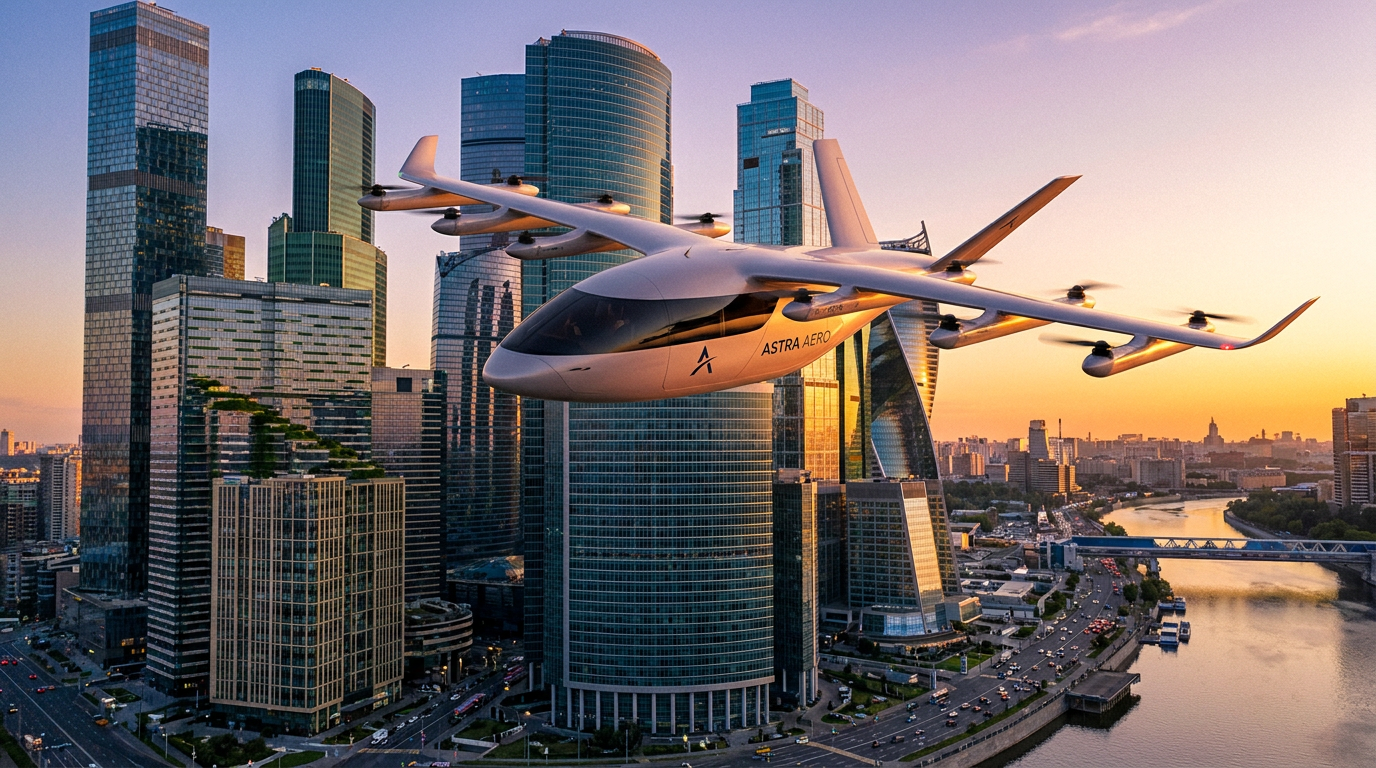
Beyond safety, DEP allows for radical new aerodynamic designs. The two most common configurations nearing commercialization are "Lift + Cruise" and "Tiltrotor." Lift + Cruise models use dedicated vertical rotors for hovering and separate forward-facing propellers for horizontal flight. Tiltrotor designs, like those pioneered by Joby and Archer Aviation, use rotors that point upward for takeoff and then physically pivot forward to pull the aircraft through the air like a traditional plane.[6][8]
But the most critical battleground for eVTOL adoption isn't just in the sky—it's on the ground, in the ears of the public. Helicopters have long been restricted in urban environments due to their deafening, low-frequency thumping. If air taxis are to operate at scale, ferrying thousands of passengers daily from downtown rooftops, they must be quiet enough to blend into the ambient noise of a city.[3][4]
Noise reduction is a delicate aeroacoustic challenge. The primary source of helicopter noise is the blade tip approaching supersonic speeds. eVTOL designers mitigate this by using smaller rotors spinning at lower speeds. Furthermore, because DEP systems use multiple rotors, they generate overlapping, higher-frequency sounds rather than a single dominant thump.[3]
The results are striking. Joby Aviation recently published an acoustic study demonstrating that its aircraft produces roughly 45 decibels of noise at cruising altitude—a sound profile the company's CEO famously compared to "the rustling of leaves." During takeoff and landing, the loudest phases of flight, the aircraft peaks at around 65 decibels, well below the Federal Aviation Administration's (FAA) 82-decibel limit for air taxis.[3][4][5]

However, acoustic engineers note that perceived annoyance is about more than just raw decibels. Because eVTOL sounds are tonal and vary in pitch, they can still stand out against the drone of city traffic. Some critics have likened the sound of early prototypes to a "giant beehive," prompting manufacturers to invest heavily in blade geometry and rotor spacing to fine-tune their acoustic signatures before commercial launch.[3][5]
However, acoustic engineers note that perceived annoyance is about more than just raw decibels.
The invisible tether holding back eVTOL performance is battery energy density. Lifting a multi-ton aircraft vertically requires an immense surge of power, and current lithium-ion batteries are heavy. This physical limitation restricts the first generation of air taxis to relatively short hops—typically a maximum range of 100 to 150 miles on a single charge.[6]
For the initial business model, this range is sufficient. Companies are targeting the "airport shuttle" route, replacing 45-minute car rides with 10-minute flights. But for regional travel between distant cities, the industry is waiting on next-generation solid-state batteries, which promise to pack more energy into a lighter footprint, unlocking longer routes and higher payload capacities.[1][6]
Technology, however, moves faster than regulation. Before a single paying passenger can step aboard, these aircraft must navigate a labyrinthine certification process. In the United States, the FAA has spent years developing a bespoke regulatory framework for this entirely new class of "powered-lift" vehicles.[2][10]
In March 2026, the FAA finalized Part 194, the dedicated operating rule that, combined with earlier pilot certification rules, gives operators a complete legal stack to begin commercial revenue flights. Concurrently, the White House launched the eVTOL Integration Pilot Program (eIPP), allowing pre-certification demonstration flights across 26 states to help local governments prepare their airspace and infrastructure.[7][10]

The race to achieve full FAA Type Certification—the gold standard proving an aircraft's design is safe for commercial production—is fiercely competitive. Joby Aviation is currently the frontrunner, having entered Stage 4 of the FAA's rigorous five-stage process. This phase involves flying conforming aircraft in "for-credit" testing, allowing FAA engineers to validate the vehicle's performance against strict safety regulations.[7][8]
Close behind is Archer Aviation, which recently completed Phase 3 of its certification journey for its Midnight aircraft. While Joby is pursuing a vertically integrated model—aiming to manufacture the aircraft and operate the ride-sharing network itself, much like a futuristic Uber—Archer is focusing heavily on strategic partnerships, including a major deal with United Airlines to launch routes in major U.S. hubs.[1][8][9]
The competition has occasionally spilled out of the engineering labs and into the courtroom. The two California-based rivals have engaged in overlapping lawsuits, trading accusations of corporate espionage and supply chain obfuscation. The intense rivalry underscores the massive financial stakes; analysts project the global eVTOL market could be worth tens of billions of dollars by the end of the decade.[2]

While the U.S. regulatory process grinds forward, some companies are looking abroad to accelerate their timelines. Archer has announced plans to launch commercial operations in the United Arab Emirates by late 2026, leveraging local regulatory frameworks that may move faster than the FAA. Meanwhile, in China, manufacturer EHang has already secured domestic certification and begun operating pilotless commercial flights.[7][8]
As 2026 progresses, the industry is shifting its focus from proving the technology works to proving it can be manufactured at scale. Building a handful of bespoke prototypes is vastly different from running an aerospace assembly line capable of churning out hundreds of flawless aircraft a year.[8]
The next 18 months will be critical. If companies can successfully navigate the final stages of FAA certification, scale their manufacturing, and win over skeptical communities with whisper-quiet operations, the daily commute is about to look radically different. The era of urban air mobility is no longer a distant promise; it is waiting on the tarmac.[1][8]
How we got here
2009
Joby Aviation is founded, beginning early conceptual work on electric vertical flight.
2024
The FAA issues final rules for powered-lift pilot training and certification.
Dec 2025
The Department of Transportation releases its 10-year national Advanced Air Mobility strategy.
Mar 2026
The FAA finalizes Part 194 operating rules, establishing the legal framework for commercial eVTOL flights.
Apr 2026
Joby Aviation completes a landmark 7-minute demonstration flight from JFK Airport to Manhattan.
Late 2026
Targeted timeline for the first commercial eVTOL launches in the UAE and early U.S. markets.
Viewpoints in depth
eVTOL Manufacturers
Companies building the aircraft argue the technology is proven and ready for public use.
Manufacturers like Joby and Archer emphasize that the core technology—electric motors, flight control software, and battery systems—has been rigorously tested over thousands of flight hours. They argue that Distributed Electric Propulsion makes these vehicles inherently safer than traditional helicopters by eliminating single points of failure. For these companies, the primary remaining challenge is not technological invention, but rather navigating the final stages of regulatory certification and scaling up their manufacturing assembly lines to meet anticipated demand.
Aviation Regulators
Agencies like the FAA prioritize methodical safety validation over rapid deployment.
Regulators view the introduction of a completely new class of aircraft into crowded urban airspace as a monumental safety challenge. The FAA's approach has been deliberately cautious, requiring manufacturers to prove their aircraft can handle extreme edge cases, such as multiple motor failures or severe weather, before granting Type Certification. Regulators are also heavily focused on how these low-flying aircraft will integrate with existing air traffic control systems without disrupting commercial airline operations or compromising ground safety.
Acoustic Researchers
Scientists caution that raw decibel measurements don't fully capture how annoying a sound might be to the public.
While manufacturers tout low decibel readings, aeroacoustic researchers point out that the human ear is highly sensitive to the specific tonal qualities of multiple spinning rotors. Because eVTOLs generate complex, overlapping frequencies that vary in pitch as the aircraft maneuvers, the sound can be perceived as a persistent nuisance—often compared to a buzzing insect—even if the overall volume is low. Researchers argue that community acceptance will ultimately depend on psycho-acoustic factors, not just passing the FAA's baseline loudness tests.
What we don't know
- How quickly manufacturers can scale their production lines from building single-digit prototypes to hundreds of aircraft per year.
- Whether the general public will embrace the visual and acoustic impact of frequent low-altitude flights over residential neighborhoods.
- How soon next-generation solid-state batteries will be commercially viable to unlock longer regional routes.
Key terms
- eVTOL
- Electric Vertical Takeoff and Landing aircraft, designed to hover, take off, and land vertically using electric power.
- Distributed Electric Propulsion (DEP)
- An architecture that uses multiple small electric motors spread across an aircraft to provide lift and thrust, enhancing safety through redundancy.
- Advanced Air Mobility (AAM)
- A broad transportation concept that integrates new, highly automated electric aircraft into existing local and regional airspace.
- Type Certification
- A regulatory approval issued by the FAA signifying that an aircraft's design meets all required safety and performance standards for commercial production.
- Vertiport
- A dedicated launch and landing pad for eVTOL aircraft, often integrated into existing airports or built on urban rooftops.
Frequently asked
What does eVTOL stand for?
It stands for Electric Vertical Takeoff and Landing. These aircraft use battery-powered electric motors to hover like a helicopter and fly forward like an airplane.
How is an eVTOL different from a helicopter?
Instead of a single combustion engine and a large main rotor, eVTOLs use Distributed Electric Propulsion—multiple small electric motors spread across the aircraft. This makes them quieter, zero-emissions, and mechanically simpler.
Are eVTOLs fully autonomous?
The first generation of commercial eVTOLs will be piloted. However, manufacturers are designing them with advanced automation, and fully autonomous, pilotless flights are planned for the future.
How much will an air taxi ride cost?
Initial pricing is expected to be comparable to premium rideshare services, roughly $50 to $200 per trip, with costs projected to drop as the technology scales.
Sources
Source coverage
10 outlets
4 viewpoints surfaced










[1]Smart Cities DiveeVTOL Manufacturers
Archer, Joby expect to begin commercial air taxi flights in US cities this year
Read on Smart Cities Dive →[2]Los Angeles TimesUrban Planners & Communities
Dogfight over California: The ugly battle between electric air taxi leaders Joby and Archer
Read on Los Angeles Times →[3]InstrumentalAcoustic Researchers
Noise is a Delicate Quality-Control Challenge
Read on Instrumental →[4]eVTOL InsightseVTOL Manufacturers
Joby has released a new acoustic study showing the 'sound difference' between its eVTOL when compared with a helicopter
Read on eVTOL Insights →[5]AOPAAcoustic Researchers
Manufacturers have other considerations in mind: Joby's focus on noise
Read on AOPA →[6]DewesoftAcoustic Researchers
Electric Vertical Take-Off and Landing (eVTOL) aircraft represent a transformative shift in aviation technology
Read on Dewesoft →[7]eVTOL.travelAviation Regulators
eVTOL Timeline: From concept to commercial reality
Read on eVTOL.travel →[8]Low Altitude EconomyeVTOL Manufacturers
Strategic comparison of Joby and Archer's certification and operational approaches
Read on Low Altitude Economy →[9]BriefGlanceeVTOL Manufacturers
Archer Advances FAA Certification, Eyes 2026 US Air Taxi Launch
Read on BriefGlance →[10]Legis1Aviation Regulators
Department of Transportation releases national AAM strategy
Read on Legis1 →
Every angle. Every day.
Get automotive stories with full source coverage and perspective breakdowns delivered to your inbox.