
The Science of Longevity: How Advanced Biometrics and Recovery Tech Are Extending MMA Careers
Mixed martial arts is moving away from the grueling 'gym wars' of its early days, embracing data analytics, regenerative medicine, and biometric tracking to keep fighters healthier and competing longer.
By Factlen Editorial Team
- Sports Scientists & Medical Staff
- Advocate for data-driven load management, biometric tracking, and regenerative medicine to prevent injuries and prolong athletic careers.
- Brain Health Researchers
- Emphasize the urgent need to reduce sub-concussive impacts in training to protect fighters' long-term cognitive function.
- Traditional MMA Coaches
- Value the mental toughness built through live sparring, but are increasingly adapting to 'playful sparring' to preserve their athletes' health.
What's not represented
- · Amateur fighters without access to elite sports science facilities
- · Retired fighters managing long-term injuries from the pre-science era
Why this matters
The brutal, short-lived careers that once defined combat sports are becoming a thing of the past. By applying cutting-edge sports science to human performance, the MMA industry is creating a blueprint for injury prevention and brain health that could eventually benefit amateur athletes, physical laborers, and the general public.
Key points
- MMA training has shifted from grueling daily sparring to data-driven, periodized sports science.
- The UFC Performance Institute uses tiered diagnostics to identify muscular imbalances before they cause injuries.
- Instrumented mouthguards now track the G-force of head impacts in real-time to protect fighters' brain health.
- Regenerative medicine, including stem cell therapy, is replacing traditional surgery for many joint injuries.
- Targeted off-season aerobic and plyometric training has been shown to increase fighter strength endurance by 18%.
For the first two decades of mixed martial arts, the prevailing wisdom was forged in blood and sweat. Fighters engaged in daily "gym wars," enduring grueling, full-contact sparring sessions that often left them more damaged in training than under the arena lights. Careers were spectacular but brief, with many athletes physically declining before their thirty-second birthdays. Today, that paradigm has been entirely rewritten.[3][7]
The modern MMA fighter is no longer just a martial artist; they are the subject of a highly calibrated sports science experiment. The catalyst for this industry-wide shift was the 2017 launch of the UFC Performance Institute (PI) in Las Vegas—a $14 million, 30,000-square-foot facility dedicated to evidence-based human performance. Since its inception, the PI has expanded globally to Shanghai and Mexico City, standardizing care and fundamentally changing how fighters prepare, recover, and extend their athletic primes.[5][6]
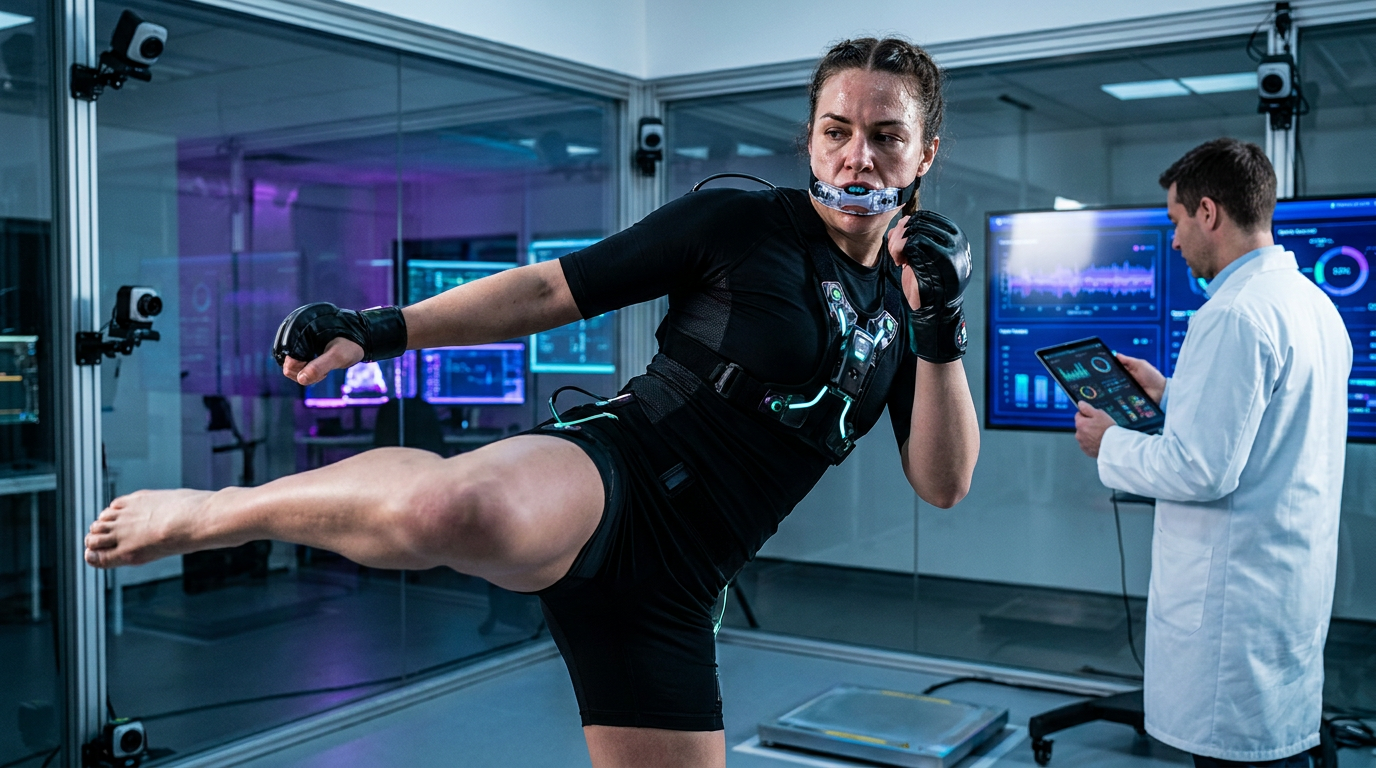
At the core of this revolution is a shift from reactive medicine to proactive data analytics. When athletes arrive at the Performance Institute, they no longer just hit pads; they undergo a "tiered diagnostic system." Tim Roberts, the Sports Medicine Manager at the UFC PI in Mexico City, utilizes fixed-frame and strain-gauge testing to establish strength profiles across key anatomical regions like the neck, shoulders, and hips.[2]
This profiling identifies muscular imbalances before they result in catastrophic tears. By normalizing data across weight classes and genders, sports scientists can pinpoint exactly when a fighter's hip flexor is overcompensating for a weak glute, allowing coaches to prescribe targeted interventions. It is a system designed to keep athletes out of the operating room and inside the Octagon.[2][7]

Strength and conditioning protocols have also evolved from generic weightlifting to highly periodized, fight-specific programming. A 2024 study published in the Journal of Physical Education and Sport tracked an experimental exercise program tailored for professional fighters. By splitting training into distinct off-season aerobic cycles and competitive-phase plyometrics, fighters saw an 18% boost in strength endurance and a 12% increase in maximum strength.[3]
But the most profound transformation in MMA sports science centers on the brain. The culture of daily hard sparring is rapidly being replaced by "playful sparring"—a concept popularized by elite coaches as "updating the software without damaging the hardware." The goal is to train reflexes, timing, and neuroplasticity without the cognitive wear and tear of sub-concussive impacts.[3][7]
But the most profound transformation in MMA sports science centers on the brain.
The urgency behind this shift is backed by sobering neurological data. Recent studies in the journal Frontiers in Neurology revealed that MMA fighters frequently show reduced N400 amplitudes—a key biomarker tied to cognitive processing. These subtle shifts in the brain's gray matter indicate that even strikes that do not cause a full concussion can disrupt neural pathways over time.[3]
To combat this, the UFC has partnered with Sports & Wellbeing Analytics (SWA) to implement the PROTECHT system. Fighters now train with instrumented mouthguards equipped with advanced sensors that monitor heart rate and measure the exact G-force of head impacts in real-time. If a fighter absorbs too much cumulative force during a camp, coaches have the objective data required to pull them out of live sparring and mandate rest.[1]

When injuries do occur, the recovery process looks vastly different than it did a decade ago. The traditional route of surgical repair, cortisone injections, and extended physical therapy is increasingly being supplemented—or replaced—by regenerative medicine. Elite athletes are turning to orthobiologics to heal damaged tissue naturally.[4]
Mesenchymal stem cells (MSCs) and Platelet-Rich Plasma (PRP) therapies are now commonplace among top-tier competitors. Unlike surgical interventions that cut away damaged cartilage or reconstruct ligaments artificially, MSCs possess the capacity to differentiate into various cell types, including bone and muscle tissue. They modulate the body's inflammatory response and release growth factors that actively promote tissue regeneration.[4][7]
The daily recovery room has also received a high-tech upgrade. The old standard of ice baths and hot packs has been replaced by a multi-modal approach. Fighters now utilize infrared red-light beds to stimulate cellular repair, flotation therapy pods for central nervous system decompression, and advanced cryotherapy chambers to rapidly flush metabolic waste from fatigued muscles.[3][6]
To manage this complex web of training loads, biometric data, and recovery metrics, organizations are employing sophisticated athlete management systems. Platforms like Kitman Labs consolidate a fighter's daily data, allowing sports scientists to accurately quantify injury risk factors. Through remote coaching apps, athletes can log their sleep, mood, and perceived exertion from anywhere in the world, giving medical staff a real-time dashboard of their roster's health.[5]

The results of this scientific awakening are undeniable. Fighters are entering their late thirties not as diminished veterans relying solely on experience, but as physically optimized athletes capable of competing with the next generation. By treating recovery as a discipline equal to striking or grappling, the sport has fundamentally raised its own ceiling.[3][7]
While uncertainties remain—particularly regarding the long-term efficacy of certain stem cell treatments compared to placebos, and the exact threshold at which sub-concussive impacts trigger neurodegenerative disease—the trajectory is clear. MMA has transitioned from a test of pure human attrition into a showcase of human optimization, ensuring that the athletes who build the sport can safely enjoy their lives long after they leave the cage.[1][4][7]
How we got here
2017
The UFC opens its first $14 million Performance Institute in Las Vegas to standardize athlete care.
2018
The PI publishes its first comprehensive cross-sectional analysis of MMA athlete performance data.
2021
Volume 2 of the PI's performance journal is released, incorporating data from over 600 fighters.
2024
New neurological studies highlight the impact of sub-concussive blows, accelerating the shift toward 'playful sparring'.
2025
The UFC partners with SWA to implement PROTECHT instrumented mouthguards for real-time impact tracking.
Viewpoints in depth
Sports Scientists & Medical Staff
Advocate for data-driven load management, biometric tracking, and regenerative medicine to prevent injuries and prolong athletic careers.
For sports medicine professionals, the human body is a complex system of levers and pulleys that must be carefully managed. They argue that the traditional 'tough guy' mentality of MMA actively shortens careers and diminishes peak performance. By utilizing tools like strain-gauge testing, heart rate variability monitors, and instrumented mouthguards, medical staff can objectively measure when an athlete is overtraining. Their primary goal is to normalize data across weight classes, allowing them to prescribe highly individualized, periodized training blocks that peak a fighter's physical condition exactly on fight night, while using regenerative therapies like stem cells to manage the inevitable wear and tear.
Brain Health Researchers
Emphasize the urgent need to reduce sub-concussive impacts in training to protect fighters' long-term cognitive function.
Neurologists and brain health advocates view combat sports through the lens of long-term cognitive preservation. They point to studies showing reduced N400 amplitudes in fighters as evidence that even strikes that do not cause visible concussions are altering brain chemistry and processing speeds. This camp strongly advocates for the elimination of hard gym sparring, arguing that the vast majority of brain trauma occurs behind closed doors rather than in the arena. They champion the use of impact-tracking technology to establish hard limits on the amount of cumulative force a fighter is allowed to absorb during a training camp.
Traditional MMA Coaches
Value the mental toughness built through live sparring, but are increasingly adapting to 'playful sparring' to preserve their athletes' health.
While many veteran coaches acknowledge the undeniable benefits of modern sports science, they maintain that fighting is inherently chaotic and cannot be entirely replicated in a laboratory. They argue that athletes still need to experience the psychological pressure and physical timing of live combat to prepare for the reality of the Octagon. However, this camp is rapidly adapting. Instead of the brutal 'gym wars' of the 2000s, progressive coaches are implementing 'playful sparring'—high-speed, low-power technical exchanges that train the nervous system to react to strikes without inflicting structural damage to the brain or joints.
What we don't know
- The exact threshold of sub-concussive impacts required to trigger long-term neurodegenerative diseases like CTE.
- How much of the extended longevity in modern fighters is due to technological intervention versus natural genetic durability.
- The long-term efficacy of certain regenerative stem cell therapies compared to rigorous placebo-controlled trials.
Key terms
- N400 Amplitude
- A brainwave marker tied to cognitive processing; reduced amplitudes in fighters can indicate subtle neurological shifts caused by repeated head impacts.
- Mesenchymal Stem Cells (MSCs)
- Adult stem cells used in regenerative medicine that can develop into various tissue types, including bone, cartilage, and muscle, to aid in natural healing.
- Orthobiologics
- Biological substances, such as platelet-rich plasma or stem cells, used to promote the rapid healing of musculoskeletal injuries.
- Strain-Gauge Testing
- A diagnostic method used to measure the precise amount of force a muscle group can exert, helping to identify physical imbalances.
- Periodization
- The systematic planning of athletic training, breaking the calendar into distinct phases (like off-season and competitive) to peak for a specific event.
Frequently asked
What is the UFC Performance Institute?
It is a state-of-the-art sports science, training, and rehabilitation facility designed to provide UFC athletes with evidence-based performance optimization, nutrition, and medical care.
How do instrumented mouthguards work?
They contain advanced sensors that measure the exact G-force of head impacts and monitor heart rate in real-time, allowing coaches to track cumulative trauma during sparring sessions.
What is 'playful sparring'?
A training method where fighters engage in technical exchanges focusing on movement, timing, and reflexes without throwing strikes at full power, significantly reducing the risk of brain trauma.
Why are fighters using stem cell therapy?
Mesenchymal stem cells can differentiate into cartilage and muscle tissue while reducing inflammation, offering a natural healing alternative to invasive joint surgeries.
Sources
Source coverage
7 outlets
3 viewpoints surfaced







[1]UFCSports Scientists & Medical Staff
UFC and SWA Announce Collaboration to Monitor Head Impacts
Read on UFC →[2]SportsmithSports Scientists & Medical Staff
Redefining Rehabilitation and Performance in MMA: Insights from Tim Roberts
Read on Sportsmith →[3]Fighters OnlyBrain Health Researchers
The Science Shaping the Future of MMA
Read on Fighters Only →[4]BioStem HealthBrain Health Researchers
Stem Cell Therapy in MMA: How Regenerative Medicine Is Helping UFC Fighters Heal
Read on BioStem Health →[5]Kitman LabsSports Scientists & Medical Staff
UFC Partners with Kitman Labs to Deliver Innovative Sports Science Program
Read on Kitman Labs →[6]UFC Performance Institute
UFC Performance Institute: Services and Interdisciplinary Science
Read on UFC Performance Institute →[7]Factlen Editorial TeamTraditional MMA Coaches
Synthesis by Factlen editorial team
Read on Factlen Editorial Team →
More in sports
See all 10 stories →MLB Milestones
Cubs' Pete Crow-Armstrong Hits First Cycle of the 2026 MLB Season
0 sources

Standings
Midseason Lacrosse Standings: Chaos Lead 'Wild West' as Defending Champion Atlas Stumble
0 sources
Women's Soccer
NWSL Awards 2026 Championship to Audi Field Amid Record Global Call-Ups
0 sources

Injury
World Snooker Tour Injury Report: Carrington's Return, Brecel's Recovery, and Latest Player Updates
0 sources
Every angle. Every day.
Get sports stories with full source coverage and perspective breakdowns delivered to your inbox.