
Precision Nutrition: How AI and Microbiome Science Are Ending the 'One-Size-Fits-All' Diet
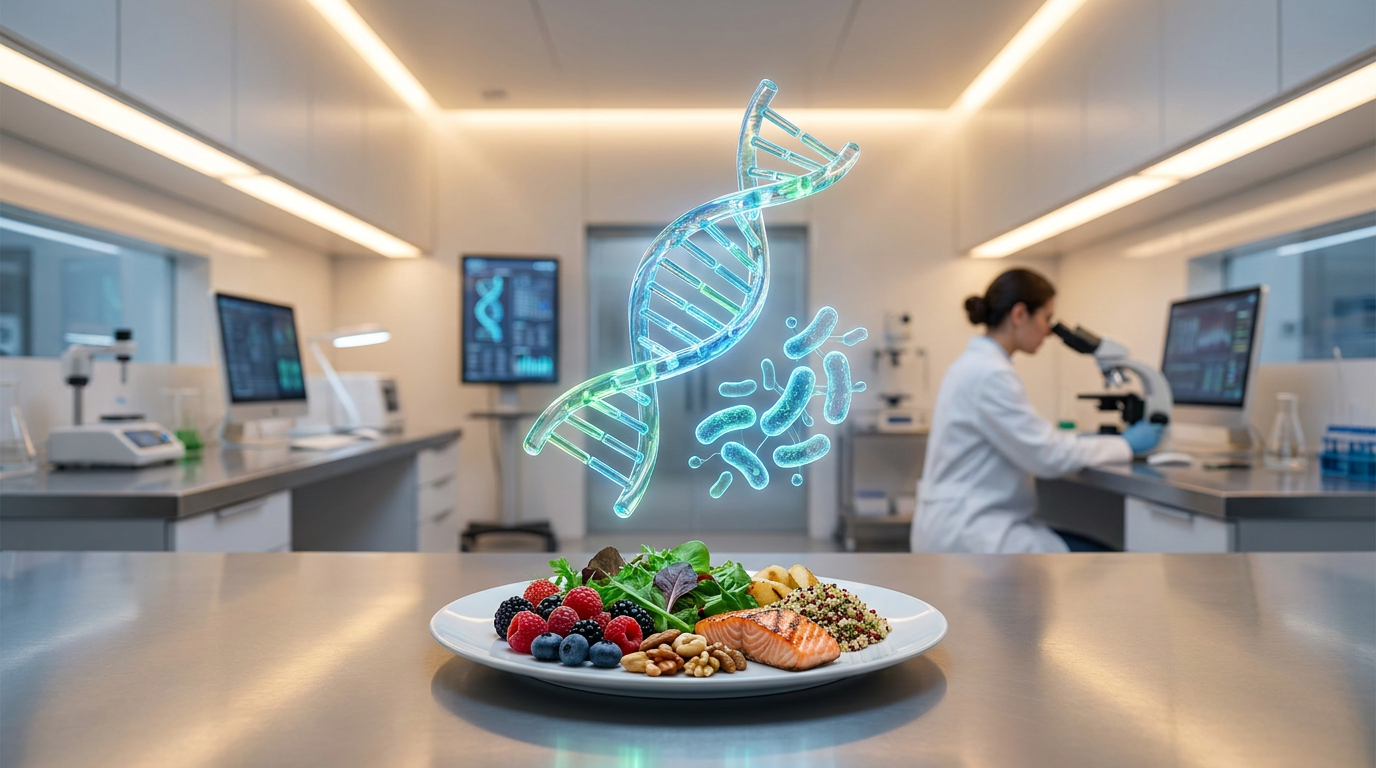
Advances in artificial intelligence and microbiome sequencing are dismantling universal dietary guidelines, paving the way for personalized nutrition that targets individual metabolic and mental health.
By Factlen Editorial Team
- Microbiome Researchers
- Focus on how specific bacterial strains and fermented foods alter systemic inflammation and metabolic responses.
- Public Health Officials
- Emphasize the need for large-scale data and AI to transition from universal dietary guidelines to personalized, predictive health models.
- Neuroscientists & Psychiatrists
- Investigate the gut-brain axis, studying how psychobiotics can be used as targeted interventions for mental health.
What's not represented
- · Traditional dietitians who argue that focusing on AI and microbiomes overcomplicates basic healthy eating principles.
- · Agricultural experts concerned about the accessibility and cost of highly specialized, personalized food systems.
Why this matters
For decades, contradictory diet advice has left people frustrated and confused. The shift toward precision nutrition means that future dietary recommendations will be tailored to your unique biological signature, potentially reversing chronic inflammation and improving mental health more effectively than generic guidelines.
Key points
- The 'one-size-fits-all' approach to diet is being replaced by precision nutrition tailored to individual biology.
- The NIH is investing $170 million to develop AI algorithms that predict how individuals respond to specific foods.
- A Stanford study found that a diet high in fermented foods rapidly increases microbiome diversity and lowers inflammation.
- High-fiber diets alone do not increase gut diversity unless the individual already possesses a healthy microbiome.
- Psychobiotics are emerging as a potential treatment for mental health by modulating the gut-brain axis.
- Gut bacteria actively produce neurotransmitters like serotonin and GABA, directly influencing mood and cognitive function.
For decades, public health advice has relied on a universal blueprint: eat more fiber, reduce saturated fats, and consume plenty of vegetables. Yet, this "one-size-fits-all" approach has consistently yielded wildly different results across individuals, leaving many frustrated when a supposedly healthy diet fails to improve their well-being.[7]
The reason for this discrepancy is no longer a mystery. It lies in the gut microbiome—the trillions of bacteria, fungi, and viruses residing in the human digestive tract.[7]
The emerging field of "precision nutrition" is fundamentally rewriting the rules of dietary science. Rather than prescribing a single optimal diet, researchers are now mapping how an individual's unique microbial signature dictates their metabolic and immune responses to specific foods.[3][6]
The scale of this shift is monumental. The National Institutes of Health has launched the Nutrition for Precision Health initiative, a $170 million program nested within the All of Us research cohort.[2]

This initiative utilizes artificial intelligence to analyze the genetics, microbiome composition, and metabolic data of thousands of participants. The goal is to develop algorithms capable of predicting exactly how a specific person's blood sugar, inflammation levels, and lipid profiles will react to a given meal.[2][5]
Central to this personalized revolution is a deeper understanding of how to actively cultivate a healthy microbiome. For years, dietary fiber was championed as the ultimate fuel for gut health.[7]
However, a landmark clinical trial conducted by Stanford Medicine researchers revealed a surprising nuance. The study compared the effects of a high-fiber diet against a diet rich in fermented foods, such as kimchi, kefir, kombucha, and cultured cottage cheese.[1]
Over a 10-week period, participants consuming the fermented food diet experienced a significant increase in overall microbial diversity. More importantly, they showed a marked decrease in 19 different inflammatory proteins, including interleukin-6, a marker associated with chronic conditions like type 2 diabetes and rheumatoid arthritis.[1]
Over a 10-week period, participants consuming the fermented food diet experienced a significant increase in overall microbial diversity.
Conversely, the high-fiber group did not show a universal increase in microbial diversity or a decrease in inflammation. The Stanford researchers discovered that fiber only reduced inflammation in participants who already possessed a highly diverse microbiome at the start of the study.[1]

This finding suggests a crucial sequence in gut rehabilitation: individuals may need to first introduce beneficial microbes through fermented foods before their bodies can effectively utilize high-fiber diets.[1][7]
The implications of microbiome diversity extend far beyond digestion and immune function. A rapidly expanding body of research is illuminating the "gut-brain axis," a bidirectional communication network linking the enteric nervous system to the brain.[4]
This connection has given rise to the study of "psychobiotics"—live microorganisms that, when ingested, confer mental health benefits.[4][7]
Recent reviews in physiological journals detail how specific strains of Lactobacillus and Bifidobacterium can modulate the hypothalamic-pituitary-adrenal (HPA) axis, the body's primary stress response system.[4]
These microbes actively produce and regulate critical neurotransmitters, including serotonin, dopamine, and gamma-aminobutyric acid (GABA). By transmitting signals through the vagus nerve, these gut-derived chemicals can directly influence mood, anxiety levels, and cognitive function.[4]

While early clinical trials show promise in using psychobiotics to alleviate symptoms of depression and anxiety, researchers caution that the effects are highly strain-specific. A probiotic that works for one biological subtype may be entirely ineffective for another.[4]
This brings the science full circle back to precision nutrition. The future of mental and physical health interventions will likely involve matching specific microbial strains and dietary patterns to an individual's unique biological profile.[3][6]
Deep learning models are already demonstrating the ability to predict postprandial glycemic responses—how much a person's blood sugar will spike after eating—based entirely on their microbiome composition.[5]

As AI models become more sophisticated and microbiome sequencing becomes more accessible, the era of generic dietary guidelines is drawing to a close.[5][6]
In its place, a new paradigm is emerging—one where food is utilized as a highly targeted, personalized medicine, empowering individuals to optimize their health from the inside out.[7]
How we got here
May 2020
The NIH releases its first-ever Strategic Plan for Nutrition Research, emphasizing precision health.
July 2021
Stanford Medicine publishes a landmark study showing fermented foods increase microbiome diversity and lower inflammation.
January 2022
The NIH launches the $170 million Nutrition for Precision Health initiative to develop AI dietary algorithms.
2024-2025
Deep learning models successfully demonstrate the ability to predict individual blood sugar spikes based on microbiome data.
Early 2026
Clinical reviews highlight the emerging efficacy of 'psychobiotics' in modulating the gut-brain axis for mental health.
Viewpoints in depth
Microbiome Researchers
Focus on the biological mechanisms of gut bacteria.
For microbiome researchers, the focus is on the specific mechanisms by which bacteria interact with the foods we eat. They point to studies, such as the Stanford fermented foods trial, as evidence that we can actively rehabilitate our gut flora. Their primary argument is that without a diverse microbial ecosystem, even objectively 'healthy' foods like high-fiber vegetables cannot be properly metabolized, rendering standard dietary advice ineffective for those with depleted microbiomes.
Public Health Officials
Focus on population-level data and AI integration.
Public health experts and epidemiologists are looking at the macro-level potential of precision nutrition. Through initiatives like the NIH's $170 million Nutrition for Precision Health program, they aim to gather enough multi-omic data to train deep learning models. Their goal is to eventually replace the generic food pyramid with dynamic, AI-driven algorithms that can predict an individual's glycemic and inflammatory responses to specific meals, fundamentally changing how dietary guidelines are issued.
Neuroscientists & Psychiatrists
Focus on the gut-brain axis and mental health applications.
Researchers in neurobehavioral science are investigating the profound connection between the gut and the brain. They view 'psychobiotics'—specific strains of bacteria that confer mental health benefits—as a revolutionary frontier in treating depression and anxiety. By mapping how gut microbes produce neurotransmitters like serotonin and GABA, they hope to develop targeted probiotic therapies that can modulate the body's stress response system without the side effects of traditional psychiatric medications.
What we don't know
- Which specific strains of bacteria are responsible for the most significant mental health improvements in psychobiotic therapies.
- How long the benefits of a high-fermented food diet last if the individual stops consuming those foods.
- How to effectively scale AI-driven precision nutrition algorithms so they are accessible and affordable for the general public, rather than just clinical trial participants.
Key terms
- Precision Nutrition
- An emerging field of science that tailors dietary recommendations to an individual's unique genetics, microbiome, and metabolism.
- Microbiome
- The diverse community of trillions of bacteria, fungi, and viruses that live in the human digestive tract.
- Gut-Brain Axis
- The bidirectional communication network linking the enteric nervous system in the gut directly to the brain, primarily via the vagus nerve.
- Psychobiotics
- Live microorganisms (probiotics) that, when ingested in adequate amounts, confer mental health benefits by interacting with the gut-brain axis.
- Postprandial Glycemic Response
- The change in a person's blood sugar levels in the hours immediately following a meal.
Frequently asked
Why doesn't a high-fiber diet work for everyone?
Research shows that fiber only reduces inflammation if a person already has a diverse gut microbiome. Without the right bacteria to break the fiber down, the body cannot fully utilize it.
What are the best fermented foods for gut health?
Studies highlight foods like kimchi, kefir, kombucha, sauerkraut, and cultured cottage cheese as highly effective for increasing microbial diversity.
Can gut bacteria really affect my mood?
Yes. Gut bacteria produce and regulate critical neurotransmitters like serotonin and GABA, which communicate with the brain via the vagus nerve to influence mood and anxiety.
When will AI-driven diets be available to the public?
While early deep learning models can already predict blood sugar responses, large-scale initiatives like the NIH's Nutrition for Precision Health are currently gathering the massive datasets needed to make these algorithms widely accessible in the coming years.
Sources
Source coverage
7 outlets
3 viewpoints surfaced







[1]Stanford MedicineMicrobiome Researchers
Fermented-food diet increases microbiome diversity, decreases inflammatory proteins, study finds
Read on Stanford Medicine →[2]National Institutes of Health (NIH)Public Health Officials
Nutrition for Precision Health, powered by the All of Us Research Program
Read on National Institutes of Health (NIH) →[3]Frontiers in NutritionPublic Health Officials
Goals in Nutrition Science 2025–2030
Read on Frontiers in Nutrition →[4]Experimental PhysiologyNeuroscientists & Psychiatrists
Psychobiotics and the microbiota-gut-brain axis: Emerging paradigms in mental health modulation
Read on Experimental Physiology →[5]National Science ReviewMicrobiome Researchers
Deep learning for microbiome-informed precision nutrition
Read on National Science Review →[6]Global Wellness InstitutePublic Health Officials
Nutrition For Healthspan Initiative Trends for 2026
Read on Global Wellness Institute →[7]Factlen Editorial TeamNeuroscientists & Psychiatrists
Synthesis by Factlen editorial team
Read on Factlen Editorial Team →

More in health
See all 5 stories →Metabolic Health
The Science of Zone 2: Why Low-Intensity Cardio is the Ultimate Longevity Biohack
0 sources

Nutritional Psychiatry
How the Gut Microbiome is Reshaping Mental Health Treatment
0 sources
Vaccine Research
Updated Covid Vaccines Significantly Reduce Risk of Heart Attacks and Strokes, Large Study Finds
0 sources

Every angle. Every day.
Get health stories with full source coverage and perspective breakdowns delivered to your inbox.