
Markets Rally and Oil Plunges as U.S. and Iran Agree to Reopen Strait of Hormuz
A preliminary peace agreement has ended the months-long blockade of the world's most critical energy chokepoint, sending oil prices tumbling and sparking a surge of investment into emerging markets.
By Factlen Editorial Team
- Global Markets & Investors
- Focuses on the immediate economic relief, lower inflation outlook, and the resulting capital flows into emerging markets.
- Energy Consumers & Importers
- Emphasizes the resumption of critical energy supplies and the immediate drop in global crude prices.
- Maritime & Energy Monitors
- Tracks the physical movement of vessels and the logistical challenges of clearing the backlog of stranded ships.
What's not represented
- · Environmental organizations monitoring the risks of sudden, en masse supertanker movements.
- · Local fishing communities in the Gulf whose livelihoods were disrupted by the naval blockade.
Why this matters
The reopening of the Strait of Hormuz removes the single largest inflationary threat to the global economy, instantly lowering energy costs for manufacturers and promising cheaper gasoline for everyday consumers.
Key points
- The U.S. and Iran have reached a preliminary agreement to halt hostilities and reopen the Strait of Hormuz.
- Brent crude futures plunged 4% as supertankers carrying 6 million barrels of oil began exiting the Gulf.
- Morgan Stanley has substantially cut its oil-price forecasts, citing the revived regional supply.
- The sudden drop in energy costs has triggered a massive wave of foreign investment into emerging markets like India and Vietnam.
- While the blockade has ended, clearing the backlog of hundreds of stranded ships will require significant logistical coordination.
The United States and Iran have reached a preliminary agreement to halt hostilities and reopen the Strait of Hormuz, ending a months-long blockade that had choked off a fifth of the world's oil supply. The diplomatic breakthrough has sent a wave of profound relief through global markets, instantly deflating the geopolitical premium that had kept energy costs artificially high. Brent crude futures plunged 4% in early trading as the realization set in that the world's most critical energy artery was back in business.[4]
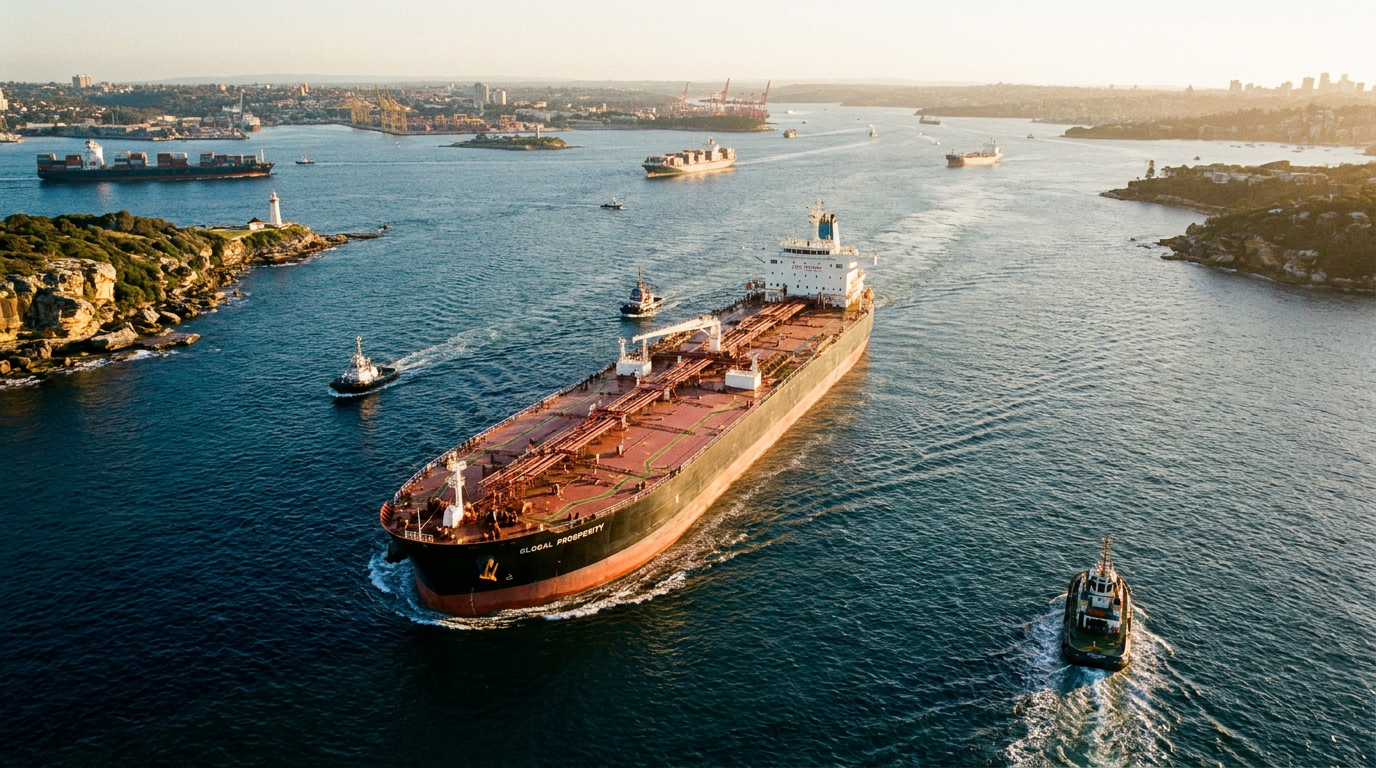
The physical unblocking of the strait is already underway, marking a tangible end to the standoff. U.S. President Donald Trump announced the termination of the naval blockade on Iranian ports, declaring on social media, "Ships of the World, start your engines. Let the oil flow!" Almost immediately, supertankers that had been stranded in the Persian Gulf for over two months began navigating the transit routes toward Asian markets. These initial vessels are carrying an estimated 6 million barrels of Middle East crude, signaling the first pulse of a massive supply injection.[3][4][5]
The sudden influx of supply has prompted major financial institutions to rapidly revise their economic models. Morgan Stanley announced substantial cuts to its oil-price forecasts for the coming quarters, citing the revived regional output and the easing of supply-side panic that had gripped the industry. The broader Middle Eastern crude markets weakened significantly on the optimism, as buyers who had spent the spring scrambling for expensive alternative shipments can now return to their traditional, more efficient supply chains without the looming threat of a winter energy crisis.[1][2]

The ripple effects of cheaper energy are transforming the global investment landscape, sparking a massive reallocation of capital. With the inflation outlook suddenly improving, global funds are piling into emerging market debt and equities, confident that central banks will no longer be forced to maintain punishingly high interest rates to combat energy-driven price spikes. Vietnam's stock market just recorded its largest daily foreign inflows in nearly six years, while Indian sovereign bonds are seeing a massive resurgence as lower crude prices ease the pressure on the country's current account deficit.[1][8][9]
Corporate sectors heavily dependent on energy and post-conflict rebuilding are also surging on the news. South Korean defense and infrastructure stocks rallied sharply on the prospect of numerous export pipelines and lucrative rebuilding contracts in the Middle East once the peace deal is formalized and the region stabilizes. The end of the conflict is viewed not just as a return to the status quo, but as a catalyst for a massive wave of deferred investment and modernization projects across the Gulf states.[7]
Corporate sectors heavily dependent on energy and post-conflict rebuilding are also surging on the news.
The resumption of oil flows is particularly vital for China, the world's largest energy importer, which relies heavily on unrestricted maritime trade. Chinese oil refiners had recently slashed their output to the weakest levels in nearly four years after crude imports from the Persian Gulf ground to a near-halt during the blockade. The reopening provides a critical lifeline to Beijing's industrial sector at a time when domestic consumer spending has faltered, allowing the country to stabilize its export-driven economic engine with reliable, cheaper energy inputs.[10]

The relief sweeping through the markets is proportional to the sheer scale of the disruption that has just ended. The Strait of Hormuz is universally recognized as the world's most critical energy chokepoint; prior to the conflict, it facilitated the transit of nearly 21 million barrels of oil per day—roughly 20% of total global petroleum liquids consumption. The months-long closure forced buyers to drain strategic reserves worldwide and exposed the fragility of a global economy entirely dependent on a 21-mile-wide stretch of water.[6]
While the political deadlock has broken, clearing the physical backlog will require immense logistical coordination. Shipping industry monitors note that hundreds of vessels and approximately 20,000 seafarers remain stranded inside the Gulf, waiting for clearance to move. The sudden, en masse movement of these ships presents a considerable navigational challenge, requiring strict military and civilian oversight to prevent accidents, manage unpredictable traffic congestion, and ensure the safe passage of highly volatile cargo through the narrow shipping lanes.[5]

Despite the euphoric market reaction, diplomats caution that the current agreement is a preliminary framework rather than a comprehensive, finalized treaty. The deal secures the immediate release of $25 billion in frozen Iranian assets and successfully restores freedom of navigation, but it intentionally leaves the complex, decades-old fate of Tehran's nuclear program for future, likely arduous, negotiations. Both sides have essentially agreed to decouple the immediate economic strangulation of the shipping lanes from their broader geopolitical disputes, prioritizing global economic stability over total diplomatic resolution.[4]
For now, however, the global economy is celebrating a massive and desperately needed de-escalation. The reopening of the Strait of Hormuz removes the single largest inflationary threat hanging over the post-pandemic recovery, offering immediate financial relief to consumers at the pump and providing the world's central banks with much-needed breathing room. As the first supertankers sail into the open ocean, the immediate crisis has passed, replacing fears of a global recession with renewed optimism for a stabilized, growing international market.[1][2][4]
How we got here
Feb 2026
Joint U.S.-Israeli strikes on Iran escalate into a broader conflict, leading to the effective closure of the Strait of Hormuz.
Mar - May 2026
Global oil prices surge as 20 million barrels per day of crude are removed from the maritime market; hundreds of ships are stranded.
Early June 2026
Secret negotiations progress regarding the unblocking of the strait and the release of frozen Iranian assets.
June 15, 2026
The U.S. and Iran announce a preliminary framework to halt hostilities and reopen the shipping lanes.
June 16, 2026
The first supertankers carrying millions of barrels of crude successfully exit the Gulf, sending oil markets tumbling.
Viewpoints in depth
Global Markets & Investors
Focuses on the macro relief and the reallocation of capital.
For the financial sector, the reopening of the strait is the ultimate inflation-killer. Analysts argue that the artificially high energy prices of the past few months were forcing central banks to maintain restrictive monetary policies. With crude prices tumbling, investors are betting that inflation will cool rapidly, allowing capital to flow freely into emerging markets like India and Vietnam that had been starved of investment during the crisis.
Energy Consumers & Importers
Focuses on the physical supply chain and industrial relief.
Asian refiners and European buyers view the peace deal as a critical lifeline that averts a catastrophic winter energy crisis. By restoring the 20 million barrels per day that normally transit the strait, importers no longer have to rely on expensive, inefficient alternative routes or drain their strategic petroleum reserves. This physical relief translates directly into lower manufacturing costs and stabilized consumer prices.
Maritime & Energy Monitors
Focuses on the logistical reality of clearing the chokepoint.
While politicians celebrate the diplomatic win, maritime monitors emphasize the immense physical challenge ahead. Hundreds of commercial vessels and tens of thousands of seafarers have been stranded in the Gulf for months. Coordinating the safe, en masse exit of these ships through a narrow 21-mile-wide channel requires unprecedented military and civilian oversight to prevent collisions or environmental disasters.
What we don't know
- How long it will take to safely clear the massive backlog of hundreds of stranded commercial vessels from the Gulf.
- The specific timeline and conditions for the release of the $25 billion in frozen Iranian assets.
- Whether the upcoming negotiations will successfully resolve the long-term status of Iran's nuclear program.
Key terms
- Strait of Hormuz
- A narrow waterway between Oman and Iran that connects the Persian Gulf to the open ocean, serving as the transit route for 20% of the world's oil.
- Brent Crude
- A major global benchmark for crude oil prices, used to price two-thirds of the world's internationally traded crude oil supplies.
- Emerging Markets
- Developing nations with fast-growing economies, such as India and Vietnam, which are highly sensitive to global inflation and energy costs.
- Supertanker (VLCC)
- Very Large Crude Carriers capable of transporting up to 2 million barrels of oil in a single voyage.
Frequently asked
Why did oil prices drop so suddenly?
The peace agreement reopens the Strait of Hormuz, allowing roughly 20 million barrels of daily oil supply back into the global market, which eases fears of a prolonged shortage.
Does this mean the conflict is entirely resolved?
No. While the immediate hostilities and the naval blockade have ended, long-term issues like Iran's nuclear program remain subject to future negotiations.
How does this affect everyday consumers?
Lower global crude prices typically translate to cheaper gasoline at the pump and reduced manufacturing costs, which helps cool down broader inflation.
Sources
Source coverage
10 outlets
3 viewpoints surfaced





[1]BloombergGlobal Markets & Investors
Morgan Stanley Cuts Oil Forecasts as Hormuz Deal Revives Supply
Read on Bloomberg →Middle East Oil Markets Weaken on Optimism Over Increased Supply
Read on Bloomberg →[3]ReutersEnergy Consumers & Importers
Trump says ships carrying oil are moving out of Strait of Hormuz
Read on Reuters →[4]NTV KenyaEnergy Consumers & Importers
Iran, US agree to halt war and reopen Hormuz, sending oil prices tumbling
Read on NTV Kenya →[5]BNN BloombergMaritime & Energy Monitors
Tankers exit Strait of Hormuz with 6 million barrels of crude oil
Read on BNN Bloomberg →[6]U.S. Energy Information AdministrationMaritime & Energy Monitors
New EIA Report Shows Extent of Hormuz Oil Disruptions
Read on U.S. Energy Information Administration →[7]CNBCGlobal Markets & Investors
South Korean defense stocks surge on prospects for post-Iran-war sales boosts
Read on CNBC →Vietnam Stocks See Biggest Foreign Inflows in Nearly Six Years
Read on Bloomberg →Global Funds Pile Into India Bonds as Oil Cools
Read on Bloomberg →China’s Oil Refiners Slash Output After Crude Imports Plunge
Read on Bloomberg →

Every angle. Every day.
Get business stories with full source coverage and perspective breakdowns delivered to your inbox.