
Hardside vs. Softside Luggage: The 2026 Material Science Breakdown
As airlines strictly enforce carry-on dimensions, the choice between hardside polycarbonate and softside ballistic nylon dictates how travelers pack and protect their gear. This side-by-side analysis breaks down the durability, flexibility, and trade-offs of modern luggage materials.
By Factlen Editorial Team
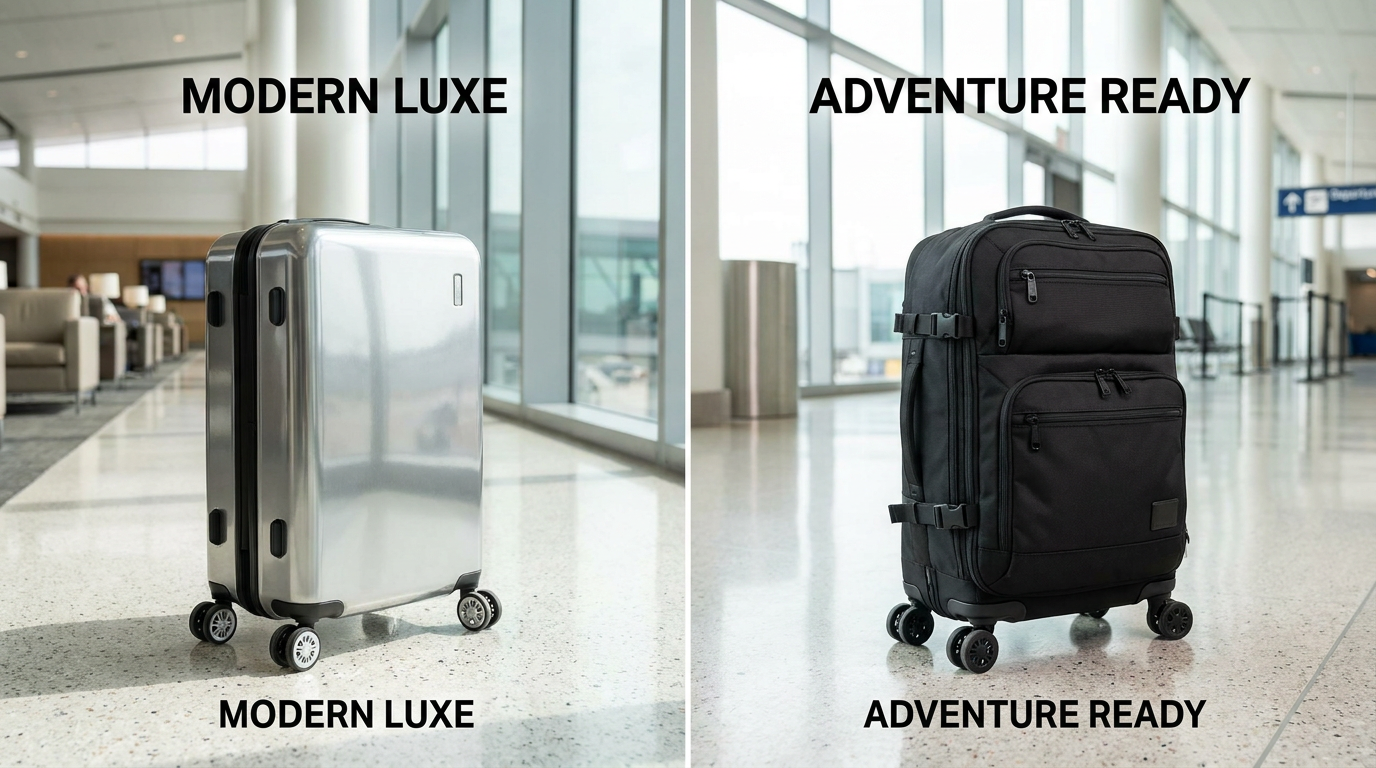
- Hardshell Advocates
- Prioritizes absolute protection for fragile items, weather resistance, and a sleek, modern aesthetic that wipes clean.
- Softshell Loyalists
- Values packing flexibility, the ability to squeeze bags into tight overhead bins, and quick-access exterior pockets.
- Frequent Business Travelers
- Focuses on long-term durability, professional appearance, and efficient organization, often leaning toward premium ballistic nylon or aluminum.
- Budget & Leisure Travelers
- Prioritizes cost-efficiency and lightweight designs, often opting for ABS plastic or polyester for occasional trips.
- Neutral Analysts
- Evaluates luggage based on objective lab testing, material science, and airline compliance data.
What's not represented
- · Baggage Handlers
- · Airline Gate Agents
- · Sustainable Material Innovators
Why this matters
Luggage is a long-term investment that directly impacts travel stress. Understanding the specific material trade-offs ensures you buy a bag that survives baggage handlers, fits in overhead bins, and matches your packing style.
Key points
- Polycarbonate hardshells flex under pressure, offering superior protection for fragile items and electronics.
- Ballistic nylon softside bags provide unmatched flexibility, allowing travelers to squeeze them into tight overhead bins.
- Hardside luggage utilizes a clamshell design, while softside luggage acts as a deep bucket with a lid.
- Softside bags feature exterior pockets for quick access, a feature mostly absent in rigid hardshells.
- Aluminum offers the ultimate hardside durability but adds significant weight to the luggage.
- ABS plastic and polyester are budget-friendly alternatives but lack the long-term durability of premium materials.
The great luggage debate of 2026 is no longer just about aesthetics; it is a materials science arms race. With airlines strictly enforcing carry-on dimensions and baggage handlers processing record volumes, the choice between hardside and softside luggage dictates whether a bag survives a decade or fails on its maiden voyage. The decision fundamentally alters how travelers pack, navigate airports, and protect their belongings.[9]
At the core of the hardside argument is structural integrity and elemental protection. Premium hardshells are predominantly forged from 100 percent polycarbonate—a thermoplastic polymer that flexes under heavy pressure rather than cracking. Lab tests dropping 25-kilogram loaded bags from 1.2 meters demonstrate that polycarbonate absorbs kinetic energy and snaps back to its original shape, shielding the contents inside.[2][3]
The case against hardside luggage centers on its absolute rigidity and surface vulnerability. A bag measuring 22.5 inches will never squeeze into a 22-inch airline sizer, making hardshells the most frequent victims of forced gate-checking. Furthermore, while the shell will not break, the glossy finishes are notorious for accumulating deep scuffs and scratches after a single trip through a mechanized baggage carousel.[1][7]

Evidence from frequent flyers and durability testing highlights that hardside luggage excels in protecting fragile technology and resisting weather. High-pressure water spray tests confirm that polycarbonate and aluminum shells keep interiors completely dry, whereas zippers remain the only minor vulnerability. For travelers carrying camera gear or laptops, the rigid barrier provides unmatched peace of mind.[3][5]
Conversely, the primary argument for softside luggage is its unparalleled flexibility and organizational superiority. Constructed from high-denier fabrics like ballistic nylon or Cordura, softside bags act as a bucket with a lid, allowing travelers to overpack and compress the bag to fit tight spaces. A 1050-denier ballistic nylon resists abrasion and tearing while offering enough give to wedge into a crowded overhead bin.[4][6]
The argument against softside luggage focuses on its susceptibility to the elements and lack of impact shielding. While nylon is water-repellent, it is not waterproof; sustained exposure to rain or a spill in the cargo hold will eventually soak through to the interior. Additionally, softside bags absorb the blunt force of impacts, transferring that energy directly to the contents inside, which can spell disaster for packed electronics or souvenirs.[2][5]
The evidence supporting softside longevity is rooted in its ability to absorb everyday travel abuse without showing cosmetic wear. Unlike polycarbonate, ballistic nylon does not dent or scratch. Zipper cycling tests and abrasion resistance trials show that high-quality fabric luggage can endure years of being dragged over curbs and tossed into trunks while maintaining a pristine, professional appearance.[3][4]

The evidence supporting softside longevity is rooted in its ability to absorb everyday travel abuse without showing cosmetic wear.
The trade-off for packing style pits the clamshell against the bucket. For hardside luggage, the clamshell design splits the volume into two equal halves. This requires a larger footprint to open fully in a hotel room but naturally separates clean and dirty laundry. Softside luggage generally features a single deep main compartment with a top lid, taking up less space when open and accommodating bulky, irregularly shaped items like boots or heavy coats.[7][8]
The trade-off for exterior accessibility reveals a stark contrast in transit efficiency. Softside bags almost universally feature front pockets, allowing travelers to stash boarding passes, tablets, and light jackets for instant retrieval. Hardside bags, prioritizing a seamless protective shell, force travelers to open the entire main compartment to access a single item, though some modern polycarbonate models are introducing specialized front-access tech compartments to bridge this gap.[7][8]
When evaluating the luxury and business travel segment, aluminum emerges as the ultimate, albeit heavy, hardside upgrade. Aluminum cases offer absolute structural security and a premium aesthetic, but they trade weight for invincibility. An aluminum carry-on can weigh up to 10.5 pounds empty, consuming a massive portion of strict international weight allowances, and it will proudly display every dent as a permanent travel scar.[3][5]
On the budget end of the spectrum, the materials shift to ABS plastic for hardshells and standard polyester for softsides. ABS is significantly cheaper but lacks the flexibility of polycarbonate, making it prone to catastrophic cracking under pressure. Polyester offers a lightweight softside option but tears easily compared to military-grade ballistic nylon, making these materials suitable only for infrequent, light-duty travel.[2][4]

Ultimately, hardside luggage fits well when travelers prioritize the protection of fragile items, frequently check their bags, or travel to destinations with unpredictable, harsh weather. It is the optimal choice for those who prefer a structured, clamshell packing style and want a sleek, modern aesthetic that easily wipes clean after a long journey.[5][7]
However, hardside luggage does not fit well when travelers heavily rely on exterior pockets for quick access during transit, or when they frequently fly on budget airlines with unforgiving, rigid baggage sizers. It is also less ideal for road trips, where the inflexible shells cannot be easily squeezed into a fully packed car trunk.[1][8]
Softside luggage fits well when travelers need maximum packing flexibility, prefer to live out of a single deep compartment, and require exterior pockets for seamless airport navigation. It is the definitive choice for carry-on purists who need their bag to squish into overhead bins and for business travelers who value a classic, scuff-resistant exterior.[7][8]

Conversely, softside luggage does not fit well when travelers are transporting delicate equipment, checking bags on multi-leg international flights with high risks of rough handling, or visiting regions with heavy rainfall. In these scenarios, the fabric's vulnerability to moisture and impact makes it a liability rather than an asset.[2][6]
How we got here
1987
The first modern rollaboard softside luggage is invented by a pilot, revolutionizing airport transit.
2000
Polycarbonate is introduced to the luggage market, creating the first truly lightweight and durable hardshells.
2015
Smart luggage with built-in batteries peaks in popularity before airline bans force a massive industry redesign.
2026
Airlines implement stricter automated sizers, heavily penalizing rigid oversized bags and renewing the hardside versus softside debate.
Viewpoints in depth
Hardshell Advocates
Prioritizes absolute protection for fragile items, weather resistance, and a sleek, modern aesthetic that wipes clean.
Proponents of hardside luggage argue that the primary function of a suitcase is to protect its contents from the chaotic environment of modern travel. By utilizing materials like 100 percent polycarbonate or aerospace-grade aluminum, these bags create an impenetrable barrier against rain, snow, and the blunt force of baggage carousels. They point to lab tests showing that polycarbonate absorbs kinetic energy by flexing and snapping back into place, ensuring that laptops, camera gear, and souvenirs remain intact regardless of how the bag is handled. Furthermore, advocates highlight the hygiene and maintenance benefits of rigid shells. Unlike fabric, which absorbs spills and retains odors, a hardshell can be wiped clean with a simple disinfectant wipe. While they acknowledge the susceptibility to cosmetic scuffs, they view these marks as acceptable trade-offs for the structural integrity and peace of mind that a rigid exterior provides.
Softshell Loyalists
Values packing flexibility, the ability to squeeze bags into tight overhead bins, and quick-access exterior pockets.
Softside loyalists view luggage as a dynamic tool that must adapt to the traveler, rather than forcing the traveler to adapt to the bag. They argue that the rigid dimensions of hardshells are a massive liability in an era of strict airline sizers and shrinking overhead bins. High-denier ballistic nylon offers the crucial ability to compress, allowing a slightly overpacked bag to wedge into a tight space where a hardshell would be forced into the cargo hold. Additionally, this camp champions the organizational superiority of softside designs. The inclusion of exterior pockets allows travelers to navigate security checkpoints and boarding gates seamlessly, keeping essential documents and electronics within arm's reach. They argue that the bucket-style main compartment is inherently more efficient for packing bulky items, making softside the ultimate choice for practical, stress-free transit.
What we don't know
- How upcoming changes to international airline weight limits might further penalize heavy aluminum and polycarbonate bags.
- Whether new hybrid materials currently in development can successfully merge the flexibility of nylon with the impact resistance of polycarbonate.
Key terms
- Polycarbonate
- A lightweight, flexible thermoplastic polymer used in premium hardside luggage that bends under pressure instead of cracking.
- Ballistic Nylon
- A thick, synthetic nylon fabric originally developed for military use, known for exceptional abrasion and tear resistance.
- ABS Plastic
- A rigid, budget-friendly plastic used in entry-level hardshells that is more prone to cracking than polycarbonate.
- Denier
- A unit of measurement for the thickness of individual threads used in fabrics; higher numbers indicate heavier, sturdier material.
- Clamshell Design
- A packing style where the suitcase opens perfectly in half, dividing the storage volume into two equal compartments.
Frequently asked
Which material is most durable for checked luggage?
For checked bags subjected to rough handling, 100% polycarbonate or aluminum offers the best protection against impacts and crushing.
Will a softside bag protect my laptop?
While softside bags absorb blunt force, a dedicated, padded tech compartment in a high-denier nylon bag can safely protect electronics during carry-on use.
Why do airlines gate-check hardside bags more often?
Hardside bags have rigid dimensions that cannot compress. If a bag is even half an inch too thick, it will fail to slide into an airline's metal sizer.
Is ballistic nylon waterproof?
Ballistic nylon is highly water-resistant and handles light rain well, but it is not fully waterproof and can soak through during sustained exposure.
Sources
Source coverage
9 outlets
5 viewpoints surfaced







[1]The GadgeteerSoftshell Loyalists
Best carry on luggage hardside vs softside
Read on The Gadgeteer →[2]PYB FashionHardshell Advocates
The Most Durable Luggage Materials: A Lab-Tested Breakdown
Read on PYB Fashion →[3]Eume WorldHardshell Advocates
Luggage Material Durability Test
Read on Eume World →[4]AOTOSFrequent Business Travelers
Polycarbonate vs ABS vs Aluminum vs Ballistic Nylon
Read on AOTOS →[5]Delsey ParisHardshell Advocates
Most Durable Luggage Material
Read on Delsey Paris →[6]Beis TravelBudget & Leisure Travelers
Which Luggage Material Is Best?
Read on Beis Travel →[7]Empire Luggage CenterSoftshell Loyalists
Hardside vs. Softside Luggage: How to Choose
Read on Empire Luggage Center →[8]Deep ArrivalFrequent Business Travelers
Hardside vs softside carry on luggage
Read on Deep Arrival →[9]Factlen Editorial TeamNeutral Analysts
Synthesis by Factlen editorial team
Read on Factlen Editorial Team →

Every angle. Every day.
Get shopping stories with full source coverage and perspective breakdowns delivered to your inbox.