
How Bidirectional Charging is Turning Electric Vehicles into Mobile Power Plants
Vehicle-to-grid (V2G) and vehicle-to-home (V2H) technologies are transforming EVs from simple transportation into massive, decentralized batteries that can power homes and stabilize the electricity grid.
By Factlen Editorial Team
- Grid Operators & Utilities
- Focuses on using EV batteries to stabilize the grid, shave peak demand, and manage the intermittency of renewable energy.
- Automakers & Hardware Providers
- Prioritizes standardizing communication protocols like ISO 15118-20 and bringing V2G-ready vehicles to the mass market.
- Consumers & Homeowners
- Values bidirectional charging for home energy resilience, backup power during outages, and lowering monthly electricity bills.
- Energy Regulators
- Focuses on updating market rules, mandating smart meters, and removing double-taxation on stored energy to enable V2G.
What's not represented
- · Environmental NGOs advocating for faster peaker plant retirements
- · Traditional utilities hesitant about grid infrastructure upgrade costs
Why this matters
Bidirectional charging allows electric vehicle owners to use their cars as backup generators during blackouts and sell stored energy back to the utility. This technology not only lowers household electricity bills but fundamentally reduces the world's reliance on fossil-fuel power plants during peak demand.
Key points
- Bidirectional charging allows EVs to discharge stored energy to power appliances, homes, or the broader electricity grid.
- Vehicle-to-Home (V2H) systems can provide emergency backup power during outages and help homeowners maximize rooftop solar.
- Vehicle-to-Grid (V2G) technology helps utilities stabilize the grid by reducing reliance on expensive fossil-fuel peaker plants.
- The rollout of the ISO 15118-20 standard is bringing bidirectional capabilities to the widely used CCS charging connectors.
- Regulatory updates, such as Germany's removal of double grid fees, are paving the way for commercial V2G adoption.
For decades, the relationship between a car and its fuel source has been a strictly one-way street. You fill the tank, or charge the battery, and drive away. But a quiet revolution in energy management is turning electric vehicles into massive, mobile power plants. This concept, known as bidirectional charging, allows energy to flow both into the vehicle and back out again, fundamentally changing how consumers interact with the electricity grid.[4]
The technology is broadly categorized under the umbrella term V2X, or "vehicle-to-everything." While early electric vehicles were designed purely to consume electricity, modern EVs are increasingly equipped with sophisticated power converters that can discharge their stored energy on demand. This shift transforms the car from a simple transportation tool into a critical asset for home energy resilience and national grid stability.[2][8]
To understand the impact of bidirectional charging, it helps to break down its three primary applications: Vehicle-to-Load (V2L), Vehicle-to-Home (V2H), and Vehicle-to-Grid (V2G). V2L is the simplest and most widely available today, allowing drivers to plug standard appliances—from camping gear to emergency medical equipment—directly into the car, typically drawing between 1.8 and 3.6 kilowatts of power.[8]
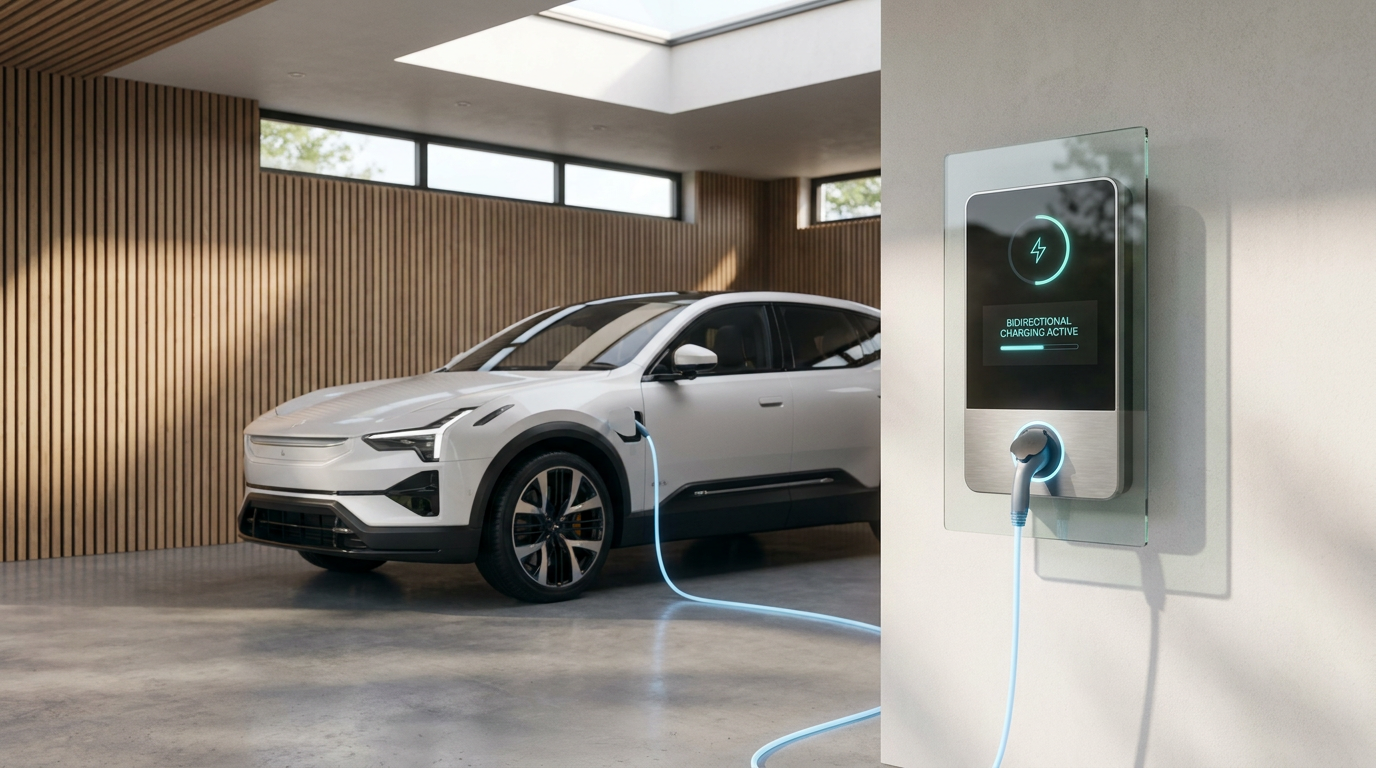
Vehicle-to-Home (V2H) takes this concept a step further by integrating the EV's battery directly into a home's electrical panel. When a compatible EV is connected to a bidirectional home charger, the system converts the car's stored direct current (DC) energy into alternating current (AC) power for household use. This setup can typically supply 6 to 10 kilowatts, which is more than enough to run a modern home during a prolonged power outage.[7][8]

Beyond emergency backup, V2H offers significant financial benefits for homeowners. By charging the vehicle overnight when electricity tariffs are at their lowest, residents can use that stored energy to power their homes during expensive evening peak hours. This strategy, known as peak-time energy trading, is particularly valuable for households equipped with high-draw appliances like heat pumps or those looking to maximize their rooftop solar panels.[4]
When paired with solar, an EV acts as a massive energy sponge. Solar panels generate the bulk of their electricity during midday hours when many homes have low energy demand. A bidirectional system allows the EV to store that excess midday solar energy and discharge it into the home after the sun goes down, drastically reducing the household's reliance on utility-provided electricity.[2][4]
The most ambitious and complex form of bidirectional charging is Vehicle-to-Grid (V2G). Instead of just powering a single home, V2G allows an electric vehicle to synchronize with the local electricity grid and inject power back into the broader network. This requires a specialized bidirectional charger, utility approval, and a remote management system capable of communicating with grid operators in real time.[1][8]
The most ambitious and complex form of bidirectional charging is Vehicle-to-Grid (V2G).
Grid operators view V2G as a transformative tool for balancing supply and demand. During periods of extreme demand—such as a summer heatwave when millions of air conditioners are running simultaneously—utilities often rely on expensive, fossil-fuel-powered "peaker plants" to prevent blackouts. V2G technology can reduce or entirely eliminate the need for these plants by tapping into the collective stored energy of thousands of parked EVs.[1][3]

To manage this massive distributed energy resource, grid operators use software to aggregate the vehicles into a Virtual Power Plant (VPP). When the grid needs a sudden injection of power, the VPP signals the connected bidirectional chargers to discharge a small, calculated amount of energy from each participating vehicle. In exchange, EV owners are financially compensated for the energy they provide, turning their depreciating asset into an income generator.[1][7]
The integration of renewable energy makes V2G not just useful, but essential for future grid stability. Wind and solar power are inherently intermittent; the wind doesn't always blow, and the sun doesn't always shine. By absorbing excess renewable generation when it is abundant and releasing it when generation drops, a fleet of V2G-enabled vehicles acts as a massive, decentralized shock absorber for the entire energy network.[2]
Despite its immense potential, the rollout of V2G has faced significant technical and regulatory hurdles over the past decade. Historically, the majority of V2G-compatible systems relied on the CHAdeMO charging standard, a connector developed in Japan with bidirectional capabilities built in from its inception. However, the global automotive market has largely moved away from CHAdeMO in favor of newer plug designs.[5]
Today, most modern European and North American EVs use the Combined Charging System (CCS) standard, which initially lacked bidirectional support. That limitation is rapidly dissolving with the rollout of the ISO 15118-20 communication protocol, a standardized framework that enables seamless, two-way energy flow for CCS chargers. This standard is widely considered the technical key that will unlock V2G for the mass market.[3][7]

Hardware is only half the battle; regulatory frameworks must also adapt to this new reality. In many regions, outdated grid codes inadvertently penalize V2G participants by charging them grid fees twice—once when they pull energy to charge the battery, and again when they discharge it back to the network. Policymakers are now racing to update these rules to treat EVs as legitimate, untaxed energy storage assets.[6]
Germany recently provided a blueprint for this regulatory shift. The country passed new legislation eliminating the double-fee penalty for EV battery storage, and in April 2026, the Federal Network Agency launched its "MiSpeL" technical framework. This framework provides the legal and technical rails required for energy companies to confidently offer commercial V2G tariffs to German consumers.[6]
However, infrastructure bottlenecks remain a stubborn reality. For a utility to dynamically manage a V2G connection, the home must be equipped with a smart meter. In markets like Germany, smart meter penetration remains surprisingly low—hovering around 3 percent of households—which physically limits how quickly V2G programs can scale, regardless of how many compatible cars are on the road.[6]

While full V2G deployment scales up, the industry is heavily leaning into "smart charging," or V1G. Smart charging does not require bidirectional hardware; instead, it uses software to automatically shift a vehicle's charging schedule away from peak hours to times when electricity is cheapest and most abundant. It serves as a simpler, immediate step toward grid harmony while the bidirectional hardware catches up.[6]
Automakers are increasingly treating bidirectional capability as a standard feature rather than a premium add-on. Vehicles are already demonstrating the practical value of V2H and V2L capabilities to everyday consumers. As the technology matures and regulatory barriers fall, the vehicle sitting in the driveway will become virtually indistinguishable from the power plant that keeps the lights on.[7][8]
How we got here
Early 2010s
Vehicle-to-grid concepts emerge, primarily utilizing the Japanese CHAdeMO charging standard.
Feb 2021
Winter Storm Uri in Texas highlights the critical value of electric vehicles as emergency backup power sources.
2024
The automotive industry heavily standardizes around CCS and NACS connectors, necessitating new bidirectional software protocols.
2025
The ISO 15118-20 standard accelerates, bringing bidirectional capabilities to the widely used CCS charging standard.
April 2026
Germany implements the MiSpeL technical framework, removing regulatory barriers and double grid fees for V2G participants.
Viewpoints in depth
Grid Operators' view
V2G is a critical tool for managing peak demand and integrating intermittent renewable energy.
For grid operators, the transition to renewable energy introduces a massive problem: intermittency. Solar power floods the grid at midday but vanishes just as evening demand spikes—a phenomenon known as the 'duck curve.' Grid operators view millions of parked EVs as a decentralized solution to this problem. By aggregating these vehicles into Virtual Power Plants (VPPs), utilities can absorb excess midday solar and discharge it during the evening peak, drastically reducing their reliance on expensive, high-emission natural gas peaker plants.
Consumers' view
Bidirectional charging offers energy independence, emergency resilience, and financial savings.
From the homeowner's perspective, an EV is a depreciating asset that spends 90 percent of its life parked. Bidirectional charging flips this dynamic, turning the car into a functional home appliance. Consumers are primarily drawn to Vehicle-to-Home (V2H) setups for the peace of mind they provide during blackouts, effectively replacing noisy gas generators. Furthermore, the ability to buy electricity at cheap overnight rates and use it to power the home during expensive evening hours offers a tangible, daily return on their EV investment.
Regulators' view
Market rules and infrastructure must be modernized to safely integrate EVs as storage assets.
Energy regulators recognize the potential of V2G but are focused on the complex logistics of safely integrating it into legacy power grids. Their primary challenges include updating outdated grid codes that unfairly tax stored energy twice, and mandating the installation of smart meters, which are required for utilities to communicate with bidirectional chargers. Regulators are carefully balancing the push for rapid V2G adoption with the need to ensure local distribution grids aren't overwhelmed by two-way power flows.
What we don't know
- How quickly smart meter installations can scale to support mass-market V2G participation.
- The exact long-term impact of daily bidirectional cycling on the lifespan of newer solid-state EV batteries.
- Whether consumers will broadly embrace utility control over their vehicle's state of charge.
Key terms
- Bidirectional Charging
- Technology that allows an electric vehicle to both receive electricity from the grid and discharge stored electricity back out.
- Vehicle-to-Grid (V2G)
- A system where electric vehicles communicate with the power grid to sell stored battery energy back to the utility during peak demand.
- Vehicle-to-Home (V2H)
- A setup that allows an electric vehicle to act as a backup battery, supplying power directly to a household's electrical panel.
- Virtual Power Plant (VPP)
- A cloud-based network of decentralized energy resources, like EV batteries, that are aggregated to provide power to the grid just like a traditional power plant.
- Peaker Plant
- A power plant, often running on natural gas, that only operates during times of exceptionally high electricity demand to prevent blackouts.
- ISO 15118-20
- An international communication standard that enables secure, bidirectional energy transfer between an electric vehicle and a Combined Charging System (CCS) station.
Frequently asked
Do I need a special charger for bidirectional charging?
Yes. While Vehicle-to-Load (V2L) often just requires an adapter, Vehicle-to-Home (V2H) and Vehicle-to-Grid (V2G) require a specialized bidirectional charger that can convert the car's DC power back into AC power.
Will discharging my EV battery degrade it faster?
While all battery use causes some wear, modern battery management systems and V2G software are designed to minimize degradation by keeping discharge cycles shallow and within optimal charge limits.
Can I use V2G if I have solar panels?
Yes, bidirectional charging works excellently with solar. You can store excess solar energy generated during the day in your EV and use it to power your home at night.
Is my current electric vehicle V2G compatible?
It depends on the model. While older Nissan LEAFs support it via the CHAdeMO standard, many newer EVs require the CCS standard with ISO 15118-20 protocol support, which automakers are actively rolling out.
Sources
Source coverage
9 outlets
4 viewpoints surfaced









[1]Clean Energy ReviewsGrid Operators & Utilities
V2G and Bidirectional Charging Explained
Read on Clean Energy Reviews →[2]DriivzEnergy Regulators
Bidirectional Charging: V2G, V2H, and Renewable Integration
Read on Driivz →[3]IEBrainAutomakers & Hardware Providers
Charging Redefined: How Vehicle-to-Grid (V2G) Technology is Transforming Grid Stability
Read on IEBrain →[4]Apex DomaConsumers & Homeowners
What Is Bidirectional EV Charging?
Read on Apex Doma →[5]EV Infrastructure NewsGrid Operators & Utilities
Vehicle-to-Grid technology: How bidirectional charging transforms EVs into grid assets
Read on EV Infrastructure News →[6]EleportEnergy Regulators
Vehicle-to-Grid (V2G) charging is finally a reality in 2026
Read on Eleport →[7]ElectroverseConsumers & Homeowners
Everything you need to know about bidirectional charging
Read on Electroverse →[8]FeyreeAutomakers & Hardware Providers
The Ultimate Guide to V2L, V2H, and V2G Technologies
Read on Feyree →[9]Factlen Editorial Team
Synthesis by Factlen editorial team
Read on Factlen Editorial Team →
Every angle. Every day.
Get automotive stories with full source coverage and perspective breakdowns delivered to your inbox.