
U.S. and Iran Reach Deal to Reopen Strait of Hormuz as Oil Prices Tumble
A preliminary agreement to end the 3.5-month conflict has reopened a critical global energy artery, sending oil prices down 5%. The resolution comes as the U.S. Strategic Petroleum Reserve drops to its lowest level since 1983 following massive emergency drawdowns.
By Factlen Editorial Team
- Energy Markets
- Focuses on the physical realities of the oil trade, emphasizing that logistical delays and depleted stockpiles will keep prices elevated.
- Geopolitical Skeptics
- Warns that the agreement is fragile, highlighting the unresolved nuclear questions and the ongoing conflict between Israel and Hezbollah.
- U.S. Administration
- Frames the deal as a decisive victory that secures global energy flows and protects American consumers from skyrocketing fuel costs.
What's not represented
- · Middle Eastern civilian populations
- · Renewable energy advocates
Why this matters
The reopening of the Strait of Hormuz averts a catastrophic global energy shortage, immediately lowering the cost of oil and gasoline for consumers worldwide. However, the severe depletion of the U.S. Strategic Petroleum Reserve leaves the American economy highly vulnerable to any future supply shocks.
Key points
- The U.S. and Iran have reached a preliminary agreement to end their 3.5-month war and reopen the Strait of Hormuz to commercial shipping.
- Brent crude oil prices dropped roughly 5% to $83 per barrel following the announcement, easing fears of a global energy crisis.
- The U.S. Strategic Petroleum Reserve has fallen to 340.3 million barrels, its lowest level since 1983, after massive emergency drawdowns.
- The deal establishes a 60-day ceasefire, deferring complex negotiations over Iran's nuclear program and leaving the ongoing conflict in Lebanon unresolved.
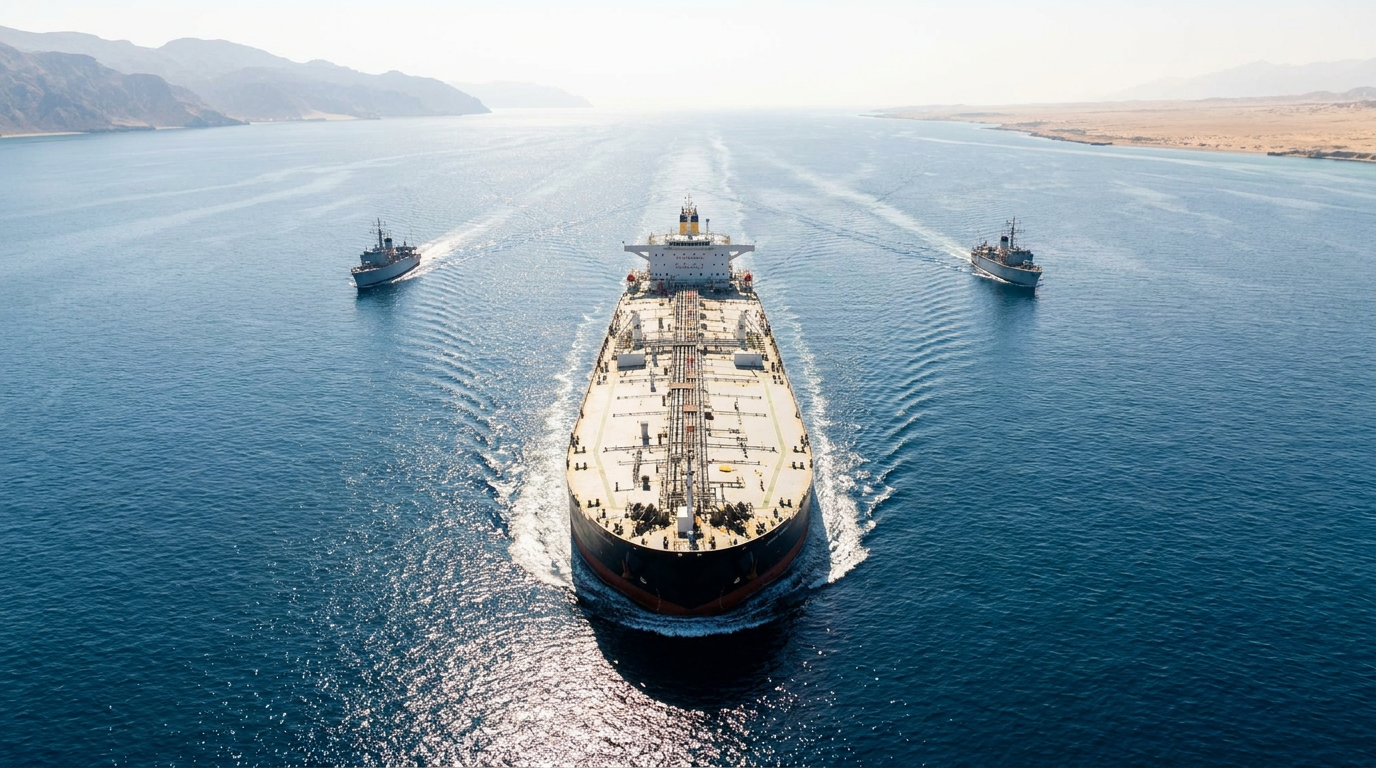
After three and a half months of conflict that choked off one of the world's most vital economic arteries, the United States and Iran have reached a preliminary agreement to end their war and reopen the Strait of Hormuz. The breakthrough, mediated by Pakistan and Qatar, establishes a framework to halt hostilities, lift the U.S. naval blockade on Iranian ports, and restore commercial shipping through the Persian Gulf. President Donald Trump announced the agreement over the weekend, declaring that the strait would soon be "toll-free" and urging the world to "let the oil flow." While the final documents are scheduled to be signed in Geneva on Friday, the announcement immediately triggered a massive recalibration across global energy markets.[2][9]
The economic relief was instantaneous. Brent crude, the international benchmark for oil prices, tumbled roughly 5% to hover near $83 per barrel when markets opened on Monday. This marks a steep decline from the height of the conflict, when prices spiked to around $118 per barrel and threatened to plunge the global economy into a recession. West Texas Intermediate, the U.S. benchmark, similarly slid below $80 per barrel. Global equities rallied on the news, with the Dow Jones Industrial Average hitting a record high as investors priced in the end of what the International Energy Agency had characterized as a historic supply disruption.[1][8]
The stakes of the closure cannot be overstated. The Strait of Hormuz is a narrow chokepoint between the Persian Gulf and the Gulf of Oman, measuring just 21 miles wide at its narrowest point. Through this corridor, approximately 20% of the world's total oil supply and significant volumes of liquefied natural gas typically transit. When the conflict erupted in late February, commercial traffic effectively ceased, severing Asian and European markets from Middle Eastern energy exports. The sudden absence of millions of barrels of daily supply sent shockwaves through global supply chains, inflating the cost of everything from jet fuel to agricultural fertilizers.[1][8]

During the conflict, Iran had demanded tolls for vessels navigating the strait, a practice the U.S. and its allies condemned as a violation of international maritime law and a direct threat to global free trade. Under the new framework, transit will reportedly resume without tolls, though Iranian state media has suggested this toll-free period may only be guaranteed for an initial 60-day window. The exact mechanics of how the strait will be governed moving forward remain one of the most closely guarded secrets of the negotiations, leaving maritime lawyers and shipping insurers scrambling to understand the new rules of engagement and liability.[4][9]
To survive the immediate supply shock, the United States leaned heavily on the Strategic Petroleum Reserve (SPR). Authorized in 1975 in the wake of the Arab oil embargo, the SPR is a complex of underground salt caverns along the Gulf Coasts of Texas and Louisiana designed to buffer the domestic economy against severe energy disruptions. It serves as the ultimate geopolitical shock absorber, allowing the federal government to inject millions of barrels of crude into the open market to artificially suppress skyrocketing prices during a crisis.[3][7]
To survive the immediate supply shock, the United States leaned heavily on the Strategic Petroleum Reserve (SPR).
In March, the Trump administration authorized the emergency release of 172 million barrels from the SPR, coordinating the move with 32 member nations of the International Energy Agency, who collectively pledged to release 400 million barrels. The aggressive drawdown was intended to stabilize fuel costs ahead of the U.S. midterm elections, but it has pushed the nation's emergency stockpile to historic lows. The Department of Energy reported that the SPR currently holds just 340.3 million barrels of crude oil—its lowest level since August 1983.[3][6][7]

The reserve has been steadily depleted over consecutive administrations. The recent 172-million-barrel release follows a 180-million-barrel drawdown authorized by former President Joe Biden in 2022 following Russia's invasion of Ukraine. Energy Secretary Chris Wright has stated that the administration plans to replace the released crude with approximately 200 million barrels over the next year. However, energy analysts note that refilling the reserve will require sustained lower oil prices and significant logistical coordination, meaning the U.S. will remain highly vulnerable to any secondary supply shocks in the near term.[3][7]
Despite the market euphoria, energy analysts and shipping operators remain deeply cautious about the timeline for normalization. The preliminary agreement does not instantly clear the waterway. Shipping companies are awaiting concrete security guarantees and the completion of extensive mine-clearing operations before they will risk sending multi-million-dollar tankers back into the corridor. "There's just one litmus test for all policy interventions: does it sufficiently reassure ship operators to resume normal operations?" noted Clay Seigle, a scholar at the Center for Strategic and International Studies.[1]
Furthermore, the physical infrastructure of the global oil market cannot be restarted with the flip of a switch. Middle Eastern producers who were forced to shut in their oil fields during the blockade will need weeks, if not months, to safely bring production back to pre-war capacity. Financial analysts at Morningstar warn that the speed of this recovery, combined with the urgent need to replenish depleted commercial and strategic stockpiles worldwide, means that a geopolitical risk premium will likely remain embedded in energy prices for the foreseeable future. The new price floor for Brent crude may settle closer to $75 or $80 per barrel, rather than returning to the $60 range seen before the conflict.[1][8]

The diplomatic framework itself also contains significant unresolved vulnerabilities. The current deal functions primarily as a 60-day ceasefire designed to facilitate the immediate resumption of maritime trade. Crucial aspects of the conflict, most notably the status of Iran's nuclear program, have been deferred to a subsequent round of negotiations. While U.S. officials claim the ultimate goal is the complete dismantling of Iran's nuclear capabilities and the removal of enriched uranium, Iranian officials have cautioned that the timeline remains fluid and subject to change.[4][5]
The most volatile wildcard remains the ongoing conflict in the Levant. Israel is not a party to the U.S.-Iran agreement and has explicitly stated that it will not halt its military campaign against Hezbollah in Lebanon. Hezbollah, an Iranian proxy, has credited Tehran with securing a "major achievement" in the peace deal but insists that the regional security paradigm has permanently shifted. If hostilities escalate further in Lebanon, it could easily fracture the fragile 60-day ceasefire in the Gulf, plunging energy markets back into chaos.[2][5]
For now, the international community is moving rapidly to lock in the gains of the preliminary pact. Leaders from the G7 and the European Commission have warmly welcomed the breakthrough, pledging to support mine-clearing operations and independent naval missions to reassure commercial shipping. As diplomats converge on Geneva for the formal signing, the global economy watches with bated breath, hoping that the promise of a toll-free Strait of Hormuz will hold long enough to pull the world back from the brink of a historic energy crisis.[2][5]
How we got here
Late February 2026
The U.S.-Iran conflict erupts, leading to the closure of the Strait of Hormuz and a spike in global oil prices.
March 2026
The U.S. authorizes the emergency release of 172 million barrels from the Strategic Petroleum Reserve to combat rising fuel costs.
June 14, 2026
President Trump announces a preliminary agreement to end the naval blockade and reopen the Strait of Hormuz.
June 15, 2026
Global oil prices tumble 5% as markets react to the peace deal, while U.S. SPR levels hit their lowest point since 1983.
June 19, 2026
The formal memorandum of understanding is scheduled to be signed in Geneva, initiating a 60-day ceasefire.
Viewpoints in depth
Energy Markets' View
Traders are pricing in the logistical delays of mine-clearing and restarting shut-in production.
While the diplomatic breakthrough is welcome, energy markets are focused on the physical realities of the oil trade. Analysts argue that the preliminary agreement does not instantly clear the waterway, as shipping companies require concrete security guarantees and extensive mine-clearing operations before resuming normal transit. Furthermore, restarting shut-in oil fields in the Middle East will take weeks to months. Consequently, traders believe a geopolitical risk premium will keep oil prices elevated above pre-war levels, establishing a new price floor closer to $75 or $80 per barrel.
U.S. Administration's View
The deal is framed as a decisive victory that secures global energy flows and protects consumers.
The U.S. administration views the agreement as a major diplomatic and economic win, emphasizing the successful "toll-free" reopening of the Strait of Hormuz. Officials point to the aggressive use of the Strategic Petroleum Reserve as a necessary and effective tool that bridged the crisis and shielded American consumers from skyrocketing fuel costs ahead of the midterm elections. The administration maintains that the 60-day ceasefire provides a strong foundation to negotiate the complete dismantling of Iran's nuclear capabilities.
Geopolitical Skeptics' View
The agreement is seen as a fragile, temporary fix that leaves major regional conflicts unresolved.
Geopolitical analysts and skeptics warn that the peace deal is essentially a 60-day ceasefire that defers the most difficult questions. They highlight that the status of Iran's nuclear program remains unresolved and subject to future negotiations. More critically, the agreement does not include Israel, which continues its military campaign against Hezbollah in Lebanon. Skeptics argue that if hostilities escalate further in the Levant, it could easily fracture the fragile ceasefire in the Gulf, plunging energy markets back into chaos.
What we don't know
- Whether the "toll-free" transit through the Strait of Hormuz will be extended beyond the initial 60-day ceasefire period.
- How quickly Middle Eastern oil producers can safely restart shut-in production facilities and return to pre-war export volumes.
- Whether the ongoing military conflict between Israel and Hezbollah in Lebanon will fracture the fragile U.S.-Iran peace agreement.
Key terms
- Strait of Hormuz
- A critical maritime chokepoint connecting the Persian Gulf to the open ocean, essential for global oil and liquefied natural gas exports.
- Strategic Petroleum Reserve (SPR)
- The U.S. government's emergency stockpile of crude oil, stored in underground salt caverns along the Gulf Coast.
- Brent Crude
- The primary international benchmark price for purchasing oil worldwide.
- West Texas Intermediate (WTI)
- The primary benchmark price for crude oil produced and purchased in the United States.
- Shut-in production
- Oil wells that have been temporarily closed off or had their output severely restricted due to market disruptions or conflict.
Frequently asked
What is the Strait of Hormuz?
It is a narrow waterway between the Persian Gulf and the Gulf of Oman, through which approximately 20% of the world's oil supply passes.
Why did oil prices drop?
Prices fell roughly 5% because the U.S. and Iran agreed to reopen the Strait of Hormuz, easing fears of a prolonged global energy shortage.
What is the Strategic Petroleum Reserve?
It is a U.S. government complex of underground salt caverns that stores emergency crude oil to protect the economy from severe supply disruptions.
Why is the SPR at its lowest level since 1983?
The U.S. released 172 million barrels during the Iran conflict to lower gas prices, which followed a previous 180-million-barrel release in 2022.
Does this deal end all conflict in the Middle East?
No. The agreement does not include Israel, which continues its military campaign against Hezbollah in Lebanon, and defers negotiations on Iran's nuclear program.
Sources
Source coverage
9 outlets
3 viewpoints surfaced









[1]BloombergEnergy Markets
Oil Prices Drop Further Monday as Markets React to U.S.-Iran Agreement
Read on Bloomberg →[2]NPRGeopolitical Skeptics
U.S. and Iran reach an agreement, but details remain scant
Read on NPR →[3]NewsweekGeopolitical Skeptics
Stocks of oil in US Strategic Petroleum Reserve falls to lowest since 1983
Read on Newsweek →[4]ForbesGeopolitical Skeptics
Crucial Aspects Of Trump’s Iran Deal Remain Secret: Nuclear Program, Strait Of Hormuz Tolls And Sanctions Relief
Read on Forbes →[5]The GuardianGeopolitical Skeptics
Donald Trump posts 'Let the oil flow' as US-Iran peace deal sparks immediate drop for Brent crude
Read on The Guardian →[6]Al-MonitorGeopolitical Skeptics
US Strategic Petroleum Reserve falls to 349.2 million barrels amid global energy shock
Read on Al-Monitor →[7]Department of EnergyU.S. Administration
United States to Release 172 Million Barrels of Oil From the Strategic Petroleum Reserve
Read on Department of Energy →[8]MorningstarEnergy Markets
Brent Crude Oil Prices Fall on US-Iran Peace Deal
Read on Morningstar →[9]The NationalU.S. Administration
Trump says Strait of Hormuz will 'immediately open to all' after US-Iran deal is signed on Sunday
Read on The National →

Every angle. Every day.
Get business stories with full source coverage and perspective breakdowns delivered to your inbox.