
The Science of Fine Robusta: How Coffee's Bitter Underdog is Saving the Industry
As climate change threatens the delicate Arabica bean, producers are applying specialty processing techniques to the hardy Robusta species, unlocking complex flavors and securing the future of coffee.
By Lan Xu

In short
- Climate change threatens up to 50% of the land currently used to grow Arabica coffee.
- Robusta is naturally resistant to pests and heat, but historically suffered from a bitter, rubbery flavor profile.
- The bitterness stems from higher levels of caffeine and chlorogenic acids, which act as natural defenses.
For generations, the global coffee industry has operated on a simple, unspoken hierarchy: Arabica is for savoring, and Robusta is for surviving. Arabica, with its delicate floral notes and bright acidity, has long been the undisputed king of specialty coffee. But this beloved species is remarkably fragile. It requires cool, high-altitude climates, consistent rainfall, and meticulous care to thrive. As global temperatures rise and weather patterns become increasingly erratic, Arabica is facing an existential crisis.
Environmental models and agricultural studies project that by 2050, up to half of the land currently suitable for cultivating Arabica will become unusable. Severe droughts, such as the one that decimated Brazil's crop in 2021, have already offered a grim preview of a warmer future. Faced with the very real possibility of a global coffee shortage, agronomists and producers are turning their attention to Arabica's much-maligned sibling: Coffea canephora, universally known as Robusta.[1][3]
Historically, Robusta has suffered from a severe image problem. It has been the anonymous, utilitarian backbone of the commercial coffee industry, prized for its high yields rather than its flavor. Because it produces a thick, stable crema, it became a staple in traditional Italian espresso blends, but its primary role has always been as a cheap filler for instant coffee.
Coffee purists have long dismissed it, describing its flavor profile with unflattering terms like 'burnt rubber,' 'wood,' or 'harsh earth.' This reputation was not entirely unearned; because Robusta was treated as a commodity crop, it was typically strip-picked, poorly sorted, and heavily roasted to mask its defects. For decades, the specialty coffee movement simply ignored it, treating Arabica as the only species capable of producing a complex, high-quality cup.[4][5]
The stark difference in taste between the two species comes down to their fundamental molecular chemistry. Arabica beans are naturally packed with flavor-enhancing compounds. They contain nearly 60 percent more lipids and almost twice the concentration of natural sugars compared to Robusta. During the roasting process, these abundant sugars caramelize, while the lipids help trap and preserve the volatile aromatic compounds.
This chemical makeup is what gives a high-quality Arabica its smooth mouthfeel, its perceived sweetness, and its dazzling array of tasting notes—from crisp green apple and jasmine to blueberry and milk chocolate. Robusta, lacking this dense concentration of sugars and fats, simply cannot replicate the delicate, tea-like profiles that Arabica effortlessly produces.[2][5]
However, the very chemical traits that make Robusta taste harsh are the exact same traits that make it a climate-resilient powerhouse. Robusta contains up to 2.7 percent caffeine—nearly double the 1.5 percent found in Arabica—along with significantly higher levels of chlorogenic acids (CGAs), which can reach up to 10 percent of the bean's composition. In the wild, caffeine and CGAs act as potent natural defense mechanisms.
They are highly toxic to insects and act as powerful fungicides, protecting the plant from devastating diseases like coffee leaf rust. This chemical armor allows Robusta to thrive at lower altitudes, endure sweltering heat, and survive heavy rainfall. The evolutionary trade-off for this incredible hardiness is bitterness, as both caffeine and CGAs are inherently bitter compounds.[2][3][5]
Recognizing that Robusta's hardiness is essential for the future of coffee, a new generation of producers is asking a radical question: What happens if you treat Robusta with the exact same reverence and care as specialty Arabica? The answer is a burgeoning movement known as 'Fine Robusta.' The transformation begins at the agronomy level.
Instead of mass-harvesting entire branches of underripe and overripe fruit, farmers are selectively hand-picking only the perfectly ripe, deep-red cherries. They are investing in raised drying beds, meticulous defect sorting, and improved soil management. By eliminating the damaged and unripe beans that historically contributed to Robusta's 'burnt tire' flavor, producers are uncovering a surprisingly clean and complex baseline.
The most significant breakthroughs in Fine Robusta, however, are happening during the processing and fermentation stages. Processing Robusta is inherently more difficult than processing Arabica because the Robusta bean is encased in a much thicker, stickier layer of sugary mucilage. In traditional washed processing, this thick mucilage increases the risk of over-fermentation, which can introduce rotting or medicinal flavors.
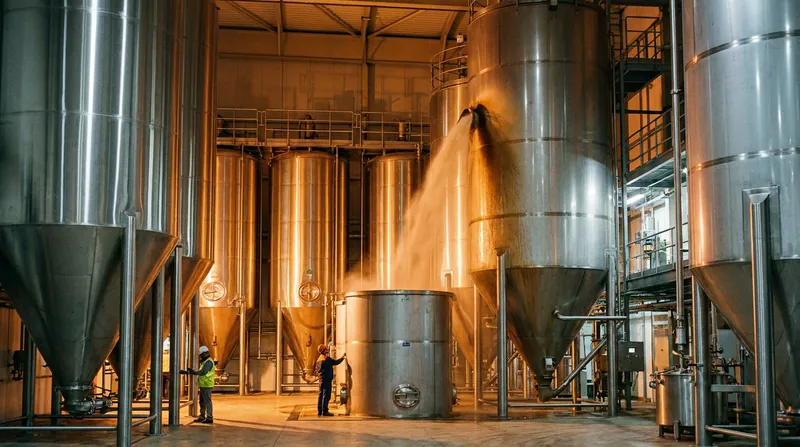
To combat this, producers are adapting their techniques, sometimes extending the washing process to over 72 hours to safely break down the fruit. More excitingly, farmers are experimenting with advanced techniques like anaerobic fermentation—sealing the cherries in oxygen-free tanks—and yeast inoculation. These controlled environments help tame the bean's natural bitterness and unlock entirely new flavor pathways.
The results of these meticulous processing methods are shattering long-held industry biases. When graded by the Coffee Quality Institute (CQI) using a specialized scale, these carefully crafted lots are scoring above 80 points, officially earning the title of 'Fine Robusta.' Instead of harsh rubber and ash, cuppers are discovering rich, heavy-bodied coffees with tasting notes of dark cocoa, roasted hazelnut, sugarcane molasses, and even surprising hints of ripe plum and rum.
While it does not mimic the bright, citric acidity of a washed Ethiopian Arabica, Fine Robusta offers a deeply satisfying, sweet, and creamy profile that excels in espresso and cold brew applications, proving that the species has its own unique culinary merit.[1]
This quality revolution is sparking a global shift in coffee agriculture. Vietnam, already the world's undisputed leader in Robusta volume, is at the forefront of the Fine Robusta movement, with boutique farms and 'green bean hunters' proving that the country can produce world-class specialty lots.
In India, where rising humidity is making Arabica cultivation increasingly difficult, farmers are aggressively transitioning to high-quality Robusta. The movement is even penetrating traditional Arabica strongholds; producers in Colombia and Panama, facing unpredictable weather patterns, are planting Robusta and applying their generations of processing expertise to elevate the crop to unprecedented heights.[1][3]
The final hurdle for Fine Robusta is consumer acceptance, but the walls are beginning to crack. Specialty roasters across the United States, Europe, and Asia are slowly introducing 100 percent Fine Robusta offerings to their menus, challenging their customers to leave their preconceptions at the door.
Major industry players are also taking note, recognizing that blending high-quality Robusta into their products can maintain flavor consistency while mitigating the supply chain risks associated with Arabica shortages. As education around coffee processing improves, consumers are increasingly willing to pay a premium for a sustainably grown, meticulously crafted cup, regardless of the species printed on the bag.[3][4]
The rise of Fine Robusta represents a profound paradigm shift in how the world values its morning cup. It is a story of agricultural adaptation, proving that human ingenuity and careful processing can unlock beauty in a crop that was long dismissed as inferior.
While Arabica will always hold a cherished place in coffee culture, it can no longer shoulder the burden of global demand alone. By embracing Robusta not as a cheap substitute, but as a distinct, resilient, and delicious species in its own right, the industry is ensuring that coffee will survive—and thrive—in a warming world.[6]
Jargon, explained
- Fine Robusta
- High-quality Robusta coffee that scores 80 points or higher on the specialty coffee grading scale and is free of primary defects.
- Chlorogenic Acids (CGA)
- Powerful antioxidants found in high concentrations in Robusta that contribute to its bitterness and natural pest resistance.
- Mucilage
- The sticky, sugary layer surrounding the coffee bean inside the cherry, which is thicker in Robusta and requires careful fermentation to remove.
- Anaerobic Fermentation
- A processing method where coffee cherries are sealed in oxygen-free tanks, often unlocking unique fruity and complex flavors.
Common questions
Does Robusta have more caffeine than Arabica?
Yes, Robusta contains up to 2.7% caffeine, which is nearly double the 1.5% typically found in Arabica beans.
Why does regular Robusta taste bitter?
The bitterness comes from its high levels of caffeine and chlorogenic acids, combined with historically poor processing and dark roasting practices.
Can Robusta be used for pour-over coffee?
Yes. While traditionally used for espresso, Fine Robusta processed with care can make an excellent pour-over, often featuring a sweet, lingering, and heavy-bodied profile.
Competing readings
The Arabica Purists
Maintaining that fundamental chemistry limits Robusta's culinary potential.
For decades, the specialty coffee industry has been built entirely around Arabica, and many purists argue this should not change. They point to the fundamental molecular chemistry of the beans: Arabica naturally contains significantly more lipids and sugars, which are essential for developing the bright, floral, and complex acidic notes prized in modern coffee culture. From this perspective, while Robusta can be improved, its high concentration of bitter chlorogenic acids places a hard ceiling on its flavor potential. These advocates often argue that the industry's resources would be better spent developing genetic hybrids that preserve Arabica's flavor profile while borrowing Robusta's resilience, rather than trying to force Robusta into a specialty mold it wasn't built for.
The Climate Agronomists
Viewing Robusta as the only viable path forward in a warming world.
Agronomists and climate scientists look at the global coffee trade through the lens of sheer survival. With climate models projecting a 50 percent reduction in viable Arabica farming land by 2050, they view the industry's reliance on a single, fragile species as an existential threat. To this camp, Robusta's historically maligned traits—its high caffeine and chlorogenic acid content—are actually its greatest assets, acting as natural armor against rising temperatures, erratic rainfall, and devastating diseases like coffee leaf rust. They argue that transitioning to Robusta is not a culinary compromise, but an agricultural necessity to ensure that millions of smallholder farmers can maintain their livelihoods as the planet warms.
The Processing Innovators
Treating Robusta as a blank canvas for advanced fermentation techniques.
A growing movement of progressive farmers and roasters views Robusta not as a lesser Arabica, but as an entirely different ingredient with untapped potential. By applying the meticulous care usually reserved for specialty Arabica—selective hand-picking, raised drying beds, and experimental anaerobic fermentation—these innovators are completely rewriting Robusta's flavor profile. They argue that the bean's historically 'rubbery' taste was a result of poor commodity processing, not inherent biology. By mastering the fermentation of Robusta's thick mucilage, they are unlocking rich, heavy-bodied coffees with notes of dark chocolate, rum, and plum, creating a new category of premium coffee that appeals to consumers who prefer a sweeter, less acidic cup.
- Climate-Adaptive Agronomists
- Champion Robusta's natural resilience to heat and disease as essential for the coffee industry's survival.
- Innovative Producers
- Focus on using advanced fermentation and processing to elevate Robusta into a premium, high-value product.
- Specialty Coffee Purists
- Argue that Arabica's superior lipid and sugar content makes it the only species capable of true culinary complexity.
Perspectives this story doesn't cover
- Commercial instant coffee manufacturers who rely on cheap, low-grade Robusta
- Smallholder farmers who lack the capital to invest in specialty fermentation equipment
Sources
Source coverage
6 outlets
3 viewpoints surfaced






- [1]Al JazeeraClimate-Adaptive Agronomists
In Nepal’s highlands, climate change threatens Tibet’s Bon faith
Read on Al Jazeera → - [2]National Institutes of HealthSpecialty Coffee Purists
Characterization of Arabica and Robusta Coffees by Ion Mobility Sum Spectrum
Read on National Institutes of Health → - [3]USDA Foreign Agricultural ServiceClimate-Adaptive Agronomists
Is Robusta on the Rise? Trends in Coffee Species Trade
Read on USDA Foreign Agricultural Service → - [4]GOYAInnovative Producers
The Rise of Specialty Robusta Coffee
Read on GOYA → - [5]The Roasters PackSpecialty Coffee Purists
10 differences Between Robusta & Arabica Coffee
Read on The Roasters Pack → - [6]Factlen Editorial TeamInnovative Producers
Synthesis by Factlen editorial team
Read on Factlen Editorial Team →
More in Food & Drink
See all →Coffee Science
The 40% CO2 Loss in the First 7 Days: How Degassing Dictates Optimal Brewing Time and Crema Formation
7 sources
Coffee Market
Record Brazilian Harvest Forecast Triggers 20% Plunge in Arabica Coffee Futures
6 sources
Coffee Trade
Kenya's New Coffee Act Bans Vertical Integration, Forcing Major Restructuring of Supply Chain
2 sources
EUDR Policy
EU Proposes Closing Deforestation Loophole by Extending Traceability Rules to Instant Coffee
5 sources
Comments
Every angle. Every day.
Get Food & Drink stories with full source coverage and perspective breakdowns, free every day.