
The Science and Art of Aquascaping: How Underwater Gardening Became a Global Phenomenon
Aquascaping has transformed the traditional fish tank into a sophisticated living canvas. By balancing the nitrogen cycle, CO2 injection, and aquatic botany, enthusiasts are building self-sustaining underwater ecosystems in their living rooms.
By Factlen Editorial Team
- High-Tech Enthusiasts
- Advocates for using advanced equipment to push the limits of aquatic plant growth.
- Natural Ecosystem Purists
- Focuses on low-intervention methods and replicating wild habitats.
- Therapeutic Hobbyists
- Values the practice primarily for its mental health and mindfulness benefits.
What's not represented
- · Commercial Aquarium Manufacturers
- · Marine Biologists
Why this matters
As urban living spaces shrink and digital fatigue rises, aquascaping offers a tangible, science-backed way to bring nature indoors. Understanding how these miniature ecosystems function provides valuable insight into broader biological cycles and offers a proven method for daily stress relief.
Key points
- Aquascaping blends interior design with biology to create self-sustaining underwater ecosystems.
- A successful tank relies on the nitrogen cycle, where beneficial bacteria neutralize toxic fish waste.
- Aquatic plants act as natural filters, absorbing nitrates and releasing oxygen into the water.
- High-tech setups use intense LED lighting and CO2 injection to cultivate vibrant, fast-growing plants.
- The hobby is increasingly recognized for its mental health benefits and meditative maintenance routine.
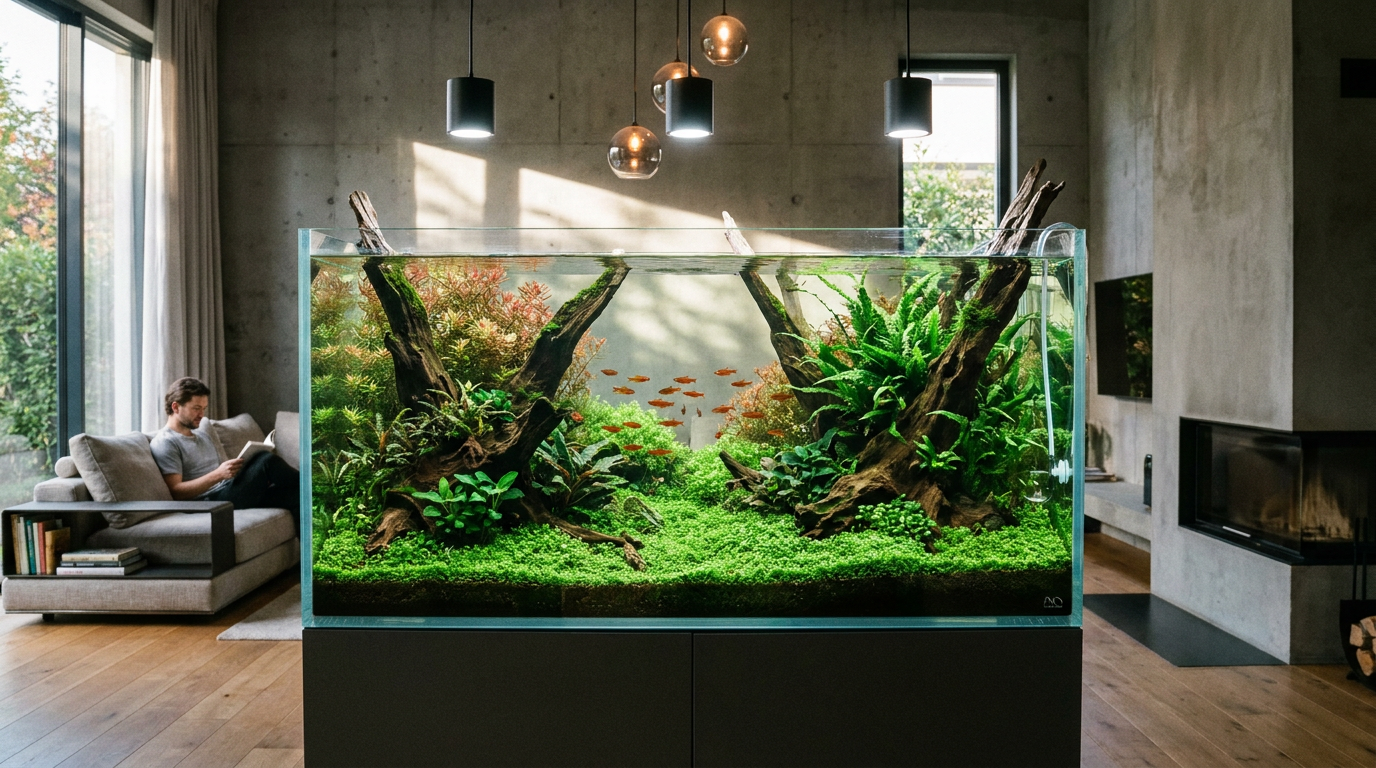
For decades, the standard home aquarium was defined by neon gravel, plastic plants, and bubbling treasure chests. Today, a rapidly growing movement has transformed the glass box into a sophisticated living canvas. Aquascaping—the craft of arranging aquatic plants, rocks, and driftwood into stunning underwater landscapes—has surged from a niche pursuit into a global art form. It is a practice where interior design meets biology, requiring practitioners to act as both landscape architects and ecosystem managers.[1][5]
While the keeping of aquatic plants dates back to the Victorian era, modern aquascaping owes its philosophy to the late Japanese photographer and aquarist Takashi Amano. In the 1990s, Amano pioneered the "Nature Aquarium" style, translating the zen principles of Japanese rock gardens and terrestrial landscapes into submerged environments. He introduced rimless, low-iron glass tanks that removed visual barriers, allowing the underwater world to seamlessly integrate into modern living spaces.[3][4]
Beyond aesthetics, the hobby is increasingly recognized for its psychological benefits. The meticulous, hands-on process of planning, planting, and pruning serves as a meditative practice for many enthusiasts. Studies and enthusiast reports alike highlight how the presence of a thriving, illuminated aquatic ecosystem acts as a natural stress reliever, bringing a slice of vibrant nature into urban homes and offering a daily exercise in mindfulness.[2][4]
But beneath the tranquil surface lies a complex, invisible engine. An aquascape is not merely a decoration; it is a closed biological ecosystem that relies entirely on the nitrogen cycle. When fish and invertebrates consume food, they produce waste in the form of ammonia, a compound that is highly toxic to aquatic life even in microscopic amounts.[6]
To survive, the aquarium depends on microscopic allies. Beneficial nitrifying bacteria colonize the tank's surfaces, feeding on the toxic ammonia and converting it into nitrite, which is also dangerous. A second colony of bacteria then converts the nitrite into nitrate, a significantly less harmful compound. Establishing this bacterial workforce—a process known as "cycling"—is the mandatory first step before any fish can safely inhabit the water.[6]

In a traditional aquarium, nitrates are removed solely through manual water changes. In an aquascape, the dense flora performs the heavy lifting. Aquatic plants act as a powerful natural filtration system, aggressively absorbing nitrates and phosphates from the water column to fuel their own growth. During photosynthesis, these plants release streams of tiny oxygen bubbles—referred to by hobbyists as "pearling"—which oxygenate the water and sustain the animal life in a perfect symbiotic loop.[2][6]
Building this self-sustaining world begins from the bottom up, relying on a carefully engineered substrate. Advanced aquascapers rarely use standard gravel. Instead, they lay a foundational base of highly porous materials, such as crushed lava rock. This hidden layer serves a dual purpose: it creates steep, dramatic elevations for the landscape while providing massive surface area for beneficial bacteria to thrive, preventing stagnant, anaerobic dead zones beneath the soil.[8]
Building this self-sustaining world begins from the bottom up, relying on a carefully engineered substrate.
Over the lava rock goes the active layer: aqua soil. Manufactured from nutrient-rich, baked volcanic clay, aqua soil is designed specifically for planted tanks. It physically softens the water and lowers the pH to mimic the slightly acidic rivers of the Amazon or Southeast Asia, creating the ideal chemical conditions for delicate root-feeding plants to flourish.[8]

With the soil in place, the "hardscape" is constructed. This is the structural skeleton of the design, utilizing materials like intricate spider wood, jagged dragon stone, or smooth river boulders. The placement of these elements dictates the flow and perspective of the tank. By adhering to the rule of thirds and utilizing negative space, aquascapers can create the illusion of a vast mountain range or a deep forest trail within a tank only two feet long.[7][8]
To bring the landscape to life, technology steps in. The engine of any aquascape is its lighting. High-intensity, full-spectrum LED fixtures have become the industry standard, engineered to penetrate the water column and provide the exact wavelengths required for optimal photosynthesis. Smart technology now allows these lights to simulate gradual sunrises and sunsets, reducing stress on the fish while maximizing plant vitality.[3][5]
For those pursuing "high-tech" setups, light alone is not enough. Enthusiasts inject pressurized carbon dioxide (CO2) directly into the water. In the wild, aquatic plants have access to naturally dissolved CO2, but in a closed glass box, it depletes rapidly. By artificially supplementing CO2 during daylight hours, aquascapers supercharge plant growth, allowing them to cultivate demanding, vibrantly red plant species that would otherwise perish in a standard tank.[5]
The planting process itself requires surgical precision. Using specialized long tweezers, hobbyists insert delicate stems and tissue-cultured plants into the aqua soil. Designs typically feature three zones: a low-growing "carpet" of grass-like plants in the foreground, bushy midground plants to hide equipment and stems, and tall, fast-growing background plants that reach the water's surface.[8]

Once flooded, the tank enters a delicate maturation phase. Algae blooms are almost inevitable in the first few weeks as the ecosystem struggles to find its nutrient balance. To combat this, aquascapers deploy a "cleanup crew" rather than chemical algaecides. Amano shrimp, Otocinclus catfish, and various aquatic snails are introduced to tirelessly graze on algae and decaying plant matter, keeping the hardscape pristine.[1]
Only when the plants are established and the water parameters are stable are the display fish added. Unlike traditional fishkeeping, where the fish are the main attraction, aquascaping treats fish as moving accents that complement the landscape. Small, tight-schooling species like Ember Tetras or Harlequin Rasboras are heavily favored; their diminutive size makes the underwater landscape appear massive by comparison.[3][6]
As the hobby has matured, distinct stylistic schools have emerged. The "Iwagumi" style relies strictly on minimalist rock formations and a single species of carpeting plant to evoke a serene, wind-swept meadow. "Biotope" aquariums reject artistic symmetry in favor of hyper-realistic recreations of specific wild habitats, such as a tannin-stained Amazonian tributary. Meanwhile, the classic "Dutch" style abandons rocks and wood entirely, focusing on dense, meticulously terraced rows of colorful stem plants.[3][7]

Ultimately, an aquascape is never truly finished; it is a fluid, living sculpture. It requires a disciplined weekly routine of 25-percent water changes, precise scissor trimming to shape the plant mass, and the careful dosing of liquid fertilizers. For the dedicated aquascaper, this maintenance is not a chore, but the core appeal of the hobby—a quiet, weekly communion with a miniature world of their own creation.[2][8]
How we got here
1800s
The keeping of aquatic plants in glass enclosures begins to gain traction during the Victorian era.
1930s
The Dutch style emerges in the Netherlands, focusing on dense, highly organized plant arrangements without the use of rocks or wood.
1990s
Takashi Amano introduces the 'Nature Aquarium' style, blending Japanese gardening principles with underwater ecosystems.
2020s
Aquascaping surges in global popularity as a therapeutic indoor hobby during pandemic lockdowns.
2026
Smart technology and automated CO2 systems make high-tech, precision aquascaping more accessible to beginners.
Viewpoints in depth
High-Tech Enthusiasts
Advocates for using advanced equipment to push the limits of aquatic plant growth.
This camp views aquascaping as a pursuit of peak biological performance. By utilizing app-controlled LED lighting, pressurized CO2 injection, and specialized synthetic fertilizers, high-tech hobbyists can cultivate notoriously difficult, vibrantly colored plant species. They argue that while the initial financial investment is steep, the technology provides precise control over the ecosystem, resulting in explosive growth and pristine, algae-free environments that low-tech setups struggle to match.
Natural Ecosystem Purists
Focuses on low-intervention methods and replicating wild habitats.
Purists argue that an aquarium should function as closely to nature as possible, without the crutch of artificial CO2 or intense lighting. This camp often favors 'biotope' setups that meticulously recreate specific geographical environments, such as a tannin-rich Amazonian stream. They prioritize a slow, balanced approach, relying on heavy plant mass, robust cleanup crews, and the natural nitrogen cycle to maintain water quality, arguing that low-tech tanks are ultimately more stable and less prone to catastrophic crashes.
Therapeutic Hobbyists
Values the practice primarily for its mental health and mindfulness benefits.
For this growing demographic, the technical perfection of the tank is secondary to the psychological benefits of maintaining it. They view the weekly routine of trimming plants and performing water changes as a grounding, meditative ritual. Drawing on studies linking the presence of aquariums to lowered blood pressure and reduced anxiety, this camp emphasizes aquascaping as an accessible way to bring a calming, living piece of nature into increasingly urbanized and digital lives.
What we don't know
- The long-term ecological impact of harvesting wild hardscape materials like dragon stone and spider wood for the hobby.
- How emerging AI-driven smart sensors will change the hands-on nature of traditional aquascape maintenance.
Key terms
- Aquascaping
- The craft of arranging aquatic plants, rocks, and driftwood in an aesthetically pleasing manner within an aquarium.
- Nitrogen Cycle
- The biological process where beneficial bacteria convert toxic fish waste (ammonia) into less harmful compounds.
- Aqua Soil
- A nutrient-rich, clay-based substrate designed specifically to support the root systems of aquatic plants.
- Hardscape
- The non-living structural elements of an aquascape, such as rocks and driftwood.
- Iwagumi
- A minimalist Japanese aquascaping style that focuses primarily on rock formations and low-growing carpet plants.
- CO2 Injection
- The practice of adding pressurized carbon dioxide to aquarium water to accelerate plant growth and photosynthesis.
Frequently asked
Do I need a massive tank to start aquascaping?
No. While larger water volumes are chemically more stable, beginners can successfully learn the ropes with a standard 10 to 20-gallon setup.
Why do I need to wait weeks before adding fish?
A new aquarium must "cycle" to build up colonies of beneficial bacteria. Without these bacteria, toxic ammonia from fish waste will quickly reach lethal levels.
Is CO2 injection absolutely necessary for a planted tank?
It is not strictly required for low-light plants like ferns and mosses, but it is essential if you want dense, fast-growing carpets or vibrantly colored red plants.
How much weekly maintenance does an aquascape require?
Most established setups require about an hour a week for a 25% water change, scraping algae off the glass, and trimming overgrown plants.
Sources
Source coverage
8 outlets
3 viewpoints surfaced








[1]Factlen Editorial Team
Synthesis by Factlen editorial team
Read on Factlen Editorial Team →[2]Mirage NewsTherapeutic Hobbyists
The Benefits of Aquascaping: Beyond Aesthetics
Read on Mirage News →[3]Pond Trade Magazine
Aquascaping Parallels Pond Design
Read on Pond Trade Magazine →[4]ResearchGateTherapeutic Hobbyists
Aquascaping is an ancient art of creating aquatic environments
Read on ResearchGate →[5]Buce PlantHigh-Tech Enthusiasts
Top Trends in Aquarium Aquascaping in 2025
Read on Buce Plant →[6]AquascapesNatural Ecosystem Purists
The Science Behind Aquascaping: Balancing Nature and Ecology
Read on Aquascapes →[7]School of ScapeNatural Ecosystem Purists
Top 5 Aquascaping Trends: Innovative Ideas for Your Aquarium
Read on School of Scape →[8]Fitz Fish PondsHigh-Tech Enthusiasts
Plan Before You Plant: A Guide to Smart Aquascaping Prep
Read on Fitz Fish Ponds →

Every angle. Every day.
Get lifestyle stories with full source coverage and perspective breakdowns delivered to your inbox.