
The 'One-Touch' Rule and the Psychology of Micro-Organizing
Neuroscience reveals that physical clutter actively spikes cortisol levels and drains cognitive focus. To combat this, experts recommend the 'OHIO' method and daily micro-organizing habits to cut off visual noise at the source.
By Factlen Editorial Team
- Professional Organizers
- Practitioners focused on actionable, low-friction systems to manage household inventory.
- Behavioral Researchers
- Scientists focusing on the physiological and cognitive toll of physical environments.
- Practical Living Advocates
- Voices cautioning against the pursuit of sterile, magazine-perfect homes.
What's not represented
- · Interior Designers
- · Individuals with ADHD
Why this matters
Understanding the biological link between clutter and stress allows you to stop blaming yourself for feeling overwhelmed in a messy room. By implementing low-friction systems like the one-touch rule, you can actively lower your daily cortisol levels without exhausting weekend cleaning marathons.
Key points
- Studies show that physical clutter actively elevates cortisol, the body's primary stress hormone.
- Visual noise drains working memory by forcing the brain to constantly filter out irrelevant data.
- The OHIO (Only Handle It Once) method prevents clutter by forcing immediate decisions on everyday items.
- Micro-organizing relies on 5-to-10-minute daily habits rather than exhausting weekend cleaning marathons.
Walking into a messy room and feeling an immediate drain on your energy is a nearly universal experience. For decades, this feeling was dismissed as a mere aesthetic preference, a quirk of personality, or simply the natural consequence of a busy life. People who preferred tidy spaces were often labeled as fastidious, while those with cluttered homes were told they just needed to dedicate a weekend to cleaning. However, the reality of how our environments affect us is far more profound than simple preferences.[1]
Modern neuroscience and behavioral psychology have revealed that the human brain has a profound, measurable reaction to physical disorder. Clutter is not just a visual nuisance; it is a physiological stressor that actively alters how our bodies and minds function on a daily basis. The way we organize our physical space directly dictates our internal emotional state, influencing everything from our ability to concentrate on complex tasks to our baseline anxiety levels when we are trying to unwind after a long day.[1][2]
To combat this biological reaction, a growing consensus among professional organizers and psychologists points away from grueling, weekend-long cleaning marathons that often lead to burnout. Instead, they advocate for a combination of two low-friction behavioral systems: the "OHIO" (Only Handle It Once) method and the practice of daily micro-organizing. These systems focus on changing daily habits rather than relying on massive bursts of willpower.[1][6]
The biological mechanism behind clutter-induced stress begins deep within the endocrine system. A landmark study conducted by researchers at the UCLA Center on Everyday Lives of Families tracked the physiological responses of individuals as they navigated their own homes. The researchers sought to understand exactly how the density of household objects affected the occupants' physical health and emotional well-being over extended periods of time, moving beyond self-reported stress to measure actual hormonal changes in the body. Their findings fundamentally shifted how psychologists view interior spaces.[2]

The researchers found a direct, measurable correlation between the volume of physical possessions in a home and the inhabitants' levels of cortisol, the body's primary stress hormone. When the brain perceives a high density of objects, it interprets the environment as chaotic and demanding, triggering a low-grade but constant "fight or flight" response that leaves individuals feeling perpetually on edge.[2]
This stress response is heavily compounded by a phenomenon known as cognitive overload. Neuroscientists at the Princeton University Neuroscience Institute discovered that visual clutter actively competes for the brain's attention, even when we are not consciously looking at the mess. The human brain is constantly scanning and processing its surrounding environment for threats and opportunities, and a cluttered room provides far too much data for the visual cortex to efficiently filter. Every object in your peripheral vision demands a tiny fraction of your cognitive bandwidth.[3]
In a cluttered environment, the visual cortex is bombarded with unnecessary stimuli. This constant, subconscious filtering process drains our working memory, making it measurably harder to focus on tasks, process new information, or simply relax. The brain is essentially forced to multi-task just by keeping its eyes open in a messy room, leading to rapid mental exhaustion.[3]

Beyond the strain on the visual cortex, physical clutter preys on a well-documented psychological phenomenon known as the Zeigarnik Effect. This principle, first observed in the 1920s, dictates that the human mind tends to become preoccupied with interrupted or incomplete tasks, remembering them far more vividly than tasks that have been finished.[1][7]
In the context of a home, every piece of unsorted mail, every jacket draped over a dining chair, and every unwashed dish represents an unresolved choice and an incomplete task. The brain registers these misplaced items as a lingering, physical to-do list, leading to a state of chronic decision fatigue that drains our motivation before we even begin to clean.[7]
This is precisely where the OHIO method intervenes. Standing for "Only Handle It Once," OHIO is a strict productivity framework originally developed by early time-management pioneers for office paperwork and email triage. In recent years, however, it has been adapted into a cornerstone philosophy of modern home organization.[5]
Standing for "Only Handle It Once," OHIO is a strict productivity framework originally developed by early time-management pioneers for office paperwork and email triage.
The core rule of the OHIO method is simple but intentionally rigid: once you physically touch an item, you must make a final decision about its placement right then and there. You are not allowed to set the item down with the vague promise to "deal with it later," as that simply delays the decision and creates a new pile. The goal is to eliminate the intermediate steps that allow clutter to migrate from one surface to another. By forcing a conclusion immediately, you save the mental energy required to re-evaluate the item a second or third time.[4][5]
For example, when bringing in the daily mail, the OHIO method dictates that you sort it immediately, ideally standing over a recycling bin. Junk mail is discarded instantly, bills are filed or paid, and nothing is allowed to form a "maybe" pile on the kitchen counter. The item is handled once, and its journey is complete.[7]

Professional organizers note that the OHIO method is particularly effective for high-turnover areas like bedroom closets. When trying on clothes for the day, the rule forces a binary choice: the garment either goes immediately back on the hanger or straight into a laundry or donation bin. It entirely prevents the notorious pile of discarded outfits on the bed, which often sits there until the end of the day when you are too exhausted to put anything away properly. This single habit can dramatically reduce the visual chaos in a bedroom, setting a calmer tone for both the morning routine and the evening wind-down.[4]
By forcing immediate action, the OHIO method successfully bypasses decision fatigue. It cuts off the accumulation of clutter at the source, ensuring that daily detritus never has the opportunity to become a permanent fixture in the home. It shifts the burden from massive decluttering sessions to split-second daily choices.[5][7]
However, experts emphasize that the OHIO method is most effective when it is paired with the concept of "micro-organizing." Rather than dedicating an entire Saturday to overhauling a garage or a basement, micro-organizing breaks the concept of tidying into hyper-focused, five-to-ten-minute daily habits that fit seamlessly into a normal routine.[6]
The psychology of micro-organizing relies entirely on lowering the barrier to entry. A massive task like "organize the kitchen" feels insurmountable and naturally triggers procrastination. Conversely, a micro-task like "clear the coffee table before bed" takes two minutes and provides an immediate dopamine hit of accomplishment.[6]

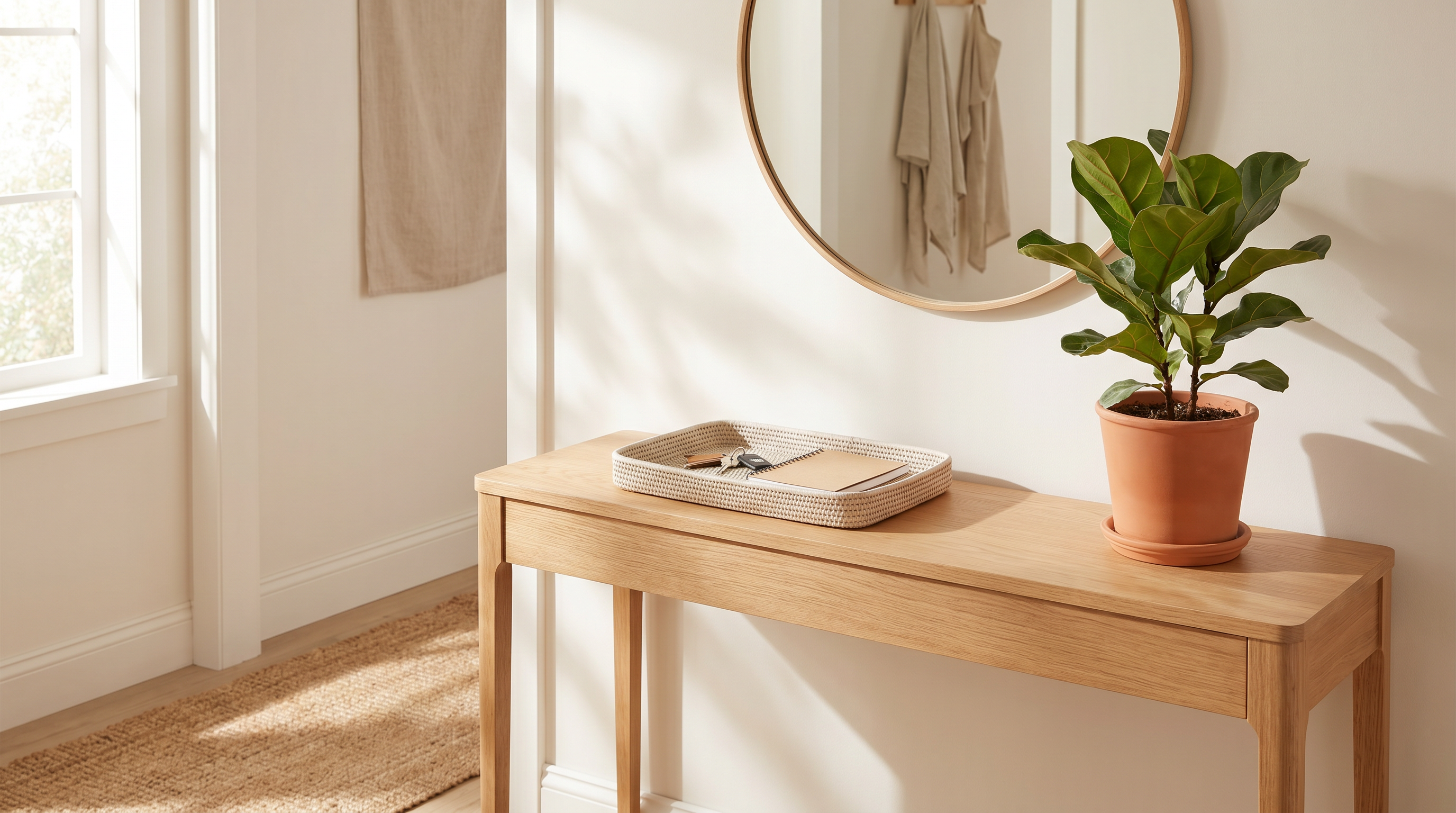
Organization experts recommend identifying small, highly visible zones to tackle in these daily micro-sessions. Clearing a single nightstand, organizing one specific bathroom shelf, or wiping down the entryway table creates small "islands of calm" that gradually expand throughout the house, building momentum without causing burnout.[6]
There are, of course, practical limitations to these rigid systems. The OHIO method is notoriously ineffective for sentimental items, family heirlooms, or complex financial paperwork. These items require emotional processing and extended cognitive time that a strict one-touch rule simply cannot accommodate, and they should be handled in dedicated sessions. Attempting to force quick decisions on items with deep personal meaning often leads to regret or overwhelming anxiety, defeating the entire purpose of the organizational exercise. Experts recommend separating these complex items into a specific category that is exempt from daily micro-organizing rules.[4]
Furthermore, behavioral researchers and editorial voices caution against the relentless pursuit of sterile perfection. A home is meant to be lived in, and a healthy, vibrant environment will naturally feature signs of life and activity. The ultimate goal is not to eliminate all possessions, but to manage the visual noise so it does not manage you.[1]
Ultimately, the shift from exhausting weekend purges to daily micro-habits transforms home organization from a punishing chore into a gentle background rhythm. By understanding the underlying science of how our physical spaces affect our neurology, we can intentionally build environments that actively lower our cortisol, rather than raising it.[1][2][6]
Viewpoints in depth
Behavioral Researchers
Scientists focusing on the physiological and cognitive toll of physical environments.
This camp views home organization primarily through the lens of neurology and endocrinology. Citing studies from institutions like UCLA and Princeton, they argue that visual clutter is not a moral failing or a character flaw, but a biological stressor. They emphasize that the brain's visual cortex has a finite bandwidth, and an overabundance of physical objects forces the brain to constantly filter out irrelevant data, leading to measurable spikes in cortisol and rapid cognitive fatigue.
Professional Organizers
Practitioners focused on actionable, low-friction systems to manage household inventory.
Rather than focusing on the biology of stress, professional organizers focus on the behavioral mechanics of preventing it. They champion frameworks like the OHIO method and micro-organizing because these systems bypass the need for massive reserves of willpower. By breaking down the overwhelming task of 'cleaning the house' into binary, split-second decisions—like sorting mail directly over a recycling bin—they help clients build sustainable habits that prevent clutter from accumulating in the first place.
Practical Living Advocates
Voices cautioning against the pursuit of sterile, magazine-perfect homes.
While acknowledging the stress of clutter, this perspective warns that the modern obsession with extreme minimalism can become its own source of anxiety. They argue that a home is fundamentally a space for living, and signs of life—a book left on a chair, a project on a desk—are natural and healthy. Their goal is to find a middle ground where visual noise is managed enough to prevent cortisol spikes, without turning the home into an unlivable museum.
What we don't know
- It remains unclear exactly how different personality types or neurodivergent profiles respond to varying levels of visual clutter.
- Long-term studies on whether micro-organizing habits permanently alter baseline cortisol levels are still ongoing.
Key terms
- OHIO Method
- An acronym for 'Only Handle It Once,' a productivity technique where an item is dealt with immediately upon first touch.
- Zeigarnik Effect
- A psychological tendency to remember interrupted or incomplete tasks better than completed ones, causing mental fatigue.
- Cortisol
- The body's primary stress hormone, which studies show elevates when individuals are surrounded by physical clutter.
- Decision Fatigue
- The deteriorating quality of decisions made by an individual after a long session of making choices.
- Micro-Organizing
- The practice of breaking home organization into small, five-to-ten-minute daily habits rather than large, infrequent purges.
Frequently asked
Does the OHIO method work for sentimental items?
Generally, no. The method is designed for quick, low-stakes decisions like sorting mail or daily clothing, not items requiring deep emotional processing.
Why does clutter make me feel tired?
Visual clutter competes for your brain's attention, increasing cognitive load and triggering the release of cortisol, which leads to mental and physical fatigue.
Where is the best place to start micro-organizing?
Experts recommend starting with small, highly visible zones like a nightstand, an entryway table, or a single kitchen counter to build momentum quickly.
Sources
Source coverage
7 outlets
3 viewpoints surfaced







[1]Factlen Editorial TeamPractical Living Advocates
Synthesis by Factlen editorial team
Read on Factlen Editorial Team →[2]UCLA Center on Everyday Lives of FamiliesBehavioral Researchers
The Clutter-Stress Connection: Cortisol Levels in the Home
Read on UCLA Center on Everyday Lives of Families →[3]Princeton University Neuroscience InstituteBehavioral Researchers
Interactions of Top-Down and Bottom-Up Mechanisms in Human Visual Cortex
Read on Princeton University Neuroscience Institute →[4]Apartment TherapyProfessional Organizers
I Tried the “OHIO” Method to Declutter My Closet, and It Made Me So Much More Decisive
Read on Apartment Therapy →[5]LifehackerProfessional Organizers
Use the 'OHIO' Method to Clean Your House
Read on Lifehacker →[6]Homes & GardensProfessional Organizers
What is micro-organizing? Why pros say it's the key to an organized home
Read on Homes & Gardens →[7]The Simplicity HabitProfessional Organizers
How to Use the OHIO Method to Keep Your Home Clutter-Free
Read on The Simplicity Habit →
More in home
See all 24 stories →Household Science
Why Enzymatic Cleaners Are Replacing Harsh Chemicals in Homes
8 sources

Soil Science
The Science of No-Dig Gardening: Why Leaving Soil Undisturbed Yields Better Results
8 sources

Building Science
The Science of the 'Deep Energy Retrofit': How Older Homes Are Achieving Net-Zero
6 sources

Neuroarchitecture
How Neuroaesthetics is Turning Interior Design into a Science of Well-Being
7 sources

Every angle. Every day.
Get home stories with full source coverage and perspective breakdowns delivered to your inbox.