
The Evidence Is In: Building More Homes Actually Lowers Rent
After years of theoretical debate, empirical data from cities like Austin and Minneapolis proves that upzoning and building market-rate housing successfully stabilizes housing costs.
By Factlen Editorial Team
- YIMBY Advocates & Urban Economists
- Argue that restrictive zoning artificially caps supply and drives up housing costs.
- Homeowners & Small Developers
- View zoning reform as a restoration of property rights and a path to wealth generation.
- Neighborhood Preservationists
- Argue that rapid densification degrades local quality of life if infrastructure is not upgraded.
What's not represented
- · Low-income renters facing immediate displacement before the filtering effect reaches them
- · Municipal infrastructure planners managing the strain on aging sewer and water systems
Why this matters
For years, the debate over housing affordability relied on economic theory, but new empirical data proves that building more homes—even market-rate ones—directly lowers rents and expands options for middle- and lower-income families.
Key points
- Empirical data from 2026 confirms that upzoning and increasing housing supply successfully lowers or stabilizes rent prices.
- Austin, Texas built 120,000 new homes over a decade, resulting in median rents falling below the national average.
- A 'filtering effect' demonstrates that building luxury apartments frees up older, more affordable housing for lower-income residents.
- Accessory Dwelling Units (ADUs) have surged nationwide, with over 2.8 million permitted units providing 'gentle density'.
- Preapproved building plans are drastically reducing ADU permitting times, cutting approval delays by more than half in cities like Seattle.
For decades, the debate over how to solve the American housing shortage was dominated by economic theory and local political friction. Proponents of "upzoning"—relaxing land-use rules to allow more homes on a given parcel—argued that increasing supply would naturally lower prices. Skeptics countered that developers would only build luxury units, accelerating gentrification without helping middle- and lower-income renters. By mid-2026, however, the debate has shifted from theoretical projections to hard empirical data. A wave of zoning reforms passed in the late 2010s and early 2020s has matured, providing researchers with a robust track record of what actually happens when cities legalize more housing.[9]
The most prominent claim tested by recent data is whether a surge in market-rate housing construction actually stabilizes rents for everyone else. The evidence increasingly points to yes. In Austin, Texas, city officials implemented a series of policies starting in 2015 to make it easier for developers to build. Over the next decade, the city added roughly 120,000 new homes, the vast majority of which were market-rate. The result was a dramatic market correction: by early 2026, Austin's median rent had fallen 4% below the national average, even as the city absorbed tens of thousands of new residents.[3][5]
Crucially, the benefits in Austin did not accrue solely to high-income earners moving into new builds. Rents in older, less expensive apartment buildings fell by 11% between 2023 and 2024, indicating that lower-income renters were among the primary beneficiaries of the construction boom. This phenomenon mirrors international data. When Auckland, New Zealand, eased zoning restrictions on roughly three-quarters of its residential land in 2016, it triggered a historic building boom. Six years later, the rent for a typical three-bedroom dwelling had plummeted by more than 25%.[3][5]

Similar stabilization has been documented in the Midwest. The Minneapolis 2040 plan, which famously eliminated single-family-only zoning and abolished citywide parking mandates, has served as a primary laboratory for urban economists. A recent synthetic control study published in EconStor analyzed the first five years of the policy. The researchers found that home prices and rents in Minneapolis grew 16% to 34% slower than they would have in a counterfactual scenario without the reforms. While duplexes and triplexes added a modest number of units, the most consequential changes came from allowing larger apartment buildings near transit corridors.[1][6]
The mechanism driving these price drops is known as "filtering," a process where new, expensive housing absorbs high-income demand, preventing those buyers from bidding up the prices of older housing stock. A landmark study by University of Notre Dame economist Evan Mast quantified this chain reaction. Mast found that for every 100 new market-rate homes built in a high-income neighborhood, roughly 70 existing homes are eventually freed up in communities with below-average incomes. As wealthier residents move into new developments, they vacate older units, which are then occupied by middle-income residents, cascading down the economic ladder.[2][5]
A landmark study by University of Notre Dame economist Evan Mast quantified this chain reaction.
Localized studies confirm the filtering effect in real time. In Honolulu, researchers at the University of Hawaiʻi Economic Research Organization tracked the ripple effects of a single new high-rise condominium called "The Central." They found that the building's completion generated more than 500 vacancies across the island of Oʻahu. The homes freed up by residents moving into the new tower were, on average, larger and 40% less expensive per square foot than the new condos, providing immediate relief to cost-burdened local families.[5]

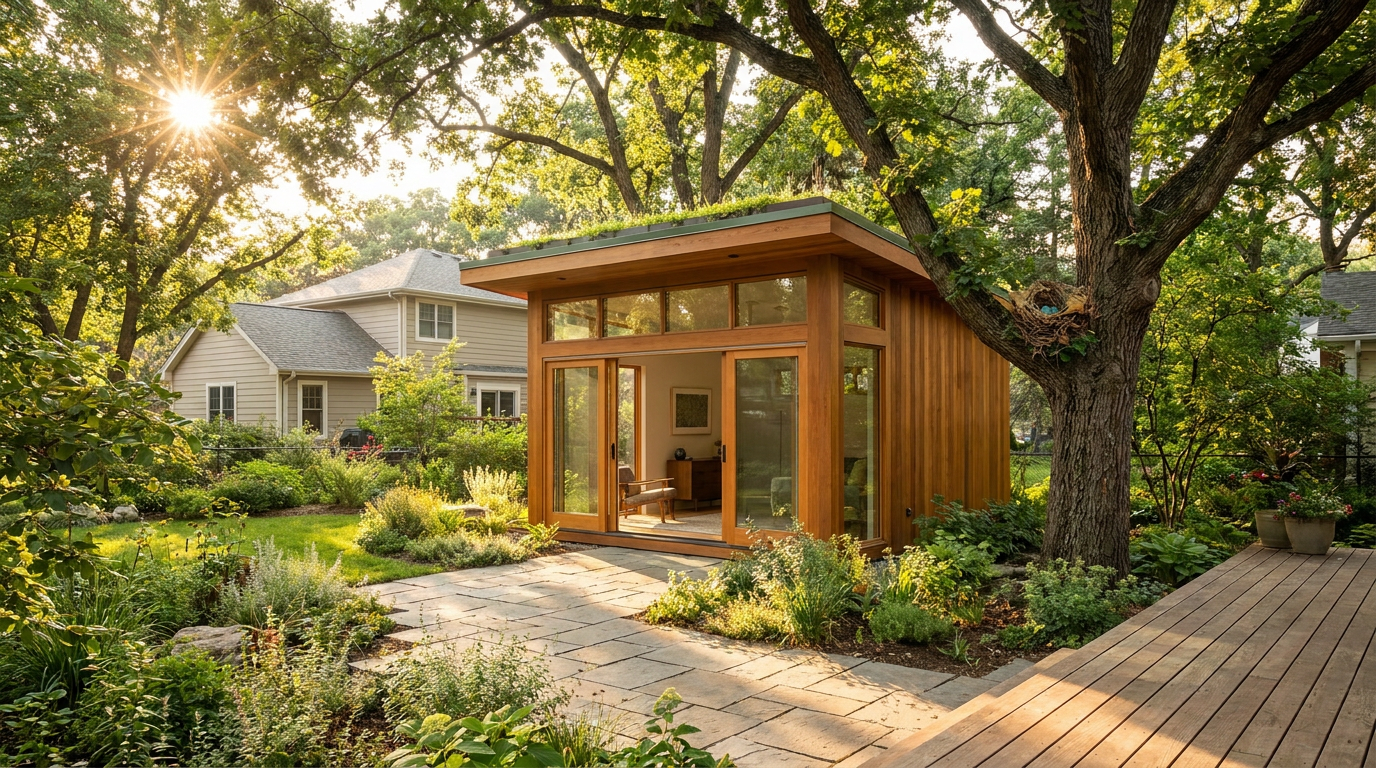
While large-scale apartment construction handles the bulk of new supply, the most rapid transformation in residential neighborhoods has come from Accessory Dwelling Units (ADUs). Often called backyard cottages or granny flats, ADUs represent a form of "gentle density" that integrates into existing single-family neighborhoods without requiring massive redevelopment. Driven by aggressive state-level policy reforms, particularly in California, ADUs have transitioned from a niche architectural project to a cornerstone of national housing strategy.[4][9]
The scale of the ADU boom is staggering. According to 2025 permit data analyzed by the construction technology firm Shovels, there are now over 2.8 million permitted ADUs nationwide. In California, where a series of bills made ADU approvals ministerial and capped development fees, permits more than doubled in just six years, stabilizing at over 200,000 annual permits by 2024. For homeowners, these units offer a way to generate passive rental income, house aging relatives, or increase property equity by 20% to 30%.[4]
To accelerate this gentle density, municipalities have increasingly turned to preapproved building plans. A May 2026 report by The Pew Charitable Trusts found that roughly 40 U.S. jurisdictions now offer libraries of preapproved ADU designs, effectively bypassing months of architectural review. In Seattle, the introduction of a preapproved plan program slashed average ADU permitting times from 160 days down to just 54 days. This bureaucratic streamlining has allowed both individual homeowners and small-scale developers to bring units to market at a fraction of the traditional cost and time.[8]

However, the evidence pack is not entirely devoid of friction. While the macroeconomic benefits of increased housing supply are well-documented, hyper-local studies reveal that density can introduce negative externalities for immediate neighbors. A 2025 paper published in Regional Science and Urban Economics utilized an instrumental variable approach to measure the spillover effects of dense ADU development. The study found that a 0.5 percentage point increase in neighborhood ADU concentration led to a 3% decrease in the property values of homes within a 300-meter radius.[7]
The researchers attributed this localized depreciation to neighborhood externalities rather than structural economic shifts. Areas with high ADU growth saw statistically significant increases in parking citations, illegal dumping, and municipal service requests, though there was no measurable increase in overall or property crime. These findings validate the concerns often raised by neighborhood preservationists: while the broader city benefits from lower rents, the immediate neighbors absorb the physical friction of increased population density on infrastructure designed for fewer people.[7][9]
Despite these localized growing pains, the overwhelming consensus among urban economists and housing researchers in 2026 is that supply-side interventions work. The data from Austin, Auckland, and Minneapolis demonstrates that zoning reform is not merely a theoretical exercise, but a proven mechanism for halting runaway housing costs. As more cities adopt preapproved plans and legalize missing-middle housing, the American housing market is slowly transitioning from a state of chronic scarcity toward a more sustainable, elastic equilibrium.[1][2][3][8][9]
How we got here
2016
Auckland, New Zealand upzones 75% of its residential land, triggering a massive building boom.
2018-2022
California passes a series of housing bills streamlining ADU construction, leading to a surge in backyard cottages.
2020
The Minneapolis 2040 plan takes effect, eliminating single-family-only zoning and parking mandates.
2024-2026
Empirical data confirms that cities with aggressive zoning reforms, like Austin and Minneapolis, are seeing rents stabilize or fall.
Viewpoints in depth
YIMBY Advocates & Urban Economists
Argue that restrictive zoning artificially caps supply and drives up housing costs.
This camp points to overwhelming empirical evidence that building more homes—even luxury units—initiates a 'filtering effect' that lowers prices across the entire market. They advocate for abolishing single-family-only zoning, eliminating parking mandates, and streamlining permitting to allow the private market to meet housing demand.
Neighborhood Preservationists
Argue that rapid densification degrades local quality of life if infrastructure is not upgraded.
While often agreeing that housing is too expensive, this group highlights the hyper-local friction of 'gentle density.' They cite data showing that a sudden influx of ADUs can strain street parking, increase municipal service requests, and slightly depress the property values of immediate neighbors who absorb these externalities.
Homeowners & Small Developers
View zoning reform as a restoration of property rights and a path to wealth generation.
For this group, the housing crisis represents an opportunity. By utilizing preapproved plans and streamlined ministerial approvals, everyday homeowners can build ADUs to generate passive rental income, house aging family members, and significantly boost their property's equity without needing to acquire new land.
What we don't know
- Whether the localized negative externalities of ADUs (like parking friction) will diminish as cities adapt their infrastructure to gentle density.
- How long the 'filtering effect' takes to reach the lowest-income renters in severely supply-constrained coastal markets.
Key terms
- Upzoning
- Changing local zoning codes to allow for higher-density development, such as permitting duplexes or apartment buildings on land previously restricted to single-family homes.
- Filtering Effect
- The process by which new, expensive housing absorbs high-income demand, freeing up older housing stock for lower-income residents.
- Accessory Dwelling Unit (ADU)
- A secondary, self-contained housing unit located on the same parcel as a primary single-family home.
- Ministerial Approval
- A streamlined permitting process where a project is approved automatically if it meets objective standards, without requiring subjective architectural review or public hearings.
Frequently asked
Does building luxury apartments help lower-income renters?
Yes. Studies show a 'filtering effect' where high-income earners move into new luxury units, freeing up older, more affordable housing stock for middle- and lower-income renters.
What is an Accessory Dwelling Unit (ADU)?
An ADU is a small, independent residential unit located on the same lot as a standalone single-family home, often called a backyard cottage or granny flat.
Do ADUs lower the property values of neighboring homes?
Evidence is mixed. While they increase the host property's value, one 2025 study found a slight 3% decrease in immediate neighbors' property values due to localized density externalities like parking.
Sources
Source coverage
9 outlets
3 viewpoints surfaced






[1]Pew Charitable TrustsYIMBY Advocates & Urban Economists
Minneapolis Land Use Reforms Offer a Blueprint
Read on Pew Charitable Trusts →[2]Urban InstituteYIMBY Advocates & Urban Economists
How Upzoning Affects Housing Supply
Read on Urban Institute →[3]Mackinac Center for Public PolicyYIMBY Advocates & Urban Economists
Zoning reform can increase housing affordability
Read on Mackinac Center for Public Policy →[4]ShovelsHomeowners & Small Developers
ADU Permit Data: What 2.8 Million Permits Reveal
Read on Shovels →[5]Honolulu Civil BeatYIMBY Advocates & Urban Economists
Building More Homes Really Does Lower Housing Costs
Read on Honolulu Civil Beat →[6]EconStorYIMBY Advocates & Urban Economists
The local effects of relaxing land use regulation on housing supply and rents
Read on EconStor →[7]Regional Science and Urban EconomicsNeighborhood Preservationists
Spillover effects of accessory dwelling unit development
Read on Regional Science and Urban Economics →Preapproved Building Plans Speed Housing Production
Read on Pew Charitable Trusts →[9]Factlen Editorial TeamYIMBY Advocates & Urban Economists
Synthesis by Factlen editorial team
Read on Factlen Editorial Team →
Every angle. Every day.
Get real estate stories with full source coverage and perspective breakdowns delivered to your inbox.