
How Sleep and Exercise Reprogram Aging Blood Cells to Prevent Heart Disease
A landmark study reveals that healthy lifestyle habits can selectively "turn off" the harmful effects of age-related genetic mutations in white blood cells, reducing the risk of cardiovascular disease.
By Factlen Editorial Team

- Cardiovascular Researchers
- Focus on the molecular mechanisms linking lifestyle to gene expression and the potential for targeted therapies.
- Geneticists
- Highlight the mutation-dependent nuance, noting that lifestyle interventions depend on specific genetic variants.
- Public Health Advocates
- Emphasize the accessibility of sleep and exercise as non-pharmacological interventions for aging populations.
What's not represented
- · Patients living with diagnosed clonal hematopoiesis
- · Gerontologists specializing in practical exercise adherence for the elderly
Why this matters
For decades, age-related genetic mutations in the blood were considered an inevitable risk factor for heart disease. This research proves that lifestyle choices like sleep and exercise can directly alter how these mutant cells behave, offering a powerful, non-pharmacological way to mitigate cardiovascular risk as we age.
Key points
- Clonal hematopoiesis (CH) is a condition where age-related genetic mutations cause white blood cells to multiply rapidly and trigger inflammation.
- CH affects roughly 25% of people over the age of 70 and half of all individuals over 80, significantly increasing the risk of atherosclerosis.
- A new study found that sufficient sleep and moderate-to-vigorous exercise can selectively reprogram these mutant cells, stripping away their inflammatory characteristics.
- The benefits are mutation-dependent, effectively neutralizing Jak2 and Tet2 mutations while having little effect on Trp53 or Dnmt3a variants.
Every day, the hematopoietic stem cells residing in human bone marrow divide and replicate to generate billions of new immune cells. This relentless biological engine replenishes the body’s defense system, but the sheer volume of cellular turnover inevitably introduces DNA glitches. While many of these spontaneous mutations are harmless, certain variants can accumulate disproportionately in the blood as we age. This phenomenon, known as clonal hematopoiesis (CH), has long been recognized as a silent driver of cardiovascular disease. For years, the medical consensus viewed these age-related genetic mutations as an unavoidable consequence of getting older—a fixed risk factor that patients simply had to live with.[4]
But a landmark study published this week in the journal Nature is upending that fatalistic view. Researchers from the Icahn School of Medicine at Mount Sinai have demonstrated that the behavior of these mutant cells is not entirely hardwired. Instead, they are highly responsive to lifestyle factors. Specifically, the team found that sufficient, uninterrupted sleep and regular moderate-to-vigorous exercise can selectively "turn off" the harmful, inflammatory programming of these mutant white blood cells, effectively neutralizing their ability to cause heart disease.[1][2]
"We’ve discovered that healthy sleep and exercise can selectively influence immune cells with clonal hematopoiesis mutations, repressing their proliferative programming and expansion," said Cameron McAlpine, an associate professor of medicine and neuroscience at Mount Sinai and the study's senior author. The findings reveal a profound malleability within our immune system, suggesting that while we cannot erase the genetic mutations acquired over a lifetime, we can dictate how those mutations express themselves.[2]
To understand the magnitude of this discovery, it is necessary to look at how clonal hematopoiesis damages the body. When a hematopoietic stem cell acquires a mutation in specific genes—such as Jak2 or Tet2—it gains a competitive advantage over healthy cells. It begins to multiply faster than it should, creating a "clone" army of identical, mutated white blood cells. This condition is remarkably common in older adults, detectable in roughly a quarter of people over the age of 70 and half of those over 80.[2][3]

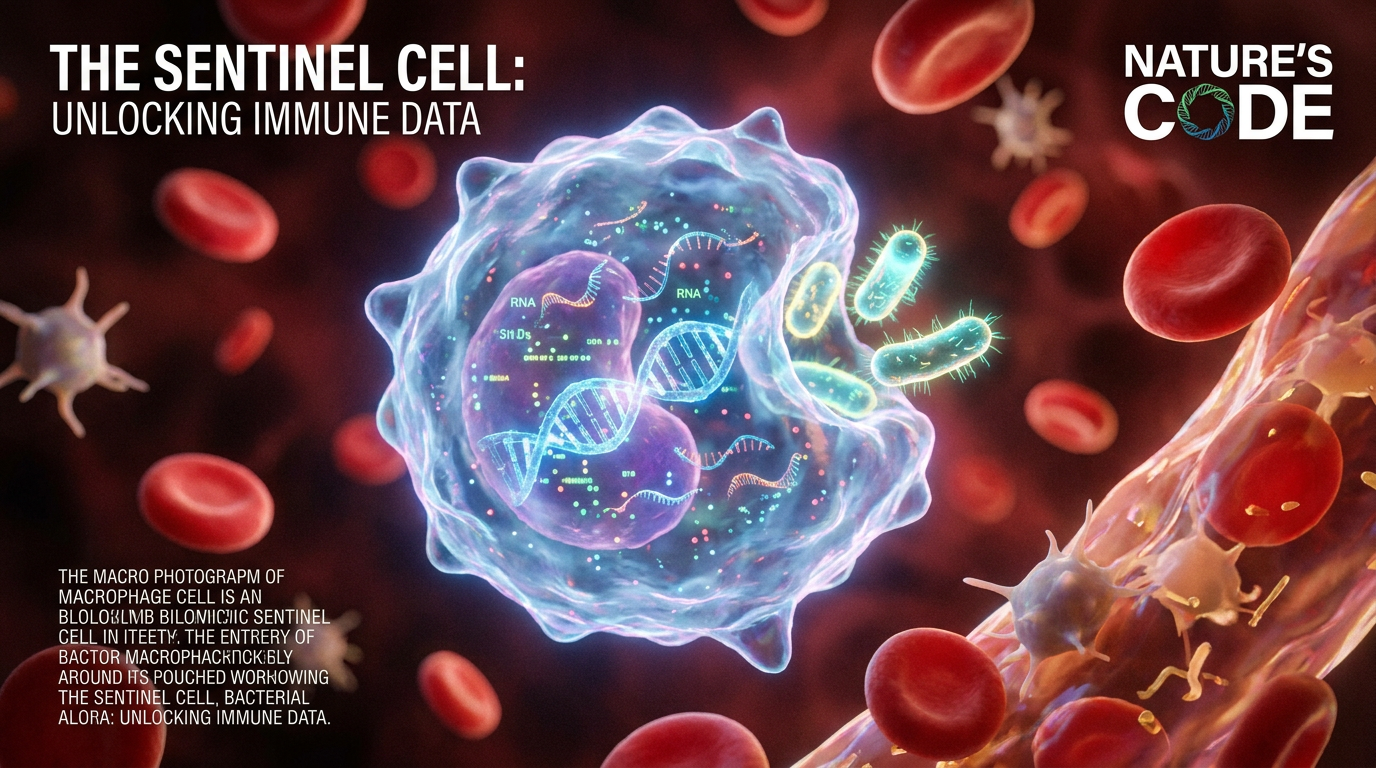
These mutant cells, particularly macrophages, are hyper-inflammatory. When they circulate through the bloodstream, they swarm into the walls of blood vessels to consume cholesterol deposits. However, because of their mutated programming, they overreact, releasing intense inflammatory signals that accelerate the buildup of dangerous arterial plaques. This process, known as atherosclerosis, is the primary culprit behind heart attacks and strokes.[3]
The Mount Sinai team wanted to know if environmental and behavioral factors could intervene in this microscopic chain of events. They began by analyzing massive epidemiological datasets, including nearly 83,000 participants from the UK Biobank and over 8,400 from the National Institutes of Health’s All of Us research program. The population data revealed a striking pattern: individuals who engaged in regular moderate-to-vigorous physical activity had a significantly lower prevalence of certain CH mutant clones circulating in their blood.[1][2]
To uncover the biological mechanisms behind this correlation, the researchers turned to genetically engineered mouse models predisposed to atherosclerosis. They introduced specific CH mutations into the mice and then manipulated their sleep and exercise routines. Some mice were given access to running wheels, while others experienced fragmented sleep, with a sweeping bar gently nudging them awake every few minutes.[3]
To uncover the biological mechanisms behind this correlation, the researchers turned to genetically engineered mouse models predisposed to atherosclerosis.
The results were highly specific and illuminating. In mice harboring the Jak2 or Tet2 mutations, consistent exercise and uninterrupted sleep effectively curtailed the expansion of the mutant clones. The lifestyle interventions reprogrammed the mutant cells, stripping away their inflammatory characteristics and making them behave almost exactly like healthy, non-mutated cells. Consequently, the mice that slept well and exercised developed significantly smaller arterial plaques and less severe cardiovascular disease.[1][2]

The researchers even mapped the precise neural and chemical pathways responsible for this transformation. When the mice exercised, it activated specific neurons in a brain region called the locus coeruleus. This neural activity triggered the release of noradrenaline into the periphery of the body. The noradrenaline then bound to specific receptors on the mutant macrophages, sending a chemical signal that actively repressed their inflammatory programming.[1]
Sleep operated through a different, but equally effective, mechanism. Uninterrupted sleep was found to blunt the activation of a specific inflammasome—a multi-protein complex responsible for initiating inflammatory responses—within the Jak2 mutant macrophages. By keeping this inflammasome dormant, healthy sleep prevented the macrophages from exacerbating the arterial lesions.[1]
However, the study also revealed a crucial nuance: the benefits of sleep and exercise are strictly "mutation-dependent." The researchers tested four different genes commonly implicated in clonal hematopoiesis. While the lifestyle interventions worked wonders against Jak2 and Tet2 mutations, they had virtually no effect on clones driven by mutations in the Trp53 or Dnmt3a genes.[1][3]
This genetic specificity is a vital piece of the puzzle. "Adequate sleep or exercise can reverse the atherosclerosis risk, but it’s different for the different variants—the degree to which that occurs, and whether it occurs at all," noted Alan Tall, a cardiovascular disease researcher at Columbia University who reviewed the findings. Because the Jak2 and Tet2 mutations are among the most common variants found in the human population, the protective effects of lifestyle changes still apply to a vast number of older adults.[3]

The implications for public health and personalized medicine are substantial. For decades, the primary medical response to atherosclerosis has relied on pharmacological interventions, such as statins to lower cholesterol or blood pressure medications to reduce vascular strain. While these remain essential tools, the Mount Sinai research elevates the clinical importance of behavioral prescriptions.[4]
"Our study showed that healthy sleep and exercise can counteract the harmful effects of certain age-related mutations which occur over time," explained Teresa Gerhardt, the study's lead author. By proving that lifestyle habits possess a molecular specificity capable of reining in pathogenic clones, the research bridges the gap between general wellness advice and targeted genetic therapy.[2]
Moving forward, this discovery could pave the way for more tailored cardiovascular treatments. As genetic sequencing becomes cheaper and more accessible, doctors may soon screen older patients for specific clonal hematopoiesis mutations. A patient found to have a Jak2 mutation, for instance, could be prescribed a rigorous, medically supervised sleep and exercise regimen as a frontline defense against heart disease, knowing exactly how those behaviors will alter their cellular biology.[4]
Ultimately, the research challenges the traditional boundaries between our genetic code and our daily choices. It demonstrates that while the passage of time guarantees the accumulation of genetic errors, the biological destiny of those errors is not entirely fixed. Through the simple, fundamental acts of moving our bodies and resting our minds, we retain a profound degree of control over our cellular health.[4]
How we got here
2014–2017
Researchers formally identify clonal hematopoiesis (CH) and establish its strong link to an increased risk of atherosclerotic cardiovascular disease in older adults.
June 10, 2026
Mount Sinai researchers publish findings in Nature demonstrating that sleep and exercise can selectively reprogram CH mutant cells to prevent arterial plaque buildup.
Viewpoints in depth
Cardiovascular Researchers
Focus on the molecular mechanisms linking lifestyle to gene expression and the potential for targeted therapies.
For cardiovascular specialists, the Mount Sinai findings represent a paradigm shift in how atherosclerosis is understood. Historically, the focus has been on managing lipid levels and blood pressure through pharmacology. By mapping the exact neural and chemical pathways—such as the locus coeruleus releasing noradrenaline to repress macrophage inflammation—researchers have established a biological basis for lifestyle medicine. This opens the door to treating exercise and sleep not just as general wellness advice, but as precise, molecular-level interventions capable of altering immune cell behavior.
Geneticists
Highlight the mutation-dependent nuance, noting that lifestyle interventions depend on specific genetic variants.
Geneticists emphasize the critical caveat of the study: the benefits are strictly mutation-dependent. While exercise and sleep effectively reprogrammed cells with Jak2 and Tet2 mutations, they failed to alter the trajectory of clones driven by Trp53 or Dnmt3a mutations. This nuance cautions against viewing lifestyle changes as a universal panacea for all age-related genetic degradation. Instead, it underscores the future need for personalized medicine, where interventions are tailored to the specific genetic profile of a patient's clonal hematopoiesis.
Public Health Advocates
Emphasize the accessibility of sleep and exercise as non-pharmacological interventions for aging populations.
From a public health perspective, the discovery offers a highly accessible strategy for mitigating one of the leading causes of mortality in older adults. Because the Jak2 and Tet2 mutations are among the most common variants in the population, the protective effects of sleep and exercise apply to millions of people. Advocates argue that these findings should heavily influence public health messaging, framing moderate physical activity and sleep hygiene not merely as ways to stay fit, but as essential tools for actively suppressing disease-causing genetic mutations.
What we don't know
- It remains unclear exactly how much exercise or sleep is required to achieve the optimal reprogramming effect in humans with specific mutations.
- Researchers do not yet know if other lifestyle factors, such as specific dietary interventions, can similarly reprogram the mutations that did not respond to sleep and exercise.
Key terms
- Clonal hematopoiesis (CH)
- A condition where a single mutated blood stem cell multiplies disproportionately, creating a large population of identical, often inflammatory, white blood cells.
- Atherosclerosis
- The buildup of fats, cholesterol, and other substances in and on the artery walls, forming plaques that can restrict blood flow.
- Macrophages
- A type of white blood cell that engulfs and digests cellular debris and foreign substances, playing a key role in immune response and inflammation.
- Hematopoietic stem cells
- Immature cells found in the bone marrow that can develop into all types of blood cells, including white blood cells, red blood cells, and platelets.
Frequently asked
Can sleep and exercise reverse all genetic mutations?
No. The study found that the benefits are "mutation-dependent," meaning they effectively counteract specific mutations like Jak2 and Tet2, but not others like Dnmt3a.
How common is clonal hematopoiesis?
It is highly associated with aging, affecting approximately 25% of people over the age of 70 and half of all individuals over 80.
Do I need to run marathons to see these benefits?
The study highlighted "moderate-to-vigorous physical activity," suggesting that consistent, regular exercise is key, rather than extreme athletic endurance.
Sources
Source coverage
4 outlets
3 viewpoints surfaced




[1]NatureCardiovascular Researchers
Mutation-dependent responses to sleep and exercise in clonal haematopoiesis
Read on Nature →[2]Mount Sinai Health SystemCardiovascular Researchers
Healthy Sleep and Regular Exercise Can Counteract Genetic Mutations Associated With Cardiovascular Disease
Read on Mount Sinai Health System →[3]Science NewsGeneticists
Getting solid shut-eye and hitting the gym could offset the impact of some genetic mutations
Read on Science News →[4]Factlen Editorial TeamPublic Health Advocates
Synthesis by Factlen editorial team
Read on Factlen Editorial Team →

More in science
See all 43 stories →Cellular Biology
Sleep and Exercise Can Reprogram Mutant Blood Cells to Prevent Heart Disease, Study Finds
6 sources
Carbon Budget
Global Carbon Budget for 1.5°C Will Be Exhausted in Three Years, Major Climate Assessment Warns
7 sources

Cellular Aging
Sleep and Exercise Can Reprogram Mutant Blood Cells to Prevent Heart Disease
7 sources

Quantum Computing
Microsoft and Quantinuum Achieve 800-Fold Reduction in Quantum Error Rates
6 sources

Every angle. Every day.
Get science stories with full source coverage and perspective breakdowns delivered to your inbox.