
Global Carbon Budget for 1.5°C Will Be Exhausted in Three Years, Major Climate Assessment Warns
A comprehensive update by over 70 international scientists reveals human-induced warming has reached 1.37°C, leaving just three years before the remaining carbon budget for the 1.5°C threshold is permanently exhausted.
By Factlen Editorial Team
- Climate Science Consensus
- Emphasizes the empirical data showing unprecedented heat accumulation and the rapidly shrinking carbon budget.
- Global Policy Watchers
- Focuses on the implications of breaching the 1.5°C threshold for international agreements and human health.
- Energy & Market Analysts
- Highlights the role of fossil fuel emissions and the economic shifts required to bend the emissions curve.
What's not represented
- · Communities in the Global South facing immediate displacement from sea-level rise.
- · Fossil fuel industry representatives defending the current pace of the energy transition.
Why this matters
The exhaustion of the 1.5°C carbon budget signals a critical turning point for global climate stability. Surpassing this threshold will lock in more severe extreme weather events, accelerate sea-level rise, and fundamentally alter agricultural yields and coastal economies worldwide.
Key points
- Human-induced global warming reached 1.37°C above pre-industrial levels in 2025, driven by record greenhouse gas concentrations.
- The remaining carbon budget to limit warming to 1.5°C stands at 130 billion tonnes, which will be exhausted by 2029 at current emission rates.
- The Earth's energy imbalance has more than doubled, resulting in a tripling of marine heatwave days since 1991.
- A new study reveals that 'indirect greenhouse gases' like carbon monoxide are responsible for 15% of current global warming.
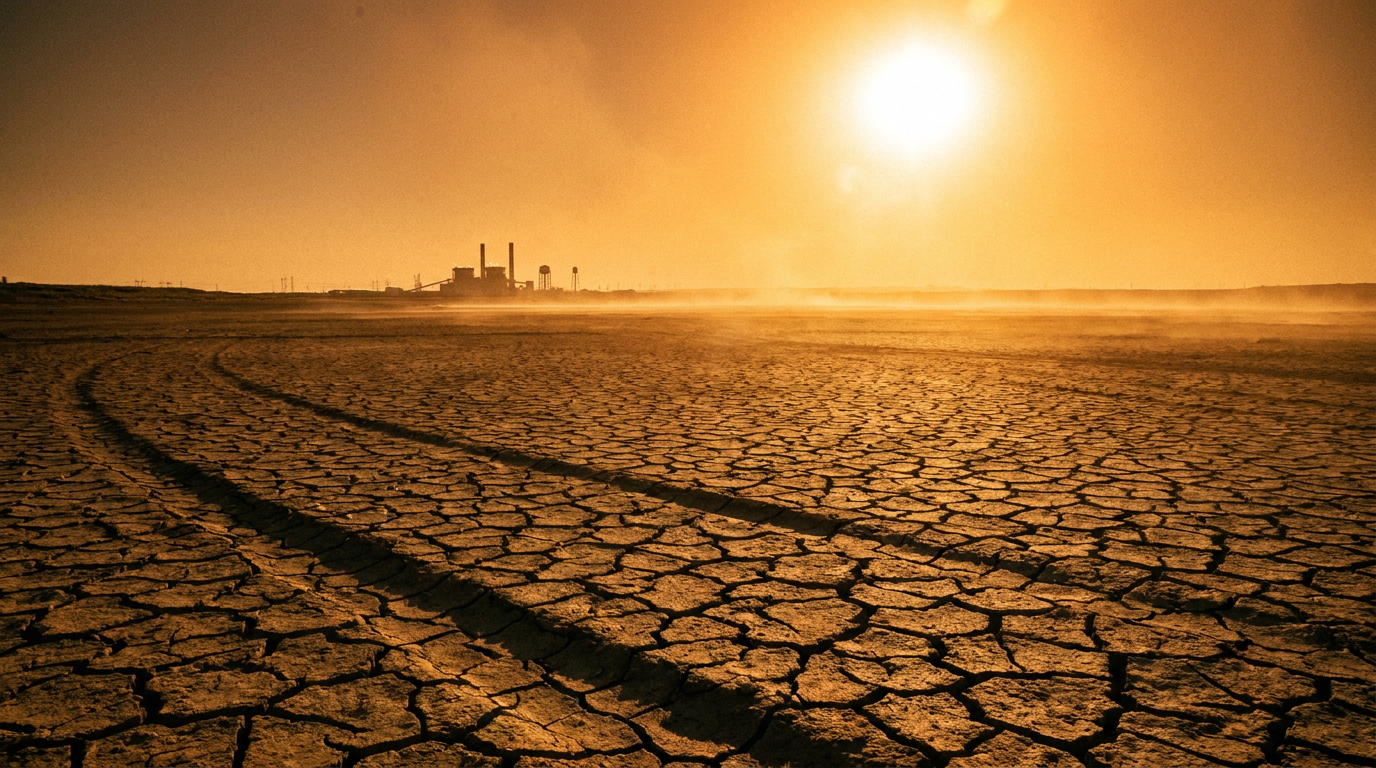
The Earth's remaining carbon budget to limit global warming to the critical 1.5°C threshold will be entirely exhausted within three years at current emission rates, according to a landmark scientific assessment published this week. The findings, which synthesize the latest data on the planet's physical state, present a stark timeline for international climate goals.[1][7]
The fourth annual "Indicators of Global Climate Change" (IGCC) report, authored by more than 70 scientists and published in Earth System Science Data, reveals that human-induced warming reached 1.37°C above pre-industrial levels in 2025. This marks a steady, relentless climb driven by record-high concentrations of greenhouse gases in the atmosphere.[1][2]
The speed of this temperature rise is unprecedented in the historical record. Researchers calculated that the rate of human-induced warming over the last decade has hit an all-time high of 0.27°C per decade. If this trajectory holds, the planet is projected to permanently surpass the 1.5°C target established by the Paris Agreement around 2030.[1][5]
The mathematics of the remaining carbon budget leave virtually no room for delay. At the start of 2026, the world had approximately 130 billion tonnes of carbon dioxide left to emit while maintaining a 50% chance of holding warming to 1.5°C. With global greenhouse gas emissions reaching a record 56.8 billion tonnes of CO2 equivalent in 2024, that budget will be consumed by 2029 unless emissions plummet immediately.[1][6]

"The rate at which heat is accumulating in the Earth system suggests high levels of future warming," the IGCC authors noted, pointing to a fundamental metric known as the Earth's energy imbalance. This imbalance—the difference between the energy entering the atmosphere from the sun and the energy escaping back into space—has more than doubled in recent decades, trapping vast amounts of excess heat.[1][2]
The vast majority of this trapped heat—around 90%—is absorbed by the world's oceans, leading to profound structural changes in marine environments. The report introduced a new metric tracking marine heatwaves, revealing that the number of days the oceans experience extreme heat has more than tripled since 1991. In 2025 alone, the global ocean endured 65 marine heatwave days, devastating coral reefs and disrupting coastal fisheries.[1][5]

These long-term trends are manifesting in immediate, visceral weather extremes. Data released simultaneously by the Copernicus Climate Change Service confirmed that May 2026 was the second-warmest May on record globally, trailing only 2024. The month saw a rapid transition to intense heatwave conditions across Europe, alongside near-record low sea ice extents in both the Arctic and Antarctic.[3]
These long-term trends are manifesting in immediate, visceral weather extremes.
While natural climate patterns like El Niño can temporarily boost global temperatures—and are expected to influence weather heavily through the remainder of 2026—scientists stress that the underlying, permanent breach of climate thresholds is entirely driven by human activity. The burning of fossil fuels remains the primary engine of this warming, though deforestation and industrial agriculture play significant roles.[3][6]
There is a faint glimmer of stabilization in the data, though it falls far short of what is required. While total emissions remain at record highs, the growth of those emissions has begun to slow compared to the rapid increases seen in the 2000s. Policy shifts, the scaling of renewable energy, and the adoption of electric vehicles are beginning to bend the curve, but they have not yet forced the absolute decline necessary to stabilize the climate.[1][6]
Complicating the mitigation effort is a major new finding regarding pollutants that have largely evaded regulatory scrutiny. A breakthrough paper published this week in the journal Science demonstrates that "indirect greenhouse gases" are responsible for approximately 15% of current global warming, contributing roughly 0.3°C to the global temperature rise.[4]
Unlike carbon dioxide or direct methane emissions, these overlooked pollutants—which include carbon monoxide, non-methane volatile organic compounds (VOCs), and nitrogen oxides—do not trap heat directly. Instead, they trigger complex chemical reactions in the atmosphere that increase the abundance and lifespan of potent greenhouse gases like methane and tropospheric ozone.[4][7]

Because they are not direct warming agents, these indirect pollutants fall outside most existing climate policy frameworks and international carbon accounting standards. The Science authors, including leading climate policy experts, argue that incorporating these gases into national mitigation strategies could unlock a highly effective, near-term lever for slowing the rate of warming.[4][7]
The convergence of a shrinking carbon budget and the hidden impact of indirect pollutants underscores the immense challenge facing negotiators preparing for the upcoming COP31 summit. Breaching the 1.5°C threshold does not mean the end of the world, but it represents a critical benchmark beyond which climate impacts—such as lethal heatwaves, crop failures, and irreversible ice sheet collapse—become disproportionately more severe and harder to manage.[2][5]

The economic and human toll of this accelerating warming is already staggering. As the Earth's energy imbalance grows, the atmosphere holds more moisture, supercharging storms and altering precipitation patterns. The resulting floods, droughts, and coastal erosion threaten to destabilize vulnerable economies and force widespread migration.[5][7]
Ultimately, the evidence pack presented by the scientific community this week serves as a definitive ticking clock. The physical reality of the climate system is behaving exactly as models predicted decades ago; the only remaining variable is how quickly human societies can transition away from the combustion of fossil fuels and halt the accumulation of heat in the atmosphere.[1][2][7]
How we got here
2015
The Paris Agreement is adopted, establishing the goal of limiting global warming to 1.5°C above pre-industrial levels.
1991–2025
The number of marine heatwave days globally more than triples, reflecting the ocean's absorption of excess heat.
2024
Global greenhouse gas emissions reach an all-time high of 56.8 billion tonnes of CO2 equivalent.
2025
Human-induced global warming reaches 1.37°C, with the rate of warming hitting a record 0.27°C per decade.
June 2026
The IGCC report warns that the remaining carbon budget for 1.5°C will be exhausted by 2029 at current emission rates.
Viewpoints in depth
Climate Science Consensus
Emphasizes the empirical data showing unprecedented heat accumulation and the rapidly shrinking carbon budget.
For the scientific community, the latest data is a stark validation of long-standing physical models. Researchers point to the Earth's energy imbalance—which has more than doubled in recent decades—as the ultimate proof that the climate system is absorbing heat at a dangerous and accelerating rate. They argue that the focus must remain on the absolute mathematics of the carbon budget: with only 130 billion tonnes of CO2 remaining for a 50% chance of holding warming to 1.5°C, the physical reality dictates that emissions must fall immediately, regardless of political or economic friction.
Global Policy Watchers
Focuses on the implications of breaching the 1.5°C threshold for international agreements and human health.
Policy experts and international negotiators view the impending breach of the 1.5°C target as a critical stress test for global diplomacy. They emphasize that 1.5°C is not a physical cliff, but a political guardrail designed to protect the most vulnerable nations from disproportionate harm. This camp is increasingly focused on adaptation strategies and the newly discovered impact of 'indirect greenhouse gases,' arguing that expanding regulatory frameworks to include pollutants like carbon monoxide and VOCs could provide a crucial, near-term mechanism to slow the warming rate while broader decarbonization efforts scale up.
Energy & Market Analysts
Highlights the role of fossil fuel emissions and the economic shifts required to bend the emissions curve.
Market analysts focus on the structural drivers behind the record 56.8 billion tonnes of CO2 equivalent emitted in 2024. While acknowledging the severity of the climate data, they point to the slowing growth rate of emissions as evidence that the energy transition is beginning to take hold. This perspective emphasizes the massive capital reallocation required to replace fossil fuel infrastructure with renewables, noting that the speed of this transition is currently limited by supply chain bottlenecks, grid capacity, and the sheer scale of global energy demand, rather than a lack of technological solutions.
What we don't know
- Exactly how sensitive the Earth's climate system is to the final increments of greenhouse gases before the 1.5°C threshold is permanently crossed.
- Whether international policymakers will rapidly integrate 'indirect greenhouse gases' into their mitigation frameworks following the new scientific findings.
- How quickly the slowing growth rate of global emissions can be converted into the steep absolute declines required to stabilize temperatures.
Key terms
- Earth's Energy Imbalance
- The difference between the amount of energy the Earth receives from the sun and the amount it radiates back into space; a positive imbalance means the planet is heating up.
- Carbon Dioxide Equivalent (CO2e)
- A standard unit for measuring carbon footprints that expresses the impact of different greenhouse gases in terms of the amount of CO2 that would create the same amount of warming.
- Marine Heatwave
- A period of unusually high ocean temperatures that can devastate marine ecosystems, similar to how atmospheric heatwaves affect land.
- Volatile Organic Compounds (VOCs)
- A large group of carbon-based chemicals that easily evaporate at room temperature and can react in the atmosphere to form harmful ozone.
Frequently asked
What is the remaining carbon budget?
The carbon budget is the total amount of carbon dioxide the world can still emit while maintaining a 50% chance of limiting global warming to 1.5°C. As of early 2026, it stands at roughly 130 billion tonnes, which will be exhausted in about three years at current emission rates.
What happens if we cross the 1.5°C threshold?
Breaching 1.5°C is not an immediate cliff, but it marks a point where climate impacts—such as extreme heatwaves, coral reef die-offs, and coastal flooding—become significantly more severe, frequent, and difficult to manage.
What are indirect greenhouse gases?
These are pollutants like carbon monoxide and nitrogen oxides that do not trap heat directly. Instead, they trigger chemical reactions in the atmosphere that increase the levels of direct greenhouse gases like methane and ozone.
Are global emissions finally going down?
Not yet. Global greenhouse gas emissions reached a record high of 56.8 billion tonnes of CO2 equivalent in 2024. However, the growth rate of these emissions is slowing down compared to previous decades.
Sources
Source coverage
7 outlets
3 viewpoints surfaced







[1]Earth System Science DataClimate Science Consensus
Indicators of Global Climate Change 2025: annual update of key indicators of the state of the climate system and human influence
Read on Earth System Science Data →[2]Imperial College LondonClimate Science Consensus
Earth's climate continues to warm as heat accumulation reaches record levels
Read on Imperial College London →[3]Copernicus Climate Change ServiceClimate Science Consensus
May 2026 was the second-warmest May on record globally
Read on Copernicus Climate Change Service →[4]ScienceClimate Science Consensus
New paper shows overlooked pollutants are responsible for about 15% of current global warming
Read on Science →[5]Health Policy WatchGlobal Policy Watchers
Planet On Course To Permanently Breach 1.5°C Limit By 2030
Read on Health Policy Watch →[6]Argus MediaEnergy & Market Analysts
Global warming set to exceed 1.5°C by 2030: Scientists
Read on Argus Media →[7]Factlen Editorial TeamGlobal Policy Watchers
Synthesis by Factlen editorial team
Read on Factlen Editorial Team →

More in science
See all 43 stories →Cellular Biology
Sleep and Exercise Can Reprogram Mutant Blood Cells to Prevent Heart Disease, Study Finds
6 sources
Longevity Science
How Sleep and Exercise Reprogram Aging Blood Cells to Prevent Heart Disease
4 sources

Cellular Aging
Sleep and Exercise Can Reprogram Mutant Blood Cells to Prevent Heart Disease
7 sources

Quantum Computing
Microsoft and Quantinuum Achieve 800-Fold Reduction in Quantum Error Rates
6 sources
Every angle. Every day.
Get science stories with full source coverage and perspective breakdowns delivered to your inbox.