
Sleep and Exercise Can Reprogram Mutant Blood Cells to Prevent Heart Disease
A landmark study reveals that healthy lifestyle habits can selectively neutralize the cardiovascular risks of age-related genetic mutations in white blood cells.
By Factlen Editorial Team

- Molecular Cardiologists
- Focus on the cellular mechanisms, macrophage reprogramming, and how lifestyle alters inflammatory signaling pathways.
- Public Health Researchers
- Emphasize the epidemiological data and the broad accessibility of sleep and exercise as preventative interventions.
- Clinical Oncologists
- Focus on the origins of these mutations in cancer risk and the complexities of clone size reduction versus functional reprogramming.
What's not represented
- · Patients living with diagnosed clonal hematopoiesis
- · Exercise physiologists designing targeted interventions
Why this matters
This discovery proves that acquired genetic mutations are not fixed biological destiny. By maintaining healthy sleep and exercise habits, older adults can actively suppress the cellular drivers of heart attacks and strokes at the molecular level.
Key points
- Clonal hematopoiesis (CH) occurs when mutated stem cells create inflammatory white blood cells, significantly increasing heart attack risk.
- A Nature study found that sleep and exercise can suppress the growth and inflammatory behavior of these mutant cells.
- The lifestyle benefits are highly specific, neutralizing Jak2 and Tet2 mutations but showing no effect on Dnmt3a or Trp53 mutations.
- The findings introduce the concept of precision lifestyle medicine, where behavioral interventions are tailored to a patient's genetics.
For decades, the medical consensus has treated acquired genetic mutations as fixed biological destiny. Once a somatic mutation occurs in the body's stem cells, lifestyle choices were thought to have little direct impact on the cellular behavior of those specific rogue clones. Patients could manage their systemic health, but the mutant cells themselves were considered beyond the reach of a morning jog or a good night's sleep.[1][3]
A landmark study published in Nature upends that assumption. Researchers have demonstrated that healthy sleep and regular exercise can directly suppress the growth and inflammatory behavior of mutated white blood cells—effectively forcing precancerous, disease-driving cells to behave like healthy ones. The discovery provides a molecular explanation for how lifestyle interventions protect the heart at the deepest genetic level.[1][2]
The research centers on a condition known as clonal hematopoiesis (CH). Every day, hematopoietic stem cells in the bone marrow divide to produce billions of new immune cells. Over a lifetime, the sheer volume of replication causes these stem cells to accumulate spontaneous DNA mutations.[2][3]
When a mutated stem cell begins to multiply faster than its healthy neighbors, it creates a disproportionate "clone" army of white blood cells. This phenomenon is rare in young people but becomes ubiquitous with age. Clonal hematopoiesis is detectable in roughly 25 percent of people over the age of 70, and in half of all individuals over 80.[2][3]

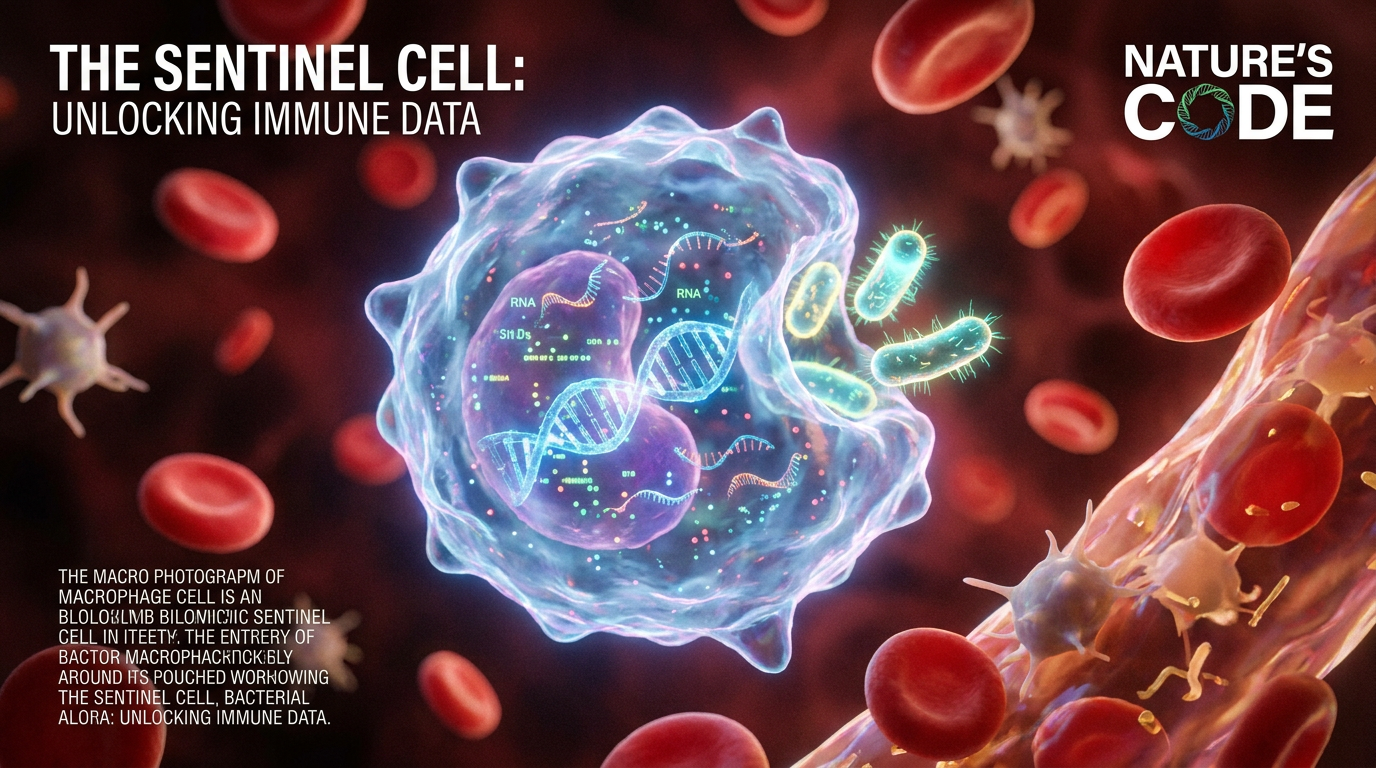
While CH was originally studied primarily as a precursor to blood cancers like leukemia, researchers made a startling discovery in the late 2010s: the primary danger of these mutant clones is actually cardiovascular. The rogue immune cells, particularly macrophages, are highly inflammatory. They swarm into blood vessels, exacerbating the buildup of atherosclerotic plaque and dramatically increasing the risk of fatal heart attacks and strokes.[3][7]
The new Nature study, led by researchers at the Cardiovascular Research Institute at the Icahn School of Medicine at Mount Sinai, asked a novel question: can behavioral interventions alter the trajectory of these specific genetic mutations? To find out, the team analyzed genetic and lifestyle data from nearly 83,000 participants in the UK Biobank and over 8,400 from the NIH's All of Us research program.[2]
The epidemiological data revealed a striking pattern. Individuals who engaged in moderate-to-vigorous physical activity had a significantly lower prevalence of CH clones in their blood. The finding suggested that exercise was somehow keeping the mutant stem cells in check, preventing them from dominating the bone marrow.[1][4]
Individuals who engaged in moderate-to-vigorous physical activity had a significantly lower prevalence of CH clones in their blood.
To prove causality and uncover the underlying mechanism, the researchers turned to genetically engineered mice predisposed to atherosclerosis. They introduced specific CH mutations into the mice and subjected them to strictly controlled environments, comparing the effects of uninterrupted sleep versus sleep fragmentation, as well as exercise versus sedentary conditions.[3][4]

The results were highly specific and profoundly effective. In mice with mutations in the Jak2 or Tet2 genes, both sleep and exercise successfully curtailed the expansion of the mutant clones. The lifestyle interventions reduced the inflammatory signaling—specifically a pathway known as IL-1β—between bone marrow macrophages and stem cells, which ultimately shrank the atherosclerotic lesions in the arteries.[1][4]
The researchers traced the exact biological pathway for exercise. Physical activity activated PAC1+ neurons in the brain's locus coeruleus, prompting the release of peripheral noradrenaline. This neurotransmitter then signaled through specific receptors on the mutant macrophages, selectively repressing their inflammatory programming without altering the behavior of neighboring healthy cells.[1][4]
However, the study also revealed a crucial limitation: the benefits are entirely mutation-dependent. While sleep and exercise neutralized the cardiovascular risks of Jak2 and Tet2 mutations, they had absolutely no effect on clones driven by mutations in the Dnmt3a or Trp53 genes. The mutant cells in those pathways continued to drive plaque formation regardless of the mice's lifestyle.[1][3]

"Adequate sleep or exercise can reverse the atherosclerosis risk, but it's different for the different gene variants," noted Dr. Alan Tall, a cardiovascular researcher at Columbia University who reviewed the findings. This discovery introduces the concept of precision lifestyle medicine, where the efficacy of a behavioral intervention depends entirely on the patient's specific genetic architecture.[3]
The findings also help contextualize conflicting data in the broader field of oncology and cardiology. A 2025 study published in JACC: CardioOncology analyzed cancer patients with CH and found that while exercise reduced overall mortality, it did not shrink the size of the mutant clones. The Mount Sinai team's discovery that lifestyle interventions only constrain specific mutations—and that they can reduce plaque inflammation even when clone size remains stable—helps explain these previously observed discrepancies.[6]
For the millions of older adults unknowingly harboring these mutations, the implications are profoundly empowering. "Our findings reveal that CH mutant cells are malleable and selectively responsive to lifestyle behavior in a way that can mitigate atherosclerotic risk," said Dr. Cameron McAlpine, the study's senior author.[2][5]
While patients cannot erase the somatic mutations accumulating in their bone marrow as they age, they are not defenseless against them. By maintaining regular physical activity and protecting their sleep architecture, individuals can actively suppress the most dangerous genetic drivers of cardiovascular aging, forcing mutant cells to behave like healthy ones.[2][3]
How we got here
2014
Researchers first identify that clonal hematopoiesis is common in aging populations and linked to blood cancers.
2017
Studies reveal that CH mutations are actually a massive independent risk factor for cardiovascular disease and fatal heart attacks.
2025
Research in cancer patients shows exercise reduces overall mortality but does not seem to shrink CH clone size, creating a mystery in the field.
June 2026
The Mount Sinai study in Nature proves that sleep and exercise selectively reprogram specific CH mutations, explaining the mechanism and the mutation-dependent effects.
Viewpoints in depth
Molecular Cardiologists
Focus on the mechanism of macrophage reprogramming and inflammatory signaling.
For molecular cardiologists, the breakthrough lies in the precise mapping of the biological pathway. The discovery that exercise activates PAC1+ neurons in the locus coeruleus to release noradrenaline, which then binds to specific receptors on mutant macrophages, provides a concrete mechanical link between physical movement and cellular inflammation. This proves that lifestyle interventions are not just 'general wellness' concepts, but targeted biochemical therapies that interrupt the IL-1β signaling pathway responsible for building arterial plaque.
Public Health Researchers
Focus on the population-level data and the broad preventative power of lifestyle.
Epidemiologists and public health experts view the findings through the lens of the UK Biobank data, which showed a clear inverse relationship between moderate-to-vigorous physical activity and the prevalence of non-DNMT3A clonal hematopoiesis. Because CH affects up to half of the population over 80, they argue that promoting sleep hygiene and exercise is the most scalable, cost-effective way to manage this massive, hidden driver of cardiovascular mortality across aging populations.
Precision Medicine Advocates
Focus on the mutation-specific nature of the findings and the future of tailored prescriptions.
Advocates for precision medicine emphasize the study's most surprising caveat: that sleep and exercise completely failed to mitigate the risks of Dnmt3a and Trp53 mutations. They argue this signals a paradigm shift in how doctors should prescribe lifestyle changes. In the future, a patient's specific genetic sequencing may determine whether they are prescribed an exercise regimen to manage their cardiovascular risk, or whether they need to be moved immediately to pharmacological interventions because their specific mutation is resistant to behavioral changes.
What we don't know
- It is not yet clear exactly how much exercise or what specific sleep duration is required to achieve the optimal suppression of mutant clones in humans.
- Researchers do not fully understand why Dnmt3a and Trp53 mutations are completely resistant to the anti-inflammatory effects of sleep and exercise.
- Long-term clinical trials are needed to confirm if prescribing exercise based on a patient's specific blood mutations directly reduces heart attack rates.
Key terms
- Clonal hematopoiesis (CH)
- The expansion of a population of blood cells derived from a single mutated stem cell, common in older adults.
- Macrophage
- A type of white blood cell that engulfs cellular debris, but can also drive dangerous inflammation in arterial plaques when mutated.
- Atherosclerosis
- The buildup of fats, cholesterol, and inflammatory cells in and on the artery walls, restricting blood flow.
- Hematopoietic stem cells
- Immature cells residing in the bone marrow that have the potential to develop into all types of blood cells.
- Locus coeruleus
- A nucleus in the brainstem involved with physiological responses to stress and exercise, which releases noradrenaline.
Frequently asked
What is clonal hematopoiesis (CH)?
A condition where mutated stem cells in the bone marrow multiply and create a large population of abnormal white blood cells, which becomes increasingly common as people age.
How does CH affect the heart?
The mutated white blood cells are highly inflammatory and accelerate the buildup of plaque in the arteries, significantly increasing the risk of heart attacks and strokes.
Does exercise cure the mutations?
No, the mutations remain in the DNA, but exercise and sleep force the mutated cells to behave like healthy cells, stopping their harmful inflammatory effects.
Do sleep and exercise work for all blood mutations?
No, the study found they are highly effective for Jak2 and Tet2 mutations, but ineffective for Dnmt3a and Trp53 mutations.
Sources
Source coverage
7 outlets
3 viewpoints surfaced







[1]NatureMolecular Cardiologists
Mutation-dependent responses to sleep and exercise in clonal haematopoiesis
Read on Nature →[2]Mount SinaiMolecular Cardiologists
Healthy Sleep and Regular Exercise Can Mitigate the Genetic Cardiovascular Risk of Mutant White Blood Cells
Read on Mount Sinai →[3]Science NewsPublic Health Researchers
Sleep and exercise may dampen genetic drivers of heart disease
Read on Science News →[4]Bioengineer.orgClinical Oncologists
Mutation-Driven Sleep and Exercise Responses Explored
Read on Bioengineer.org →[5]Respiratory TherapyPublic Health Researchers
Sleep, Exercise Mitigate Cardiovascular Risk From Blood Mutations
Read on Respiratory Therapy →[6]JACC: CardioOncologyClinical Oncologists
Impact of Exercise on Clonal Hematopoiesis
Read on JACC: CardioOncology →[7]New England Journal of MedicineClinical Oncologists
Clonal Hematopoiesis and Risk of Atherosclerotic Cardiovascular Disease
Read on New England Journal of Medicine →

More in science
See all 43 stories →Cellular Biology
Sleep and Exercise Can Reprogram Mutant Blood Cells to Prevent Heart Disease, Study Finds
6 sources
Carbon Budget
Global Carbon Budget for 1.5°C Will Be Exhausted in Three Years, Major Climate Assessment Warns
7 sources

Longevity Science
How Sleep and Exercise Reprogram Aging Blood Cells to Prevent Heart Disease
4 sources

Quantum Computing
Microsoft and Quantinuum Achieve 800-Fold Reduction in Quantum Error Rates
6 sources

Every angle. Every day.
Get science stories with full source coverage and perspective breakdowns delivered to your inbox.