
Why Economic Cooling Could Spark a Stock Market Rally Under the New Fed Chair
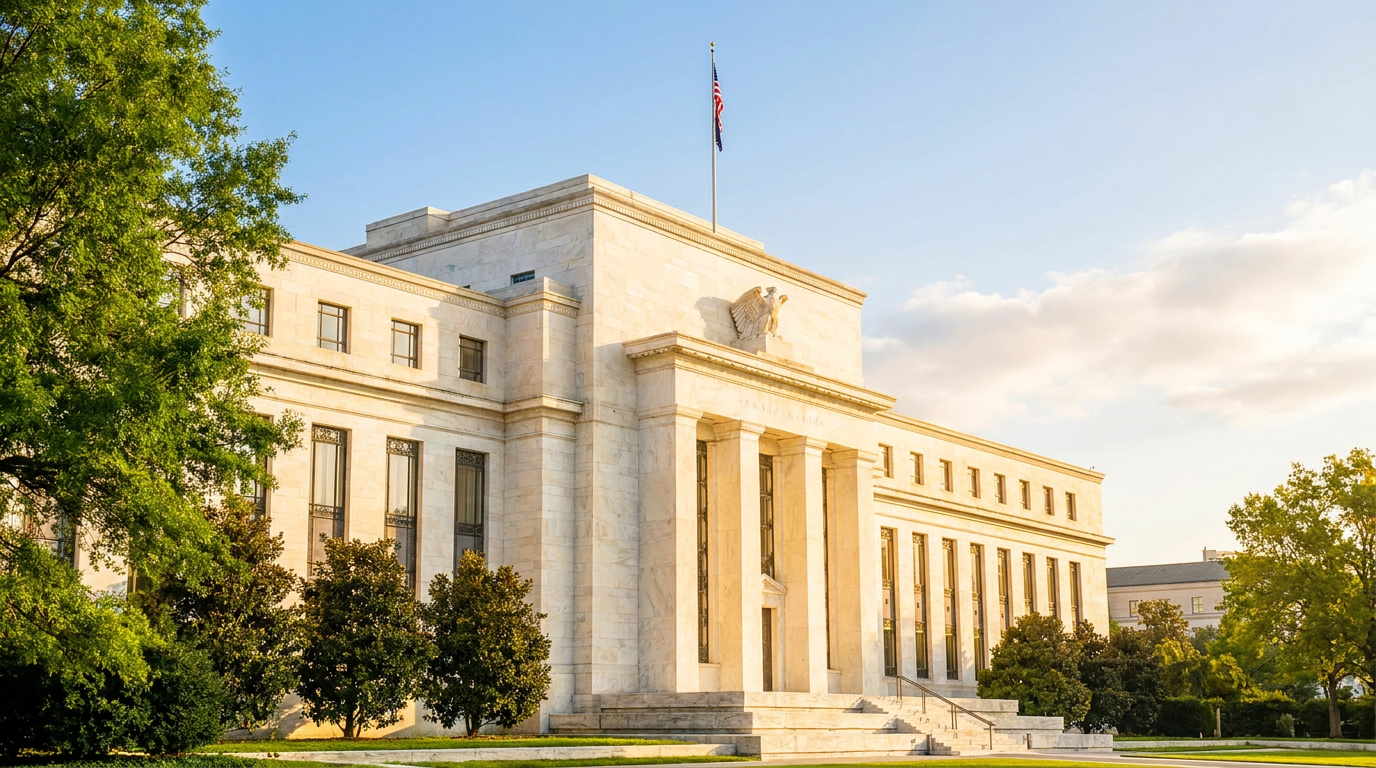
As Kevin Warsh prepares for his first meeting as Federal Reserve Chair, analysts suggest that softening economic data could actually trigger a market surge. Understanding this counterintuitive "bad news is good news" dynamic is crucial for long-term investors navigating the transition.
By Factlen Editorial Team
- Monetary Doves
- Argue that underlying economic cooling justifies a pivot to lower interest rates, which will fuel a massive stock market rally.
- Economic Realists
- Emphasize the mechanical relationship between central bank policy and asset prices, warning that a severe recession would negate the benefits of rate cuts.
- Long-Term Investors
- Focus on looking past short-term economic headlines to accumulate quality assets while the market anticipates future liquidity.
What's not represented
- · Small business owners reliant on local bank lending
- · Fixed-income retirees who benefit from high interest rates
Why this matters
Grasping how central bank policy outweighs short-term economic data helps investors avoid panic-selling during economic slowdowns. By understanding this mechanism, you can better position your portfolio to benefit from rate-driven market rallies rather than retreating at the wrong time.
Key points
- Wall Street often reacts positively to cooling economic data because it signals potential interest rate cuts.
- Lower interest rates reduce borrowing costs and mathematically increase the present value of future corporate earnings.
- The Federal Reserve's dual mandate forces it to balance inflation control with employment stability.
- A 'soft landing' is the ideal scenario where inflation cools without triggering a severe corporate earnings recession.
- Long-term investors benefit from understanding that the stock market prices in future liquidity rather than current economic conditions.
As the financial world turns its attention to Washington this week, a counterintuitive dynamic is taking center stage on Wall Street. Kevin Warsh is preparing to gavel in his first Federal Open Market Committee (FOMC) meeting as Chair of the Federal Reserve, and investors are parsing every economic data point for clues about his upcoming moves. Curiously, many market strategists are actively hoping for signs of economic softening. This paradox—where Main Street's struggles become Wall Street's fuel—is one of the most vital, yet confusing, mechanisms for everyday investors to understand. Grasping why the market cheers for cooling data can transform how individuals manage their portfolios during periods of economic transition.[1][6]
The current macroeconomic landscape presents a fascinating case study in this phenomenon. Recent reports have shown a complex mix of hot inflation readings and robust job growth, which on the surface suggests a booming economy. However, beneath these headline numbers, research firms like Citrini are identifying a more somber reality of underlying economic deceleration. Rather than triggering a panic, this hidden cooling is being heralded as potentially excellent news for equities. Strategists argue that if Warsh acknowledges this deceleration and gives the "green light" that the Fed's aggressive stance can soften, the stock market is poised for a significant upward revaluation.[1][2]
To understand why bad news for the broader economy can translate into good news for your retirement account, one must look at the Federal Reserve's dual mandate. Congress has tasked the central bank with two primary goals: maximizing employment and stabilizing prices. When the economy runs too hot, inflation spikes, forcing the Fed to raise interest rates to cool things down. Conversely, when the economy slows and unemployment threatens to rise, the Fed typically lowers interest rates to stimulate borrowing and investment. For the stock market, these interest rate adjustments are the ultimate puppet strings, dictating the flow of capital across the global financial system.[3][6]

Interest rates act as the fundamental gravity for asset valuations, particularly for stocks. When the Federal Reserve raises the federal funds rate, the cost of borrowing increases for both consumers and corporations. This means companies face higher costs to fund their growth, and consumers have less discretionary income to spend on those companies' products. Furthermore, higher interest rates mean that ultra-safe investments like U.S. Treasury bonds offer attractive returns, drawing capital away from the riskier stock market. Therefore, when economic data suggests the economy is slowing, investors anticipate that the Fed will lower rates, effectively reducing the gravitational pull on stock prices.[4][5]
The mechanics of this relationship are deeply rooted in how financial analysts value companies. The most common method is the discounted cash flow model, which calculates a company's present value based on its expected future earnings. The "discount rate" used in this formula is heavily influenced by the Fed's interest rates. When rates fall, future earnings are penalized less in today's dollars, making the company mathematically more valuable right now. This is why growth stocks—such as technology companies whose biggest profits are expected years in the future—are particularly sensitive to interest rate expectations and often surge when economic data hints at impending rate cuts.[4][6]
The mechanics of this relationship are deeply rooted in how financial analysts value companies.
This brings us back to the anticipation surrounding Kevin Warsh's debut as Fed Chair. The market is currently suspended in a delicate balancing act. If Warsh signals that the central bank is recognizing the underlying economic cooling identified by independent researchers, it implies that the era of restrictive monetary policy may be nearing its end. This "green light" would likely trigger a wave of multiple expansion, where investors are willing to pay a higher price for every dollar of a company's earnings, simply because the alternative yields in the bond market are expected to decline.[1][2]
However, the "bad news is good news" dynamic has a critical threshold. There is a distinct line between an economy that is cooling just enough to warrant lower interest rates—often referred to as a "soft landing"—and an economy that is plunging into a severe recession. If the economic data becomes too dire, the resulting collapse in corporate earnings will eventually outweigh the benefits of lower interest rates. In a true recession, companies sell fewer goods, lay off workers, and see their profits evaporate. At that point, no amount of interest rate cutting can immediately rescue stock prices from the reality of shrinking corporate revenues.[4][5]

For long-term investors, navigating this transition requires a focus on underlying business quality rather than reacting emotionally to daily economic headlines. When the media reports on rising unemployment or slowing manufacturing output, the instinct is often to sell stocks and move to cash. Yet, historically, these moments of peak economic pessimism frequently coincide with the beginning of new bull markets, as central banks pivot to accommodative policies. Understanding that the stock market is a forward-looking mechanism—pricing in the recovery long before it shows up in the official economic data—is essential for capturing long-term wealth.[5][6]
The current environment is further complicated by the massive capital flows into artificial intelligence and next-generation technologies. There is a profound appetite for moonshot growth stories across the market. These capital-intensive sectors thrive in lower-rate environments where funding is cheap and investors are willing to take risks on future paradigms. If the Fed adopts a more dovish stance in response to economic cooling, it could provide the exact macroeconomic backdrop needed to sustain the massive investments required for the ongoing technological buildouts.[1][6]
As Kevin Warsh steps to the podium for his first post-meeting press conference, economists and investors will be parsing every syllable. They will not just be listening for what he says about current inflation, but how he characterizes the balance of risks. If he emphasizes the risks to the labor market and acknowledges the somber reality beneath the surface data, Wall Street will likely interpret it as the starting gun for a liquidity-driven rally. It is a masterclass in market psychology, where acknowledging weakness becomes the ultimate catalyst for financial strength.[1][2][6]

Ultimately, the lesson for everyday investors is to separate the economy from the stock market. They are related, but they are not the same thing. The economy is a snapshot of current conditions—jobs, wages, and prices today. The stock market is a voting machine on future liquidity and corporate profitability. By understanding the mechanical relationship between central bank policy, interest rates, and asset valuation, individuals can view alarming economic headlines not as a reason to panic, but as a signal that the macroeconomic tides may be shifting in favor of equity investors.[3][5]
As we move deeper into 2026, this framework will be tested repeatedly. Whether the U.S. achieves a perfect soft landing or experiences a mild contraction, the Federal Reserve's reaction function will remain the dominant force shaping portfolio returns. By staying invested, maintaining a diversified approach, and recognizing the counterintuitive nature of market cycles, investors can position themselves to benefit from the very economic transitions that often cause others to retreat. The "green light" may come disguised as a yellow caution flag for the broader economy, but for the prepared investor, it signals the road ahead is clearing.[5][6]
How we got here
Late 2023 - Early 2024
The Federal Reserve holds interest rates at peak levels to combat sticky inflation.
2025
Inflation begins to cool consistently, prompting initial adjustments to monetary policy expectations.
June 2026
Kevin Warsh chairs his first FOMC meeting amid mixed economic signals and high market anticipation.
Viewpoints in depth
Monetary Doves
Argue that underlying economic cooling justifies a pivot to lower interest rates, which will fuel a massive stock market rally.
Strategists in this camp believe that headline economic numbers are masking a deeper deceleration in consumer spending and job creation. They argue that the Federal Reserve must act preemptively to prevent a recession by lowering the cost of capital. From their perspective, the moment the Fed signals this pivot, a massive wave of liquidity will flow out of money market funds and into equities, driving a powerful bull market regardless of short-term economic bumps.
Economic Realists
Emphasize the mechanical relationship between central bank policy and asset prices, warning that a severe recession would negate the benefits of rate cuts.
This perspective, often held by academic economists and central bankers, focuses on the delicate balance of the dual mandate. They acknowledge that lower rates boost asset prices mechanically, but warn that if the 'bad news' in the economy turns into a full-blown recession, corporate earnings will collapse. In that scenario, the mathematical benefit of a lower discount rate is wiped out by the reality of shrinking profits, meaning investors should be careful what they wish for.
Long-Term Investors
Focus on looking past short-term economic headlines to accumulate quality assets while the market anticipates future liquidity.
For long-term capital allocators, the day-to-day drama of Fed meetings and economic data releases is largely noise. Their focus is on acquiring shares of fundamentally strong companies that can survive a high-rate environment and thrive in a low-rate one. They view periods of economic pessimism as buying opportunities, knowing that the stock market is a forward-looking mechanism that will price in an eventual economic recovery long before it becomes obvious to the general public.
What we don't know
- Whether the underlying economic cooling will stabilize into a soft landing or accelerate into a recession.
- Exactly how aggressive the new Federal Reserve Chair will be in adjusting policy compared to his predecessors.
- How quickly corporate earnings might degrade if consumer spending slows faster than anticipated.
Key terms
- Federal Funds Rate
- The target interest rate set by the Federal Reserve at which commercial banks borrow and lend their excess reserves to each other overnight.
- Multiple Expansion
- A scenario where a company's stock price increases faster than its actual earnings, meaning investors are willing to pay a higher premium for every dollar of profit.
- Dual Mandate
- The two primary goals assigned to the Federal Reserve by Congress: maximizing employment and keeping prices stable (controlling inflation).
- Discount Rate
- The interest rate used in financial modeling to determine the present value of future cash flows; as this rate drops, present valuations rise.
Frequently asked
Why does the stock market go up when the economy slows down?
When the economy slows, investors anticipate that the Federal Reserve will lower interest rates to stimulate growth. Lower interest rates make borrowing cheaper for companies and make future corporate earnings mathematically more valuable today, driving stock prices higher.
What is a 'soft landing'?
A soft landing occurs when a central bank successfully raises interest rates just enough to cool inflation without triggering a severe recession or massive job losses.
How do interest rates affect technology stocks?
Technology and growth stocks are highly sensitive to interest rates because much of their value is based on profits expected far in the future. When rates fall, those future profits are discounted less, making the stocks more attractive to buyers today.
Sources
Source coverage
6 outlets
3 viewpoints surfaced





[1]MarketWatchMonetary Doves
The stock market is poised to go crazy if Warsh gives the green light, these strategists say
Read on MarketWatch →[2]BloombergMonetary Doves
Wall Street Weighs Warsh's First Move as Fed Chair
Read on Bloomberg →[3]Federal ReserveEconomic Realists
Federal Open Market Committee: Monetary Policy Basics
Read on Federal Reserve →[4]NBEREconomic Realists
The Impact of Monetary Policy on Asset Prices
Read on NBER →[5]InvestopediaLong-Term Investors
How Interest Rates Affect the Stock Market
Read on Investopedia →[6]Factlen Editorial TeamLong-Term Investors
Synthesis by Factlen editorial team
Read on Factlen Editorial Team →

Every angle. Every day.
Get finance stories with full source coverage and perspective breakdowns delivered to your inbox.