
The OTC CGM Boom: What Healthy People Are Learning From Tracking Their Blood Sugar
Over-the-counter continuous glucose monitors have transitioned from medical necessities to mainstream biohacking tools, offering real-time insights into how food, sleep, and stress affect metabolic health.
By Factlen Editorial Team
- Metabolic Optimization Advocates
- Argue that real-time biofeedback empowers individuals to make better dietary choices and catch metabolic dysfunction early.
- Medical Skeptics
- Caution that normal glucose fluctuations are being pathologized and that long-term outcome data for healthy individuals is lacking.
- Consumer Tech Industry
- View OTC CGMs as the next frontier in wearable health tech, bridging the gap between medical devices and fitness trackers.
What's not represented
- · Insurance providers evaluating coverage for preventative tech
- · Individuals with eating disorders who may be triggered by biometric tracking
Why this matters
Understanding your personal metabolic response to food and lifestyle can help prevent chronic disease, optimize daily energy, and shift healthcare from reactive treatment to proactive wellness.
Key points
- The FDA approved the first over-the-counter continuous glucose monitors (CGMs) for non-insulin users in early 2024.
- Devices like Dexcom Stelo and Abbott Lingo are marketed as wellness biowearables rather than diagnostic medical tools.
- CGMs measure glucose in the interstitial fluid, providing real-time biofeedback on how meals, stress, and sleep impact the body.
- While advocates praise the behavioral changes driven by real-time data, medical skeptics warn against pathologizing normal glucose fluctuations.
- Long-term clinical trials have not yet proven that CGM use improves hard health outcomes for individuals without diabetes.
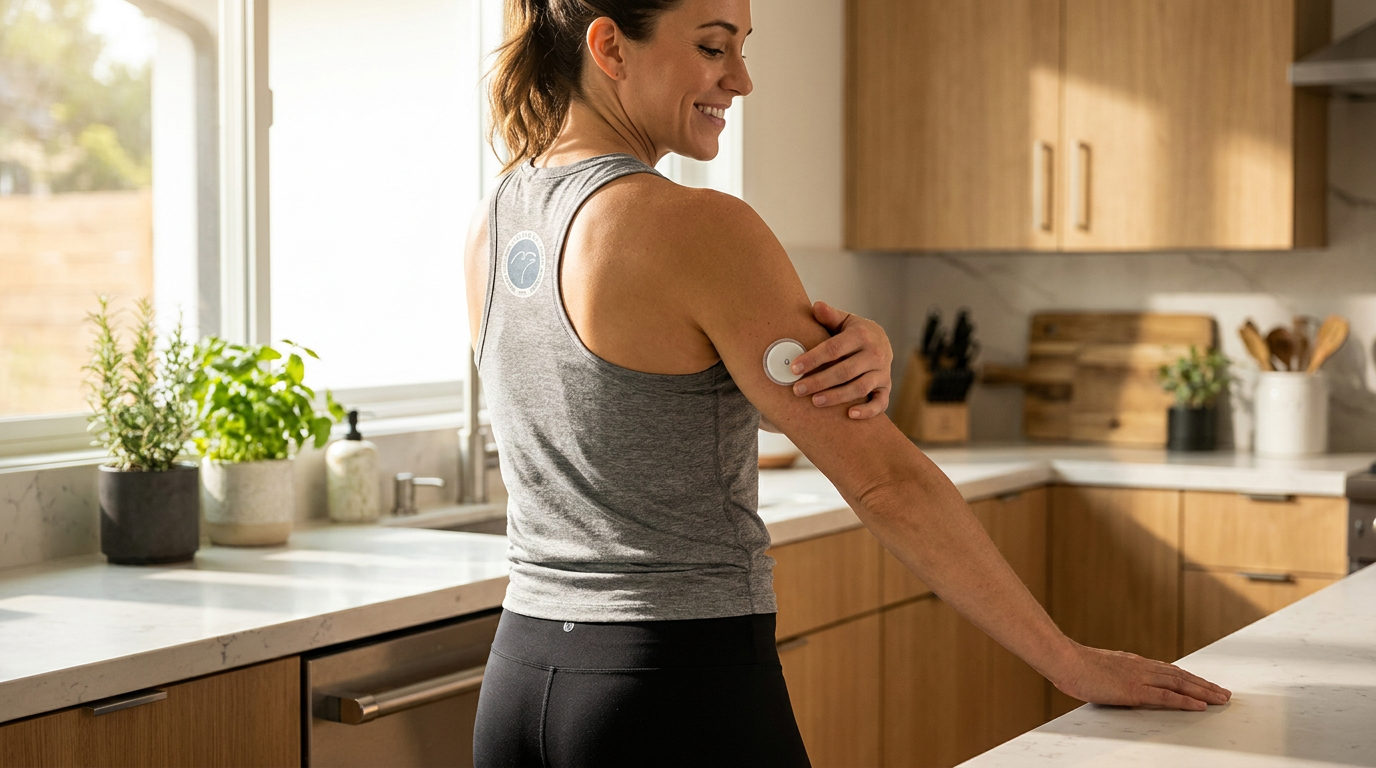
For years, a small white disc adhered to the back of an arm was a quiet indicator that the wearer was managing diabetes. Today, that same device is just as likely to be worn by a marathon runner, a tech executive, or a wellness enthusiast looking to optimize their afternoon energy levels. Continuous glucose monitors (CGMs) have officially crossed the chasm from medical necessity to mainstream biohacking tool. By providing a real-time window into the body's metabolic machinery, these devices are changing how healthy individuals understand their relationship with food, stress, and sleep.[6]
The catalyst for this cultural shift arrived in early 2024, when the U.S. Food and Drug Administration cleared the first over-the-counter (OTC) continuous glucose monitors for adults without insulin-dependent diabetes. Devices like the Dexcom Stelo and Abbott Lingo entered the market not as diagnostic medical equipment, but as wellness biowearables. By removing the prescription barrier, manufacturers opened a vast new market of health-conscious consumers eager to track their internal metrics with the same ease that they track their daily steps.[1][4]
While they share the same underlying hardware as their prescription counterparts, OTC monitors are engineered for a distinctly different psychological experience. Prescription devices like the Dexcom G7 are designed to alert insulin users to dangerous drops in blood sugar, featuring loud alarms that can interrupt sleep. In contrast, wellness-focused models like the Stelo and Lingo deliberately omit these urgent hypoglycemia alerts. Instead, they focus on long-term trend analysis, helping users map their metabolic patterns over a 14- to 15-day sensor lifespan without the anxiety of medical alarms.[1][4]
To understand the appeal of the OTC CGM boom, it is necessary to understand how the technology actually gathers its data. Despite the name, a continuous glucose monitor does not directly measure blood sugar. When a user applies the sensor, a microscopic, flexible filament is inserted just beneath the surface of the skin. This filament sits in the interstitial fluid—the liquid that surrounds the body's cells—and measures the glucose concentration present in that fluid, transmitting the data via Bluetooth to a smartphone app every few minutes.[1]

Because glucose must travel from the bloodstream into the interstitial fluid, there is a physiological delay built into the system. Interstitial readings typically lag behind actual blood glucose levels by five to fifteen minutes. For a diabetic patient dosing insulin, this lag requires careful calculation. But for a non-diabetic user simply trying to see how a bowl of oatmeal impacts their morning energy, this slight delay is irrelevant. The value lies in the shape of the curve, not the absolute precision of the minute-by-minute number.[5][6]
The primary draw for healthy individuals is the pursuit of metabolic stability. When a person consumes carbohydrates, the body breaks them down into glucose, prompting the pancreas to release insulin to shuttle that energy into cells. In a perfectly optimized system, this results in a gentle rise and fall in glucose. However, modern diets often trigger massive spikes followed by steep crashes—a rollercoaster that manifests physically as brain fog, intense sugar cravings, and the dreaded mid-afternoon energy slump.[5]
Perhaps the most profound insight delivered by widespread CGM use is the reality of biochemical individuality. Standard nutritional advice often categorizes foods as universally "low glycemic" or "high glycemic." Yet, CGM data consistently reveals that human metabolisms are highly idiosyncratic. A banana might cause a massive glucose spike in one person while barely registering for another, whereas a bowl of rice might trigger the exact opposite response. This real-time feedback allows users to move beyond generic dietary guidelines and build a personalized nutrition profile.[1][5]

Perhaps the most profound insight delivered by widespread CGM use is the reality of biochemical individuality.
The behavioral impact of this immediate biofeedback is striking. Traditional dietary changes require weeks or months to yield visible results on a scale or in a mirror, making adherence notoriously difficult. A CGM, however, provides instant accountability. In clinical observations, nearly 90 percent of participants reported altering their food choices after seeing their real-time glucose responses on a screen. Watching a post-dinner dessert send a line soaring into the red zone often provides the exact psychological friction needed to skip the late-night snack the following evening.[3][6]
Furthermore, the data is challenging the binary definition of metabolic health. Historically, a person was considered either diabetic, pre-diabetic, or healthy based on a single fasting blood draw at an annual physical. But continuous monitoring has revealed that dysglycemia—abnormal blood sugar fluctuations—is more common than previously understood. Studies tracking healthy adults have found that a significant percentage experience glucose excursions into the pre-diabetic range for hours each day, completely undetected by standard medical screening.[3]
Despite the enthusiasm of the biohacking community, the medical establishment remains cautious. The overwhelming consensus among skeptical scientists is that there is currently a lack of high-quality, long-term evidence proving that CGM use improves hard health outcomes for people without diabetes. While the devices undoubtedly change behavior in the short term, critics argue that there are no randomized controlled trials demonstrating that this behavioral shift translates into a longer lifespan or a reduced risk of chronic disease for an already healthy population.[2]
A central concern among endocrinologists is the risk of pathologizing normal human physiology. A glucose spike after eating a carbohydrate-rich meal is not inherently a sign of metabolic dysfunction; it is exactly what the body is designed to do. By gamifying blood sugar and rewarding users for keeping their glucose lines as flat as possible, some experts worry that wellness apps are encouraging an unnatural and potentially harmful fear of normal metabolic processes.[2][6]

This hyper-fixation on data carries real psychological risks. For some users, the constant stream of biometric feedback can trigger orthorexia—an unhealthy obsession with eating only "pure" or perfectly optimized foods. In the pursuit of a flat glucose curve, users might unnecessarily eliminate nutrient-dense foods like fruits, legumes, and whole grains, replacing them with high-fat alternatives that keep blood sugar stable but may negatively impact long-term cardiovascular health.[2]
Yet, for those who can navigate the data without anxiety, the insights extend far beyond the kitchen. Modern CGM platforms increasingly integrate with other wearable technologies, such as the Oura Ring or the Apple Watch, to paint a holistic picture of human health. Users quickly discover that a poor night of sleep or a highly stressful day at the office can elevate baseline glucose levels just as dramatically as a sugary dessert. This correlation transforms the CGM from a mere diet tracker into a comprehensive lifestyle monitor.[1][6]
The rise of the OTC CGM represents a broader shift in healthcare from reactive treatment to proactive, personalized medicine. Rather than waiting for a diagnosis of metabolic dysfunction in their fifties, consumers are using technology to map their metabolic health in their twenties and thirties. By positioning these devices as wellness tools, manufacturers have successfully reframed glucose monitoring from a chronic disease burden into an aspirational fitness metric.[4][5]
Ultimately, a continuous glucose monitor is simply a mirror reflecting the invisible consequences of daily habits. It cannot force a user to exercise, nor can it prevent them from eating a donut. But by making the invisible visible, the OTC CGM boom is empowering a new generation of health-conscious individuals to take ownership of their biology, one data point at a time.[6]

How we got here
1999
The FDA approves the first professional continuous glucose monitor for retrospective clinical use.
2017
Abbott releases the FreeStyle Libre, eliminating the need for routine fingerstick calibration for diabetic patients.
March 2024
The FDA clears the Dexcom Stelo, the first over-the-counter CGM for adults not using insulin.
June 2024
Abbott receives FDA clearance for the Lingo, officially launching the wellness-focused biowearable market.
Viewpoints in depth
Metabolic Optimization Advocates
Believe real-time biofeedback is the ultimate catalyst for sustainable lifestyle changes.
Proponents of widespread CGM use argue that the traditional healthcare model is far too reactive, waiting until a patient develops pre-diabetes to intervene. By providing real-time, personalized biofeedback, CGMs allow individuals to discover their unique biochemical responses to food. Advocates point to the massive behavioral shifts seen in users—such as taking post-meal walks or adjusting carbohydrate intake—as proof that visible data is the most effective tool for preventing chronic disease.
Medical Skeptics
Warn that the wellness industry is turning normal human physiology into a source of anxiety.
Many endocrinologists and researchers caution that a glucose spike after eating a carbohydrate-rich meal is a healthy, expected biological response, not a disease state. They emphasize that without rigorous, long-term randomized controlled trials proving that flattening the glucose curve extends lifespan in healthy people, these devices risk promoting orthorexia and the unnecessary restriction of nutrient-dense foods like fruits and whole grains.
Consumer Tech Industry
View glucose monitoring as a foundational layer of data for the future of precision medicine.
For technology and wearable companies, the OTC CGM represents the holy grail of the quantified-self movement. Industry leaders view glucose monitoring not as an isolated metric, but as a crucial data stream that, when combined with sleep tracking and heart rate variability, will unlock true personalized health. They argue that as the hardware becomes cheaper and the algorithms more sophisticated, biowearables will become as ubiquitous and essential as the smartphone.
What we don't know
- Whether the short-term behavioral changes prompted by CGM use translate into long-term reductions in chronic disease.
- How the widespread availability of biometric data will impact the prevalence of eating disorders and dietary anxiety.
- If future iterations of OTC biosensors will successfully integrate other real-time metrics, such as ketone or cortisol levels.
Key terms
- Continuous Glucose Monitor (CGM)
- A wearable device that tracks glucose levels 24 hours a day, transmitting the data to a smartphone or receiver.
- Interstitial Fluid
- The fluid that surrounds the body's cells, where CGM sensors measure glucose concentrations rather than directly in the blood.
- Dysglycemia
- An abnormality in blood sugar stability, encompassing both severe spikes (hyperglycemia) and crashes (hypoglycemia).
- Biochemical Individuality
- The concept that different human bodies can have vastly different metabolic responses to the exact same food.
- Orthorexia
- An unhealthy obsession with eating only foods considered pure or perfectly healthy, sometimes triggered by excessive biometric tracking.
Frequently asked
Do I need a prescription to buy a CGM?
As of 2024, no. Devices like the Dexcom Stelo and Abbott Lingo are available over-the-counter for adults who do not use insulin.
Does applying the sensor hurt?
Most users report feeling only a slight pinch or nothing at all. The sensor is applied with a spring-loaded device that inserts a tiny, flexible filament just under the skin.
Can a CGM diagnose diabetes?
No. Over-the-counter CGMs are classified as wellness devices intended for general health awareness, not for diagnosing or treating medical conditions.
Why is my CGM reading different from a fingerstick test?
CGMs measure glucose in the interstitial fluid, which lags behind blood glucose by 5 to 15 minutes. During rapid changes, the two numbers will naturally differ.
Sources
Source coverage
6 outlets
3 viewpoints surfaced






[1]ForbesConsumer Tech Industry
5 Key Insights On Dexcom's Stelo And Abbott's Lingo Glucose Monitors
Read on Forbes →[2]IFLScienceMedical Skeptics
Does Tracking Your Blood Sugar Have Any Benefit If You Don't Have Diabetes?
Read on IFLScience →[3]National Institutes of HealthMedical Skeptics
Changes in continuous glucose monitoring (CGM)-derived glucose metrics of healthy and physically active participants
Read on National Institutes of Health →[4]SequenexMetabolic Optimization Advocates
Case Study: Abbott Lingo – The Wellness Positioning Play
Read on Sequenex →[5]NutriSenseMetabolic Optimization Advocates
Biohacking Your Blood Sugar: A Practical Overview of the Top CGM Devices
Read on NutriSense →[6]Factlen Editorial TeamConsumer Tech Industry
Synthesis by Factlen editorial team
Read on Factlen Editorial Team →

Every angle. Every day.
Get health stories with full source coverage and perspective breakdowns delivered to your inbox.