
US and Iran Reach Tentative Deal to End War and Reopen Strait of Hormuz
The United States and Iran have agreed to a 60-day ceasefire and the reopening of the Strait of Hormuz, though Israel's ongoing military operations in Lebanon threaten to complicate the fragile pact.
By Factlen Editorial Team
- US and Allied Governments
- Views the deal as a necessary tactical pause to stabilize global energy markets and establish verifiable constraints on Iran's nuclear program.
- Iranian Leadership
- Frames the agreement as a victory that forced the US to lift its blockade, prioritizing immediate sanctions relief and the unfreezing of billions in assets.
- Israeli Security Establishment
- Rejects the premise that a US-Iran bilateral deal dictates Israel's security imperatives, insisting on the military dismantling of Hezbollah in Lebanon.
- Global Markets & Analysts
- Cautiously optimistic about the resumption of oil flows but highly skeptical that the underlying geopolitical fractures have been resolved.
What's not represented
- · Lebanese civilians displaced by the conflict
- · Commercial shipping operators and maritime insurers
Why this matters
This agreement pauses a devastating multi-front conflict that has choked global energy supplies and driven up inflation. However, the exclusion of Israel's military objectives in Lebanon leaves the region highly vulnerable to an immediate re-escalation.
Key points
- The US and Iran have agreed to a 60-day ceasefire, mediated by Pakistan and Qatar.
- The US will lift its naval blockade in exchange for Iran reopening the Strait of Hormuz.
- Negotiators now have 60 days to reach a final deal on Iran's nuclear program and sanctions relief.
- Israel has explicitly rejected claims that the ceasefire requires it to halt operations in Lebanon.
After more than a hundred days of devastating conflict, the United States and Iran have reached a tentative agreement to halt hostilities. The memorandum of understanding (MoU), mediated primarily by Pakistan and Qatar, aims to unwind a war that has paralyzed global shipping and reshaped Middle Eastern geopolitics.[1][3][4]
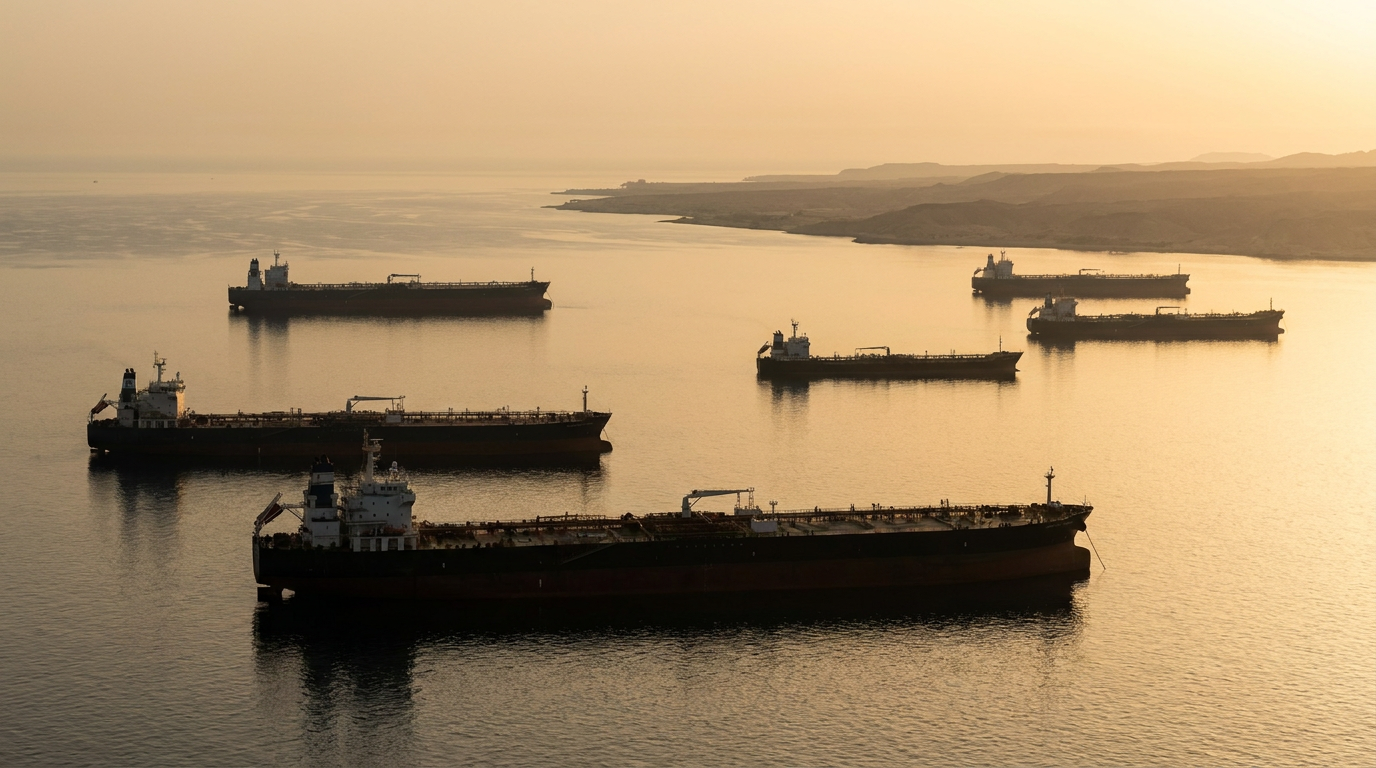
At the heart of the interim deal is a straightforward exchange: the United States will lift its naval blockade on Iranian ports, and in return, Tehran will reopen the Strait of Hormuz to international shipping. US President Donald Trump celebrated the breakthrough on social media, declaring an end to the blockade and urging commercial ships to "start your engines."[3][5]
The immediate economic impact was palpable. Brent crude oil, which had surged well past $100 a barrel during the height of the conflict, plummeted by nearly 5% to around $83 following the announcement. Global stock markets rallied on the prospect of restored energy flows and normalized supply chains.[2][5]
However, diplomats caution that this is not a final peace treaty. The MoU establishes a 60-day ceasefire window designed to freeze the conflict while negotiators tackle the most intractable issues: Iran's nuclear program and the labyrinth of US economic sanctions.[1][5]

The United States and its European allies are demanding "clear, verifiable steps" that Iran will permanently dismantle any capacity to produce a nuclear weapon. Iran, which maintains its nuclear program is peaceful, has historically resisted external control over its enriched uranium stockpiles, some of which are buried deep underground and were targeted by US strikes earlier in the war.[1][5]
For Tehran, the primary objective of the 60-day window is economic survival. Iranian officials expect the negotiations to yield a full lifting of US primary and secondary sanctions. More immediately, Iran is demanding access to roughly $24 billion in frozen overseas assets, with the Islamic Revolutionary Guard Corps claiming half of those funds will be unlocked before final talks even begin.[2][8]
US officials have pushed back on that timeline, insisting that Iran will not receive sanctions relief or access to frozen capital until it demonstrates strict compliance with the initial terms of the MoU. This sequencing dispute threatens to derail the fragile trust established by the mediators.[2]

This sequencing dispute threatens to derail the fragile trust established by the mediators.
The most volatile threat to the agreement, however, lies outside the direct US-Iran bilateral relationship. Iranian and Pakistani officials have publicly stated that the ceasefire applies to "all fronts," explicitly including Lebanon, where Israeli forces have been waging a fierce ground and air campaign against the Iranian-backed militant group Hezbollah.[3][4]
Israel has forcefully rejected this framing. Israeli Defense Minister Israel Katz and National Security Minister Itamar Ben-Gvir both declared that Israel is not a party to the US-Iran agreement and is not bound by its terms. Katz stated that Israeli forces will remain in southern Lebanon "indefinitely" to dismantle terrorist infrastructure.[2][6][7]
Underscoring its independence from the Washington-Tehran pact, Israel launched deadly drone and air strikes in Beirut's southern suburbs just hours before the MoU was finalized. The strikes targeted Hezbollah positions but signaled a clear willingness to risk the broader regional ceasefire to achieve local security objectives.[5][6]

Hezbollah officials have cautiously welcomed the US-Iran deal, stating they have paused operations since the announcement. However, the group warned that its continued compliance is entirely dependent on Israel halting its attacks and withdrawing from Lebanese territory—a condition Israel has explicitly ruled out.[1]
Pakistan, which has played a central role in brokering the deal, now faces the daunting task of keeping the framework intact while the Lebanon crisis burns. Pakistani Prime Minister Shehbaz Sharif is scheduled to oversee the formal signing ceremony in Geneva, Switzerland, on Friday, but diplomatic maneuvering will likely continue up to the last minute.[3][4]
The international community has largely rallied behind the agreement. A joint statement from G7 leaders, including the UK, France, and Germany, welcomed the "diplomatic breakthrough" as a vital opportunity to restore regional stability. United Nations Secretary-General Antonio Guterres called it a "critical step" toward a permanent settlement.[4]
Despite the political declarations, the physical reality in the Strait of Hormuz remains precarious. While the US has authorized the reopening, shipping companies and maritime insurers remain deeply hesitant to send vessels into a waterway that has been heavily mined and contested for months.[1][8]

Experts note that even with political clearance, it will take time to sweep the strait for explosives and establish a verifiable security framework that gives commercial operators the confidence to resume normal transit. Until then, the promised economic relief for global energy markets may be delayed.[1][8]
The next 60 days will test whether a tactical pause can be translated into a durable strategic settlement. If negotiators fail to bridge the gap on nuclear enrichment and sanctions relief, or if the Israel-Hezbollah conflict triggers a broader escalation, the region could quickly plunge back into all-out war.[8]
For now, the Middle East exists in a state of suspended animation. The guns between Washington and Tehran have temporarily fallen silent, but the underlying structural conflicts that ignited the war remain entirely unresolved.[8]
How we got here
Feb 28, 2026
The United States and Israel launch a coordinated military campaign against Iran.
April 8, 2026
An initial two-week ceasefire is brokered by Pakistan but is repeatedly violated by both sides.
June 14, 2026
The US and Iran finalize a Memorandum of Understanding to end hostilities and reopen maritime trade.
June 15, 2026
Israeli officials publicly reject the ceasefire's application to their military operations in Lebanon.
June 19, 2026
A formal signing ceremony for the interim agreement is scheduled to take place in Geneva.
Viewpoints in depth
US and Allied Governments
Focuses on maritime security, nuclear containment, and economic stabilization.
For Washington and its European allies, the primary goal of the interim deal is to stop the bleeding in global energy markets while re-establishing leverage over Tehran's nuclear ambitions. The US views the 60-day window not as a concession, but as a necessary tactical pause to force Iran into verifiable commitments regarding its enriched uranium stockpiles. Allied leaders emphasize that any permanent lifting of sanctions will be strictly conditional on Iran proving it cannot and will not develop a nuclear weapon.
Iranian Leadership
Focuses on sanctions relief, unfreezing assets, and linking regional fronts.
Tehran is framing the memorandum of understanding as a strategic victory that forced the United States to abandon its naval blockade. For the Iranian government, the immediate priority is economic survival. They are demanding the rapid unfreezing of $24 billion in overseas assets and the dismantling of US secondary sanctions. Furthermore, Iran insists that the ceasefire is comprehensive, attempting to use its leverage over the Strait of Hormuz to shield its regional proxy, Hezbollah, from further Israeli attacks.
Israeli Security Establishment
Focuses on dismantling Hezbollah and rejecting external constraints on military operations.
Israel views the US-Iran agreement with deep skepticism, seeing it as an arrangement that prematurely relieves pressure on Tehran without addressing the immediate security threats on Israel's borders. Israeli defense officials are adamant that a bilateral deal between Washington and Tehran cannot dictate Israel's military imperatives. Consequently, Israel has drawn a hard line, refusing to withdraw from southern Lebanon or halt its campaign to degrade Hezbollah's military infrastructure, regardless of the diplomatic fallout.
What we don't know
- Whether the United States will agree to unfreeze any of Iran's $24 billion in assets before a final nuclear agreement is signed.
- How Hezbollah will respond if Israel continues its military campaign in Lebanon despite the broader regional ceasefire.
- How quickly commercial shipping companies will feel safe enough to resume normal transit through the Strait of Hormuz.
Key terms
- Strait of Hormuz
- A narrow, strategically vital waterway between the Persian Gulf and the Gulf of Oman through which roughly 20% of the world's crude oil passes.
- Memorandum of Understanding (MoU)
- A formal, written agreement between two or more parties that establishes a framework for cooperation but is often not a legally binding final treaty.
- Primary and Secondary Sanctions
- Primary sanctions prohibit US entities from doing business with a target country, while secondary sanctions penalize foreign entities that do business with that country.
- Hezbollah
- A heavily armed, Iranian-backed Shia militant group and political party based in Lebanon, currently engaged in a major conflict with Israel.
Frequently asked
What does the US-Iran agreement actually do right now?
It establishes an immediate ceasefire between US and Iranian forces, lifts the US naval blockade on Iranian ports, and requires Iran to reopen the Strait of Hormuz to commercial shipping.
Is the war completely over?
No. The current agreement is a memorandum of understanding that creates a 60-day window to negotiate a permanent settlement regarding Iran's nuclear program and US sanctions.
How does this affect Israel and Lebanon?
This is highly contested. Iran and mediators claim the ceasefire covers Lebanon, but Israel insists it is not bound by the deal and will continue its military operations against Hezbollah.
Will oil prices go back to normal?
Prices have already dropped significantly, but shipping companies remain hesitant to transit the Strait of Hormuz until the waters are cleared of mines and a verifiable security framework is in place.
Sources
Source coverage
8 outlets
4 viewpoints surfaced








[1]The GuardianUS and Allied Governments
US-Iran peace deal hinges on shipping, sanctions relief and deferred nuclear talks
Read on The Guardian →[2]CBS NewsIsraeli Security Establishment
U.S.-Iran deal updates: Israel says no Lebanon withdrawal, Iran says funds expected before final talks
Read on CBS News →[3]PBS NewsHourUS and Allied Governments
US, Iran reach agreement to end war, open Strait of Hormuz
Read on PBS NewsHour →[4]Al JazeeraIranian Leadership
World leaders welcome US-Iran peace deal
Read on Al Jazeera →[5]The Washington PostUS and Allied Governments
U.S., Iran reach limited deal to end fighting, open Strait of Hormuz
Read on The Washington Post →[6]The Jerusalem PostIsraeli Security Establishment
Israel will not withdraw from southern Lebanon as part of US-Iran deal
Read on The Jerusalem Post →[7]BNN BloombergIsraeli Security Establishment
Iran and U.S. reach a tentative deal to end war as Israel rules out withdrawing from seized land
Read on BNN Bloomberg →[8]Atlantic CouncilGlobal Markets & Analysts
Experts react: The US and Iran just announced an interim peace deal. Here’s what we know so far.
Read on Atlantic Council →
More in news politics
See all 5 stories →
Every angle. Every day.
Get news politics stories with full source coverage and perspective breakdowns delivered to your inbox.