
US and Iran Reach Interim Deal to End 15-Week War and Reopen Strait of Hormuz
President Trump announced a 60-day ceasefire and memorandum of understanding with Tehran, lifting the U.S. naval blockade in exchange for the toll-free reopening of the critical global oil chokepoint.
By Factlen Editorial Team
- U.S. Administration
- Views the deal as a strategic victory that secures global shipping lanes and halts Iran's nuclear ambitions.
- Iranian Leadership
- Frames the agreement as a successful effort to break the U.S. naval blockade and secure economic relief.
- Israeli Government
- Rejects the ceasefire's application to Lebanon and insists on maintaining military freedom of action.
- Global Markets & Allies
- Relieved by the de-escalation and the reopening of a critical chokepoint for the global economy.
What's not represented
- · Lebanese Civilians
- · Commercial Shipping Companies
- · Iranian Hardline Opposition
Why this matters
The 15-week conflict effectively closed the Strait of Hormuz, choking off 20 percent of the world's oil supply and sending global energy prices soaring. This 60-day ceasefire provides immediate relief to the global economy, though the hardest negotiations over Iran's nuclear program and Israel's ongoing operations in Lebanon remain unresolved.
Key points
- The U.S. and Iran agreed to a 60-day ceasefire to end their 15-week military conflict.
- The deal mandates the immediate, toll-free reopening of the Strait of Hormuz.
- The U.S. will lift its naval blockade on Iranian ports as part of the interim agreement.
- Technical talks over Iran's nuclear program and sanctions relief will occur during the 60-day window.
- Israel rejected the Lebanon ceasefire provision, vowing to continue fighting Hezbollah.
- Global oil prices dropped more than 5 percent following the announcement.
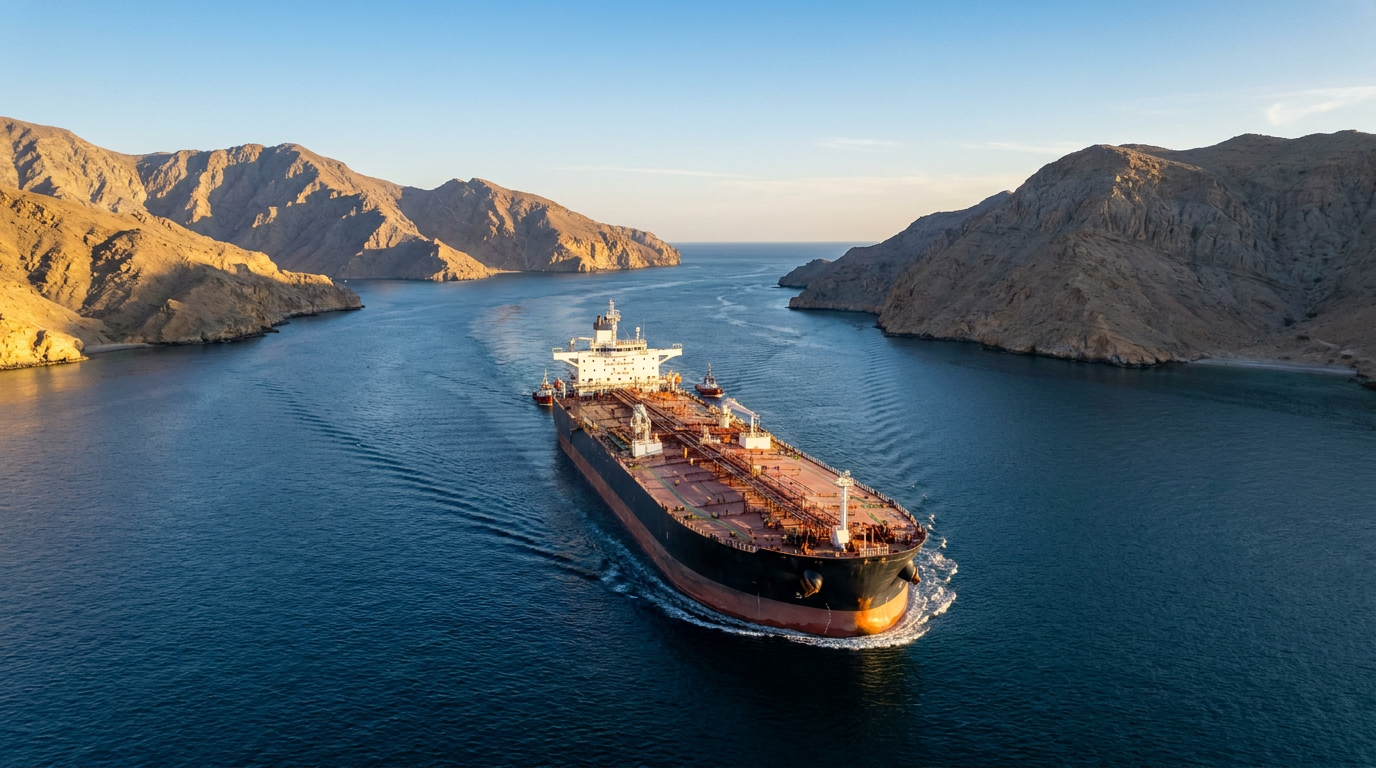
The United States and Iran have agreed to a tentative memorandum of understanding to end their 15-week military conflict, establishing a 60-day ceasefire and paving the way for the immediate reopening of the Strait of Hormuz. The breakthrough, mediated by Pakistan and Qatar, halts a war that has killed thousands and severely disrupted global energy markets since late February.[3][4]
President Donald Trump announced the agreement on social media, declaring the deal "complete" and authorizing the immediate removal of the U.S. naval blockade on Iranian ports. "Ships of the World, start your engines. Let the oil flow!" Trump wrote, framing the accord as a definitive victory that secures toll-free passage through the critical maritime chokepoint.[1][5]
The framework, which was signed electronically by Trump, Vice President JD Vance, and Iranian Parliament Speaker Mohammad Bagher Ghalibaf, is scheduled for a formal signing ceremony in Geneva, Switzerland, on Friday. Under the terms of the interim agreement, Iran will clear naval mines from the strait, allowing commercial vessels to resume transit without facing tolls or military harassment.[2][3]

The economic relief was immediate. Brent crude, the international oil benchmark, fell more than 5 percent to $82.84 a barrel following the announcement, while global stock markets rallied. Prior to the conflict, roughly 20 percent of the world's seaborne oil and liquefied natural gas passed through the 21-mile-wide strait daily, and its effective closure had sent shockwaves through supply chains and inflation metrics worldwide.[4]
Despite the optimism from Washington and Islamabad, the memorandum of understanding is an interim step rather than a final peace treaty. The document establishes a 60-day window for technical negotiations to address the most intractable issues, chief among them Iran's nuclear program. Trump has insisted the agreement will permanently prevent Tehran from acquiring a nuclear weapon, suggesting the U.S. will oversee the extraction and destruction of Iran's highly enriched uranium.[1][6][7]

Despite the optimism from Washington and Islamabad, the memorandum of understanding is an interim step rather than a final peace treaty.
However, Iranian officials and state media have presented a vastly different narrative, portraying the deal as a capitulation by the United States. Iranian state television broadcast banners claiming the U.S. was "forced to sign an agreement to end the war." Tehran's primary focus in the initial phase is securing immediate economic benefits, including the lifting of the naval blockade, access to frozen funds, and sanctions relief, before entering complex nuclear talks.[3][8]
The agreement has already sparked domestic backlash within Iran. In the northeastern city of Mashhad, hardline protesters gathered outside a foreign ministry office, chanting slogans against Foreign Minister Abbas Araghchi. The demonstrators argued that by agreeing to reopen the Strait of Hormuz, Iran surrendered its most potent leverage over the West without securing permanent guarantees on sanctions relief.[1][8]
Perhaps the most volatile complication to the ceasefire lies outside of the U.S.-Iran bilateral relationship. While the memorandum reportedly includes a provision to end military operations on all fronts, including in Lebanon, the Israeli government has explicitly rejected those terms. Israel, which joined the U.S. in launching strikes in late February, was not a party to the negotiations.[2][3]

Israeli Prime Minister Benjamin Netanyahu and Defense Minister Israel Katz have stated that the Israel Defense Forces will not withdraw from southern Lebanon and do not consider themselves bound by the U.S.-Iran ceasefire. Israel intends to maintain its military campaign against Hezbollah, a stance that could easily scuttle the broader regional de-escalation if Iran decides that Israeli strikes violate the spirit of the Geneva agreement.[1][3]
For now, the international community is breathing a sigh of relief. Leaders from the G7 and the European Commission welcomed the diplomatic breakthrough, urging swift implementation to restore freedom of navigation. Yet foreign policy analysts warn that the "delta" between the interim memorandum and a final, binding treaty remains vast. If the 60-day technical talks collapse over nuclear inspections or Israeli military actions, the Strait of Hormuz could quickly become a war zone once again.[4][7]
How we got here
Feb 28, 2026
The U.S. and Israel launch initial military strikes against Iran, sparking a 15-week conflict.
March 2026
Iran effectively closes the Strait of Hormuz, sending global energy prices soaring.
June 14, 2026
Following mediation by Pakistan and Qatar, the U.S. and Iran agree to a memorandum of understanding.
June 19, 2026
The formal signing ceremony for the interim agreement is scheduled to take place in Geneva.
Viewpoints in depth
U.S. Administration's View
The deal is a strategic victory that secures global energy markets and halts Iran's nuclear ambitions.
President Trump and his administration are framing the memorandum as a definitive win that achieves Washington's primary objectives without requiring a prolonged ground war. By forcing the toll-free reopening of the Strait of Hormuz, the U.S. claims to have neutralized Iran's ability to hold the global economy hostage. Furthermore, the administration asserts that the upcoming 60-day technical talks will result in the dismantling of Iran's highly enriched uranium stockpiles, fulfilling a long-standing pledge to prevent Tehran from acquiring a nuclear weapon.
Iranian Leadership's View
The agreement is a tactical success that breaks the U.S. naval blockade and provides economic relief.
Tehran is presenting the ceasefire to its domestic audience as a capitulation by the West. Iranian state media emphasizes that the U.S. was forced to end its naval blockade of Iranian ports and that the agreement paves the way for the release of billions in frozen assets and the lifting of crippling sanctions. By phasing the agreement, Iranian negotiators hope to secure immediate economic benefits and rebuild their military capabilities before making any binding concessions regarding their nuclear infrastructure.
Israeli Government's View
The bilateral deal ignores Israel's security needs and allows Iranian proxies to survive.
Israel views the U.S.-Iran memorandum with deep skepticism, particularly because it was excluded from the negotiations. Prime Minister Benjamin Netanyahu's government is adamant that a ceasefire with Iran does not obligate Israel to halt its offensive against Hezbollah in Lebanon. Israeli defense officials worry that the 60-day pause will simply allow Iran and its proxy networks to rearm and regroup, and they have explicitly reserved the right to continue military operations to secure Israel's northern border.
What we don't know
- Whether Iran will actually agree to surrender or destroy its highly enriched uranium during the 60-day technical talks.
- How the U.S. and Iran will respond if Israel escalates its military campaign in Lebanon during the ceasefire.
- The exact mechanisms for verifying that the Strait of Hormuz is free of naval mines and safe for commercial transit.
Key terms
- Strait of Hormuz
- A narrow waterway between the Persian Gulf and the Gulf of Oman through which roughly 20 percent of the world's oil supply passes.
- Memorandum of Understanding (MoU)
- A formal, written agreement between two or more parties that establishes a framework for cooperation, often serving as a stepping stone to a binding treaty.
- Highly Enriched Uranium (HEU)
- Uranium that has been processed to contain a high concentration of the U-235 isotope, making it capable of being used in nuclear weapons.
- Naval Blockade
- The use of naval forces to cut off a specific area, such as a port or strait, to prevent the entry or exit of commercial and military vessels.
Frequently asked
Is the war between the U.S. and Iran officially over?
Not permanently. The current agreement is a 60-day interim ceasefire designed to halt hostilities while the two nations negotiate a final, binding peace treaty.
Will gas prices go down?
Global oil prices dropped more than 5 percent immediately after the deal was announced. If the Strait of Hormuz reopens smoothly, energy costs are expected to stabilize.
Did Iran agree to give up its nuclear weapons program?
President Trump claims the deal will prevent Iran from obtaining a nuclear weapon, but the specifics of how Iran's highly enriched uranium will be handled are still being negotiated.
How does this affect Israel?
Israel was not part of the negotiations and has stated it will not abide by the ceasefire's provisions regarding Lebanon, vowing to continue its military operations against Hezbollah.
Sources
Source coverage
8 outlets
4 viewpoints surfaced








[1]CBS NewsU.S. Administration
Trump says U.S. deal with Iran "is now complete," authorizes removal of Navy blockade
Read on CBS News →[2]The GuardianGlobal Markets & Allies
Trump says strait of Hormuz will be 'completely open' on Friday
Read on The Guardian →[3]PBS NewsIsraeli Government
Deal is reached to end Iran war and Trump orders stop to U.S. naval blockade
Read on PBS News →[4]Financial TimesGlobal Markets & Allies
US and Iran reach deal to reopen Strait of Hormuz
Read on Financial Times →[5]TimeU.S. Administration
US and Iran Reach Deal to End War, Trump Says
Read on Time →[6]AxiosGlobal Markets & Allies
What's in the Iran deal Trump says he's ready to sign
Read on Axios →[7]Atlantic CouncilGlobal Markets & Allies
What to know about the US-Iran memorandum of understanding
Read on Atlantic Council →[8]Institute for the Study of WarIranian Leadership
Iran Update Special Report, June 13, 2026
Read on Institute for the Study of War →
Every angle. Every day.
Get news politics stories with full source coverage and perspective breakdowns delivered to your inbox.