
Beyond the Nutrition Label: How the 'Food Matrix' Changes How Your Body Absorbs Calories
Emerging nutritional science reveals that the physical structure of food—known as the food matrix—dictates how our bodies absorb calories and nutrients, explaining why whole foods behave differently than processed equivalents.
By Factlen Editorial Team
- Whole-Food Advocates
- Argue that the intact physical structure of food is just as important as its chemical makeup for sustained health and digestion.
- Food Technologists
- Study how mechanical and thermal processing can be used to intentionally alter the food matrix to either increase or decrease nutrient absorption.
- Nutritional Reductionists
- Focus primarily on the isolated macronutrient and micronutrient profiles of foods, treating the body as a simple calorie-in, calorie-out engine.
What's not represented
- · Gut microbiome researchers
Why this matters
Understanding the food matrix empowers you to look beyond simple calorie counting. It explains why eating whole foods provides more sustained energy and better metabolic health than consuming the exact same nutrients in isolated or highly processed forms.
Key points
- The physical structure of food dictates how your body absorbs its calories and nutrients.
- Whole nuts deliver 20% to 30% fewer calories than their labels suggest because their cell walls survive digestion.
- The fibrous matrix in whole fruit slows sugar absorption, preventing the insulin spikes caused by fruit juice.
- Cooking can beneficially break down the matrix of certain vegetables, making nutrients like lycopene easier to absorb.
For decades, nutrition has been treated like a simple math equation. The prevailing logic suggested that if you consume a certain number of grams of carbohydrates, fats, and proteins, your body processes them identically regardless of their source. Under this model, a carbohydrate is a carbohydrate, and a calorie is a calorie, whether it comes from a raw vegetable or a powdered supplement. [1][2][1][2]
But a growing consensus in nutritional science is shifting focus away from this reductionist view. Researchers are increasingly pointing to the "food matrix"—the complex physical and chemical structure in which nutrients are bound together within a food item. [6][6]
The food matrix explains why the human body is not a simple combustion engine. When you eat a whole food, you are not just ingesting isolated chemicals; you are consuming a microscopic cellular architecture that dictates exactly how, when, and where those nutrients are released into your digestive tract. [1][4][1][4]
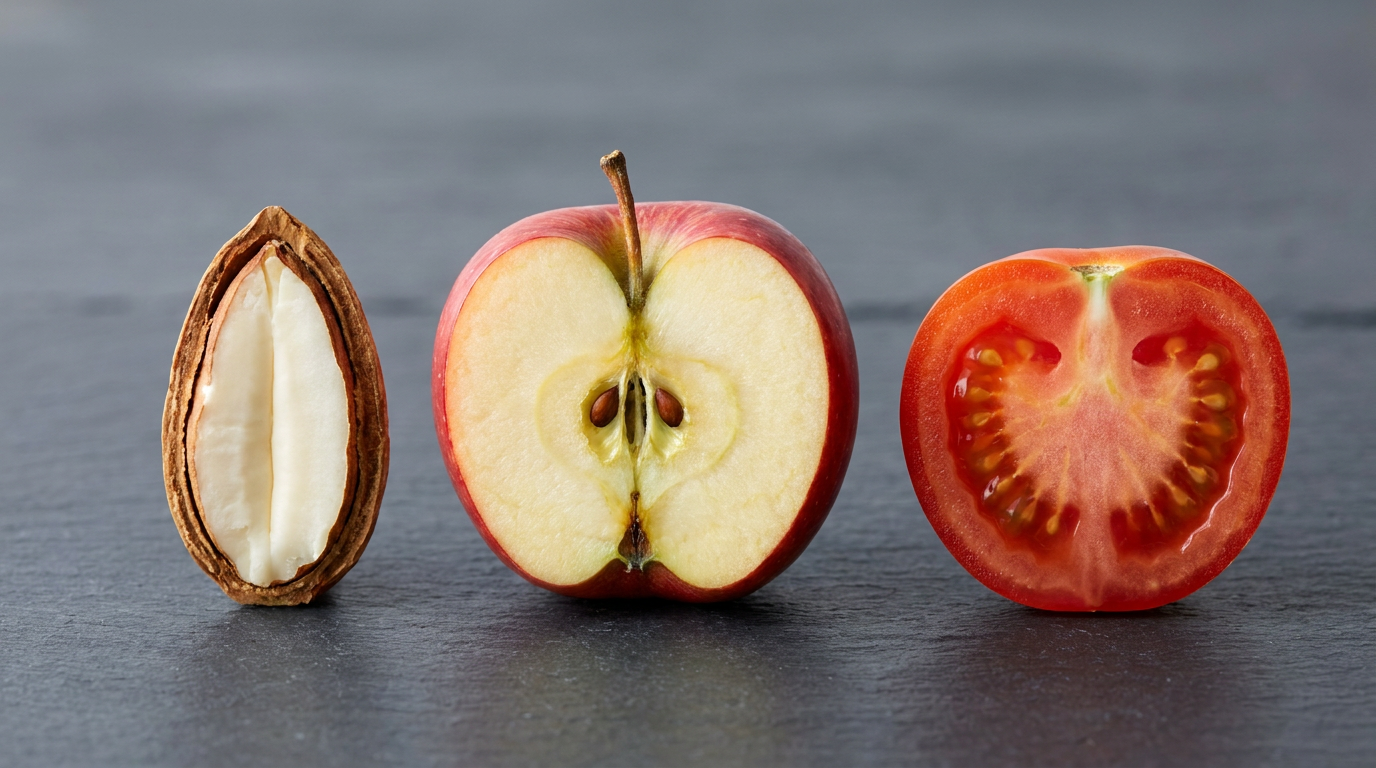
Consider the almond. According to standard nutritional labels, a handful of almonds contains about 160 calories. However, clinical studies have demonstrated that the human body actually absorbs 20% to 30% fewer calories from whole almonds than the label suggests. [4][5][4][5]
The reason lies entirely in the physical matrix. Almonds are composed of rigid plant cell walls made of dietary fiber. Human digestive enzymes cannot easily break down these walls. As a result, a significant portion of the fat inside the almond cells remains trapped and passes completely through the digestive system unabsorbed. [4][4]

But if you take those exact same almonds and grind them into ultra-smooth almond butter, the mechanical processing destroys the cellular matrix. Suddenly, nearly 100% of the fat and calories become bioavailable. The ingredients are identical, but the structural change dramatically alters the metabolic outcome. [1][5][1][5]
This structural phenomenon extends far beyond nuts. It is the primary reason why eating whole fruit is metabolically distinct from drinking fruit juice, even if the total sugar content is exactly the same. [3][3]
It is the primary reason why eating whole fruit is metabolically distinct from drinking fruit juice, even if the total sugar content is exactly the same.
In a whole apple, fructose is encased in a robust web of pectin and cellulose. As the stomach and intestines work to break down this fibrous matrix, the sugar is released in a slow, steady trickle. This gradual release provides sustained energy and prevents the pancreas from having to pump out massive amounts of insulin. [3][6][3][6]
When that apple is pulverized and strained into juice, the matrix is obliterated. The sugar is entirely liberated and hits the bloodstream almost instantly, triggering a rapid insulin spike followed by a reactive energy crash. The body treats the juice much like it would a synthetic soda, despite its natural origins. [3][3]

The food matrix also governs the synergy between different nutrients. Certain vitamins and minerals are practically useless to the human body unless they are consumed alongside specific structural partners that facilitate their absorption. [2][2]
Fat-soluble vitamins—specifically A, D, E, and K—require dietary lipids to cross the intestinal wall and enter the bloodstream. Eating a bowl of raw spinach provides plenty of Vitamin K, but without a fat source like olive oil or avocado to act as a transport mechanism, much of it goes unabsorbed. [2][5][2][5]
Interestingly, processing and cooking do not always degrade the food matrix in a negative way; sometimes, they unlock it. The classic example is the tomato, which is rich in lycopene, a powerful antioxidant linked to cardiovascular health. [6][6]
In a raw tomato, lycopene is tightly bound within the plant's cellular structure, making it difficult for the human digestive tract to extract. However, applying heat breaks down these cell walls. When tomatoes are cooked—especially in the presence of olive oil—the bioavailability of lycopene increases by up to 300%. [1][6][1][6]

This nuanced understanding of food structure is beginning to reshape dietary guidelines. Public health experts are increasingly urging consumers to look beyond the standard nutrition facts panel, which strips away the context of how a food is built, and focus instead on the physical integrity of their meals. [3][3]
Ultimately, the science of the food matrix empowers individuals to make smarter dietary choices without obsessing over microscopic nutrient counting. By prioritizing foods with their natural cellular architecture intact, we allow our digestive systems to work exactly as they evolved to—extracting what we need, at the right pace, and leaving the rest behind. [1][3][1][3]
Viewpoints in depth
Nutritional Reductionists
Focus primarily on the isolated macronutrient and micronutrient profiles of foods.
For decades, the dominant paradigm in nutritional science and food labeling has been reductionist. This view treats the human body as a simple accounting system: a gram of sugar is a gram of sugar, and a calorie is a calorie. By breaking foods down into their constituent parts—carbohydrates, fats, proteins, and isolated vitamins—this perspective allowed for the creation of standardized nutrition labels and the fortification of processed foods with synthetic vitamins.
Whole-Food Advocates
Argue that the intact physical structure of food is just as important as its chemical makeup.
Public health experts and whole-food advocates argue that the reductionist model fails to account for human biology. They point to the food matrix as evidence that the body evolved to process complex, structurally intact foods. From this viewpoint, stripping away the fiber web of an apple to make juice, or pulverizing a grain into ultra-fine flour, fundamentally changes the metabolic impact of the food, leading to rapid energy spikes and long-term metabolic dysfunction.
Food Technologists
Study how mechanical and thermal processing can be used to intentionally alter the food matrix.
Food scientists and technologists view the matrix as something that can be optimized. Rather than seeing all processing as negative, they study how thermal and mechanical interventions can unlock trapped nutrients. By understanding how cooking tomatoes increases lycopene absorption, or how pairing certain fats with leafy greens enhances vitamin uptake, technologists aim to design food preparation methods that maximize nutritional benefit.
What we don't know
- How the long-term consumption of ultra-processed, matrix-free foods permanently alters the human gut microbiome.
- The exact degree to which individual variations in digestive enzymes affect how much of a food matrix is broken down from person to person.
Key terms
- Food Matrix
- The complex physical and chemical structure of a food, including its cell walls and fiber networks, which dictates how nutrients are digested.
- Bioavailability
- The proportion of a nutrient or calorie that is successfully absorbed, digested, and utilized by the body.
- Reductionism
- An approach to nutrition that focuses solely on isolated components (like vitamin C or protein grams) rather than the whole food.
- Lycopene
- A powerful antioxidant found in red fruits and vegetables, particularly tomatoes, which becomes much more bioavailable when cooked.
Frequently asked
Does blending a smoothie destroy the food matrix?
Blending mechanically breaks down the cell walls, making the sugars and calories more rapidly absorbable than eating the whole fruit, though it retains the fiber that juicing removes.
Is cooking bad for the food matrix?
Not necessarily. While cooking breaks down the matrix, this can actually be beneficial for certain vegetables (like tomatoes and spinach) by making their antioxidants and minerals easier to absorb.
Are vitamin supplements useless without a food matrix?
They aren't useless, but they are often less efficiently absorbed. Fat-soluble vitamins in supplements, for example, should be taken with a meal containing dietary fat to ensure they can be processed.
Sources
Source coverage
6 outlets
3 viewpoints surfaced






[1]Factlen Editorial TeamWhole-Food Advocates
Synthesis by Factlen editorial team
Read on Factlen Editorial Team →[2]National Institutes of HealthFood Technologists
The Food Matrix: Implications in Processing, Nutrition and Health
Read on National Institutes of Health →[3]Harvard T.H. Chan School of Public HealthWhole-Food Advocates
Whole Foods vs. Supplements: The Power of the Matrix
Read on Harvard T.H. Chan School of Public Health →[4]American Journal of Clinical Nutrition
Food structure and metabolic response: The case of the almond
Read on American Journal of Clinical Nutrition →[5]USDA Agricultural Research ServiceFood Technologists
Nutrient bioavailability and physical food structure
Read on USDA Agricultural Research Service →[6]Annual Review of Food Science and TechnologyFood Technologists
Understanding the Food Matrix: Digestion and Bioaccessibility
Read on Annual Review of Food Science and Technology →



Every angle. Every day.
Get health stories with full source coverage and perspective breakdowns delivered to your inbox.