
How Hydrogen Trains Work: The Tech Replacing Diesel on Non-Electrified Rails
Hydrogen-powered passenger trains are entering regular service across North America and Europe, offering a zero-emission alternative for regional rail lines where overhead wires are too expensive to install.
By Factlen Editorial Team
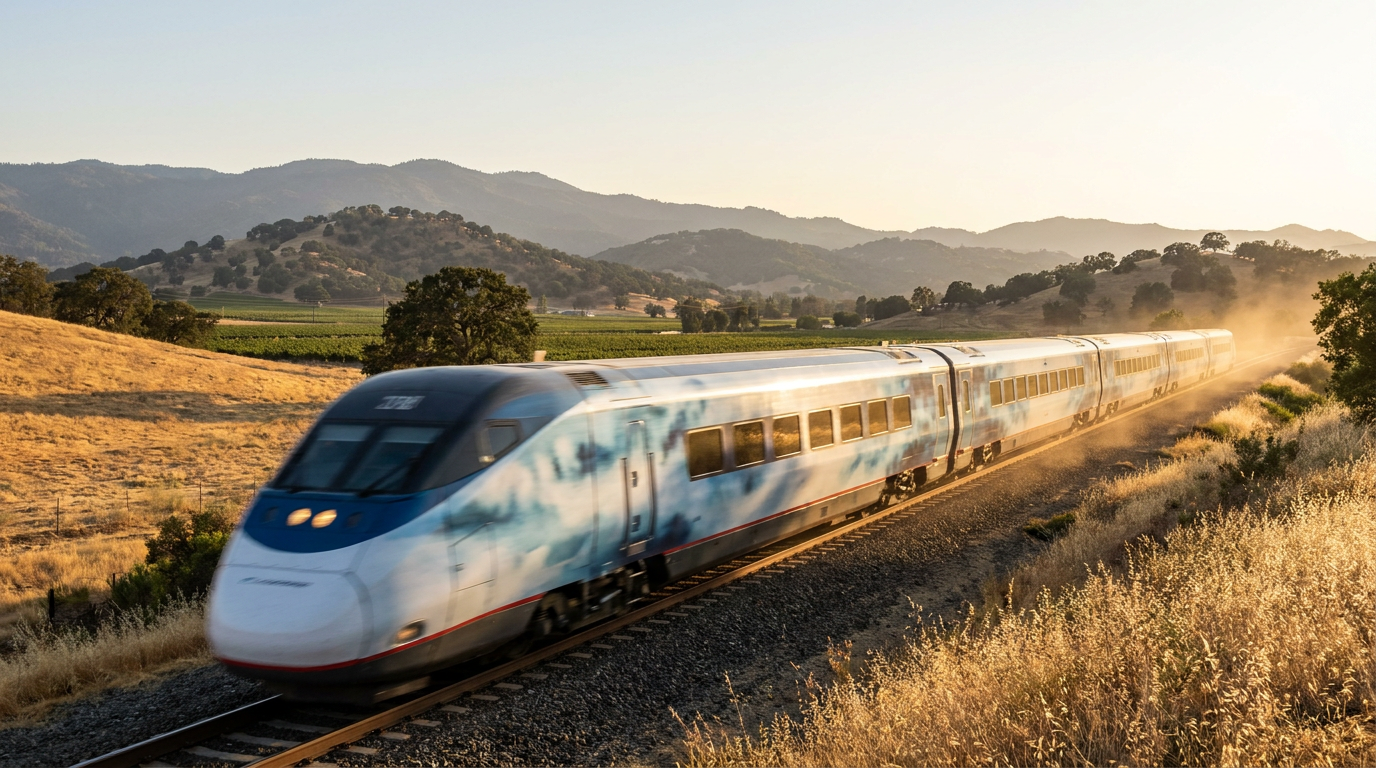
- Hydrail Pioneers
- Manufacturers and transit agencies pushing hydrogen as the ultimate zero-emission solution for regional rail.
- Pragmatic Analysts
- Industry experts who view hydrogen as a specialized tool rather than a universal replacement for electrification.
- Hybrid Tech Developers
- Innovators focusing on multi-mode trains that blend hydrogen, batteries, and traditional electric power.
What's not represented
- · Fossil fuel suppliers facing reduced diesel demand
- · Local communities living near proposed hydrogen production facilities
Why this matters
Rail is already one of the greenest ways to travel, but thousands of miles of regional tracks still rely on polluting diesel locomotives because overhead wires are too expensive to install. Hydrogen trains bridge this gap, bringing quiet, zero-emission transit to communities that previously had no clean alternative.
Key points
- Hydrogen-powered passenger trains, known as hydrail, are entering regular service to replace diesel locomotives on non-electrified regional routes.
- Instead of combustion, these trains use fuel cells to mix hydrogen and oxygen, generating electricity with water vapor as the only byproduct.
- The U.S. recently launched its first hydrogen passenger train, the ZEMU, in Southern California, following years of successful deployments in Europe.
- Hydrail operates as a hybrid system, using the fuel cell for steady power while relying on lithium-ion batteries for peak acceleration.
- The ultimate environmental impact depends on transitioning from 'grey' hydrogen made from natural gas to 'green' hydrogen produced via renewable energy.
For decades, the rail industry has been the poster child for sustainable transportation. Yet a surprisingly large share of regional rail services across North America and Europe still runs on diesel. These are lines that were never electrified because installing continuous overhead wires across sprawling, low-density routes is prohibitively expensive.[9]
That is the exact gap hydrogen-powered trains—often called "hydrail"—are designed to close. By generating their own electricity onboard, these trains offer the smooth, quiet performance of an electric locomotive without the need for billions of dollars in catenary wire infrastructure.[8][9]
In late 2025, this technology crossed a major threshold in the United States. The San Bernardino County Transportation Authority (SBCTA) officially launched the Zero-Emission Multiple Unit (ZEMU) into regular passenger service. Built by Swiss manufacturer Stadler, the ZEMU is North America’s first self-powered, zero-emission passenger train fully compliant with Federal Railroad Administration standards.[2][6]
The ZEMU, wrapped in a distinctive blue and white water-vapor design, now operates on the nine-mile Arrow Corridor connecting San Bernardino and Redlands, California. It represents a blueprint for transit agencies looking to eradicate diesel from their commuter networks.[1][6]

While the U.S. is just boarding the hydrail movement, Europe has been laying the track for years. In 2018, French manufacturer Alstom debuted the Coradia iLint in Germany, marking the world's first commercial deployment of a hydrogen fuel cell passenger train.[4]
Since then, the Coradia iLint has expanded its footprint, securing orders in France and Italy, and completing successful trials in Austria, Sweden, and Poland. In the summer of 2023, a pilot project in Quebec, Canada, carried over 10,000 passengers, saving 8,400 liters of diesel and averting 22 tons of carbon dioxide emissions over just four months.[3][7]
But how does a hydrogen train actually work? Despite the name, most hydrail vehicles do not burn hydrogen in a traditional combustion engine. Instead, they are fundamentally electric trains equipped with a mobile power plant.[5][9]
The process begins on the roof of the train, where high-pressure tanks store gaseous hydrogen. This hydrogen is fed into a fuel cell stack, where it meets oxygen drawn from the ambient air.[5][9]
The process begins on the roof of the train, where high-pressure tanks store gaseous hydrogen.
Inside the fuel cell, an electrochemical reaction—essentially reverse electrolysis—strips electrons from the hydrogen atoms. This flow of electrons creates an electrical current that drives the train's traction motors. Because there is no combustion, the only direct byproducts exhausted from the train are heat and pure water vapor.[4][5]

However, fuel cells are best suited for providing a steady, continuous output of power. Rail traction, by contrast, is highly dynamic. Trains require massive surges of energy to accelerate from a dead stop or climb steep gradients.[9]
To solve this, modern hydrogen trains operate as hybrids. The fuel cell is paired with an onboard lithium-ion battery pack. The fuel cell constantly charges the battery, which then handles the peak loads during acceleration. When the train brakes, regenerative motors capture the kinetic energy and feed it back into the battery, maximizing overall efficiency.[5][9]
This hybrid architecture gives hydrogen trains a distinct operational advantage over pure battery-electric models. While battery trains are improving, they still suffer from limited range and long recharging times. A hydrogen train like the Coradia iLint can travel up to 621 miles (1,000 kilometers) on a single tank and can be fully refueled in about 30 minutes.[4][8]
Yet, the hydrail revolution is not without its uncertainties. The true climate benefit of a hydrogen train depends entirely on how the hydrogen itself is produced. Hydrogen is an energy carrier, not a primary energy source, meaning it must be manufactured.[5][9]
Currently, the vast majority of industrial hydrogen is "grey," produced by steam methane reforming of natural gas. While running a train on grey hydrogen still produces 45% fewer emissions than burning diesel, it is not a truly zero-emission lifecycle.[5]

The ultimate goal is "green" hydrogen, which is produced by splitting water via electrolysis powered by renewable energy sources like wind or solar. Until green hydrogen production scales up globally, the environmental promise of hydrail remains partially constrained by the broader energy grid.[7][9]
Infrastructure presents another formidable hurdle. Transitioning to hydrail requires transit operators to build entirely new refueling depots, install high-pressure storage tanks, and secure reliable supply chains for industrial-grade hydrogen.[2][5]

Despite these challenges, the rail industry is heavily investing in the hydrogen ecosystem. Polish manufacturer PESA is currently developing a tri-mode train that can seamlessly switch between hydrogen fuel cells, battery power, and overhead electric lines, optimizing energy use across mixed infrastructure.[3]
Ultimately, hydrogen is not a universal substitute for traditional rail electrification. For high-speed lines and dense urban corridors, continuous overhead wires remain the most efficient solution. But as a targeted tool to decarbonize the sprawling, hard-to-electrify routes where diesel has long been the only practical option, the hydrogen train has definitively arrived.[8][9]
How we got here
2018
Alstom's Coradia iLint enters commercial service in Germany, becoming the world's first hydrogen passenger train.
2023
A four-month pilot in Quebec, Canada, successfully demonstrates the technology in North America, saving 8,400 liters of diesel.
June 2024
The Stadler-built ZEMU arrives in San Bernardino, California, for extensive testing on U.S. rail networks.
September 2025
The ZEMU officially enters regular passenger service, marking the debut of hydrail in the United States.
Early 2026
Polish manufacturer PESA advances development of tri-mode hydrogen trains, signaling broader European adoption.
Viewpoints in depth
Hydrail Pioneers
Manufacturers and transit agencies pushing hydrogen as the ultimate zero-emission solution for regional rail.
This camp, led by early adopters like Alstom and the San Bernardino County Transportation Authority, argues that hydrogen is the only viable replacement for diesel on long, non-electrified routes. They emphasize that hydrail offers the operational flexibility of diesel—specifically long range and rapid refueling—without the staggering capital costs of installing hundreds of miles of overhead catenary wires. For these advocates, the immediate elimination of tailpipe particulate matter and noise pollution justifies the investment in new refueling infrastructure.
Pragmatic Analysts
Industry experts who view hydrogen as a specialized tool rather than a universal replacement for electrification.
Analysts and rail engineers caution against viewing hydrogen as a silver bullet. They point out that continuous overhead electrification remains vastly more energy-efficient for high-speed and high-density corridors, as it avoids the energy losses inherent in manufacturing, compressing, and converting hydrogen back into electricity. This camp advocates for a mixed approach: electrify the mainlines where economically feasible, and deploy hydrogen or battery-electric trains strictly on the sprawling regional branches where wire installation is cost-prohibitive.
Hybrid Tech Developers
Innovators focusing on multi-mode trains that blend hydrogen, batteries, and traditional electric power.
Recognizing the limitations of relying solely on one power source, this group is pioneering tri-mode and advanced hybrid locomotives. Companies like Poland's PESA are developing trains that can draw power from overhead wires when available, switch to hydrogen fuel cells on unelectrified stretches, and rely on robust battery packs for peak acceleration. They argue that this flexibility is essential for navigating complex, fragmented rail networks without stranding assets or overbuilding hydrogen infrastructure.
What we don't know
- How quickly the global supply of truly 'green' hydrogen (produced via renewable energy) will scale up to replace 'grey' hydrogen in the rail sector.
- Whether the long-term maintenance costs of hydrogen fuel cells will prove cheaper or more expensive than traditional diesel engines over a 30-year lifespan.
- If rapidly advancing solid-state battery technology will eventually outpace hydrogen's range advantage, making pure battery-electric trains the dominant choice for regional lines.
Key terms
- Hydrail
- A general term for any railway vehicle that uses hydrogen fuel cells for propulsion.
- Fuel Cell
- A device that generates electricity through an electrochemical reaction between hydrogen and oxygen, without combustion.
- Green Hydrogen
- Hydrogen produced by splitting water using electricity generated from renewable sources like wind or solar.
- Grey Hydrogen
- Hydrogen produced from natural gas through steam methane reforming, a process that still releases carbon emissions.
- Multiple Unit (MU)
- A train composed of passenger cars that have their own onboard motors, rather than being pulled by a separate locomotive.
Frequently asked
Are hydrogen trains safe to ride?
Yes. Hydrogen tanks are heavily reinforced and mounted on the train's roof. Because hydrogen is lighter than air, any leak would vent safely upward rather than pooling around the train.
Do hydrogen trains have combustion engines?
No. Most hydrogen trains use fuel cells to generate electricity, making them essentially electric trains that carry their own mobile power plant.
Why not just use battery-powered trains?
While battery trains are improving, they are heavy and take a long time to recharge. Hydrogen offers significantly longer range and faster refueling, making it ideal for long regional routes.
What comes out of a hydrogen train's exhaust?
The only direct byproducts of the fuel cell's electrochemical reaction are heat and pure water vapor. There are no greenhouse gases emitted at the tailpipe.
Sources
Source coverage
9 outlets
3 viewpoints surfaced









[1]Trains MagazinePragmatic Analysts
Southern California hydrogen trainset to make revenue debut Saturday
Read on Trains Magazine →[2]Railway-NewsPragmatic Analysts
First US Hydrogen Train to Enter Service in San Bernardino on 13 September
Read on Railway-News →[3]Railway PROHybrid Tech Developers
PESA receives funding to develop Poland's first hydrogen train
Read on Railway PRO →[4]AlstomHydrail Pioneers
Alstom Coradia iLint – the world's 1st hydrogen powered passenger train
Read on Alstom →[5]TWI GlobalPragmatic Analysts
What is a Hydrogen Train and How Do They Work?
Read on TWI Global →[6]SBCTAHydrail Pioneers
North America's First Hydrogen-Powered ZEMU Passenger Train to Enter Service Sept. 13 in San Bernardino
Read on SBCTA →[7]AcceleraHydrail Pioneers
North America's first green hydrogen passenger train
Read on Accelera →[8]EndegoHybrid Tech Developers
Could the hydrogen train revolutionize rail transport?
Read on Endego →[9]Railway TechnologyPragmatic Analysts
Hydrogen trains: A promising tool for decarbonising rail — but not the default answer
Read on Railway Technology →

More in automotive
See all 5 stories →Rail Tech
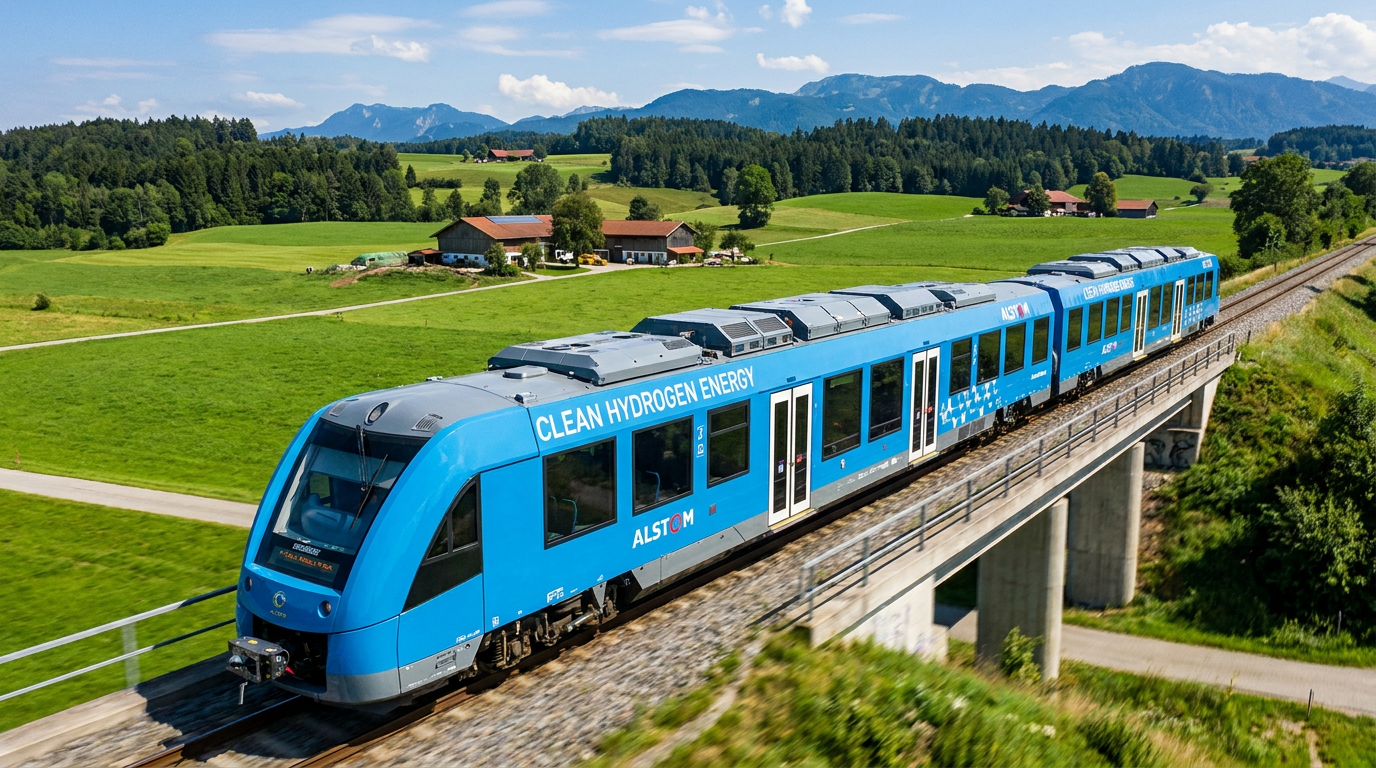
How Hydrogen Trains Work: The Push to Decarbonize Rail
0 sources
Battery Tech
The Solid-State Battery Era Arrives: How EV Tech's 'Holy Grail' Moved From Lab to Road in 2026
0 sources
EV Infrastructure
The 2026 EV Road Trip: How NACS Standardization and NEVI Funding Reshaped Long-Distance Travel
0 sources
Every angle. Every day.
Get automotive stories with full source coverage and perspective breakdowns delivered to your inbox.