
U.S. and Iran Sign 60-Day Ceasefire and Framework Deal for Nuclear Talks
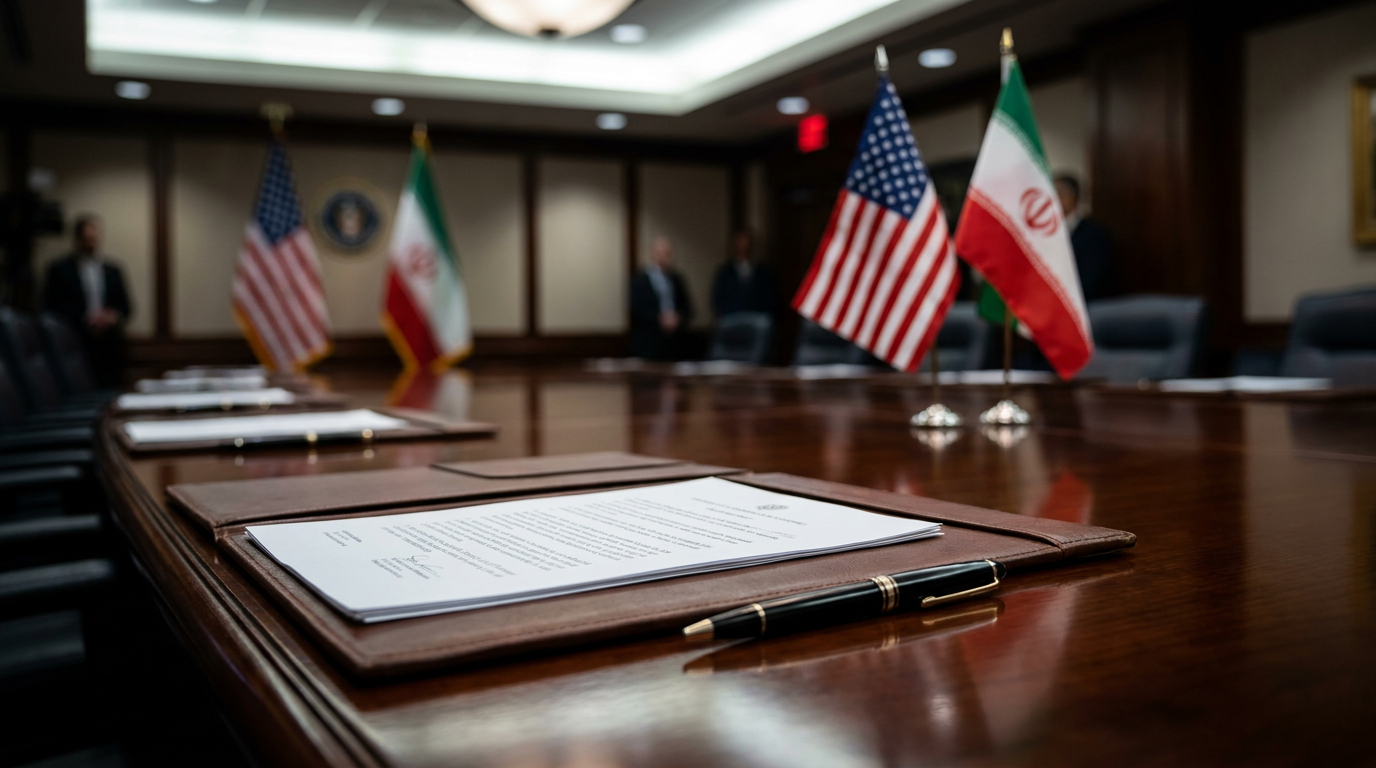
The United States and Iran have agreed to a 60-day ceasefire and a framework for future negotiations, temporarily halting direct hostilities while leaving major strategic and nuclear issues unresolved.
By Factlen Editorial Team
- U.S. Administration & Allies
- Views the ceasefire as a successful result of pressure tactics that forces Iran to the negotiating table while maintaining military deterrence.
- Israeli Security Establishment
- Considers the framework a dangerous concession that allows Tehran to regroup and rebuild its proxy networks without dismantling its nuclear capabilities.
- Iranian Leadership
- Sees the pause as a necessary tactical maneuver to negotiate the lifting of crippling economic sanctions while preserving its nuclear infrastructure.
What's not represented
- · Iranian civilians facing severe economic hardship from international sanctions.
- · Civilians in Lebanon and Syria affected by ongoing regional military operations.
Why this matters
This 60-day pause de-escalates a conflict that has disrupted global shipping and energy markets, but the underlying threat of a nuclear-armed Iran and regional proxy warfare remains entirely unresolved. The success or failure of the upcoming talks will dictate the Middle East's security architecture for the next decade.
Key points
- The U.S. and Iran have agreed to a 60-day ceasefire to facilitate negotiations on a broader peace and nuclear agreement.
- Despite the pause in hostilities, the U.S. will maintain its deployment of roughly 50,000 troops in the Middle East.
- The framework was announced as U.S. officials arrived at the G7 summit to brief allied nations.
- Israeli leadership strongly condemned the agreement, vowing to maintain military operations in Lebanon and Syria.
- Future talks will center on Iran's nuclear program and potential sanctions relief.
The United States and Iran have officially signed a framework agreement that includes a 60-day ceasefire, marking a sudden and significant diplomatic pause in a conflict that has threatened to engulf the broader Middle East. The preliminary deal, confirmed by officials from both nations, temporarily halts direct military hostilities to create a window for high-stakes negotiations. These upcoming talks are expected to address the core drivers of the conflict, most notably Iran’s rapidly advancing nuclear program and the crippling economic sanctions imposed by Washington. While the agreement represents the most concrete de-escalation in years, diplomats caution that it is merely a procedural pause rather than a comprehensive peace treaty, leaving the most intractable geopolitical disputes entirely unresolved.[1][4]
Under the terms of the framework, both Washington and Tehran have committed to a strict 60-day cessation of direct military action against each other's sovereign assets and primary military installations. This window is designed to allow negotiating teams to establish the parameters for a permanent treaty that would theoretically replace the defunct 2015 Joint Comprehensive Plan of Action (JCPOA). However, the text of the framework remains intentionally vague on the final end-state, focusing instead on immediate de-escalation mechanisms. The agreement does not explicitly mandate a freeze on Iran's uranium enrichment activities during the ceasefire, a point of significant contention among non-proliferation experts who fear Tehran may use the pause to quietly cross the nuclear threshold.[1][4]
Despite the cessation of active hostilities, the United States is not altering its regional military footprint. The administration has confirmed that roughly 50,000 U.S. troops will remain deployed across the Middle East throughout the 60-day negotiation period. Military officials emphasize that this force posture is necessary to deter any opportunistic attacks by Iranian proxy groups and to ensure that Washington negotiates from a position of overwhelming strength. The decision to maintain the troop presence underscores the deep lack of trust between the two nations, with defense planners preparing contingency options should the talks collapse and hostilities resume at the end of the two-month window.[2]

The diplomatic breakthrough was announced just as U.S. leadership arrived at the G7 summit in Italy, immediately shifting the focus of the international gathering. The U.S. administration is heavily touting the framework deal as a massive step toward long-term peace in the Middle East, framing the ceasefire as a vindication of its aggressive pressure campaign. European allies, who have spent years attempting to broker back-channel talks between Washington and Tehran, have expressed cautious optimism. However, allied diplomats remain wary of the fragile nature of the pause, privately questioning whether the 60-day timeline is sufficient to bridge the vast ideological and strategic chasms separating the two adversaries.[3][6]
In Tehran, the government is presenting the ceasefire to its domestic audience as a necessary tactical maneuver to secure economic survival. Iranian state media has heavily emphasized that the upcoming negotiations must center on the immediate and total lifting of Western sanctions, which have devastated the nation's economy and fueled domestic unrest. Iranian officials have signaled that any concessions regarding their nuclear infrastructure or regional influence will be strictly contingent on verifiable economic relief. For Iran's leadership, the 60-day pause offers a critical breathing space to stabilize its currency and reassess its strategic position without the immediate threat of U.S. military strikes.[7]
In Tehran, the government is presenting the ceasefire to its domestic audience as a necessary tactical maneuver to secure economic survival.
The reaction from Israel has been swift and overwhelmingly negative, exposing a severe rift between Washington and its closest Middle Eastern ally. Israeli Prime Minister Benjamin Netanyahu publicly rebuked the framework, declaring that Israel is not bound by the U.S.-Iran ceasefire and will not alter its own security operations. Netanyahu explicitly stated that Israeli forces will not withdraw from occupied territories in Lebanon and Syria, arguing that the Iranian threat remains existential regardless of diplomatic pauses in Washington. The Israeli security establishment views the 60-day window as a dangerous capitulation that will allow Tehran to rebuild its military capabilities and resupply its proxy networks across Israel's borders.[5][8]

Within the Israeli coalition government, hardline ministers have been even more vocal in their condemnation of the American diplomatic effort. Figures such as National Security Minister Itamar Ben-Gvir and Finance Minister Bezalel Smotrich have characterized the framework as a historic mistake, warning that any agreement that leaves Iran's nuclear infrastructure intact is a direct threat to Israel's survival. This intense domestic political pressure severely limits Israel's flexibility, raising the likelihood that unilateral Israeli military action against Iranian assets could derail the U.S.-brokered ceasefire before the 60-day negotiation window concludes.[5]
The ultimate success or failure of the framework hinges entirely on the nuclear question. Since the collapse of the JCPOA, Iran has enriched uranium to near-weapons-grade levels, drastically shortening its breakout time to assemble a nuclear device. U.S. negotiators are demanding a verifiable rollback of this enrichment capacity and intrusive inspections by the International Atomic Energy Agency (IAEA). Tehran, conversely, insists that its nuclear program is entirely peaceful and demands that the U.S. acknowledge its right to domestic enrichment. Bridging this gap within 60 days is widely considered an impossible task, meaning the current framework will likely need to be extended if a permanent collapse is to be avoided.[1][4]

Regional Arab states, particularly in the Gulf, are watching the diplomatic maneuvering with a mixture of relief and deep anxiety. Nations like Saudi Arabia and the United Arab Emirates have long feared being caught in the crossfire of a direct U.S.-Iran war and generally welcome the de-escalation. However, they are also deeply concerned that Washington might strike a narrow nuclear deal that ignores Iran's ballistic missile program and its support for militant groups in Yemen, Iraq, and Syria. Gulf leaders are quietly lobbying the U.S. administration to ensure that any final treaty addresses the full spectrum of Iranian regional behavior, not just its nuclear ambitions.[8]
As the 60-day clock begins ticking, the Middle East enters a precarious period of suspended animation. Negotiating teams are scrambling to establish venues, agendas, and technical working groups, while military commanders on all sides maintain a high state of alert. The framework deal has successfully pulled the United States and Iran back from the brink of immediate war, but it has not resolved the fundamental geopolitical friction that brought them there. If the upcoming talks fail to yield a sustainable compromise, the resumption of hostilities will likely be more intense and widespread than the conflict that preceded this fragile pause.[2][4]
How we got here
2018
The U.S. withdraws from the JCPOA nuclear deal, initiating a maximum pressure campaign of economic sanctions against Iran.
2023-2025
Regional proxy conflicts escalate, drawing U.S. and Iranian forces into increasingly direct military confrontations.
Early 2026
Intensified military exchanges push both nations to the brink of a broader, uncontrolled regional war.
June 15, 2026
The U.S. and Iran sign a 60-day ceasefire and framework agreement to pause hostilities and begin nuclear talks.
Viewpoints in depth
The U.S. Administration
Views the deal as a successful pressure tactic forcing Iran to the table.
For Washington, the 60-day ceasefire is framed as a vindication of its aggressive military and economic pressure campaign. U.S. officials argue that by maintaining a heavy troop presence of 50,000 personnel in the region, they have forced Tehran to accept a pause without conceding any immediate sanctions relief. The administration believes this window provides a critical opportunity to lock Iran into a new, more restrictive nuclear framework before its enrichment program crosses the point of no return.
The Iranian Government
Sees the ceasefire as a tactical pause to negotiate sanctions relief while preserving its nuclear infrastructure.
Tehran's leadership is presenting the framework to its domestic audience as a necessary step to alleviate the crushing economic burden of Western sanctions. Iranian strategists view the 60-day window as a chance to stabilize the national economy and de-escalate immediate military threats without permanently dismantling their advanced uranium enrichment capabilities. Their primary negotiating stance is that any long-term concessions must be preceded by verifiable, irreversible economic relief.
The Israeli Government
Considers the framework a dangerous concession that allows Tehran to regroup without dismantling its nuclear capabilities.
Israel's security establishment is deeply alarmed by the bilateral U.S.-Iran agreement, viewing it as a capitulation that ignores the broader regional threat posed by Tehran. Israeli leaders argue that a 60-day pause merely gives Iran and its proxy networks time to resupply and fortify their positions. Consequently, Prime Minister Benjamin Netanyahu has explicitly stated that Israel is not bound by the ceasefire and will continue its military campaigns in Lebanon and Syria to degrade Iranian influence.
What we don't know
- Whether Iran will freeze its uranium enrichment activities during the 60-day negotiation window.
- How proxy groups in Yemen, Lebanon, and Iraq will respond to the bilateral ceasefire between Washington and Tehran.
- The specific parameters and concessions required for the U.S. to agree to any permanent sanctions relief.
Key terms
- Framework Agreement
- A preliminary diplomatic pact that establishes the broad outlines and principles for a final, comprehensive treaty to be negotiated later.
- JCPOA
- The Joint Comprehensive Plan of Action, the 2015 nuclear deal that limited Iran's nuclear program in exchange for sanctions relief, which the U.S. withdrew from in 2018.
- Breakout Time
- The estimated amount of time it would take a country to produce enough weapons-grade uranium for one nuclear weapon, should it choose to do so.
Frequently asked
Does this agreement mean the war is over?
No. The agreement is a temporary 60-day ceasefire designed to pause hostilities and allow diplomatic negotiations to take place regarding a permanent treaty.
Are U.S. troops leaving the Middle East?
No. The U.S. military is maintaining its current force posture of approximately 50,000 troops in the region to serve as a deterrent during the talks.
How is Israel responding to the deal?
Israeli leadership has heavily criticized the framework, calling it a mistake, and stated they will continue their military operations in Lebanon and Syria regardless of the U.S. ceasefire.
Sources
Source coverage
8 outlets
3 viewpoints surfaced








[1]The New York TimesU.S. Administration & Allies
U.S. and Iran Sign a Framework Deal, Leaving Major Issues for Future Talks
Read on The New York Times →[2]Fox NewsU.S. Administration & Allies
US won't move troops despite 'signed' Iran deal, as doubts linger over Tehran's next move
Read on Fox News →[3]Al JazeeraIsraeli Security Establishment
Trump touts Iran deal and Ukraine ambition as he arrives at G7
Read on Al Jazeera →[4]ReutersU.S. Administration & Allies
US, Iran agree to 60-day ceasefire, framework for nuclear talks
Read on Reuters →[5]The Times of IsraelIsraeli Security Establishment
Netanyahu, right-wing ministers slam US-Iran framework, vow to maintain northern occupation
Read on The Times of Israel →[6]BBC NewsU.S. Administration & Allies
G7 summit overshadowed by surprise US-Iran diplomatic breakthrough
Read on BBC News →[7]Tehran TimesIranian Leadership
Iran secures 60-day pause, demands full sanctions relief in upcoming talks
Read on Tehran Times →[8]The GuardianIsraeli Security Establishment
US-Iran ceasefire leaves Middle East allies anxious over long-term security
Read on The Guardian →

More in news politics
See all 5 stories →Post-War Economy
Economic Rebound in Focus as U.S.-Iran Conflict Winds Down
0 sources
Strait of Hormuz
U.S. and Iran Reach Framework Deal for 60-Day Ceasefire and Reopening of Strait of Hormuz
0 sources

Cognitive Immunity
Does 'Prebunking' Actually Work? The Evidence Behind the Psychological Vaccine for Misinformation
0 sources

Every angle. Every day.
Get news politics stories with full source coverage and perspective breakdowns delivered to your inbox.