
U.S. and Iran Reach Framework Deal for 60-Day Ceasefire and Reopening of Strait of Hormuz
The United States and Iran have agreed to a tentative framework to pause their months-long war, reopening crucial maritime trade routes while deferring negotiations over Tehran's nuclear program.
By Factlen Editorial Team
- U.S. Administration & Allies
- Frames the agreement as a successful use of maximum pressure to reopen global trade routes and force Iran back to the nuclear negotiating table.
- Iranian Leadership & Negotiators
- Views the deal as a diplomatic victory that lifts a crippling naval blockade and provides a pathway to unfreeze billions in overseas assets.
- Israel & Regional Skeptics
- Maintains deep skepticism of the bilateral pact, arguing it fails to address Iran's proxy network and vowing to continue independent military operations.
- Global Markets & Energy Sector
- Expresses immense relief over the reopening of the Strait of Hormuz, prioritizing the stabilization of international oil supplies.
What's not represented
- · Lebanese civilians affected by the ongoing Israeli-Hezbollah conflict
- · Commercial shipping companies navigating the Strait of Hormuz
Why this matters
The reopening of the Strait of Hormuz promises immediate relief to a global economy battered by energy shortages and skyrocketing oil prices. However, the deferral of Iran's nuclear status and the exclusion of the Lebanese front mean the region remains highly volatile, with the potential for a broader war still looming if the 60-day talks fail.
Key points
- The U.S. and Iran have reached a framework agreement for a 60-day ceasefire and the reopening of the Strait of Hormuz.
- The memorandum of understanding is scheduled to be formally signed on Friday in Geneva.
- The deal establishes a 60-day window to negotiate the future of Iran's highly enriched uranium stockpile.
- Israel is not a party to the agreement and plans to continue its military operations in Lebanon.
- Global oil prices dropped roughly 5 percent following the announcement of the maritime reopening.
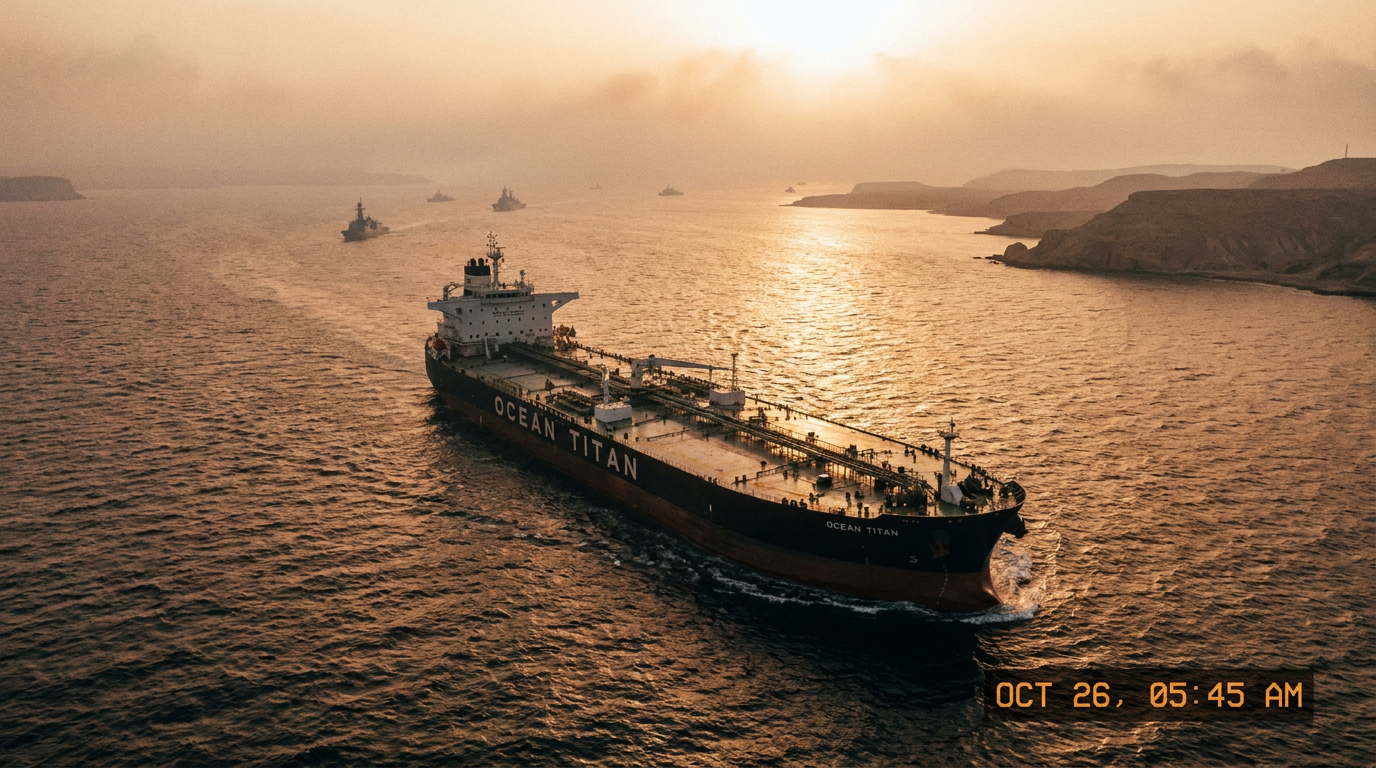
The United States and Iran have reached a preliminary framework agreement to extend a fragile ceasefire for 60 days and reopen the Strait of Hormuz, pausing a devastating months-long conflict that has destabilized the Middle East and roiled global energy markets.[1][3]
The memorandum of understanding, mediated heavily by Pakistan and Qatar, is slated to be formally signed on Friday in Geneva. U.S. President Donald Trump celebrated the breakthrough on social media during his 80th birthday, declaring the deal "all signed" and authorizing the immediate removal of the U.S. naval blockade on Iranian ports, though U.S. troop levels in the region remain unchanged.[2][3][4][8]
Iranian officials, including Deputy Foreign Minister Kazem Gharibabadi, confirmed the agreement but clarified that implementation—including the reopening of the crucial maritime chokepoint—would not begin until the formal signing ceremony. Tehran has framed the deal as a diplomatic victory that will lift the crippling blockade and potentially unfreeze billions in overseas assets.[3][5][8]
The closure of the Strait of Hormuz has been the war's most economically punishing feature. Iran choked off the waterway in retaliation for a U.S. naval blockade that had effectively severed Tehran's maritime trade. Under the new framework, both sides will stand down their maritime blockades, with the goal of restoring pre-war commercial shipping levels within 30 days, pending extensive mine-clearing operations.[3][4][8]

The prospect of restoring traffic through a strait that typically handles a fifth of the world's traded oil sent immediate ripples through the global economy. Oil prices dropped roughly 5 percent on the news, easing fears of a prolonged historic energy crisis that had threatened to tip several importing nations into recession.[8][9]
The prospect of restoring traffic through a strait that typically handles a fifth of the world's traded oil sent immediate ripples through the global economy.
Beyond maritime security, the framework establishes a 60-day window for negotiators to tackle the war's most intractable driver: Iran's nuclear ambitions. During this period, technical teams will attempt to hash out the future of Iran's highly enriched uranium stockpile and enrichment capabilities.[1][6][7]
In exchange for verifiable compliance on the nuclear front, the U.S. is offering phased economic relief. Negotiators have reportedly discussed the unfreezing of up to $24 billion in Iranian assets held overseas, with Tehran pushing for an initial $12 billion release to stabilize its battered domestic economy.[6][7][8]

Despite the optimism, the memorandum leaves major strategic issues unresolved. The text reportedly omits any restrictions on Iran's ballistic missile program or its support for regional proxy militias, leading geopolitical analysts to warn that the underlying drivers of the conflict remain intact.[4][6]
The most immediate threat to the ceasefire's survival is the ongoing fighting in Lebanon. Israel, which joined the U.S. in launching the war in late February, is not a party to the Geneva agreement. A spokesperson for Israeli Prime Minister Benjamin Netanyahu stated that Israel will maintain its operational independence and will not withdraw forces from Lebanon.[4][6]
This Israeli stance directly conflicts with Iran's demand that the ceasefire apply to all fronts. Hezbollah, Iran's primary regional ally, praised the framework as a major achievement but reiterated its commitment to resisting Israeli forces until a full withdrawal is achieved, leaving a volatile flashpoint entirely unaddressed by the U.S.-Iran pact.[4][8]

Both administrations face intense domestic scrutiny over the compromises. In Washington, the White House is under pressure to ensure the 60-day nuclear talks yield a stronger, more permanent framework than the 2015 accord Trump previously abandoned. Meanwhile, in Tehran, hardliners have already begun criticizing the negotiating team, arguing that the economic concessions are insufficient given the scale of the war's destruction.[4][7][8]
As delegations prepare to travel to Switzerland, the international community is watching closely. While the United Nations and European allies have praised the de-escalation as a critical step toward lasting peace, the sheer volume of deferred issues guarantees that the next two months of diplomacy will be as fraught as the war itself.[5][6]
How we got here
February 2026
Negotiations collapse and a multi-front war begins, featuring U.S. and Israeli strikes on Iran and the closure of the Strait of Hormuz.
April 2026
The U.S. and Iran agree to an initial two-week ceasefire mediated by Pakistan, which is later extended.
June 15, 2026
The U.S. and Iran announce a framework agreement for a 60-day ceasefire and the reopening of maritime trade.
June 19, 2026
Scheduled date for the formal signing of the memorandum of understanding in Geneva, Switzerland.
Viewpoints in depth
U.S. Administration's View
Focuses on restoring global commerce and forcing Iran back to the nuclear negotiating table.
The White House frames the reopening of the Strait of Hormuz as a major strategic victory that will rescue the global economy from an energy crisis. By lifting the naval blockade only in exchange for maritime access and a 60-day window to dismantle Iran's nuclear capabilities, the administration argues it has successfully used maximum pressure to force Tehran into compliance without committing to a permanent, unconditional withdrawal.
Iranian Leadership's View
Emphasizes the lifting of the U.S. blockade and the unfreezing of crucial economic assets.
Tehran is presenting the framework to its domestic audience as a triumph of resistance. Iranian officials highlight that the U.S. was forced to abandon its demands for unconditional surrender and regime change. Instead, Iran secured the immediate lifting of the naval blockade and a pathway to recover up to $24 billion in frozen assets, while deferring any binding commitments on its ballistic missile program or regional proxy network.
Israel's View
Views the bilateral U.S.-Iran pact with deep skepticism and insists on maintaining military independence.
Israeli leadership is notably absent from the Geneva framework and has publicly distanced itself from the ceasefire. Officials argue that by omitting restrictions on Iran's ballistic missiles and failing to address the ongoing conflict with Hezbollah in Lebanon, the deal merely pauses the threat rather than eliminating it. Consequently, Israel has vowed to continue its military operations in Lebanon regardless of the U.S.-Iran timeline.
What we don't know
- Whether Israel's ongoing military operations in Lebanon will ultimately cause Iran to abandon the ceasefire.
- The exact technical concessions Iran is willing to make regarding its highly enriched uranium stockpile.
- How quickly commercial shipping companies will feel safe enough to return to pre-war traffic levels in the Strait of Hormuz.
Key terms
- Strait of Hormuz
- A crucial maritime chokepoint between the Persian Gulf and the Gulf of Oman through which roughly a fifth of the world's traded oil passes.
- Memorandum of Understanding (MoU)
- A formal agreement between two or more parties that establishes a framework for future negotiations, though it is not always legally binding.
- Naval Blockade
- An act of war in which one country uses its military to prevent vessels from entering or leaving the ports of another country.
- Highly Enriched Uranium
- Uranium that has been processed to increase the concentration of the U-235 isotope, which can be used for civilian nuclear power or, at higher levels, nuclear weapons.
Frequently asked
Is the war completely over?
Not yet. The current agreement is a 60-day ceasefire and framework to reopen maritime trade, but a final peace treaty depends on upcoming nuclear negotiations.
When will the Strait of Hormuz reopen?
While the U.S. authorized an immediate lifting of its blockade, Iran has stated that the strait will officially reopen after the deal is signed on Friday, pending mine-clearing operations.
Is Israel part of this ceasefire?
No. Israel is not a party to the U.S.-Iran memorandum and has stated it will maintain its operational independence, particularly regarding its ongoing campaign in Lebanon.
What happens to Iran's nuclear program?
The framework defers the nuclear issue to a 60-day negotiation window, during which technical teams will discuss Iran's highly enriched uranium stockpile in exchange for potential sanctions relief.
Sources
Source coverage
9 outlets
4 viewpoints surfaced









[1]The New York TimesGlobal Markets & Energy Sector
U.S. and Iran Sign a Framework Deal, Leaving Major Issues for Future Talks
Read on The New York Times →[2]Fox NewsU.S. Administration & Allies
US won't move troops despite 'signed' Iran deal, as doubts linger over Tehran's next move
Read on Fox News →[3]The Washington PostU.S. Administration & Allies
A tentative deal is reached to end the Iran war and Trump orders a stop to the US naval blockade
Read on The Washington Post →[4]The GuardianIsrael & Regional Skeptics
What do we know about the US-Iran peace deal – and what questions remain?
Read on The Guardian →[5]Al JazeeraIranian Leadership & Negotiators
World reacts as Iran and US reach tentative deal to end war
Read on Al Jazeera →[6]Center for Strategic and International StudiesIsrael & Regional Skeptics
The United States and Iran Announce a Deal to End the War | State of Play
Read on Center for Strategic and International Studies →[7]AxiosU.S. Administration & Allies
US, Iran reach deal to extend ceasefire, open strait
Read on Axios →[8]The NationalIranian Leadership & Negotiators
US and Iran agree framework for peace deal and reopening Strait of Hormuz
Read on The National →[9]City AMGlobal Markets & Energy Sector
US and Iran agree to peace deal's text, negotiators say
Read on City AM →
More in news politics
See all 7 stories →US-Iran Ceasefire
US and Iran Reach Tentative Agreement to End War and Reopen Strait of Hormuz
0 sources
Digital Provenance
The End of the Deepfake Arms Race: How C2PA and Cryptographic Provenance Are Rebuilding Digital Trust
0 sources

Strait of Hormuz
Potential End to U.S.-Iran War Tests Trump's Economic Promises as Dispute Over Strait of Hormuz Tolls Emerges
0 sources
US-Iran Relations
CIA Director Doubts Iran's Intentions in Peace Deal as White House Seeks Economic Rebound
0 sources
Every angle. Every day.
Get news politics stories with full source coverage and perspective breakdowns delivered to your inbox.